Sunday, December 7, 2014

Rajdeep Sardesai, Caste and Secularism


Rather than presenting the news, Rajdeep Sardesai has very recently actually been in the news on two rather different occasions. The first occasion was when Sardesai got into a scuffle with some of Modi’s supporters when the Prime Minister was in New York. In the video war that followed, Sardesai was first seen as being beaten by the Hindu nationalist, then as having started the scuffle, and finally as having been forced to respond violently to the nationalist’s heckling. Regardless of the reasons for the scuffle, or its context, however, Sardesai almost instantly became the poster boy for Indian secular liberals across the world. Vociferous opponents of the BJP, Hindu nationalism and Modi, they cheered Sardesai and used the episode to reflect on the rowdy ways of Hindu nationalists.


The second occasion, however, saw the same Rajdeep Sardesai being booed for being casteist. His sin this time round was a tweet where he confessed to “Saraswat pride” at seeing two members of his Saraswat caste being included in the prime minister’s cabinet. In response to the outrage that rained on him, Sardesai sought to explain himself in an oped in the Hindustan Times, and subsequently in the Navhind Times. This only complicated matters further, since what could have been excused as a momentary lapse was now justified rather elaborately.

How does one explain this swing from being the archetypical secular liberal to unrepentant casteist in the space of a few months? The sad truth is that all too often what Sardesai demonstrated more recently is not an uncommon feature of the Indian secular liberal. 

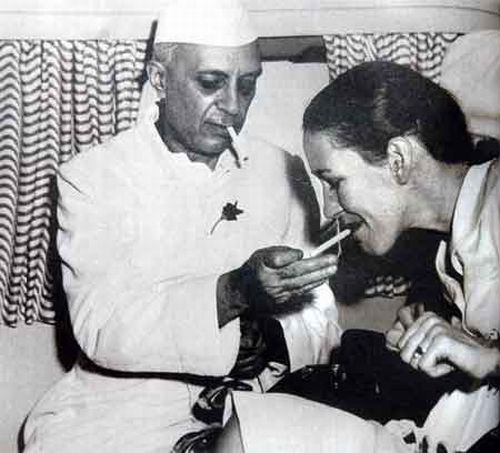
Indian secular liberalism is based on caste and largely the ideological position of anglicised upper caste Indians. One need go no further to unearth this relationship between caste and secularism than to look at Nehru, the revered figure of Indian secularism. Often referred to as Pandit Nehru, where did this title of Pandit come from? Nehru was a graduate, but the title of Pandit came not from his graduation in Western education, nor from any knowledge of the Sanskrit texts. The title is one inherited from his caste location as a Kashmiri Pandit. Nehru may have been an unrepentant dismisser of Hindu religiosity, but that did not stop him from claiming his brahmin privilege and assume a right to leadership that supposedly came with his heritage.

Nehruvian secularism was the product not merely of one man, but a social milieu that gathered around Nehru and formed the core of the anti-imperial nationalist struggle. Referred to as the ‘nationalist class’ by Partha Chatterjee, this was a group that in some ways was secular. They were secular in the sense that they did not necessarily find their spouses within their natal caste groups, nor did they follow other traditional caste rules. They did not do so, largely because they did not have to. Theirs was an anglicised milieu and they had in fact formed a sub-caste, or jati, of their own. This was the group that controlled power in the Centre through the initial decades of Indian independence.

The fact of the matter is that group was composed of people like Pandit Nehru, anglicised segments of already dominant caste groups. The nationalist class was not averse to recruiting people and accommodating them in various governmental institutions. However, the route to this recruitment depended critically on the privileges available to dominant groups in India. This meant the ability to be educated in one of the “good” schools in India, gain a degree in Oxford, Cambridge, where one gained access to scions of these families. These options are technically open to all, and yet as is the reality of this country, were, and are available largely to privileged segments of dominant caste groups. Rajdeep Sardesai, with his dominant caste background, and his privileged education is a natural member of the nationalist class jati.


One would not appreciate how this nationalist class can be seen as a jati if one has the standard static notion of India and its culture. One has to recognise that like culture, caste is not static, but dynamic and constantly changing. Take, for example, the fact that the Gaud Saraswat caste that we today assume to be an ancient caste was in fact produced through a caste unity movement that commenced in the latter part of the nineteenth century. This caste movement gathered together various jati like Bardezkars, Bhanavlikars, Pednekars, Kudaldeshkars and Sasthikars on the one hand, and Smartha and Vaishnava sampraday on the other, to form one Gaud Saraswat caste. This movement took a good amount of effort and often ran counter to the wishes of the Swamis of the various sampraday, as well as orthodox elements within these jati. 
 
When upper castes like Sardesai refer to themselves as progressive, they are not necessarily referring to a tradition of egalitarianism, but rather to their caste histories where some radicals reading the need of the times stop following caste laws and began to westernise themselves. As Sardesai’s tweet and subsequent article demonstrate, none of this meant that they gave up caste. What happened was that caste was now masked under a superficial veneer of westernised behaviour, like eating meat, not fulfilling brahmanical Hindu religious rituals, crossing the waters. In other words, they merely produced new rules for their caste groups.

New jati, therefore, are constantly being born, and if the Gaud Saraswat caste was born in the context of creating opportunities in colonial Bombay, the nationalist class is a jati that was formed through the process of fighting off the British. The idea of a single nation was the idea of this jati and they had to fight off rival claims from the princes and other caste groups. These latter groups were more interested in maintaining spheres of influence. While the princes were dismissed through democratic rhetoric, the dominant castes from various regions were accommodated through the process of the linguistic reorganisation of States. This process allowed for the regional hegemony of these caste groups by recognising their dialects as the official languages of the states where they dominated, while the Nehruvian elite dominated the centre with their secular talk of “unity in diversity”.
Unity in Diversity, with Hinduism on top

The Indian nation is not an ancient primordial entity. It is a production of the Indian nationalists held together by the force of the post-colonial state of India and the logic of Hindutva. Given that the maintenance of the Indian nation was always under threat from the dominant castes of various regions, the nationalist class always existed in some tension with the regional dominant castes. As yet unfamiliar with the options that anglicisization could bring, these regional castes stuck to the regional identities that brought them power. If they cooperated together, it was because they recognised that Hindutva is what allows for dominant brahmanised castes to assert their dominance in the various Indian states. As such, as long as their assertions of caste, regional and religious identity did not challenge the integrity of the Indian state, these were always treated with some amount of condescension by the nationalist class. It was only if these regional groups got too strident in their assertions that the Indian state got nasty.


If one looks at the longer videos of Sardesai interviewing those who had come to support Modi in New York, one will recognise instantly the condescending manner in which Sardesai did not so much talk to these supporters, as much as he talked down to them. This is the condescension that the members of the nationalist class reserve for those that do not buy their version of secularism. Rather than see the assertions of caste, and religion as a way in which segments of the Indian population are trying to assert power, the secular liberal sees this as the product of dull minds who are unable to grasp the sublime truths and value of secularism. Indeed, Hindutva in its current form is  the political response of the non-anglicised regional dominant castes to the secularism of the largely Hindu Nehruvian elite. Had the Nehruvian secularists been honest about the fact that their version of secularism was itself limited by their social location, that it was also a casteist project, then perhaps the project of Indian secularism would have met with greater success.

The two episodes that got Rajdeep Sardesai in the news are not antithetical to each other. In fact, they are but two sides of the same coin.

(A Version of this post was first published in the O Herald on 2 Dec 2014)

Friday, December 5, 2014

Who speaks for Goa?


Seven years ago I travelled to Portugal for the first time and attended the Goan Diaspora Convention in Lisbon. Listening to Goans from Lisbon speak and make presentations I learned at that moment that there were many ways through which one could learn about Goa and Goans, and not all of these methods required that one actually be present in the territory of Goa itself.

Because of its long history with Goa, Portugal remains a site where Goan identity is produced. Given its peripheral location in the world it is not necessarily a privileged location for the production of Goan identity, but it is by no means an insignificant one. Over the course of years I have come to see how ties between the two places continue to ensure the production of ways in which Goa is understood, presented and represented. In other words, a Goan culture is produced as much in Lisbon, as it is in Goa.

One production of Goan culture was made obvious to me when I went out to dine at a restaurant that offers Goan food, ‘Jesus é Goês’ (Jesus is Goan). The quirky name stems from the fact that the owner of the restaurant, Jesus, is in fact Goan.  The food that an ‘ethnic’ restaurant serves is one way in which people learn about a culture. But this is not the cultural production that struck me. What struck me were the murals on the wall of the restaurant.

The walls of the restaurant pulsated with colour and a variety of figures who commanded that you stop and take notice of them. Across one wall a Puranic Shiva sitting in a tea-cup used a fork to paddle his way away from a funky Sri Yantra through an ocean of some, no doubt ambrosial liquid. One the same wall, a venerable tortoise supported a meditating baba who contemplated a samosa that seemed to have just appeared in front of him. Further away was a blue hand with an open mouth that seemed to pant from the chillies that were crossed on the plate in front of it. This was definitely a representation of Goa for the Goa-illiterate branco and my head was spinning from all the meaning I was taking in.

To begin with, despite the clear Catholic reference in the name of the restaurant, Goa is quite clearly represented as a Hindu space. However the Hinduism represented on the walls is one that has more than a fair share of influence from the hippy aesthetic. Growing up in the Goa of the 1980s I grew up to resent the challenge that the hippies brought to the Goan status quo and resented the spin that they put both on Goa and India. Here on the walls of this Goan restaurant in Lisbon, however, I had to acknowledge that the hippies had perhaps won the war. Their vision of Goa was now a part of how many segments of the world saw the territory.

This reinterpretation continues with the image of Ganesh head that presides over the restaurant. The cute pinkish kitschy elephant head would be familiar to, and warm the insides of any person from western India. Look closely, however, and one realises that the halo around Ganesh’s head is the crown of thorns that would have sat more appropriately over the head of Christ.

This is the kind of stuff that would make any traditional Indian secularist’s heart trill with delight. I am not known to appreciate this Hinduism meets Catholicism, we-are-all-brothers form of secularist propaganda largely because it is invariably so contrived. In this case, however, it really does come together effortlessly, perhaps because the ‘fusion’ is not so obvious. You need to look really hard, or be more than a couple of gins down for the crown of thorns to pop out at you.

Also populating the world on the walls of this restaurant is a strange animal. Quite unlikely the representation of any one figure, this animal reminded me of the composite animals that are very much a part of the subcontinent’s artistic tradition where the portions of elephants, crocodiles, lions, peacocks are brought together to create fantastical creatures. Commenting on contemporary Goan art some years ago, the art critic Ranjit Hoskote had noted this tendency among the then emerging set of Goan artists as well. In his essay Hoskote had tried to draw a link between ancient art forms and the contemporary, but I was not convinced. Even if these artists were either consciously or unconsciously continuing  an earlier tradition, they were still producing these images outside of a context of daily life. Here on the walls of Jesus é Goés, however, was this fantastical creature bounding around and decorating a quotidian space, very much like its ancestors decorated the temples of yore.

Amidst all of this largely Hindu kitsch, there is also a sign that refers to Goa’s Catholic tradition in the form of two garlanded and flaming hearts struck through with a knife. References, no doubt,  to the sacred hearts of Mary and Jesus it seemed as comfortable here in a Goan restaurant, as it would have in the kitsch Catholic art that populate Central America, or any other part of the Catholic world for that matter.

There is a certain Goa that is being presented to diners at Jesus é Goés. It may not be a Goa that Goans may recognise, but it is a Goa that nevertheless has a certain validity because it reinterprets various strands that in fact exist in Goa. That Goa is framed as primarily Hindu is true, and this remains problematic. However, it is also a fact that the presence of this Hinduism is not necessarily an imposition but the result of an engagement. This interaction is not necessarily piously reverential, but able to joke with it, play with it and in the process emerge with something that is actually interesting and stimulating.

(A version of this post was first published in The Goan on 6 Dec 2014)

Wednesday, December 3, 2014

Reading Angelo: Art and the Goan


I have to confess that until recently I was not a great fan of Angelo da Fonseca, an artist who has been substantially feted in recent times. Indeed, mention his name and the project that spurred his work and I would experience more than mild irritation. A good amount of this response changed not too long ago after visiting the ongoing exhibition of his works held at the Xavier Centre of Historical Research (XCHR). This exhibition combines a large number of his works that were earlier exhibited in smaller groupings whose content was determined according to the Christian liturgical calendar. Thus where the contents of earlier exhibitions followed a Christmas or Lenten theme, this time round one saw the exhibition of a wider gamut of Fonseca’s works.
My earlier responses to Fonseca did not follow from a consideration of his work, but were largely a response to the project of inculturation he was committed to. Since even before the 1960s and the dramatic changes of the Vatican Council II, there had been a movement to depict Christ, his mother and the Saints in forms that were not restricted to Aryan stereotypes. There was a clamour in some sectors to depict the universal Christ in universal tones. People wanted to see Christ not merely as a blond blue eyed man, but in darker skin tones, outside of northern European locales. 

In itself this was not a bad idea. After all, Christ emerged from out of Palestine, the likelihood of his being blond and blue eyed are slim. The problem with the project of inculturation, however, was that in South Asia, this project became a project of brahmanising Christ. Christ and his story were depicted within forms that one can relate directly to brahmanical Hinduism. It is as if Christ lived within an entirely Hindu upper-caste milieu. Such a project has a number of problems, first it devalues the natal culture of many Christians. Born from the encounter of Europe with subcontinental South Asia, these Christians have internalised many European forms that have become local. Further, representing Christ in brahmanical forms perpetuates a casteism that is arguably not a part of the Christian message.


Viewing the art works on display at the XCHR my usual irritation was displaced by an amazement for the details I saw in Fonseca’s art. Take, for example, the little squiggle at the end of a line that he uses to represent the Holy Spirit in his representation of the Annunciation. Or the very realistic little lilies in another image.
It was obvious as one progressed along the exhibition that Fonseca was creating a style that drew as much from the European tradition, as well as from Mughal miniatures. Not all of his figures were brahmanical, rather the bearded and turbaned Saint Joseph often came across as Muslim, Mary, in a pheran and head scarf Kashmiri. This complexity is of course not surprising given his training under Abanindranath Tagore.

Even if one disliked the brahmanical references, one had to appreciate the clever way in which Fonseca interpreted these forms. For example, traditional European depictions of Saint Anne often have her seated while instructing her daughter Mary. Fonseca takes this form but instead uses the Shiva-Shakti model, where a miniature Shakti sits on the left thigh of Shiva. Brilliant!

One of the problems with Indian nationalism is that it casts the woman as the bearer of the national image. Thus, she is expected to be demure, always in a sari, and her pallu draped decorously over her head. Some of this odious nationalism emerges in Fonseca’s art. The grief of Mary as she wails either at the foot of the cross, or with her dead son in her arms is a spectacular feature in Western art. None of this sort of anguish is visible in many of Fonseca’s depictions of Mary at the scene of and after the crucifixion. And it is not as if real south Asian women do not make dramatic, heart-rending spectacles of their grief. The nationalist image of the woman, even when suffering, is of a demure little thing. This is where one regrets Fonseca’s nationalist inspiration.

Despite the luxurious display of so many of his art works, the exhibition is a little disappointing because it fails to offer blurbs that could allow the viewer to gain a deeper appreciation of the art works, the little details that the uninitiated might miss. Never mind non-Christians, a good number of Catholics are unfamiliar with traditional iconography, and with Fonseca one has the bewildering mixture of multiple styles. One would have imagined blurbs to be essential.

Similarly, there is a little bank of photographic images of Fonseca, sometimes with family. These are left marooned in a sea of his art works, leaving us no way in which to engage with them. These images could have been the subject of an independent exhibition, or juxtaposed to demonstrate, as an artist friend pointed out to me, how the face of Fonseca’s Madonna’s often resembles that of his wife.

Regardless of these small shortcomings, The ‘Angelo da Fonseca RETROSPECTIVE’ is an exhibition worth visiting. What is heartening is that the XCHR also provides prints of some of Fonseca’s works available for purchase. One wishes this little initiative well because it bears the seed of great promise, allowing Fonseca’s images to be spread wider afield, entering homes as objects of veneration, supplementing the existing bank of Aryan Christs that rule the roost today.

The ‘Angelo da Fonseca RETROSPECTIVE’ will be available for public viewing at the Xavier Centre of Historical Research, Alto-Porvorim from 13 November 2014 to 12 January 2015. The Exhibition will be open from Monday to Friday from 10 am to 5 pm.

(A version of this post was first published in the O Heraldo on 14 Nov 2014)

Saturday, November 8, 2014

Halls of Kings, Pavilions of the Gods


With but a day to spend in Berlin on a recent trip to Germany I decided to take in the Neue Nationalgalerie (Neue Galerie), one of the Berlin museums that I had not had the opportunity to visit on an earlier trip years earlier. The Neue Galerie is dedicated to exhibiting the art from the twentieth century.

However, my trip to the Neue Galerie was not only about the art. Rather it was also motivated by the building itself. Designed by the famous architect Ludwig Mies van der Rohe, the Neue Galerie was one of his last buildings and continued, on a much vaster scale, his passion for using steel and glass to create clear open spaces defined by  linear structural forms and simultaneously open to the outside. The Neue Galerie, I had read, was divided into two parts, the upper pavilion space, and a lower exhibition space. It was really the upper space, marked by about eight metre high glass walls whose roof was supported by eight columns placed along the length of each side rather than the corners, which excited my imagination. 


Having heard that the building was going to be shut from 2015 for substantial repair and renovation, I scurried off to pay homage to Mies that rainy Berlin morning.

I was not disappointed. For those who love the idea of dramatic monuments, and pavilions set in parks, the Neue Gallerie is a veritable temple. The large steel roof seems to float over the glass walls that define the façade of the building. One ascends to the pavilion via a series of steps, crosses the space around the pavilion and enters through the glass doors into that hallowed ground. 


When I walked in though, I realised that I wasn’t going to encounter Mies’ column-less pavilion, for the entire hall, covering some 2,683 square meters was filled with columns. The space, which Mies himself had envisioned as a gallery space for special exhibitions, was now playing host to an installation by David Chipperfield, the architect who will oversee the renovation of the museum.


Titled ‘Sticks and Stones’, Chipperfield’s installation involved placing one hundred and forty four trunks of spruce trees inside the hall as if they were holding up the roof. Laid out in row upon row, the effect of these roughly barked white trunks, was spectacular.


It was while contemplating the sight in this form that I realised that the hall’s current avatar appealed to me so much because it brought to mind a number of references to the courts of the kings of pre-colonial South Asia.

The first reference was to a suggestion presented by the architectural historian Ebba Koch. Discussing the Diwan-e Aam that Shahjehan built in three locations across his empire, Koch suggests that he wasn’t simply building a hall of public audience. She argues that he was constructing a chihil sutun, a hall of a thousand pillars whose origins lay in the hall constructed for the Achaemenid emperors in the city of Persepolis, now in contemporary Iran. She suggests that even though that city had been destroyed by Alexander, Persepolis remained a symbolic space that later kings sought to imitate when seeking to raise their stature. All at once, I began to see the hall as if a Mughal darbar, with row upon row of Mughal grandees and mansabdars standing dwarfed between the columns in silent attendance on an emperor located on an elevated position at one end of the hall. 


Other scholars also suggest that Persepolis had an influence on the subcontinent, arguing that the animal figures of Ashokan pillars, drew from those that graced the chihil sutun in Persepolis. This leads one to wonder whether the construction of halls of a thousand pillars that one sees in temples across South India was not inspired from this most powerful of ancient empires. This possibility would push back the influence of Persia on the subcontinent by at least thousand years, from the time of the medieval Turko-Afghans to the time of the Mauryan empire around 300 A.D.

But there was another reference I could draw on in that hall. In the middle of this forest of columns Chipperfield had left a 200-square-meter space empty of any columns to enable a performance space. Imperial histories of the subcontinent surged in my mind once again, this time round via the work of Ronald Inden who suggested that the spatial arrangement of royal courts of the ancient kings of India was modelled around that of mandalas. The mandala is a geometric pattern whose form can be said to emanate from a central point. Following the logic of the mandala, the king sat like a deity in the centre of an arrangement that had his ministers and captains and feudatories sit around him. This knowledge allowed me to see the empty space in the forest of pillared columns as one that would have been ideal for the court of a subcontinental chakravartin.

It was with these thoughts, of seeing Mies’ Sticks and Stones sharing in the imperial legacy of polities thousands of kilometres away that I walked away from the pavilion.

(A version of this post was first published in The Goan on 8 Nov 2014)