 Writing in this
newspaper a couple of days ago in the context of Pramod Muthalik’s threats to
set up base in Goa, and Sudhin Dhavalikar’s opinions on pubs, drinking, and
short skirts not being compatible with Indian culture, Dale Meneses sought to
define to amplify what secularism ought to mean. In his op-ed, Menezes
suggested that “If we are really serious about maintaining peace [ i.e. being
secular] in Goan society, power needs to be shared with minority groups, and
greater representation needs to be granted to marginalized groups across
religion, caste, and class in Goan society and politics (and not just confined
to electoral representation).”
Writing in this
newspaper a couple of days ago in the context of Pramod Muthalik’s threats to
set up base in Goa, and Sudhin Dhavalikar’s opinions on pubs, drinking, and
short skirts not being compatible with Indian culture, Dale Meneses sought to
define to amplify what secularism ought to mean. In his op-ed, Menezes
suggested that “If we are really serious about maintaining peace [ i.e. being
secular] in Goan society, power needs to be shared with minority groups, and
greater representation needs to be granted to marginalized groups across
religion, caste, and class in Goan society and politics (and not just confined
to electoral representation).” While the
argument that couldn’t have been made better, I would like to elaborate on an
argument that both Menezes, and Rochelle Pinto who wrote elsewhere have
mentioned but not elaborated sufficiently on. This argument pertains to the
‘minorities’ in Goa, in this context, the Catholic Church and other minority
groups, to which one could add Catholics as individuals. This distinction is
important to make because the Catholic Church as an institution very often has
interests and agendas different from those who confess Catholicism, either as
devout, or as a cultural identity.
While the
argument that couldn’t have been made better, I would like to elaborate on an
argument that both Menezes, and Rochelle Pinto who wrote elsewhere have
mentioned but not elaborated sufficiently on. This argument pertains to the
‘minorities’ in Goa, in this context, the Catholic Church and other minority
groups, to which one could add Catholics as individuals. This distinction is
important to make because the Catholic Church as an institution very often has
interests and agendas different from those who confess Catholicism, either as
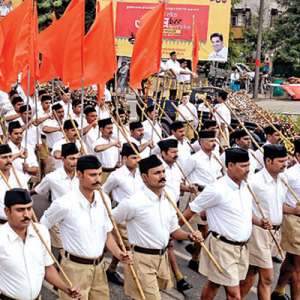
devout, or as a cultural identity.In his discussion Menezes rightly points out that “For many secular Hindus (as well as Christians) the ideal of ‘secularism’ is only threatened when right-wing groups create a ruckus.” Leaving the secular Hindus out, let us focus on the manner in which other groups in Goa seem to have rather limited notions of what secularism is, or what it should contain. Take, for example, the manner the Catholic Church in Goa found itself on the same side of the fence as Hindu rightist groups when it opposed the knowledge session on the tourist industry catering to gay tourists. In an op-ed at the time I forwarded the argument that even while the Catholic Church may be opposed to ‘gay culture’ there were still a range of very Catholic positions that they could choose from which to deal with the fact of the proposed knowledge session. In this particular case, given by the way the official statement from the Council for Social Justice and Peace (CSJP) was phrased, what they were forwarding was not so much an opposition to the exploitation of the exploitation of the sexuality of individuals for mercenary profit, but pushing a patriarchal agenda that dovetails neatly with that of the Hindu right.
There are two points that I seek to make here with regard to the establishment of a secular atmosphere in Goa; the first is that this atmosphere depends critically on the development of nuanced political discourse, and even more importantly developing an environment where respect of difference, whether that of opinion or life choices is an absolute value. A more nuanced political discourse would have allowed the CSJP to make its stand clear, and yet not necessarily fall into de-facto alliance with the very groups that would otherwise have sought to throttle the church.
However, it is neither respect for difference, nor nuanced political discourse that animates the example that demonstrates the manner in which Goan civil society is actively encouraging blind and cussed intolerance in its midst. A report in the Gulf Times drew attention to the fact that the Fatima High School in Rivona was temporarily shut down as a result of a deadlock between the institution’s management and the Parent Teacher’s Association (PTA). The PTA was apparently irked by the fact that 13 HIV positive children had been enrolled in that school and enforced their threatened boycott of the school.

The simple fact is that HIV is transmitted only through the exchange of sexual fluids, or blood, or via a mother to child during pregnancy, labour, delivery or breastfeeding. The actions of the PTA, therefore, can either be the result of appalling ignorance, or cussed desire to discriminate. Regardless of the reason the fact is that the future of a secular Goa lies not merely in whether we “throw out Muthalik and his ilk” but rests critically on whether we are able to develop a greater acceptance for difference of any sort. On whether our responses can be tempered by information, by compassion, regardless of the circumstance. At the end of the day it is this largely public culture that will forge the basis of secularism, not merely crying foul when right-wingers engage in hate-speech, or incite or engage in violence. And though clichéd, it seems a worthy time to remember the words of pastor Martin Niemöller in the context of the rise of the Nazi’s in antebellum Germany.
“ First they came for the Socialists, and I did not speak out—
Because I was not a Socialist.
Then they came for the Trade Unionists, and I did not speak out—
Because I was not a Trade Unionist.
Then they came for the Jews, and I did not speak out—
Because I was not a Jew.
Then they came for me—and there was no one left to speak for me.”
A version of this post was first published in the O Heraldo on 11 July 2014


