Showing posts with label rule of law. Show all posts

Sunday, August 27, 2017

On Vandalizations and the Rule of Law


Through the month of July, Catholics in Goa were under considerable distress following a spate of vandalizations both of crosses as well as grave stones. For a while the state seemed unable to address the situation until the police identified one Francis Pereira as the perpetrator of these acts. However, if the state authorities were under the impression that this arrest would satisfy civil society in Goa, then they were sadly mistaken. Incredulous that a fifty-year-old man could single-handedly engage in so much destruction, the arrest has become the butt of jokes and caustic comment from Goan citizens.

While the state may continue to protest its bona fides and swear that they have gotten the right man, it would do well for the authorities to take stock of the situation they find themselves in where the citizenry is deeply suspicious of them. This is at least the second instance where the citizenry have refused to accept the police’s version of events. The other incident that I refer to is that of the nature of Fr. Bismarque Dias’s mysterious death. The state authorities should realise that if this popular disregard of their findings becomes a systematic pattern, then not only will they lose the confidence of the people but it will seriously impact the law and order situation in the state. Indeed, if there is one single fear that we can take away from the grave vandalization case it is of the manner in which law and order has declined in Goa. Last month, this column reflected on the instance in the village of Mercês where rather than complain to the police, locals had taken it on themselves to avenge their abuse by rowdy tourists.

The Government on the other hand seems to not take this situation where the authorities are being increasingly disregarded seriously enough. As with most things the authorities seem to have grasped the wrong end of the stick with what law and order means. While the state should be concerned with preventing crimes like the vandalization of graves, they are instead busy building up a police, or surveillance state. Thus, rather than work to ensure that the peace of society is not disturbed, they sit back and allow for provocative rhetoric to fill the air – as in the case of the recently-concluded All India Hindu Convention. Once violence erupts, the authorities delightedly step in to augment the existence of a state with greater police surveillance. Civil society should take note that a greater police presence in the state is not a panacea. Rather, the biased way in which police can function, especially when the state is under the control of problematic forces should give one pause when considering, or demanding, greater police presence on the streets. Take, for example, the actions of police forces where they have stood by silently, or joined in the violence when Muslims are attacked by Hindu mobs. This was the case not just in Gujarat in 2002, but in various cases across India. Indeed, one was witness to such a scenario in Goa itself when I 2002 police stood by while property in Fontainhas was vandalised by Hindu right wing groups.  

There is another question that emerges when civil society considers the question of the vandalizations.  In addition to demanding that the state ensure better security, another response has been to blame Hindu nationalist groups, in particular the forces behind the All India Hindu Convention. While there is no doubt that greater state scrutiny is required of the Hindu Janajagruti Samiti, one should be careful to not blame the group for the violence without investigation. There are a plethora of Hindu nationalist groups, and not all of them are necessarily working with each other, even though they may all be working towards a common goal of a Hindu state. These groups are also working to undermine the strength of groups they see as being too soft, some groups demand deference because they have been around for longer are more established, and led by upper caste leaders. Thus, what is required is that, rather than wild allegations, we demand that a serious investigation be carried out by the state authorities and appropriate actions be taken. In this context, it falls on political parties that do not have representation in the legislature, but have ambitions of getting there, to take leadership. Political parties like the AAP or the Communists have funds and personnel and they ideally ought to direct these funds and personnel towards ensuring that the procedures and rule of law are followed. They should hire lawyers, and other professionals as needed, and ensure that there is a systematic follow-up. What I am arguing for, is that especially at a time when the rule of law, and the institutions that secure it, are collapsing we need to work harder to ensure that procedures are followed, and there is a firm focus on institution building.

What would be the appropriate response to these vandalizations? Catholics, and others concerned, should also be aware that these acts are possibly being carried out to gauge the responses of the public. If such is the case, responding with vigilante action would be devastating. Concerned groups need to do all they can to avoid emotional responses and insist that the state do its job. What we need at this point in time, where the state is actively abandoning its role as the upholder of law is to commit ourselves to a greater investment in institution building. What needs to be understood is that the Hindu right thrives precisely on the collapse of the secular state. We need to stem this collapse by a commitment to institution building and a respect for the due process of law.

(A version of this post was first published in the O Heraldo on 25 July 2017)

Thursday, June 29, 2017

Mercês, stereotypes and the broken system


A violent altercation in the village of Mercês between a busload of tourists from Maharashtra and about four residents of the village caused a stir across Goa.

There were a number of reasons why this incident garnered the attention it did. First was that the incident involved the use not merely of brute force, but of weapons including a sword, chopper and a club. Then there was the scale of the violence. The bus utilized by the tourists was also set upon by this group resulting in smashed windows and the like. And finally, as reported by the press, was the fact that it was not just men who were attacked but women and children as well.

What is interesting is that the site of the incident was considered a significant detail in the debates within Goa. As was obvious in discussions on social media, the residents of Mercês and the surrounding villages are said to be known for their violent behavior and their “goondaism”. In other words, the location was a confirmation of the guilt of the accused and the innocence of the tourists. Initial reports suggested that the four residents attacked the group of tourists over a petty incident. As it turns out, however, the tourists may not have been particularly innocent given that CCTV footage from the restaurant suggest that it was the tourists who began the altercation.

The focus on the residential identity of the perpetrators of this crime, and the manner in which the tourists were presented as innocent, demonstrates the processes of political injustice in our state. The people of Mercês and surrounding villages, just as the people of Salcete, are routinely held up as examples of rowdy and violent political behavior. Echoing the arguments of Vivek Dhareshwar and R. Srivatsan in their essay on the ‘rowdy-sheeter’, I would like to point out that the identification of the residents of these areas as rowdy elements is not innocent. Rather, it is deeply rooted in their caste, class, and religious identity. The residents of these villages tend to Catholics, not from brahmanised Catholic caste groups, former tenants of large landlords, and members of the working class. The tension in Goan politics since at least the ‘80s has been to harness the energy of these groups and make them serve the agendas of the elites, as in the case of the pro-Nagari Konkani language movement. The moment they disagree with elite opinions and seek to assert themselves, they are branded as rowdy.

The systematic and persistent denial of a voice in the formal institutions of democracy, and by extension a denigration of the rule of law ensures a rise in violent forms of protest and vigilante justice. Indeed, the incident in Mercês also assumes significance because vigilante (in)justice has come to dominate the Indian political scene. Whether it is lynching persons who are presumed to be transporting cows for slaughter, or persons who are innocent bystanders, vigilante actions seem to be a rising trend in the country.

Whether in the case of the incident in Mercês, or instances across India, vigilante actions can be traced to the fact that there is in fact a systematic destruction of institutions of law and order in the country. While the silence of the Prime Minister, and the active choices that the BJP seems to be making in nominating leaders definitely seems to have opened the flood gates of unlawful violence, it needs to be emphasized that the undermining of the institutions of justice delivery has been ongoing for decades. For example, had there been a firm commitment to the rule of law in our state, the initial altercation begun by the tourists would have been reported to the police. The locals would not have been toughs, and nor would they have taken the law into their own hands. People are encouraged to take the law into their own hands primarily because they see the organs of the state as unreliable in resolving violence, or complicit in violence.

My argument is buttressed by the fact that our Chief Minister has himself pointed to the possibility of a police-goonda nexus in the Mercês incident, only underlining the fact that the police are seen as an ineffective organ of justice delivery.Left unarticulated, however, is that the intervention of elected representatives in the functioning of the police systemis another one of the reasons for this perceived ineffectiveness. In addition to the possible police-goonda nexus, one also has the police-politician nexus, as suspected in so many cases, not least that of the rape and murder of Scarlett Keeling.

But it is not just politicians who are to blame; as many have remarked Goan society suffers from a profound lack of morality. Thus, whether politicians are the cause or the effect, the fact is that Goan society shamelessly indulges in immorality. Take, for example, the fact that a response of many Goans to the incident was that this incident would give a “further beating” to “Goa’s reputation as a tourist-friendly State”. If on the one hand the tourist in Goa is seen as an object to be used for the generation of money alone; on the other hand, under the guise of ensuring law and order the tourist is also often used as a way to destroy the guarantee of legal rights. Take, for instance, the way in which rather than address the larger issue with regard to public transport in the state, civil society groups seek to crush the taxi driver unions using the tired argument of the damage to the tourist trade. One is not concerned about rights, neither of the local, nor of the tourist. At the end of the day this cynical use of tourism only serves to further hollow out societal morality.

In various interventions in the press I have consistently pointed out that rather than being merely one way through which Goans earn money, tourism has become the raison d’etre of our existence. It is as if we exist, and Goa exists, merely to service tourists. Rather than addressing the question of rights, the issue becomes one of the impact on tourism. Even the issue of beef ban evokes responses that claim that the tourism industry will be affected. Rarely are the rights of locals to choose their diet, mentioned when criticizing the ban. The incident in Mercês should concern us not because the victims in this case were tourists, but because this incident is a demonstration of a breakdown of law and order, where both state and society systematically ignore the question of rights and justice, and people believe it is acceptable to take law into their own hands.

(A version of this post was first published in the O Heraldo on 27 June 2017)

Saturday, January 14, 2017

Social Media and Vigilantism


Could there be a sinister aspect to commonplace grumblings on social media? I recently came across a complaint on social media by a person who claimed that a young man on a bike had assaulted him and threatened him. The complaint which included a photo and a caption ended with the complainant asking the readers of his post “What should be done about such goondagiri [sic] where a law-abiding citizen has to face such humiliation that too by people who have shamelessly broken the law?”

Judging by the fact that the photograph was shared close to one hundred and ninety three times on social media the question was obviously rhetorical. The post was shared precisely to offer up the biker to public justice and ensure that he be shamed, ostracized or punished by other means. But this is precisely where we have to pause and take stock of our actions because these kinds of complaints and appeals to public justice are in fact calls to vigilante justice.

Vigilantes are groups of citizens who take it on themselves to undertake law enforcement in their community without legal authority, typically because the legal agencies are thought to be inadequate. Because vigilantism is often associated with mob justice we associate the term with howling mobs and violent action. However, the roots of vigilante actions lie well beyond these dramatic acts. Vigilantism does not begin with a lynching. Lynching is merely the highpoint of vigilante action.  Vigilantism begins when individuals abandon the state’s justice delivery system, prefer a kangaroo court of public opinion, and take it upon themselves to administer justice. When this happens what we have is the jettisoning of the system of due process through which facts can be established and a fairly objective decision can be reached.

What is particularly scary is that it is not just in the realm of social media that one can see appeals to vigilante justice. Indeed, one sees the mass media, whether print or audiovisual, also engaging in setting up popular courts, presuming guilt before a person is held guilty by the judicial system, and condemning these people in very forceful terms. These are in fact terrifying signs because it signals that we are increasingly moving towards a breakdown of a system of a rule of law, and due process, two concepts that ensure that justice is done.

Let us mine the post that inspired this column for examples. In this particular instance the complainant alleged that the biker rode on the sidewalk and responded violently to the polite request to follow the law and get off the sidewalk. If we rely entirely on the account on social media we have only one side of the story. What we do not have is the biker’s account. It is possible that the biker’s version may be radically different. He might argue that he recognizes that the bike should not be on the sidewalk but there were extenuating circumstances for the violation. He might also argue that while acknowledging his fault the complainant was not particularly polite but in fact aggressive. It is because there are always at least two versions to a conflict that one needs a judicial system manned by an impartial third party. Without an objective system of justice delivery we have no way to determine whether the photographer was in fact telling the truth. One would recognize that a social media complaint does not provide such a dialogical approach to conflict resolution but only presents one version that we often take as the gospel truth.

Central to a justice delivery system is the requirement of being dispassionate. In the post that I refer to, the complainant indicated that after being assaulted and threatened he approached the police who did not act on his complaint. It was the failure to get support from the logical agents of law and order enforcement that he turned to social media. As such, it turns out that the police were also responsible for the disaffection that drove the complainant to social media. If this was the case, why not post images of the allegedly errant police persons as well? Indeed, in the post I refer to the complaint ended the caption with statement indicating Please note that I don't intent [sic] to target any politician or policeman. My grouch is purely against such law-breakers who are full to the brim with arrogance.”

One of the significant features of vigilante justice is that the vigilantes very often attack the weak. Further, it is not the structure that is attacked, but individual manifestations of a larger, social problem. For example, we know that the sidewalk is hardly respected in our country. Sidewalks are often in a bad state of disrepair, and when available are routinely used to park vehicles. In such a situation it is little wonder that when people are rebuked for using their vehicles on the sidewalk they respond aggressively wondering why they are the only ones to be pulled up and not the others.

Interventions in social media are not innocent. They can often be the apparently innocent appeals that will eventually end in violent vigilante justice. It is imperative, therefore, that we resist the temptation to invite social ire against individuals on social media. To redress this problem what we need to do is to hold the state and its agencies responsible for their primary task; the upholding of a system of due process and the rule of law. It is no use utilizing social media as an alternative to the state system precisely because such a process is not only capricious but it threatens to empty the state of its responsibilities leaving behind a state only interested in asserting its powers. Neither of these situations is an ideal one.

(A version of this post was first published in the O Heraldo on  10 Jan 2017)

Monday, April 11, 2016

Divining reasons for the state of traffic


Last Christmas season my family and I fled tourist-invaded Goa for some peace and quiet. Little did we realize, despite friendly advice, that our destination, Sri Lanka, was also one of those holiday favourites that gets flooded at Christmas time. Along the five days that we were on the island, in addition to experiencing the incredible beauty of the country, we were also forced to spend much of our time in traffic jams, whether in the capital city Colombo, in Kandy, home of the famous Temple of the Tooth, or on the roads between these two cities.

I had been to the island-state some years prior to this family holiday, and I am sure that the country I witnessed was entirely different in terms of the amount of traffic that one experienced. If anything, my journeys then were experiences of smooth flows from one destination to another. It appears that the end of the decades-long civil war may have released extra income into the economy creating the kind of spurt in traffic that one witnessed on my last trip.


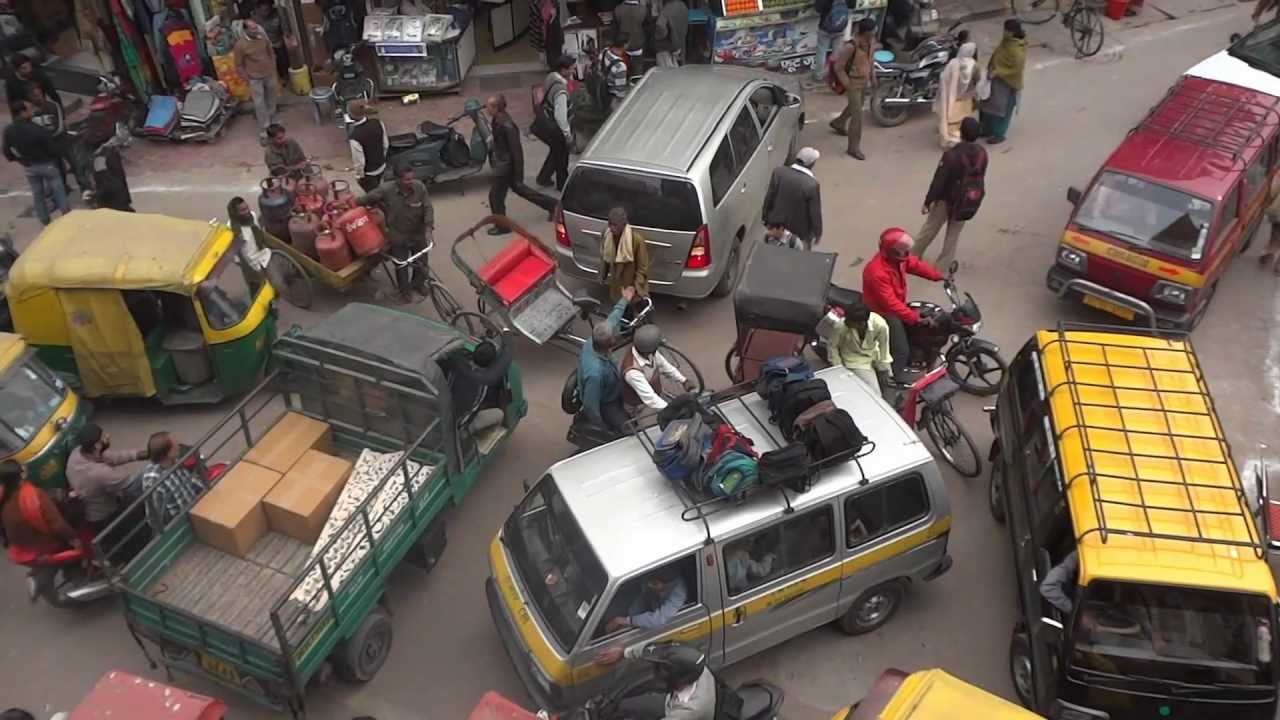
Yet, despite the fact that we spent a good amount of time in traffic jams our experience of traffic in Sri Lanka was not the same as that in India, and/or Goa. A traffic jam in India is an occasion for tons of honking and attempts by individuals to cut through the traffic jam by getting onto the opposite lane and charging to the head of the line. Others follow the lead of the first offender which ensures that within a matter of minutes the jam has been complicated beyond imagining and that instead of two lanes, one has multiple lanes, tempers rise and what could have been resolved within a shorter time takes forever to be repaired. 

In the course of the short stay in Sri Lanka my experiences of traffic jams were anything but similar. To begin with traffic jams were the result not of indiscipline, but because of the usual reason for the phenomena, too much traffic on small lanes. Rather than cut across lanes and try to short circuit the system people waited patiently for the traffic to move. It took us a couple of minutes to realize that our experience of the first jam in Sri Lanka was different from what we encountered in India. There was no honking! So strange was the situation that we could just not contain ourselves, and kept repeating this fact, over and over again, to ourselves, and then when we returned home to every one we met.

How can this difference between the road experience in India and Sri Lanka be explained? While in Sri Lanka I did notice that there were clear signs, at least in Colombo, indicating that lane discipline had to be maintained at all time, and the presence of traffic police at regular intervals. Speaking with the driver of the cab we employed we got the sense that the police are invariably on hand to take any offender to task. Responding to our queries he also suggested that it was unlikely that the police would accept bribes from offenders.

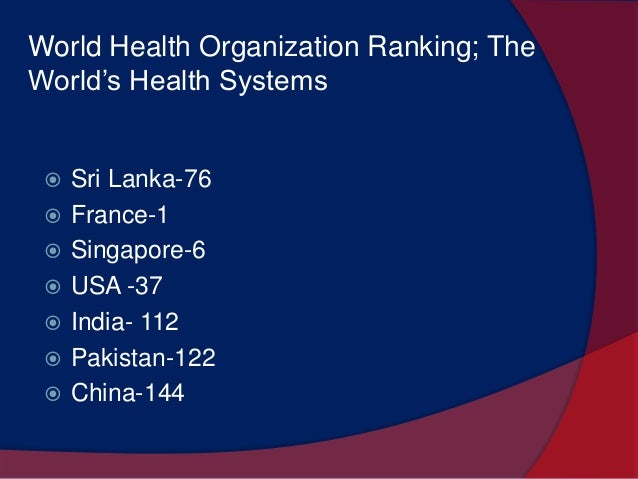
In the course of our journey, as we grew close to our driver, he shared much with us about his country. What I would like to focus on, as I try and resolve this question of the traffic discipline in Sri Lanka, is his narratives about the State. He spoke about the health care system that offered free, reliable and dependable service to all Sri Lankans. Trying to build a pattern from all that I had heard from him, I realized that in Sri Lanka the people were assured of an ever present state that was reliable, and dependable. I doubt that the same could be said about India. 

In India, one knows that one cannot rely on the state to maintain the law. The infrastructure of the state is invariably seen as tools to enrich those who gain access to public office. The enforcement of the law is not uniform. Any one in Goa will acknowledge that if one has connections to the officer’s superiors one can get away not only without a fine, but after having insulted the traffic officer. In other words, in India one knows that the state will not look after you, nor will it work to create a level playing ground. You have to look out for yourself in a dog eat dog world. In other words, it is not rules that help you get ahead in India, but the violation of rules, and muscling in on a scene gives you more than waiting patiently in line. The absence of a traffic etiquette in India is therefore the result of a failed state.

In sum, it seems that if there is a difference between traffic behavior in Sri Lanka and India, the reason can be pinned down to the fact that at least at the level of the average citizen, the Sri Lankan state is seen to be a neutral arbiter of rules that are taken seriously, while in India, one knows that the state has abandoned its role and made way for the so-called laws of the jungle to take root.

(A version of this post was first published in The Goan, on 10 April 2016)