Friday, October 2, 2015

Between the nation and state


Githa Hariharan is a fairly well-known novelist who has won acclaim through her works and was the recipient of the Commonwealth Writers Prize for Best First Book in 1993. Hariharan was in Goa because she is currently the Visiting Research Professor at the Goa University’s rather interesting Visiting Research Professor Programme (VRPP). The VRPP seeks to bring eminent figures in the fields of the liberal arts, social and natural sciences, and other studies to the Goa University. Even while this augments the exposure that students at the University enjoy, this programme also takes the University itself outside of the confines of the campus to various parts of Goa. Such has been the case of the course in creating a graphic novel, held in the Government College of Arts in Sanquelim, and the very many lectures that Gita Hariharan delivered in various parts of our state. One of these, on 4th September 2015, was a lecture titled “Reading the Nation through Short Fiction" at the International Centre Goa.

I was somewhat stunned by the choice of the topic; ‘the nation’. Haven’t sixty-seven odd years of Indian independence indicated that the project at forging the nation has been an utter failure? Yes, there are people who would argue that the nation is doing well. However, it is likely that these are not the people who have had to pay for the fiction of the Indian nation, more often than not with their lives, their broken and tortured bodies, and with experiences of exclusion and grinding poverty. These six decades have been built over the protests of groups all across the sub-continent, ranging from nationalists in Kashmir, Nagaland and other locations, tribals in Central India, Sikhs in the Punjab. All of these groups have been met with bloody violence and an Indian state machinery that has often violated the law and notions of human rights to maintain the figment of the nation. Then there are the daily violences suffered by persons who are Dalit, Muslim, or more recently, but just as violently, Christian. Sixty seven years of exclusion is what marks the history of the attempt to create an Indian nation.
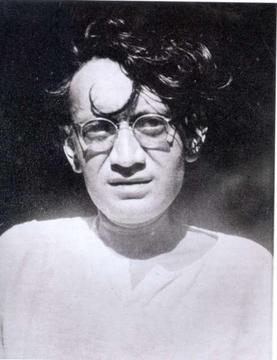
Hariharan’s choice made sense when it turned out that the fiction she chose for this particular lecture was that written by Saadat Hassan Manto. It made even more sense, when it became obvious that from among Manto’s many works, Hariharan chose those that dealt with the issue of partition of North India in 1947. It made sense because Hariharan’s choice indicated that North India is the locus of the imagination of the Indian nation. Any school student forced to read history will know that the Indian national imagination has a North Indian focus. The histories of peninsular India are awkwardly fitted into national narratives, very often almost as an afterthought. Similarly, the histories of locations beyond Bengal do not find space in these national histories. This focus and these exclusions make it quite clear that the Indian national project is a North Indian one. The nation is defined along North Indian lines, and the rest of us who have been tagged into this nation, are expected to meekly follow their leadership.
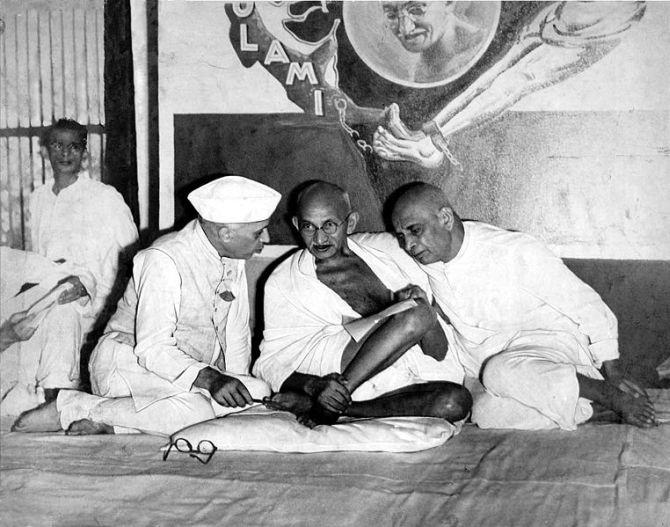
Hariharan’s choice of the violence of Partition clarified another fact about the Indian nation. The national project is not only about North India, it is also about the fratricidal politics of the North Indian elite. Independent India was imagined as a subcontinental empire ruled by brown sahibs. It was the fears of the upper-caste Muslim elites of North India that they would be excluded in this post-British India that gave rise to Pakistan. With the creation of Pakistan, the already incipient project of creating a Hindu India began, even under Nehruvian secularism, with renewed energy. The Indian national project has always been a Hindu project, and it creates space for those non Hindu upper castes who can snugly create Hindu histories for themselves.

While the choice of the nation was sufficiently strange, what was even more perplexing was that Hariharan chose to speak of the nation at exactly the time when the attempt to craft the Indian nation is being given particularly vicious attention under the premiership of Narendra Modi. To talk about the possibility of the Indian nation, especially at this point in time, is to in fact to mock the many minoritised groups within India. Rather than honestly recognise the exclusionary violence central to the project of the Indian national project, such discussions suggest that all that this project requires is a little tinkering to make it more palatable. Such suggestions ignore the fact that the problem lies not merely with the Modi government, but rather with the entire trajectory of Indian nationalism that has gotten us to these dangerous times.

It would have been more appropriate if, rather than speaking about the nation, Hariharan had chosen to speak about the construction of the Indian state. While these two terms are often clubbed together, there is a world of a difference between them. Nations do not naturally exist, they are imagined, often based on the imaginations of a dominant group, and then enforced on the rest of the population. Seeking to create a fraternal community national narratives almost never have space for the realities of exclusion. The state, on the other hand, is about power. There is no denial about this fact when talking about the construction of a state. However, the statal project is also is about the binding of that power by law, and recognising that there can be no ideal greater than the law when forging the state. The nation does not admit to this restraint. It is above law, and this fact can explain why with the horrifying growth of a shrill nationalism, the past few years has also seen the casual violations of legislations as well as natural law.

We would do well to recognise that the attempt to craft an Indian nation has failed and is an impossible project. Rather, we should turn our attentions towards seeing if from this mess of a nation, we can focus on crafting a just Indian state.


(A version of this post was first published on the O Heraldo on 2 Oct 2015)


Between Amy and Iris

Not so long ago I was struck by the differences in the lives of two women whose bio-pics I had the opportunity to view. First, the wildly-successful British pop artiste Amy Winehouse, and subsequently the New York-based fashion icon Iris Apfel.  

Amy, directed by Asif Kapadia, was released for viewing in 2015 and recounts the story of Amy Winehouse with an eye to her tragic death aged 27 from alcohol poisoning, on 23 July 2011. It has been said that Kapadia’s engagement with the life of Winehouse focuses on her battle with substance and alcohol abuse. However, owing to the deft manner in which Kapadia has dealt with Winehouse’s life story the film is quickly transformed into a larger comment about the times we live in.  The film deals with the problems attendant on substance abuse, broken families, as well as the media circus that grows around promising performance artists.

Crafted from over a hundred interviews, as well as access to home videos of Winehouse’s friends and family, some dating back to when she was still a girl, Kapadia’s film tells a tragic story. The film suggests that Winehouse’s addiction problems were aggravated through her almost violent passion for Blake Fielder-Civil, the man who would eventually be married to her for a period of two years, and who has claimed to have introduced her to crack cocaine and heroin.  However, the documentary suggests that the underlying reason for her susceptibility to both Fielder-Civil as well as substance and alcohol abuse was her family life when she was a girl.

The film is a document of the implications of dysfunctional families of our times. Amy’s descent into addition is said to be the result of the death of her grandmother to whom she was very close. The proximity to the grandmother, however, was in part the result of her father having abandoned the family even while she was a little girl. The film makes it clear that Winehouse’s father, Mitch Winehouse could have played a central role in preventing Amy’s slide into addiction had he only agreed to her friends’ urgings that she check into rehab, a situation captured in the lyrics of her song Rehab: “They tried to make me go to rehab but I said, 'No, no, no.'… I ain't got the time and if my daddy thinks I'm fine...” Watching the film, one gets the sense that Daddy was back in the picture only after Amy started turning into a star, busy making money from the life of a woman who desperately wanted the attention and love of a father who had been absent in her early years.

Witnessing the kind of media-attention that Winehouse received after she achieved fame, especially in the US, one wonders how any person, but especially a person without emotional support structures can deal with this kind of assault in privacy and person. Is any individual, leave alone a deeply insecure one, able to deal with the bank of hundreds of cameras exploding when one enters or leaves a room? Where, and how, does one learn to deal with the kind of stress, and misplaced sense of invincibility, attendant on such attention?

The answer is perhaps provided by the words of jazz-artist Tony Bennet, who was the last artist with whom Winehouse collaborated; "Life teaches you really how to live it, if you live long enough". The tragedy is that Winehouse didn’t live long enough.

Iris, the documentary on Iris Apfel by Albert Maysles is a film about someone who has lived long enough and seems to be dealing with fame rather well.  The film, released for distribution in 2015, quite literally follows the 93-year-old Apfel about her daily life, and records her musings on life, marriage, and spectacular success. The last came to her rather late in life when in 2005 the Metropolitan Museum of Art, almost as a last ditch effort to save a project curated Rara Avis, an exhibition that focused on her clothes and accessories. This is not to suggest that Apfel was a nobody prior to this exhibit; on the contrary, Apfel had already achieved more than a modest modicum of success through her work as an interior decorator and her textile initiative with her husband Carl Arpfel. When one compares their biographies, it is this long durĂ©e of her career, and the moment in which she achieves wild success that marks the difference between Winehouse and Apfel.

Another difference between the lives of Winehouse and Apfel that is striking when viewed through the lens of the films on their lives is their relationship with their spouses. While Amy had a problematic relationship with her husband, and a tumultuous family life, Apfel’s relationship with her husband Carl, who turned hundred in the course of the filming of the documentary, seems to have been a nurturing partnership that continues to sustain both of them.

What is most striking about Apfel, however, is that while it is obvious that she absolutely revels in her role as diva and celebrity, she also does not seem to take herself too seriously. She is frank about her lack of good looks, conscious that the beauty industry cannot fix the passage of time, and conscious also of the years of work before she became the focus of the camera bank. Success that comes late in life, may not be such a bad thing after all!

(A version of this post was first published in The Goan Everyday on 27 Sept 2015)

Friday, September 18, 2015

Shades of casteism


It is often the case that when speaking about caste-related problems one is accused of being casteist.  This is also true in Goa, where any discussion about the realities of caste power evokes accusations of being motivated by a personal dislike for brahmin groups, or of constantly “targetting” brahmins, especially—so the argument goes—given that the Saraswats are but a minority community; so any polemical attack on them amounts to casteism or communalism.

 But it is not casteism to speak about the violence of unequal power relations engendered by the presence of the caste system and the identities of caste. Rather, the conspiracy of silence around unequal power relations and the dominance of a single group, or a couple of groups, through caste privilege is what constitutes casteism. There is generally a deep silence about the violence of caste, and casteism operates when those who seek to speak about this violence, and challenge it, are accused of being casteist.

Let us be clear that in Goa, the Saraswats may be a small community, but they are a powerful community who hold much social, cultural and economic capital, and whether consciously or unconsciously, they wield power to ensure their continued hegemony. They fulfill the sociological category of “the dominant caste” constructed by the famous sociologist M. N. Srinivas. To expose the manner in which this power is wielded is not, to my eyes casteism. 

There are often suggestions, that “to be proud of one’s origins is not casteism”. Rather, casteism is when one “belittle[s] the origins of others”. This is an ingenious strategy beloved of many supporters of the caste system.  These proponents of the caste system fail to recognise that any identity of the self is invariably linked to identities of others. Thus, one can be brahmin only because others are not. Further, as a result of the operation of history, the brahmin identity is not an innocent identity. It is invariably the identity of oppressors. This is more so the case in Goa, where groups that claim a Saraswat identity, whether Catholic or Hindu, have controlled property, people tied to those properties, and attempted to control the rest of society too. There is not the space here to demonstrate fully how the assertion of a brahmin identity in Goa is invariably at the cost of demeaning a non-brahmin one, but any honest look at our society and history will bear this out.

It needs to be stated clearly, however, that the problem in Goa is not just with brahmins alone. There are other upper-caste groups, like the Chardos and the Desais, who despite their limited size similarly exert power owing to the manner in which they not just control landed property, but enjoy social privilege. Indeed, as the case of the Konkani Bhasha Mandal (KBM) will demonstrate, it is possible for Chardos to operate with the brahmanical matrix that the KBM embodies. As friend once commented, “for the Chardos, to be anti-brahmin is to be anti-caste”. What they all too often ignore is that they are a part of the problem, along with the brahmins.

It is this limited anti-brahmin agenda, instead of an agenda of anti-brahmanism that has ensured that the bahujan movement in Goa has missed a historical opportunity to forge a democratic polity. Instead, they have slipped into Hindu nationalism, precisely because the brahmanical logic of Indian nationalism have not been challenged. Take the constitution of the Bharatiya Bhasha Surkasha Manch (BBSM), which includes not just brahmins like Bhembre, but leaders of the bahujan castes, like Shashikala Kakodkar and Vishnu Wagh. Once again though, it is impossible to have Brahmanism, without the body of the brahmin, and it is precisely through the presence of brahmins in the BBSM that it gathers its symbolic strength. This is so because historically, it has been dominant caste groups, and especially brahmins that have set themselves up as arbiters of style and standard.

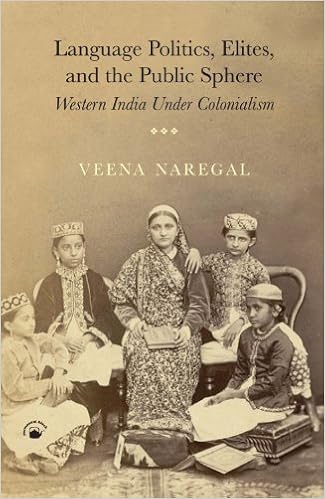
The power that Bhembre, Bhatikar, and other brahmins, Hindu or otherwise, claim to determine “standard”, whether of Konkani or otherwise, flow from the way in which upper caste individuals asserted their claim over languages in the late nineteenth century. In this context I would like to refer attention to the work of Veena Naregal in Language, Politics, Elites and the Public Sphere (2001) where she points out  that

“By the later decades of the nineteenth century, drawing on philological beliefs about the essentially interrelated genealogy of the Indian vernaculars and their common descent from the immaculate purity of the great and ancient Sanskrit language, English-educated individuals in different parts of the subcontinent could claim to constitute a transregional kinship with an immaculate high' cultural pedigree. An important part of this elite self-image was their shared status as custodians of 'correct' cultural practices. Thus, when giving the Wilson philological lectures in 1877, claiming descent from the noble brahmins of the 'ancient aryavarta' was, for the well-known orientalist scholar Bhandarkar, clearly, a way of enlarging through their dominance over the regional vernacular spheres”(p. 48).

It has been suggested that Uday Bhembre and Arvind Bhatikar are ‘good’ persons who have “the highest respect” for the Christian community in Goa. If they do, they have a very strange way of showing it, given that they have been suggesting Goan Catholics are anti-national merely for asserting their right to educate their children in the same English language that Bhembre and Bhatikar’s families are being educated. One wonders if these good persons have directed similarly vituperative language at the members of their own families. In any case, the assertion of the patriarchal right to dictate to other local communities is very much a part of brahmanical arrogance. An ideal way to show respect for the Christians in Goa would be for Bhatikar and Bhembre to cease their frightening hate-speech and support the right of these communities to determine the path of their own future.

(A version of this post was first published in the O Heraldo on 18 Sept 2015)

Friday, September 4, 2015

The Brahmin Double in Goan history


In his article, “The Brahmin double: the Brahminical construction of anti-Brahminism and anti-caste sentiment in the religious cultures of precolonial Maharashtra” ([2012] 2014), Christian Lee Novetzke discusses the cases of the Marathi bhakti poets Jnaneshwar and Eknath. Novetzke’s argument is that the image of Brahmin reformers is not as cut and dry as it is made out to be. Rather, he argues that these reformers were embodiments of what he calls “the brahmin double”. The brahmin double is the strategy through which a brahmin pokes fun of, or critiques other brahmins who are cast as bad, evil, or bigoted. In doing so, the brahmin operating as the good part of the double “provides one important way to separate Brahminism and Brahmins”. That is, the audience fails to see that the problem is not with individual brahmins alone, but also with Brahmanism. By deflecting critique toward individual brahmin figures, and not the system that produces brahmins and brahmanical structures, the good brahmin ensures that Brahmanism continues its grip over Indian society. Novetzke points out that a classic feature of the Brahmin double is that it always offers reform of Brahmanism, and never radical critique. Thus the Brahmin double ensures that there are superficial changes, even as the status quo is maintained.

Reading this argument, it occurred to me that recent Goan history offers great examples of the “brahmin double” over various generations. A previous column discussed Varde Valaulikar’s response to Raghunath Talwadkar. Valaulikar’s proposed that the Saraswat caste embrace the Konkani language as their mother-tongue while Talwadkar opposed this proposal pointing to the language’s association with lower classes, and castes, and with “defiled” Christians such as JosĂ© Gerson da Cunha. As pointed out in that column, Valaulikar’s response was not to condemn Talwadkar’s blatant casteism. Rather, he offered the suggestion that in fact the Catholic missionaries had learned Konkani from brahmins, and that da Cunha himself was a brahmin. In this equation, Talwadkar gets castigated as the bad brahmin, and Valaulikar effects the “brahmin double” move by ensuring that brahmin hegemony is not challenged, but rather paves the way for the Saraswat caste and associated caste groups to assert their claim over the Konkani language.

Another argument that I made in the earlier column was to point to the fact that Valaulikar’s project was carried forward by men like Uday Bhembre. To this extent, Uday Bhembre, and his associates, are contemporary embodiments of Valaulikar. Bhembre was a hero of the Konkani language agitation, a legend of his time. He was lionized as the man who went into the meetings of pro-Marathi activists and shouted out loud that Konkani, not Marathi was his mother tongue, at certain risk to his bodily integrity. The more important legend for my argument is his response when asked by pro-Marathi activists; “How can you claim Konkani as your mother tongue when your father claims Marathi as his mother tongue?” Bhembre’s famous response was “But don’t you know that my mother and my father’s mother are not the same person?” In the course of the Konkani language agitation, Bhembre was playing the Brahmin double, and his father, Laxmikant Bhembre, and other brahmins, were cast as the bad brahmins, who could not see that Konkani was the mother tongue of Goa. Through his actions Bhembre junior ensured that he deflected attention away from the fact that the Konkani that he and his companions were pushing was in fact not a Konkani of the bahujan masses, but the Antruzi dialect and the Nagri script, both associated with Valaulikar’s project of brahmin hegemony in Goa.

Today, with the kind of association that Bhembre is making with the RSS against the demands for the recognition of English as a state supported medium of instruction, you have younger Saraswat men who are effecting the strategy of the Brahmin double. Responding with horror to Bhembre’s suggestion, they point out that there are more Hindus than Catholics studying in diocesan schools that have switched from Konkani to English medium. What is interesting is that these arguments do not fracture the meaningless labels of “Christian community” and “Hindu community” invoked by Bhembre and others. This is not surprising given that this group is actively engaged in Hindu reform, a process which neuters dalit-bahujan assertions, and consolidates disparate caste groups into a single Hindu community usually under brahmin leadership or direction. Their rhetoric and activism is never really one of a radical rejection of caste hegemony, but of managing the anger against their caste group and its leadership of the political community Goa.

Another touchstone to use for evaluation would be their response to the demand that the Roman script be recognised on par with Nagari Konkani. These secular Saraswat will agree that there is a need for a more “bahujanised” Konkani, but will not budge when it comes to giving equal rights to the Roman script. Thus, what they are doing is trying to make Nagari Konkani, the vehicle of Saraswat hegemony in Goa, more palatable to the bahujans, even while they completely ignore the real issue of Romi Konkani.

It is important to underline that it is not my argument that these men are performing the strategy of the brahmin double deliberately. Very often our actions are determined not by our conscious selves but determined by the milieu in which we are raised. The response, therefore, is not to necessarily condemn these men. Our response ought to be to always be aware of the manner in which the social structure asserts itself, and thus question brahmin saviours, and make these saviours aware of the pernicious politics that they reproduce.

(A version of this post was first published in the O Heraldo on 4 Sept 2015)