Showing posts with label Brahmanism. Show all posts

Friday, May 27, 2016

AAP Goa as Colonial Agent?


While large numbers of its members are no doubt motivated by a genuine interest in redressing the many ills that plague Goan electoral democracy, the Aam Aadmi Party (AAP) in Goa could in fact be seen as antithetical to the pressing needs of Goans,  pushing an agenda that other national parties, operating from Delhi have done before. If the traditional national parties like the Congress and the BJP had helped, with the help of local elites, to usher in forces of unbridled capitalism in the guise of development and Hindu nationalism in Goa, AAP seems to be operating within this same model. The only difference is that AAP promises that it will deliver Goa from rampant corruption. And yet, when examined from the perspective of the nexus between New Delhi and local dominant caste landed elites AAP’s claims of difference and salvation fall flat on its face.

To examine the claim of this Delhi-Goa colonial nexus we need to explore the case of the much-vaunted Goa Bachao Abhiyan (GBA) or Save Goa Movement. While it was spurred on by the genuine concerns of many Goans as to the way Goa was being destroyed, one could also see in it the operation of colonial power. The GBA appeared at a particular moment in Goan history, when land in Goa came to be eyed by external, i.e. Indian, realtors. Thus, the existing concerns of the larger populace were whipped to frenzy by the local elite to ensure that it was the interests of the local land-owning classes and construction firms that was secured. After an initial amount of muscle-flexing, that demonstrated to external realtors the power of the local elite the movement was effectively killed, when the representatives of the GBA on the Task Force for the Regional Plan (RP) 2021 resigned their positions.

As a result of this regrettable history, nothing emerged out of the GBA except for a paralysis of the Regional Plan process, even as the real-estate business continues as usual.  Indeed, the lesson that if foreign capital wants to enter Goa it would have to be in partnership with the local elite seems to have been learned admirably in case of the usurping of Tiracol by Leading Hotels. This unfortunate outcome, however, is very much in keeping with the history of popular movements in Goa since 1961, where the manipulation of the Goan population, and especially the bahujan Catholic populations of the Old Conquests, by dominant caste elites has been a standard. In every movement, one sees that the upper caste elites gain greater autonomy for unaccountable behavior, while the masses that agitate receive no benefit at all.

These forms of Goan politics seem to be repeating themselves under the AAP. To begin with, as many have pointed out, the way the AAP is operating, by focusing on the fears of the populations in the Old Conquests suggests that it is repeating this old formula of merely harnessing Old Conquest fears to ensure the success of the upper-caste and elite class leadership. While one need not be immediately suspect if one is upper-caste, the fact that the leadership of AAP, both in Goa, as well as in Delhi is almost exclusively upper-caste is a matter of grave concern.

What is also interesting about AAP Goa is that one can deduce in it the desire of well-meaning non-Goans who have settled in Goa to influence local politics. This desire to participate is welcome, indeed many of them come with exciting ideas that we can benefit from. But one nevertheless needs to question the balance of power under which this happens.  A number of Goa’s problems are in part the result of Indian desires to settle here, as well as the manner in which Goa has been hitched to India. As individuals, we are very often also unconscious representatives of large structural powers. As such, the fact that the articulation of so much of AAP’s outreach is in compliance with a national culture, manifest through the Gandhi topi, the Hindi sloganeering, even the Hindi language outreach of the leaders, makes one question which structural interests are being served, the nationalist designs of the AAP, or those of the average Goan? Is Delhi, or the desires of the national elites, dictating what happens in Goa, or do Goans dictate what happens in Goa? The dominance of Hindi in the outreach of AAP Goa seems to suggest that it is formulating an agenda that wishes to be in sync with the assumptions of the Delhi outfit.  In such a context, especially where Kejriwal chose to holler Bharat Mata ki Jai, what is the position of AAP on Special Status for Goa?
Further, AAP Goa has the grandiose scheme of contesting all 40 seats, with the apparently single point agenda of combating corruption. But is there really a lack of critical issues in Goa that one must focus solely on corruption? In this context, it should be noted that in a rather long interview with the Indian Express, Valmiki Naik secretary of AAP Goa, noticeably skirts issues critical to the bahujan and marginalized groups, such as that of the vexed Medium of Instruction issue. Besides, it can argue that corruption narrowly conceived as economic corruption alone is the most important agenda only when one is speaking from an upper-caste position. Viewed from a bahujan perspective, whether Hindu or Catholic, it is the destruction of the twin evils of Brahmanism and Hindutva that emerges as the priority. While not an insignificant issue, dealing with corruption can come later. A failure to realize this priority, once again because it is the local dominant castes that are in control of AAP Goa, will ensure that the placing of 40 candidates in the fray will only result in the splitting of the anti-BJP vote, and the BJP’s eventual success. A refusal to heed this reality will suggest that AAP’s designs are geared more towards local dominant caste assertion, as well as towards the desire of AAP Delhi to make a national mark, rather than addressing critical Goan needs.

A leaf from Goan history should offer good reason why AAP Goa should heed this caution. In the run-up to the first elections In Goa under Indian rule the Indian National Congress (INC) was extremely confident of a sweeping INC victory in the 1963 elections. Such was its confidence, that as Parag Parobo has pointed out in his book on early post-colonial Goa, the All India Congress General Secretary K. K. Shah announced that the INC did not require any special manifesto for Goa. All of this while tickets were given almost exclusively to individuals from dominant castes. Just as supporters of AAP today dismiss the need for a regional party, so too in 63 the INC was also confident of success because of its national location. And yet the INC experienced a crushing defeat at the polls. Not only did they not gain a single seat from Goa, but in many locations the candidates lost their deposits. The moral of that election was that local issues, not national were critical to electioneering, and secondly that issues of caste justice cannot be ignored and simply dismissed. The result of that election should offer sobering advice for AAP Goa that in many ways could be said to be repeating those mistakes.

This is not, however, necessarily the end. Merely because it currently threatens to operate as an agent of colonial rule, there is no reason, especially given the genuine concerns of large numbers of its members, that the AAP in Goa cannot reinvent itself. The question is, will it?

(This post was not published in any newspaper.)

Friday, September 18, 2015

Shades of casteism


It is often the case that when speaking about caste-related problems one is accused of being casteist.  This is also true in Goa, where any discussion about the realities of caste power evokes accusations of being motivated by a personal dislike for brahmin groups, or of constantly “targetting” brahmins, especially—so the argument goes—given that the Saraswats are but a minority community; so any polemical attack on them amounts to casteism or communalism.

 But it is not casteism to speak about the violence of unequal power relations engendered by the presence of the caste system and the identities of caste. Rather, the conspiracy of silence around unequal power relations and the dominance of a single group, or a couple of groups, through caste privilege is what constitutes casteism. There is generally a deep silence about the violence of caste, and casteism operates when those who seek to speak about this violence, and challenge it, are accused of being casteist.

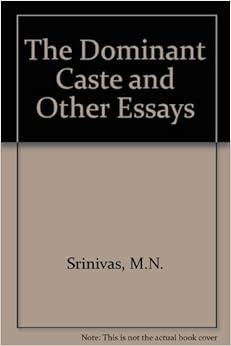
Let us be clear that in Goa, the Saraswats may be a small community, but they are a powerful community who hold much social, cultural and economic capital, and whether consciously or unconsciously, they wield power to ensure their continued hegemony. They fulfill the sociological category of “the dominant caste” constructed by the famous sociologist M. N. Srinivas. To expose the manner in which this power is wielded is not, to my eyes casteism. 

There are often suggestions, that “to be proud of one’s origins is not casteism”. Rather, casteism is when one “belittle[s] the origins of others”. This is an ingenious strategy beloved of many supporters of the caste system.  These proponents of the caste system fail to recognise that any identity of the self is invariably linked to identities of others. Thus, one can be brahmin only because others are not. Further, as a result of the operation of history, the brahmin identity is not an innocent identity. It is invariably the identity of oppressors. This is more so the case in Goa, where groups that claim a Saraswat identity, whether Catholic or Hindu, have controlled property, people tied to those properties, and attempted to control the rest of society too. There is not the space here to demonstrate fully how the assertion of a brahmin identity in Goa is invariably at the cost of demeaning a non-brahmin one, but any honest look at our society and history will bear this out.

It needs to be stated clearly, however, that the problem in Goa is not just with brahmins alone. There are other upper-caste groups, like the Chardos and the Desais, who despite their limited size similarly exert power owing to the manner in which they not just control landed property, but enjoy social privilege. Indeed, as the case of the Konkani Bhasha Mandal (KBM) will demonstrate, it is possible for Chardos to operate with the brahmanical matrix that the KBM embodies. As friend once commented, “for the Chardos, to be anti-brahmin is to be anti-caste”. What they all too often ignore is that they are a part of the problem, along with the brahmins.

It is this limited anti-brahmin agenda, instead of an agenda of anti-brahmanism that has ensured that the bahujan movement in Goa has missed a historical opportunity to forge a democratic polity. Instead, they have slipped into Hindu nationalism, precisely because the brahmanical logic of Indian nationalism have not been challenged. Take the constitution of the Bharatiya Bhasha Surkasha Manch (BBSM), which includes not just brahmins like Bhembre, but leaders of the bahujan castes, like Shashikala Kakodkar and Vishnu Wagh. Once again though, it is impossible to have Brahmanism, without the body of the brahmin, and it is precisely through the presence of brahmins in the BBSM that it gathers its symbolic strength. This is so because historically, it has been dominant caste groups, and especially brahmins that have set themselves up as arbiters of style and standard.

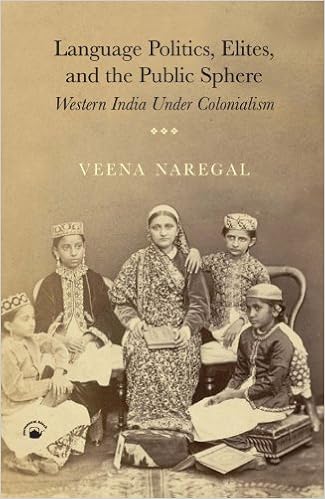
The power that Bhembre, Bhatikar, and other brahmins, Hindu or otherwise, claim to determine “standard”, whether of Konkani or otherwise, flow from the way in which upper caste individuals asserted their claim over languages in the late nineteenth century. In this context I would like to refer attention to the work of Veena Naregal in Language, Politics, Elites and the Public Sphere (2001) where she points out  that

“By the later decades of the nineteenth century, drawing on philological beliefs about the essentially interrelated genealogy of the Indian vernaculars and their common descent from the immaculate purity of the great and ancient Sanskrit language, English-educated individuals in different parts of the subcontinent could claim to constitute a transregional kinship with an immaculate high' cultural pedigree. An important part of this elite self-image was their shared status as custodians of 'correct' cultural practices. Thus, when giving the Wilson philological lectures in 1877, claiming descent from the noble brahmins of the 'ancient aryavarta' was, for the well-known orientalist scholar Bhandarkar, clearly, a way of enlarging through their dominance over the regional vernacular spheres”(p. 48).

It has been suggested that Uday Bhembre and Arvind Bhatikar are ‘good’ persons who have “the highest respect” for the Christian community in Goa. If they do, they have a very strange way of showing it, given that they have been suggesting Goan Catholics are anti-national merely for asserting their right to educate their children in the same English language that Bhembre and Bhatikar’s families are being educated. One wonders if these good persons have directed similarly vituperative language at the members of their own families. In any case, the assertion of the patriarchal right to dictate to other local communities is very much a part of brahmanical arrogance. An ideal way to show respect for the Christians in Goa would be for Bhatikar and Bhembre to cease their frightening hate-speech and support the right of these communities to determine the path of their own future.

(A version of this post was first published in the O Heraldo on 18 Sept 2015)

Friday, August 21, 2015

Bhembre, Nagri Konkani and the project of Brahmin supremacy


Some time ago, speaking on the BBSM’s platform against the assertions of FORCE Uday Bhembre, is reported to have represented “the FORCE action as not a mere step for English medium but a revival of the Portuguese agenda to denationalise Goans from its language and culture.” In addition, Bhembre suggested that, “‘English medium is a step of deculturisation, leading to the ultimate agenda of denationalisation. These are the same people who line up in front of the Portuguese Consulate for Portuguese passports. Tomorrow, these people would not hesitate to chant a slogan – Viva Portugal’”. Bhembre is not the only person to have made these suggestions.  Arvind Bhatikar is reported to have made similar statements. 
 
Persons familiar with recent history will not be surprised that Uday Bhembre is associating with the Hindu nationalist RSS and engaging in hate speech against the Catholics in Goa. However, at least the 80s this is the man who was hailed by the hierarchy of the Catholic Church as one of the most secular leaders of Goan society. How then, did this switch take place?

This confusion will be allayed, and Bhembre’s recent statements make sense, if we place him within a tradition that seeks brahmanical hegemony over both Konkani and Goa.


For this it is necessary that we go back into the past, to The Triumph of Konkani penned by Vaman Varde Valaulikar (translated by Sebastian Borges, 2003), fondly known to his spiritual children as Shenoi Goembab. The first chapter of Valaulikar’s polemic seeks to establish that Konkani is the mother-tongue of Goa. This task was important for Valaulikar, because he was in fact trying to persuade members of his caste group to accept Konkani as their mother-tongue. This was not an easy task, because many of them, like a certain Raghunath Ganesh Shenoy Talwadkar, identified Konkani with the Catholics of Goa. Valaulikar spends some time in this chapter responding to Talwadkar’s arguments.

What is very clear from reading the polemic is that Talwadkar had a horrific distaste for Christians. Valaulikar indicates that Talwadkar had disparaged Dr. José Gerson da Cunha as a “defiled Christian”, “bigot”, and “goanese”; and had indicated his argument against adopting Konkani as a mother tongue because it was a Catholic tongue derived from the language of “the very low classes viz. fisherfolk and farmers (p.16).”


Valaulikar’s response to Talwadkar is very interesting. To the suggestion that Konkani is a language of lower caste Catholics, Valaulikar’s suggests that while Konkani may have been developed by the missionaries, these “priests in Goa learnt their Konkani from the Brahmins alone (p.21).” In other words, he dismisses the possibility that humble folk may have been at the root of developing the language. With regard to da Cunha, Valaulikar’s response is even more revealing. Rather than tick Talwadkar off for his prejudices, Valaulikar’s responds, “Dr. Gersonbab is certainly not a religious fanatic; he is a large-hearted, virtuous scholarly Brahmin who, having been born in Goa, endeavoured to spread worldwide the glory of his motherland (p.32).” In short, what Valaulikar stresses as redeeming about the language and da Cunha is the fact that they are both brahmin.

This reference to history is to highlight that, while Valaulikar’s project may have been about Konkani, it was also about establishing Brahmin hegemony over the Konkani language. The period in which Valaulikar lived and worked was the period when dominant castes across India, and especially southern India, were preparing to create linguistic homelands where they could rule the roost.  If the Saraswat caste was to compete with others, it was necessary that they have both a territory and a language. To fulfil this task, it was important to convince people like Talwadkar that Konkani was indeed their language. To do this, it was necessary to take Konkani away from the labouring castes, in particular the Catholic bahujan, both in Goa and especially in Bombay, and convert it into the property of the Brahmins. This was done by constructing a history that suggested Konkani was developed by brahmins and creating a hitherto unknown language, Konkani in the Nagri script. This also required that the development of Konkani during the colonial period be erased. The tragedy is that this period of the early to mid-twentieth century was exactly the period when the Catholic bahujan, drawing on Christian and European sources, were crafting a golden period for Konkani by reading, writing, composing music, and crafting theatre in the language. To make Valualikar’s fiction into fact required that history itself be denied, and this is why Bhembre wilfully ignores a complex Goan history to make the hateful suggestions about denationalisation.

This is the common link that joins the appeal of Marathi to the bahujan of Goa from the ‘60s to the ‘80s, the fight for the official recognition of Konkani in the Roman script, and the demand that the Government support English language as a medium of primary education. All of these are directed against Brahmin and brahmanical oppression, and it for this reason that brahmin supremacists like Bhembre have been opposed to all three of these liberation projects. It is possible that Bhembre is not in essence a Hindu nationalist, but has a more limited agenda of Saraswat hegemony in Goa. However, given that Hindu nationalism is a project that seeks, and sees, brahmins as the natural rulers of the land, it is little wonder that Bhembre makes common cause with the RSS and the BBSM.

(A version of this post was first published  in the O Heraldo on 21 Aug 2015)


Wednesday, November 16, 2011

The Tejpal Factor: Trigger finger of the colonial gun


You already know that the recently concluded Thinkfest, organized by Tehelka, was partly in the news for the wrong reasons. In addition to being hosted by alleged violators of the coastal zone regulations, and being backed by mining interests, serious charges had also been brought against the editor of Tehelka, Mr. Tarun Tejpal. One of these charges was brought by an anti-mining activist, Mr. Hartmann de Souza, who alleged that Tejpal had deliberately silenced a critical story on the illegalities involved in Goa’s mining industry. Subsequently, Tejpal got into trouble for making a suggestion that when people come to Goa, in this case guests at the Thinkfest, high on their priority was engaging in sexual and other sensorial excesses.

Tejpal responded to Mr. de Souza in a profoundly insulting riposte in the Hindustan Times, attempting to deny the charges of silencing the mining story; and denied the charges regarding his statement at the Thinkfest. In his rebuttal, de Souza piled one fact upon another to demonstrate the hollowness of Tejpal’s defence. One came away from reading de Souza’s response to acknowledge that there was indeed something sticky about Tejpal, Goa and the mining issue. What this systematic destruction of Tejpal’s fig leaf left untouched however, was the colonial thinking that Tejpal had demonstrated in his response to de Souza, and which seems to have manifested itself in his alleged statement at the Thinkfest.

Tejpal’s response to de Souza commenced with the title ‘Albert Pinto ko gussa kyon aata hai’ (What makes Albert Pinto angry?). For those not in the know, the title refers to the 1981 film by Saeed Mirza featuring the socio-political dilemmas that face a young working-class Catholic man in midst of the socio-economic turmoil of Bombay in the 1970’s and 1980s. Interestingly, while the film itself offers a critical and sympathetic look at a subalternsocial group that in addition to being a religious minority was further marginalized economically and politically, Tejpal’s title does the opposite. If there is a link to Bollywood in Tejpal’s title, then it is to the ‘Anthony Gonsalvez’ from the film ‘Amar, Akbar, Anthony’ (AAA). If Mirza’s film paints a realistic likeness of a community, AAA paints the Indian west-coast Catholic into a caricature. This caricature is not unfamiliar to us, Bollywood repeatedly casts, dismissively, the Goan-East-Indian communities  as jolly (read alcohol-charged) fellows, ready for the singing and dancing. One cannot really expect them to mount a serious argument, and they are at best given to spontaneous bursts of emotion; like children really. This reading of Tejpal’s title is borne out by the manner in which he structures his response, where he rebuts every allegation, only by mocking de Souza’s alleged inability to follow an argument, or his alleged collapse into hysterical anger. The underlying message of Tejpal’s response is unmistakable; you can’t take this de Souza fellow seriously, discussing with him being an experience akin to arguing with a child (or a drunk). This was a colonial tactic too. The white-man assumed a colonial burden of educating the childlike noble savages into civilization, and the techniques of democratic governance.

Tejpal then takes up another technique used by the white man in his colonial drive. One of the justifications for colonialism was the inability of the colonized native to effectively harness the resources of the locations they lived in. The colonizer was effectively doing them a favour by effectively exploiting the local resources for development. Tejpal informs us in his response to Mr. de Souza that “the house we bought was an old ruin in an inner village”. In his rejoinder to this riposte, de Souza informs us that there were also words like “I mean, look at Moira man, it’s a dying Goan village”. Tejpal would perhaps prefer if we did not rely on de Souza’s version of the conversation between the two of them, but it does not change the way in which we read Tejpal and his statement. The point of Tejpal’s argument is clear, he is doing Goa and Goans a favour by buying an ‘old ruin’ that Goans themselves (shame on them) do not value, and he is going to breathe life into it. Could the colonial logics be any clearer? The colonial master values (the delicate Goan architecture) what the local savage (the Goan so blindly destroying his own culture) does not. 

This logic of saving has been a part of the rhetoric of a good number of those who come into Goa buying Goan property, and oftentime home-bred Goans themselves. To make this argument is to fail to see the complex mix of reasons, the socio-economic and political reasons, why Goan homes are being pulled down. To blame the Goan is all too easy, but then this easy response is part of the colonial technique of simplifying matters so that the more complex argument brought on by the colonized seem like misplaced anger, and blind stupidity. We should not forget the histories of other colonized places, where impoverished persons of the local communities (be they the First Nations of America, or the adivasis of Central India, the aborigines of Australia) were first impoverished, and then made to sell to the colonizer what they would not have contemplated selling before. This process of impoverishment, and forced selling of livelihood and history, is not uncommon even today in large parts of India, not least in Central India.

Tejpal does not see himself as part of a colonial machinery. After all how could he, given that he sees himself as the good guy fighting against the evil forces of corporate greed. But perhaps Tejpal has not followed his own logic carefully. In his response he indicated that he pleaded with de Souza to make space for ‘complexity, in an intricately intertwined world.’ If we acknowledge this intricate intertwining that Tejpal suggests, then we must also acknowledge that while we fight the good fight elsewhere, we are also implicated in the evil conquests elsewhere.

The problem with the left-leaning Indian liberal is that they do not realize that they are as Indian as the Indians they fight on other fronts. Despite their battles, they share many traits of an Indian-ness, and they too are engaged in an Indian national project, though they differ on the tiny details of this project’s agenda. And so it is, when de Souza protests against the kind of colonial enterprise that Tejpal is associating with in the Goan context, Tejpals suggests that ‘I suspect, for him if it isn’t Goa it doesn’t count.’ What is this if not the kind of charge of anti-nationalism that gets leveled against all those who protest against the excesses of the Indian Union’s colonial project, whether it is in the mountains of Kashmir, the jungles of Jharkhand, or the banks of the Brahmaputra? Tejpal leveled this charge against de Souza three times, ignoring the personal history of a man, committed to another kind of Indian-ness.

The Indian left-liberal may oppose Hindu fundamentalism, but this is largely because they don’t like this ‘return-to-the-Vedas’ kind of Brahmanism that the RSS pushes. On other fronts, they will push their own particular brand of Brahmanism, a form that Pandit Nehru was particularly fond of. One could call this, ‘playing the white man’. On the one hand Kashmir is important because it stresses our Aryan roots, on the other hand Goa is important because as long as they continue to keep up this ‘piece-of-Europe-in-India’ story, they can continue to pretend they are white people. Let us not forget the alacrity with which the former play-spaces of the white masters were taken over by the post-colonial Indian babu; from Lutyen’s Delhi, to the Himalayan and other hill-stations, Pondicherrry, and Goa.

In light of the colonially loaded sub-text of Tejpal’s response to de Souza, one should not be surprised if Tejpal did indeed make those vile remarks in the course of the Think Fest. But we would do ourselves an injustice if we restricted our gaze to Tejpal alone. The larger issue is that there are so many Tejpal’s out there, busy pushing a contemporary colonial agenda. These Tejpals exist both within the ranks of the 'insider' as they do within the 'outsider'. The issue is, what do we do about them?

(A version of this post was first published in the Gomantak Times 16 Nov 2011)