The problem around Goa’s Medium of Instruction (MoI) did not begin this year, nor did it begin in the 1990’s when the backbone of education in Goa, the Diocesan supervised schools switched their MoI from English to State Konkani. The roots of this problem lie all the way back, at the turn of the nineteenth century toward the twentieth. This was the time when Konkani was being set-up as the ‘mother tongue’ for Goans through the hand of not only Varde Valaulikar (Shenoi Goembab) but other (Catholic) intellectuals as well. Indeed in his later years, Valaulikar got a good amount of support from Catholic intellectuals, making his effort secular in the sense that it was a project that cut across religious divides.
What has not adequately been discussed however is that beyond this cross-religious collaboration there was also a caste-class divide that compromised the secular potential of this Konkani language project. Valaulikar’s Konknni was seen by non-brahmin Hindus as a Saraswat Brahmin project, that presented the Saraswat dialect alone as the perfect form of the language; while the Catholic intellectuals who supported this project, saw value in this project as a way of civilizing those Goan Catholics (both in Bombay and Goa) who came from non-dominant castes and were largely working class.
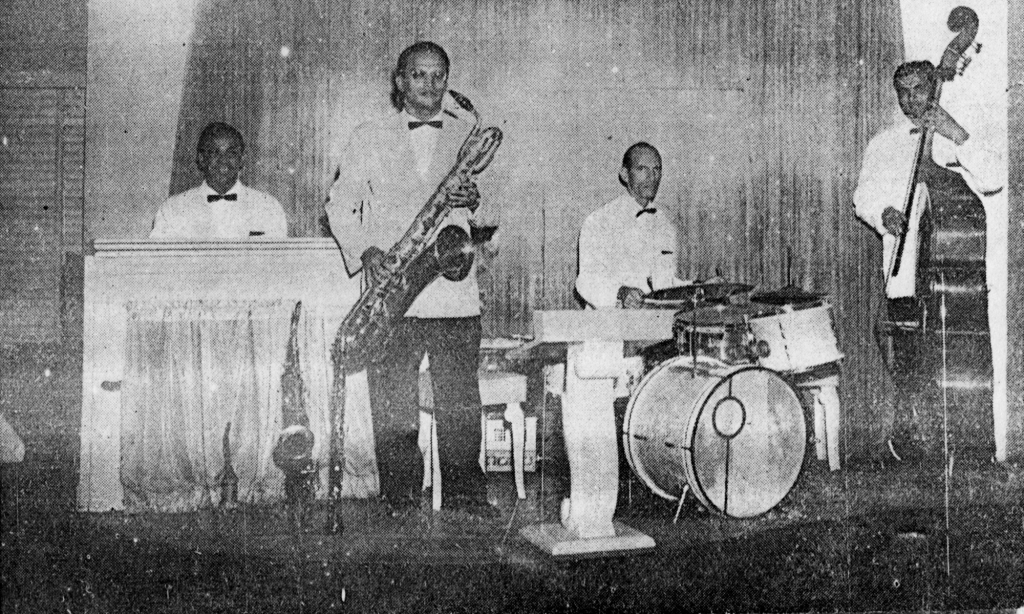
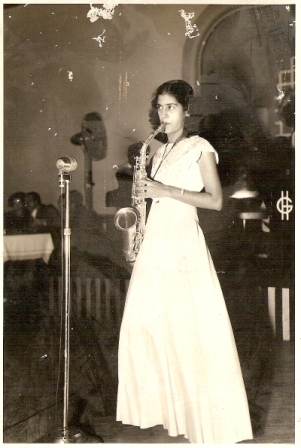
 This working class had no real need for a Konkani language project however. They produced abundant literature of all forms for their consumption, and worked Concanim into the cultural forms that gave them livelihood. Thus they produced Concanim music to the form of the Waltz, Rhumba, March, Swing and Jazz (among others). Concanim lived among them, as it did not for the elites who moved this political project. For the Catholic elites Konkani was a way for them to not only civilize their ‘lower’ brethren, but to also regain a cultural authenticity that the nineteenth century theorization of society told them they had lost. For the largely Brahmin movers of the project, Konkani was not only the primary tool to forge one single Saraswat caste from multiple Konkana jatis along the west coast, but also a political tool through which they could carve an area for their dominance. If Pune and Bombay belonged to the Marathi Brahmins, who insulted and ridiculed them, then Goa would be the Konkana base. These two trends are the basis of the eventual decision to recognize Konkani (in the Nagari script) as the official language of Goa.
 In making this move, Konkani was cast into more familiar forms of Indian nationalism. As in the case of Hindustani, Nagari alone- primarily for its brahmanical origins, though ‘scientific’ arguments were also thrown in - was seen as Indian. As a result of the historical model for Hindi that Konkani follows, the burden of North Indian communalism weighs heavily on the Konkani project. With this formulation, the Hindu and Brahmin came to be seen as the font of cultural authenticity. As a result of the elite (and hence minority) location of this project, and its nature as a civilizing mission, official or State Konkani could not walk normally as a language. The Konkani language project was marked by multiple anxieties. Because of its minority location, it could not be popularized; it had to be constantly under the control of a minority group. Because it was a civilizing mission too, ‘deviant’ forms could not be permitted. Because it was not based on a living social reality but an imagined past, it could not look to the future.
 When cast in this way, it is little wonder that State Konkani did not find sync with a large number of Goans, and especially the Goan Catholic migrant working class, who were (and despite the allegations of the BBSM and its ilk, remain) the lifeblood of this language and its cultural forms. For this group Konkani was so much theirs, it sat lightly, but no less cherished, in their basket of social capital. No fuss about it. It would pass on to subsequent generations as it had to them, without passing through school. School was for where they learned other tricks and trades. The official Konkani project is to make them Konkani in an official and nationalist sense, the Goan Catholic working class, already knows it is Concanim enough.
Once we recognize that there are at least two Konkanis at work in the Goan cultural sphere, things begin to make a lot more sense. We can see that the official and stunted State Konkani may in fact be killing a vibrant unofficial one. Recognizing the working class history of unofficial Konkani, would also point us in the direction where Concanim can be a vehicle for an inclusive secular culture in the State.
 It seems that it is this history that Armando Gonsalvez and his collaborators have connected with in their ‘Konkani Rocks’ project. It has been interesting to see the manner in which this project slowly evolved from ‘Jazz’ to combining ‘Jazz’ with ‘Konkani’. The beauty of the whole project is that because it delves, quite unselfconsciously into lived (and living) Concanim history, there is hardly a contradiction in the project. It is fun and it draws the crowds, persuading us without being heavily pedantic that Konkani can and indeed is fun. Simply put, it ‘Rocks!’
In this project, Konkani is not a nationalist millstone round our collective necks. On the contrary, it connects both with cosmopolitan past, and a cosmopolitan future. Armando’s formulation, ‘English Talks, Konkani Rocks’ twines the pragmatic approach of the Goan working class perfectly. There is no need for either to be displaced since each language has its place, and fulfills a definite need. Furthermore, 'Konkani Rocks' returns to a history that many of us, not just those pushing State Konkani, have done much to hide and forget. These actions, of shame in our working class history, have done much to ensure a shame in Concanim. By holding it, albeit indirectly, as something worth returning to, 'Konkani Rocks' reminds us that the Goan Catholics working class past is nothing to be ashamed of. On the contrary, it was a period that generated the culture that we today recognize as Konkani.
That this formulation is also concerned with what the BBSM claims to be concerned with is obvious from a column Armando penned some days ago. He pointed out that ‘When I felt that my children were not so keen on learning the language [Konkani], I was all the more pained because I myself am not that good at it. Hence, instead of forcing the language down my children’s throats, I decided that the best way forward would be to attract them to the language, to pull them to their mother tongue, and what better way to do it than via music, dance and other cultural avenues. I presumed, correctly I think, that if my children would sing a Konkani song and dance to one, their interest in the language would improve drastically, and in this way their will to learn the language would be that much more fired up that without this cajoling.’
 Rather than pull out some dusty folk-song and dance that the children may not identify with, Armando delved into a cultural tradition they could identify with. On the twentieth of August they drew from one of the most popular forms of recent history, the Big Band; and voila, Magics became!
Konkani Rocks is truly magic, and is a wonderful example of the role elites can play in pushing a more democratic public culture to greater prominence in society, by attending to popular histories instead of relying on civilizing missions that were inspired from the racist and colonial paradigms of the last millennium. It would be interesting to see how ‘Konkani Rocks’ manages to push forward a more democratic and sustainable model for Konkani in this State.
(A version of this post was first published in the Gomantak Times 24 Aug 2011)
 Some time ago,
speaking on the BBSM’s platform against the assertions of FORCE Uday Bhembre, is reported to have represented
“the FORCE action as not a mere step for English medium but a revival of the
Portuguese agenda to denationalise Goans from its language and culture.” In
addition, Bhembre suggested that, “‘English medium is a step of
deculturisation, leading to the ultimate agenda of denationalisation. These are
the same people who line up in front of the Portuguese Consulate for Portuguese
passports. Tomorrow, these people would not hesitate to chant a slogan – Viva
Portugal’”. Bhembre is not the only person to have made these suggestions. Arvind Bhatikar is
reported to have made similar statements.
Some time ago,
speaking on the BBSM’s platform against the assertions of FORCE Uday Bhembre, is reported to have represented
“the FORCE action as not a mere step for English medium but a revival of the
Portuguese agenda to denationalise Goans from its language and culture.” In
addition, Bhembre suggested that, “‘English medium is a step of
deculturisation, leading to the ultimate agenda of denationalisation. These are
the same people who line up in front of the Portuguese Consulate for Portuguese
passports. Tomorrow, these people would not hesitate to chant a slogan – Viva
Portugal’”. Bhembre is not the only person to have made these suggestions. Arvind Bhatikar is
reported to have made similar statements.  Persons familiar
with recent history will
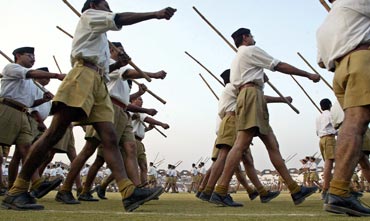
not be surprised that Uday Bhembre is associating with the Hindu
nationalist RSS and engaging in hate speech against the Catholics in Goa. However,
at least the 80s this is the man who was hailed by the hierarchy of the
Catholic Church as one of the most secular leaders of Goan society. How then,
did this switch take place?
Persons familiar
with recent history will
not be surprised that Uday Bhembre is associating with the Hindu
nationalist RSS and engaging in hate speech against the Catholics in Goa. However,
at least the 80s this is the man who was hailed by the hierarchy of the
Catholic Church as one of the most secular leaders of Goan society. How then,
did this switch take place?

.jpg/300px-Doutrina_Christam_(book_of_Stephens,_1622).jpg)
 This is the
common link that joins the appeal of Marathi to the bahujan of Goa from the ‘60s
to the ‘80s, the fight for the official recognition of Konkani in the Roman
script, and the demand that the Government support English language as a medium
of primary education. All of these are directed against Brahmin and brahmanical
oppression, and it for this reason that brahmin supremacists like Bhembre have
been opposed to all three of these liberation projects. It is possible that Bhembre
is not in essence a Hindu nationalist, but has a more limited agenda of
Saraswat hegemony in Goa. However, given that Hindu nationalism is a project
that seeks, and sees, brahmins as the natural rulers of the land, it is little
wonder that Bhembre makes common cause with the RSS and the BBSM.
This is the
common link that joins the appeal of Marathi to the bahujan of Goa from the ‘60s
to the ‘80s, the fight for the official recognition of Konkani in the Roman
script, and the demand that the Government support English language as a medium
of primary education. All of these are directed against Brahmin and brahmanical
oppression, and it for this reason that brahmin supremacists like Bhembre have
been opposed to all three of these liberation projects. It is possible that Bhembre
is not in essence a Hindu nationalist, but has a more limited agenda of
Saraswat hegemony in Goa. However, given that Hindu nationalism is a project
that seeks, and sees, brahmins as the natural rulers of the land, it is little
wonder that Bhembre makes common cause with the RSS and the BBSM.


_at_Panjim,_Goa,_India_01.jpg)