Showing posts with label Concanim. Show all posts

Friday, August 19, 2016

The Goan language problem and its resolution


There were a wide variety of responses to the State Legislative Assembly’s resolution on the twelfth of this month to grant official language status to Marathi. As can be imagined, in addition to the delight of Marathi language activists, for whom the explicit status of official language for Marathi has been a matter of principle, there were loud cries of dismay and protest from those for whom Konkani is the only vernacular tongue they consider their own.

In their anger these self-confessed Konkani lovers rejected the idea that Marathi has any Goan history while claiming that Konkani alone is the language of Goa, and that Marathi has ample opportunity to be patronized in Maharashtra.

I believe that this position is a grievous mistake. The fact is that Marathi has a long and legitimate Goan history.  Marathi was an official language when the Portuguese were around. In his book Goan Society in Transition (1975) Bento Graciano D’Souza haw drawn attention to the fact that the Boletim do Governo do Estado da India, i.e. the Gazette of the Portuguese State, used Marathi to communicate with its citizens since the late 1800s. It is also a fact that Marathi was used by the Adil Shahi sultanate, whose territories eventually came to comprise parts of the New Conquests. In Primary Education in Portuguese Goa (2013), Ricardo Cabral highlights that the Portuguese State also backed Marathi-medium government schools in Goa. Scope for the first Marathi Primary school in Panjim was established through a Portaria dated 8 Aug 1843, and by 1847-48 there were five schools in the Marathi language.
Marathi, therefore, does have a historic presence in Goa, and it would be silly to discount patent historical facts. If these Marathi language schools were able to ensure the education of the dominant castes in the New Conquests, it also ensured the education of the upper ranks of the bahujan groups. These bahujan groups deepened their emotional bond with Marathi when they used this language to counter the hegemony that the Saraswat Brahmins attempted to assert, in both late colonial and especially post-colonial Goa, through Nagari Konkani. It is in part this more recent history that has resulted in the insistence that Marathi be officially recognized as an official language, despite the fact that it has effectively been an official language since the enforcement of the Official Language Act, 1987.

However, it should be stressed that these angry responses are not without reason. No matter the history, the recognition of Marathi as an official language will not be without consequence. In the course of my doctoral research a couple of Romi Konkani activists explained to me that the recognition of Marathi as official language would impact on government recruitment. While knowledge of Konkani is today essential for recruitment to a Government post, they explained, Marathi is optional. A recognition of Marathi as an official language would require the knowledge of both Marathi and Konkani, or ensure that those with knowledge of both languages would be preferred for governmental positions. What this means is that Catholic aspirants will essentially lose out in the recruitment process, further marginalizing Catholic groups, and especially the bahujans among these groups.

Seen in this light, the opposition to Marathi is not necessarily a blind opposition but largely the response from marginalized groups fearful for their continued existence. One way to redress this fear would have been along the lines articulated by Dale Luis Menezes in a recent post on social media. As he said, “if justice has to be done, it is not by recognizing Marathi as official but Romi as official first. This is not to say that Marathi shouldn't be recognized, but first it has to be Romi Konkani. Otherwise the Marathi movement, which had anti-caste [and] pro-Bahujan leanings at its start [but] has since now been increasingly reproducing Hindu majoritarian politics, through Marathi mobilization will only lead to more Hindutva.” In formulating the argument in this manner, Menezes hits the nail on the head. As much as Marathi has been associated with bahujan politics, it has, and is, also associated with Hindutva politics. What should also be noted is that with the full recognition of Marathi, we would have a situation where the high (Marathi) and low (Konkani) languages of Hindus in the state are recognized, but those of Catholics and other groups are not. As such, only a simultaneous recognition of Romi Konkani along with Marathi would ensure a state in which justice is meted out to the various groups that call the territory its home.

However, there is also a need to point out the ridiculousness of the propositions that are determining this entire politics. No territory is the home to just one language. Such formulations emerged from antiquated ideas of the Romantic movement and have led to way too many wars and conflicts to be the basis for serious state building. The linguistic reorganization of states of the young state of India in 1956 drew from these problematic and racist politics. What we need is a politics that moves outside of the faulty frame of linguistic homelands and recognizes that the duty of the state is to speak to all of its citizens, in the languages they understand. After all, if the much criticized, if unfairly so, Portuguese state way back in the XIX century could speak to its citizens in languages other than Portuguese, what prevents the Indian state in Goa from doing so in the XXI century with all the technological capacities at its disposal?

Speaking of Portuguese, Pratapsingh Rane, the elder statesperson of the territory, made an interesting intervention in the ongoing debate on languages in our territory.  He is reported to have stated in the assembly that “We should have no problem with any language. I learnt Portuguese because our own documents are in Portuguese,” further adding a critical point that I too made some years ago, “If you want to know the history of what happened in past, you should know this language also.” Indeed, in the coming years the failure to inculcate a knowledge of the Portuguese language in a broader segment of the Goan population will lead to a crisis in both historiography and legal interpretation.

In the recent past there has been much talk about cross-religious bahujan unity. In the spirit of such unity we should welcome the recognition of Marathi as a language. However, such calls for unity cannot be a one-way street. As such, the failure of pro-Marathi activists to also demand the inclusion of Romi Konkani is rightly seen as pushing a Hindutva agenda. It would be useful if we moved away from these narrow linguistic politics to push for an agenda where the State recognizes as official all of the languages that have had a presence in Goa’s recent history.

(A version of this post was first published in the O Heraldo dated 19 Aug 2016)

Wednesday, April 27, 2016

A Goan Waltz around Postcolonial Dogmas


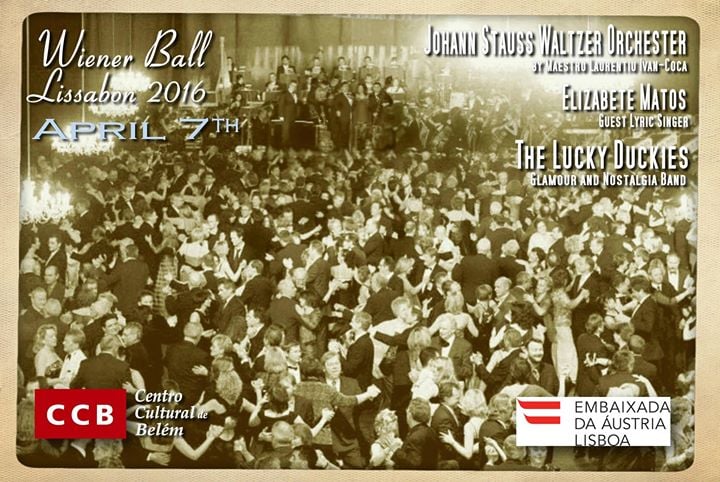
Some days ago I found myself invited to a ball in Lisbon hosted by the Austrian embassy in Portugal. Revived after more than a decade, the current initiative was conceived of a way to generate funds for deserving causes. In this inaugural year, funds were raised in support of A Orquestra Geração, which is the Portuguese application of the El Sistema method created in Venezuela. Another objective was to introduce Portuguese society to aspects of Austrian, and in particular Viennese, culture.

It was because the event was billed as a Viennese ball that I have to confess being somewhat concerned about the protocol at the event. For example, would there be dance cards? It was when I actually got immersed into the ball, however, that I realized that I was not in foreign territory at all. The ball followed a pattern not merely of contemporary wedding receptions and dances in Goa, but also approximated quite well the manners that had been drilled into me as a young boy, when first introduced by my parents to ballroom dancing. One requested a lady – any lady – to dance, accompanied her on to the floor, and at the end of the dance, one thanked her, applauded the orchestra or band, and returned one’s companion to her seat. In other words, there was, structurally, not much at this ball that I, as a Goan male, had not already been exposed to.

This encounter made me realize once again, the validity of the argument that my colleagues at the Al-Zulaij Collective and I have been making for a while now; that Goans, or at least those familiar with the Goan Catholic milieu, are in fact also European. Given the fact that Goans participate in European culture, and have been doing so for some centuries now, denying this European-ness would imply falling prey to racialised thinking that assumes that only white persons born in the continent of Europe, are European.

To make this argument is not the result of a desperate desire to be seen as European, but to assert a fact. One also needs to make this assertion if one is to move out of the racialised imaginations that we have inherited since at least the eighteenth century. It is necessary to indicate that European-ness is not a culture limited to a definite group, but like other cultures, is a model of behavior, in which one can choose to participate in. And one chooses to participate in this cultural model because the fact is that, whether we like it or not, this is the dominant cultural model in the world. The choice then is not determined by a belief in the model’s inherent superiority, it is simply a matter of pragmatic politics.

Some days before the ball, I intimated a continental Portuguese friend about this upcoming event, and the fact that I was on the lookout for a place I could rent a tailcoat from. She sneered. The suggestion in the sneer was, why do you have to become someone you are not. One should remain true to one’s culture, and not try to engage in the culture of others, or in other words, not engage in social climbing. The response was upsetting, but not particularly out of the ordinary. This is, in fact, a standard response, one that derives directly from our racialised imaginations. There is this misplaced idea that when we participate in one cultural model, say the European, one is abandoning other cultural models, and, more importantly, that non-whites would always be on the back foot when faced with European culture. A look at the cultural practices of Goan Catholics, however, will demonstrate the ridiculousness of the proposition.

Goan Catholics have not only taken up Western European cultural forms, but in fact excelled at them. In doing so, they have not abandoned other cultural models, particularly the local, but in fact rearticulated both these models at the same time. One has to merely listen to the older Cantaram (Concani language music) regularly played by the All India Radio station in Goa, to realize the truth of this assertion. Take the delightful song “Piti Piti Mog”, crafted by the genius Chris Perry and Ophelia, for example. Set to a waltz, the song talks of the desires and sexuality of a Goan woman. The emotions are honest to her social location. There is no betrayal of the local here, even as Perry articulates it within an international idiom. Indeed, one wonders if there is much of a difference between this song, and the soprano aria “Meine Lippen, sie küssen so heiß”. From the opera Giuditta, and featured at the Viennese Ball, this aria also sings of the sexuality of a young woman in her prime.

There are some who would argue that what has been described above is not participation in a cultural model, but in fact mere mimicry, or at best syncretism or hybridity. To put it bluntly, Goans are mere copycats, there is nothing original in what they do. Indeed, a good portion of the post-colonial academy would describe the examples I proffer as syncretism or mimicry. To such critics my question is this, were the young Portuguese women and men, making their social debut in the ball, not also participating in an etiquette that is not quite Portuguese? The waltz itself, that great institution of the Viennese balls, originated in Central Europe. Does their participation pertain to the category of mimicry, and syncretism, or is it somehow an authentic performance? To suggest that it is, would be to fall right into the racist paradigm where things European appropriately belong to whites, and the rest are merely engaging in impotent mimicry. The anti-racialist argument would recognize that all of these groups, whether continental Portuguese, or Goans (indeed also Portuguese by right), are participating equally in a common cultural model, each of them giving a peculiar twist to the model in their performance, all of them authentic.

Another challenge to my argument would perhaps emerge from Indian nationalists. If no one culture is authentic, and one merely choses to participate in random cultural models, why privilege the European? Why not join in the Indian cultural model? In the words of a passionate young man from the Goan village of Cuncolim I once interacted with, why not prefer your own people over foreigners? At that interaction I pointed out that crafting the choice in terms of Us Indians, versus Them Europeans, and stressing a biological or genetic proximity was falling back into the very racist equation we should be trying to be exit.

To begin with, this construction of the Indians, versus Portuguese works only because like most Indian nationalists he privileges the terrestrial contiguity of Goa to the subcontinent. The art critic Ranjit Hoskote phrased a succinct response to this claim in the curatorial essay for the exhibition Aparanta (2007) when he argued “Geographical contiguity does not mean that Goa and mainland India share the same universe of meaning”. In highlighting Goa’s Lusitanian links, Hoskote rightly pointed out that the seas were not a barrier to conversation but a link, and maritime connections are no less powerful than the terrestrial. Indeed, while connected to Europe, Goa has been an equal part of the Indian Ocean world, often sharing as much, if not more, with the East coast of Africa than with the Gangetic plains; that privileged location of Indian-ness. Terrestrial contiguity apart, this nationalist argument also succeeds because it willfully ignores a legal history, of Goans being Portuguese citizens, and hence European, in favour of a biased construction of cultural history. 

The most important support to nationalism, of course, comes from the racism inherent in the post-colonial order which is built on recognizing cultural difference managed by nationalist elites rather than stressing continuing connections. Indeed, as I go on to elaborate below, to some extent everybody participates in the European model in today’s world – in clothes and speech and education and science, and so forth. But the control of nationalist elites over the national space, and the international post-colonial order itself, would be threatened by such recognition. It is therefore necessary that while quotidian affairs run along European lines, the extraordinary is sanctified by the irruption of the national. Thus, while Indians wear pants and shirts every day, they believe that special days call for traditional garb, like kurtas. The Goan bucks this trend by privileging special moments with a lounge suit. In other words, Goan culture celebrates what is overtly European, which is what the Indians don’t like as its wrecks the nationalist posturing of not participating in European culture.

To those who would simply ask, why not exert a choice in favour of the Indian, the answer is two-fold. The first, is that there are many Goans, Catholic and non-Catholic alike, who are in fact choosing the Indian model. They do so because they see that this is where local power lies. Behaving like Indians, they believe that they can make their way better in the Indian world. Others, however, recognize the limitations of the Indian model. It can take you only so far. Upwardly mobile Indians themselves recognize that they have to perform by different rules when they emigrate. Worse, the captains of industry will tell you that they have to perform by European rules whenever they meet with their compatriots from other parts of the world. As indicated before, where the European cultural model dominates the world, it is merely pragmatic politics to follow that model. Finally, it is precisely the lack of social mobility that makes many wisely avoid the Indian cultural model. The very attraction of the European model is that practically any person can learn to perform in it and be accepted as authentic. Indian models are so limited to Hinduism and caste that one cannot hope to make this parochial model work as a tool of social mobility. Indeed, one could ask whether there in an Indian cultural model at all, and if it is not just a savarna/brahmanical model?

This lack of social mobility is best illustrated by an example from Goa, where the Saraswats are a dominant caste. Speaking with a Saraswat gentleman at a Nagari Konkani event, he indicated to me how pleased he was with the response to the elocution competitions organized by the Nagari Konkani groups. Many a times the winners were Catholic girls. “But their accent is so good”, he shared with me, “one cannot even tell that they are Catholics!” Where Nagari Konkani is largely based on the speech of the Saraswat caste, one is forever trapped into behaving like a Saraswat, and distancing oneself from one’s natal behaviours. One can never be Saraswat unless one is born into the caste. A good part of the Indian model is similarly pegged according to the behavior of the dominant castes of various regions. This model has been created not necessarily to enable a democratic project, but to ensure their continued dominance within post-colonial India. As such, they will put a person in their place when a person from a non-dominant caste performs effectively. The adoption of the European model, however, is not restricted to birth precisely because it has been adopted so universally. The adoption and occupation of this model by diverse groups has thus ensured that its very form now allows for local variation. Indeed, it needs to be pointed out that the model is very dynamic. Let us not forget that at one point of time one was expected to speak Queen’s English on the BBC, but the same platform, at least in its local transmission, has now made space for a variety of accents.

The policing of cultural boundaries is one of the silent ways through which racism continues to flourish. It is in partly in the breaching of cultural boundaries that racism can be broken. Further, it is in operating within the idiom of power, and then filling the forms of power with differing contents, that negotiation with power operates and one moves from the margins of power towards the centre. In this project, Goans are past masters. Viva Goa!

(A version of this text was first published in Raiot on 26 April 2016)

Friday, December 12, 2014

Liberation and the English Language


The two lectures and accompanying discussions held in Goa recently under the aegis of the Dr. Ambedkar Memorial Lecture Series provided much needed food for thought and discussion.  Organised to proffer Ambedkarite visions on issues that are of concern to the country, the lectures featured Dr. Varsha Ayyar from Tata Institute of Social Sciences, Bombay, and the acclaimed Dalit intellectual Chandrabhan Prasad.

Chandrabhan Prasad spoke on ‘Ambedkar’s India Project’ suggesting that Ambedkar had a definite vision for India, one that was not tied to any one dogma, but one that was committed to destroying the caste system and creating an Indian society that would be more respectful of all. A part of this project relied on the industrialisation and mechanisation of agriculture. Once people have access to machines, Prasad argued, all kind of jobs are open to people irrespective of caste. He provided the example of sanitation services in high-end hotels. Labelled more appealingly as “Housecleaning” and with provisions for gloves, uniforms and tools, these jobs that would normally be reserved for dalits had now seen the entry of dominant caste persons.
Prasad is perhaps more famous for his support of school education in English, going so far as to propose a temple for the goddess that is the English language, and the celebration of Macaulay’s birthday. Given that he did not touch directly on this more controversial topic, I ventured a question: In the context of Goa, where those who argue for English as a state-supported medium of instruction are berated as anti-national, denationalised and against Indian culture, what would your response be?

Prasad’s response was crystal clear. What is this Indian or vernacular culture that these anti-English educationists seek to promote? It is the very culture that oppresses Dalits and other marginalised communities in the country. This is a culture that embodies caste. If this culture will be destroyed in the process of education in English, then let it be destroyed.

Prasad’s logic recognises that language does not necessarily come alone, it is often accompanied by a culture. Prasad avers that the culture that comes along with English is largely an egalitarian culture and should be welcomed. This assertion is very true. Vernacular cultures in India are very often markers of caste location. Any person who speaks Konkani will know that to speak Konkani is to give away one’s caste. If one wants to speak the so-called ‘perfect Konkani’ one has to speak like a Saraswat brahmin. The problem is, given that Saraswat speech is the result of a complete immersion in a sub-culture, it is in fact difficult to speak this language. If one is able to master this caste dialect, then this is at the cost of giving up the Konkani of one’s home.  When one slips, the mask drops, and one is almost always embarrassed for it becomes obvious, one was performing the language rather than living it. In addition, there are numerous stories of households, both Hindu and Catholic where children correct both parents and grandparents, telling them, or worse laughing at them, saying “your Konkani is wrong.” Learning Konkani, is to also learn about caste, to be ashamed about one’s caste location, to try to imitate the dominant castes, and to fall short, as some applicants for government jobs have reported. The result is that the only group that is able to be proud of Konkani is that of the Saraswat Brahmins, because it is their Konkani alone that is held up as perfect.

A great part of the Goan population in fact understands this tricky situation vis-à-vis Konkani which is why they will speak it at home, but, if they are upwardly mobile, avoid it outside. They prefer to use English in public engagements outside those in the marketplace. Because, while English and its cultures may have class markings, they are both as yet largely free of markings of caste. It is for this reason that English is preferred by a large segment of our population.

The issue of culture also came up with Dr. Varsha Ayyar, the speaker who inaugurated the Ambedkar Memorial Lectures. Dalits do not celebrate their culture, she said. They seek to liberate themselves from the culture which traps them in a definite social location. But it is different with the bahujans and “their” culture. This fact was also observed by one of the participants in the discussions subsequent to the first lecture. A Dalit activist composed a question in the form of a Marathi poem, asking “In this country the Brahmin acknowledge that they are Brahmin, the Kshatriya that they are Kshatriya, even the Ati-Shudra that they are Ati-Shudra. In this country it is only the Shudra who refuse to acknowledge who they are. What do we do with the Shudra?”

What he meant was that rather than recognise that it is brahmanical culture that oppresses them and those below them, the Shudra embrace this culture that not only restricts their own mobility, but becomes the basis for the persecution of other marginalised groups in the country.

Listening to this poem and the discussion that ensued various pennies dropped in my head. To begin with, I realised with a start how the movement against English and in support of the Indian languages is led by those who see themselves as bahujan leaders in Goa. It also became clear why, so often, Hindu bahujan leaders who should reach out to their Catholic bahujan brethren often use Hindu nationalist imagery that pushes the Catholics away.

The problem is not only with the Hindu bahujan, however. The Catholic bahujan too fail to raise questions of caste, preferring to ignore the pink elephant in the room in the hope that it will go away. Rather than raise questions of caste and fracture the consensus that has caused so much misery in Goa since at least its integration into India, they grasp at straws. Therefore, rather than say that Devanagari currently operates as a tool of brahmanical domination in India, rather than say that state-supported Konkani is a tool of caste-based oppression they suggest that they are genetically unable to understand the script and dialect. In doing so, they aggravate the pro-Hindutva bahujan leaders, and also waltz straight into the arms of the upper-caste Catholic leaders who excel at playing second fiddle to the leaders among the Hindu upper-castes.

One strain of Dalit thought makes it very clear that if India is to emerge out of the morass of daily persecution that marks the lives of so many of the people in it, a good portion of Indian culture itself will have to be destroyed. There is no point being nostalgic about a poison that kills. English must be acclaimed because it is one way to check the caste logics that lurk so close to the surface of vernacular languages.

As a certain Jewish leader so many centuries ago once remarked, “Man was made for the Sabbath, not the Sabbath for man.” Thus, let Indians, and Goans, craft their own culture in new egalitarian forms, and not be enslaved to horrific forms of the past.

Viva Bhim!

(A version of this post was first published in the O Heraldo on 12 Dec 2014)

Wednesday, August 31, 2011

Konkani and the Silence of the Goan Catholic: The Concanim Series

There was a commotion in Cyberia a couple of weeks ago, around some of the observations made by Adv. Uday Bhembre in the course of an interview. The statement that caused so much of consternation was made in explanation of why Adv. Bhembre opposes grants-in-aid to schools that impart primary education in English. To give a sense of what irked the cyber-Goemcars, the statement by Adv. Bhembre is extracted in some length below.

Let me narrate to you a glaring incident that happened in my life. When I was the Independent MLA of Margao in 1985-89, I was invited by the Grace Church Parish to speak to the youth on Culture. The audience comprised of young boys between 20 to 25 years of age, to my surprise there were no girls. I don't know. The three preceding speakers spoke in English and I spoke in Konkani. During the question and answer session the Priest requested them to ask questions, I too requested them. But they did not respond, later the priest told me that if I had spoken in English perhaps they would have understood. Then I asked him (priest) why they did not understand. “They did not understand because you spoke in Konkani and not English”, the priest replied. It was all the more astonishing that all of these youth were Goans and did not understand or might not want to speak in Konkani. And if that was situation in 1988 what would it be now? So that kind of a situation is bound to develop according to me if English is encouraged at primary level itself in Goa."

Adv. Bhembre is perhaps not the first person to face this strange situation, given the two other similar situations this column will narrate, but perhaps he (and the friendly parish priest) may have misinterpreted the situation they faced.


The first of the situations took place in a training session for rookie ‘announcers’ for the AIR. The crowd was largely English speaking and faced with a Konkani speaking staff member of the radio station. The session was a nightmare though, for not a single question presented by the trainer drew a response from the audience. It seemed as if the explanation articulated by Adv. Bhembre, would have held good here as well, a crowd of young Goans, brought up to be English speaking, and yet unable to speak in Konkani.

Subsequent to the training session, asking one of the members of the audience if it was the case that she did not speak or understand Konkani, drew a fierce response. ‘Ofcourse not!’ she responded, opening her eyes wide. ‘I sing in Konkani, I do the readings in Church, I can manage quite well in Konkani. But his (referring to the trainer) Konkani is different no?’

This response affirmed the capacity of the silent audience to speak and understand Konkani, but it provided no reason as to why, because there were two different Konkanis in operation, the response of one of the Konkani speakers should be silence. This reason was provided in another conversation, this time round with a Catholic priest. In the course of our conversations around Konknai, this priest indicated a strong friendship he enjoyed with a Hindu gentleman. At one point however, the priest recounted that he was reproached by his friend; ‘Why is it that you never speak to me in Konkani’ the friend asked. To this question the priest responded that he felt ashamed, since his friend’s Konkani was so perfect, so pure, whereas his own was the ‘impure’ version that the Catholics speak.

This deep-rooted sense of inferiority of their version of Konkani is the reason for this silence among vast sections of the Konkani-speaking Catholic population in Goa. This sense of inferiority is not the result only of the dominance of the Antruzi variant since the legislation of the Official Language Act in 1987. The hierarchy that privileges Antruzi is the result of larger theoretical understandings that have been deeply grounding in society, since they came into operation since the nineteenth century, though to be sure these understandings have been underlined by teachings in school since 1987.

This silence is not a uniquely Goan phenomenon however. This response in silence has famously been highlighted by the French sociologist Pierre Bourdieu in his exploration of the power dynamics among dialects within France and their relationship with ‘official French’. Bourdieu points out that as a result of the active diminishing of the legitimacy of other variants of the language, and the stress of auto-correction that persons who do not naturally possess a facility with the official variant encounter, there is a tendency of working-class children to eliminate themselves from the educational system, or to resign themselves to vocational courses and training. He also pointed out to the unease and ‘the hesitation leading to silence’, which may overcome individuals from lower-class backgrounds on occasions defined as official.

The silence among Adv. Bhembre’s audience is not therefore the result of not knowing Konkani, but of the shame that has been drilled into Catholic society (not least by their own intellectuals from the nineteenth century on) that the Konkani that they speak is not proper Konkani. This logic is not limited only to those sections of the pro-Konkani world that favour Antruzi as the finest form of spoken Konkani. Take for example the spelling of the Thomas Stephens Konknni Kendr, which seems to replicate the Sanskritized sounds of Antruzi, rather than the broader sounds typical to the Concanim spoken among Catholics in Goa. From Bourdieu’s work it would appear that introduction of the ‘official variant’ into schooling compound the problem, since it provides a systemic production of this shame. From this logic, it would appear therefore that rather than addressing the problem Adv. Bhembre mistakenly perceived; schooling in Konkani is one of the systemic forms of perpetrating the shame and driving more and more young people away from Konkani. The solution that Adv. Bhembre seeks therefore, may come from routes other than the compulsory education in a language form that many students do not in fact identify with.

The provision of solutions to Adv. Bhembre’s pickle is not the purpose of this column. The purpose of this column was to stress that there are multiple ways in which silence can be read. Silence is not always a sign of stupidity or a lack of knowledge. Silence can be the mark of shame, or unease, or equally of disobedience. The silence in response to Konkani speakers among Concanim speaking audiences could very well be one among these many reasons. Indeed, we can safely say that it is not one of either stupidity or lack of knowledge.

(A version of the post was first published in the Gomantak Times 31 Aug 2011)