One could also make the argument, that the failure to effectively articulate issues of social and economic equality both within and outside of Goa has in fact resulted in the kind of communalisation of Goan society that we are witness to today. The interests that were served were invariably of the upper caste and business elites, but the movements were always misrepresented as Catholic. This has pitted the vast bahujan majority against the Catholic bahujan minority.
Friday, August 8, 2014
Rethinking Special Status - I
One could also make the argument, that the failure to effectively articulate issues of social and economic equality both within and outside of Goa has in fact resulted in the kind of communalisation of Goan society that we are witness to today. The interests that were served were invariably of the upper caste and business elites, but the movements were always misrepresented as Catholic. This has pitted the vast bahujan majority against the Catholic bahujan minority.
Wednesday, August 24, 2011
English Talks, Konkani Rocks! : histories, innovations and democratic public culture
The problem around Goa’s Medium of Instruction (MoI) did not begin this year, nor did it begin in the 1990’s when the backbone of education in Goa, the Diocesan supervised schools switched their MoI from English to State Konkani. The roots of this problem lie all the way back, at the turn of the nineteenth century toward the twentieth. This was the time when Konkani was being set-up as the ‘mother tongue’ for Goans through the hand of not only Varde Valaulikar (Shenoi Goembab) but other (Catholic) intellectuals as well. Indeed in his later years, Valaulikar got a good amount of support from Catholic intellectuals, making his effort secular in the sense that it was a project that cut across religious divides.
What has not adequately been discussed however is that beyond this cross-religious collaboration there was also a caste-class divide that compromised the secular potential of this Konkani language project. Valaulikar’s Konknni was seen by non-brahmin Hindus as a Saraswat Brahmin project, that presented the Saraswat dialect alone as the perfect form of the language; while the Catholic intellectuals who supported this project, saw value in this project as a way of civilizing those Goan Catholics (both in Bombay and Goa) who came from non-dominant castes and were largely working class.
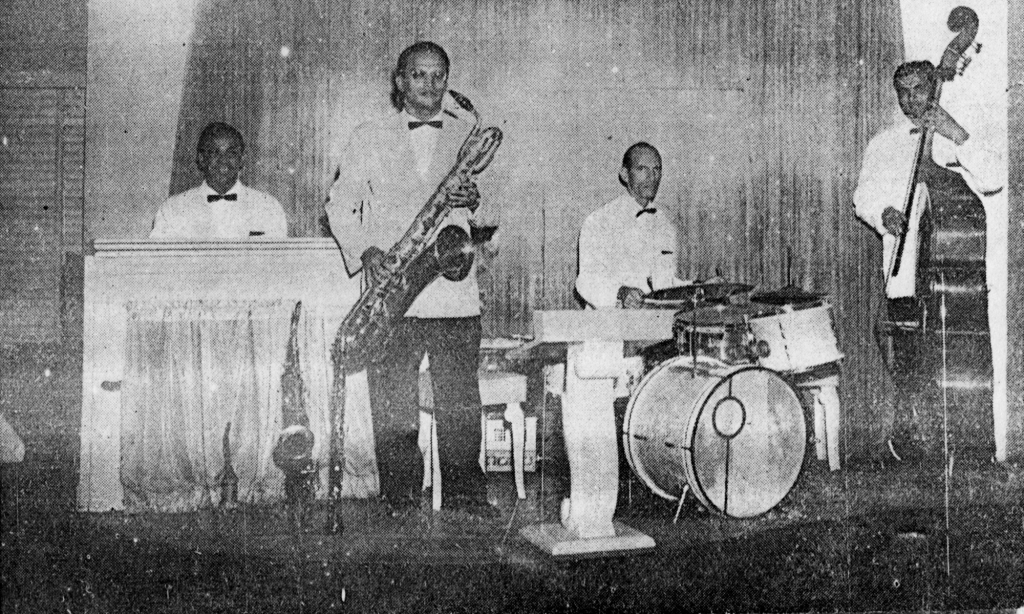
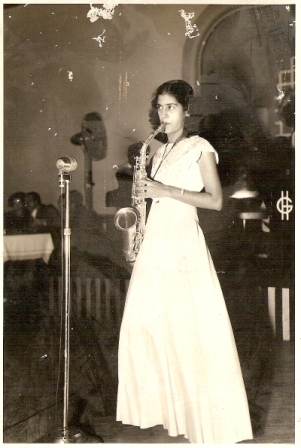
This working class had no real need for a Konkani language project however. They produced abundant literature of all forms for their consumption, and worked Concanim into the cultural forms that gave them livelihood. Thus they produced Concanim music to the form of the Waltz, Rhumba, March, Swing and Jazz (among others). Concanim lived among them, as it did not for the elites who moved this political project. For the Catholic elites Konkani was a way for them to not only civilize their ‘lower’ brethren, but to also regain a cultural authenticity that the nineteenth century theorization of society told them they had lost. For the largely Brahmin movers of the project, Konkani was not only the primary tool to forge one single Saraswat caste from multiple Konkana jatis along the west coast, but also a political tool through which they could carve an area for their dominance. If Pune and Bombay belonged to the Marathi Brahmins, who insulted and ridiculed them, then Goa would be the Konkana base. These two trends are the basis of the eventual decision to recognize Konkani (in the Nagari script) as the official language of Goa.
In making this move, Konkani was cast into more familiar forms of Indian nationalism. As in the case of Hindustani, Nagari alone- primarily for its brahmanical origins, though ‘scientific’ arguments were also thrown in - was seen as Indian. As a result of the historical model for Hindi that Konkani follows, the burden of North Indian communalism weighs heavily on the Konkani project. With this formulation, the Hindu and Brahmin came to be seen as the font of cultural authenticity. As a result of the elite (and hence minority) location of this project, and its nature as a civilizing mission, official or State Konkani could not walk normally as a language. The Konkani language project was marked by multiple anxieties. Because of its minority location, it could not be popularized; it had to be constantly under the control of a minority group. Because it was a civilizing mission too, ‘deviant’ forms could not be permitted. Because it was not based on a living social reality but an imagined past, it could not look to the future.
When cast in this way, it is little wonder that State Konkani did not find sync with a large number of Goans, and especially the Goan Catholic migrant working class, who were (and despite the allegations of the BBSM and its ilk, remain) the lifeblood of this language and its cultural forms. For this group Konkani was so much theirs, it sat lightly, but no less cherished, in their basket of social capital. No fuss about it. It would pass on to subsequent generations as it had to them, without passing through school. School was for where they learned other tricks and trades. The official Konkani project is to make them Konkani in an official and nationalist sense, the Goan Catholic working class, already knows it is Concanim enough.
Once we recognize that there are at least two Konkanis at work in the Goan cultural sphere, things begin to make a lot more sense. We can see that the official and stunted State Konkani may in fact be killing a vibrant unofficial one. Recognizing the working class history of unofficial Konkani, would also point us in the direction where Concanim can be a vehicle for an inclusive secular culture in the State.
It seems that it is this history that Armando Gonsalvez and his collaborators have connected with in their ‘Konkani Rocks’ project. It has been interesting to see the manner in which this project slowly evolved from ‘Jazz’ to combining ‘Jazz’ with ‘Konkani’. The beauty of the whole project is that because it delves, quite unselfconsciously into lived (and living) Concanim history, there is hardly a contradiction in the project. It is fun and it draws the crowds, persuading us without being heavily pedantic that Konkani can and indeed is fun. Simply put, it ‘Rocks!’
In this project, Konkani is not a nationalist millstone round our collective necks. On the contrary, it connects both with cosmopolitan past, and a cosmopolitan future. Armando’s formulation, ‘English Talks, Konkani Rocks’ twines the pragmatic approach of the Goan working class perfectly. There is no need for either to be displaced since each language has its place, and fulfills a definite need. Furthermore, 'Konkani Rocks' returns to a history that many of us, not just those pushing State Konkani, have done much to hide and forget. These actions, of shame in our working class history, have done much to ensure a shame in Concanim. By holding it, albeit indirectly, as something worth returning to, 'Konkani Rocks' reminds us that the Goan Catholics working class past is nothing to be ashamed of. On the contrary, it was a period that generated the culture that we today recognize as Konkani.
That this formulation is also concerned with what the BBSM claims to be concerned with is obvious from a column Armando penned some days ago. He pointed out that ‘When I felt that my children were not so keen on learning the language [Konkani], I was all the more pained because I myself am not that good at it. Hence, instead of forcing the language down my children’s throats, I decided that the best way forward would be to attract them to the language, to pull them to their mother tongue, and what better way to do it than via music, dance and other cultural avenues. I presumed, correctly I think, that if my children would sing a Konkani song and dance to one, their interest in the language would improve drastically, and in this way their will to learn the language would be that much more fired up that without this cajoling.’
Rather than pull out some dusty folk-song and dance that the children may not identify with, Armando delved into a cultural tradition they could identify with. On the twentieth of August they drew from one of the most popular forms of recent history, the Big Band; and voila, Magics became!
Konkani Rocks is truly magic, and is a wonderful example of the role elites can play in pushing a more democratic public culture to greater prominence in society, by attending to popular histories instead of relying on civilizing missions that were inspired from the racist and colonial paradigms of the last millennium. It would be interesting to see how ‘Konkani Rocks’ manages to push forward a more democratic and sustainable model for Konkani in this State.
(A version of this post was first published in the Gomantak Times 24 Aug 2011)
Wednesday, March 9, 2011
Breaking Secularism´s cast(e): The curious case of the poor Indian Muslim
In an opinion piece in The Hindu on the 3 March 2011, Vidya Subrahmaniam wrote of her discussion with a group of Muslims in Deoband about the reported validation that Maulana Ghulam Mohammed Vastanvi, the controversy shrouded new Vice-Chancellor of the Dar ul Uloom at Deoband. These are her words;
‘I raised the Modi issue and was instantly put down: “We are not saying that Muslims should forgive Modi or forget 2002. But all of you in the secular media want the Gujarati Muslim never to get out of his grieving. Hindu or Muslim, the Gujarati is a businessperson, and that is what Vastanvi was trying to say.” The words stung but they were true. The Congress and the secular media wanted the Gujarati Muslim forever to fight Mr. Modi but neither was there to protect him.’

Subrahmaniam should be credited for her perspicacity and sensitivity. This fact should be obvious to many an observer of the unfolding of Indian secular democracy, but has by and large remained unspoken.
The fact is that in addition to being pilloried as a result of the Orientalist and subsequently nationalist histories of
The question that remains unanswered in all of this however is why does the ‘secular’ establishment in
Ansari points out that ‘…there are a few differences between BJP and Congress … even when in the ultimate analysis they defend the same caste/class interests. For one Congress is dominated by anglicised and elite Brahmins, the BJP on the other hand is controlled by Brahmins from the rural or middle class backgrounds.’
In this formulation, Ansari helps us get to understand the obsession with the Indian Muslim. If one reads the ‘BJP’ and ‘Congress’ as symbols for opposing camps in Indian politics, and not merely – as normally done – as representative of the electoral parties, then one can see Indian politics as the struggle between the anglicised and elite dominant castes, and the rural and middle class dominant castes. The first group sold on the idea of western modernity, is empowered by its access to western cultural capital and drawing its power from international hierarchies, seeks to make a modern ‘secular’
Two lessons emerge from Subrahmaniam’s observations. The first that the solidarity that large portions of the secular lobby in India show to the Indian Muslim are motivated by the desire to wipe out their contender for power. Second, is the lesson that these political divisions in
(First published in the Gomantak Times 9 March 2011)
Thursday, October 29, 2009
La Vie en rose: Why the material is mystical
Among the many suggestions, there was one that particularly caught my eye, especially because it seemed to one that had purchase in some of the meetings organized by Mr. Faleiro. The suggestion reads “Administrative committees, duly constituted, may be truly empowered, so that lay persons feel really responsible for the administration, as the Church are Christ's faithful and the assets of the Church are their assets. Administration of the ecclesiastical assets should be their domain mainly. If this happens, priests will be left free for what is their proper field, viz. apostolate”. An interesting suggestion is being made here, that priests have really no business administering property, since property is a material good and priests have committed themselves to the spiritual. As such, leave property to be managed by those in the secular and material world. A version of ‘To Caesar that what is Caesar’s, and to God…’
Superficially the argument makes eminent sense. It extends one of the principles of secularism, of separating the Church/religion/spirituality from the State/secular/material life. Unfortunately however, this logic works well only if restricted to the secular world, it does not work at all if one does not admit of this distinction between the material and the secular. On the contrary to apply this logic to the operations of a religion, would ensure that religion ceases to have any meaning at all. The mistaken assumption of Faleiro and the secularists is that religion is about ritual and the spiritual, and it has no connection to the material. Making this assumption, they can extend the principle of secularism as they do. However, religion admits of no distinction between the spiritual and the material. On the contrary, religion is about precisely how to guide one’s material life, and as such has everything to do with the material. It is not as if Catholic culture does not admit members of the laity to be models to be emulated. On the contrary, there are a number of such examples, and priests more often than not, operate in parishes across the world in active participation with lay individuals who are identified (either by them or by social consensus) as significant members of the community. However, Catholic culture nevertheless gives the priest, one trained in the scripture, thought and tradition of the church, a preeminent place in guiding the community in its life. And because there is no such thing as a purely spiritual life, and life is lived out in a material world, this pastoral guidance necessarily extends to how we must mould our material life.
However Faleiro’s suggestion is troubling not only because it turns the idea of religion on its head. His suggestion is troubling because it perpetuates other deeply disturbing, though admittedly popular, distinctions. This distinction is between that of the public and the private. One of the reasons for the early continental European separation of Church from the State, was not because these republicans were necessarily averse to Christianity. On the contrary, their public culture continued to echo Western Christian tradition. The separation was necessary because the Church, as a human institution, was closely tied to the feudal order that the bourgeois republicans were seeking to destroy. These liberals also forged the distinction between the public domain and the private. In the private you could continue with your religious (and other traditions), and in the public they cultivated the religion of the State. Feminists for a few decades now have pointed out the problems with this distinction, pointing out that this distinction serves only to blind the eyes of State justice to abuses that go on in realms that are marked out as private. Just as there is no distinction between the material and the spiritual therefore, there is no distinction between the public and the private. Echoing the phrase ‘the personal is political’, popularized by the feminists in this context, will make the overlap between Faleiro’s suggestion and this larger ‘secular’ tradition strikingly clear. [As an aside, I should mention that this proximity between the spiritual and the feminist argument should make some in the clerical hierarchy sit up, take off their bigoted blinkers, take notice, and start thinking!]
One of the reasons I seek to articulate this critique, is because this separation that is being pushed will have a perilous impact on public life. What it will result in, is the further reduction of religion to ritual. Most of us, already thoroughly secularized in our thinking, even if we consider ourselves devout, understand religion to be ritual. Ritual in religion is however, animated by a spirit that makes meaning of it all. When that spirit is divorced, ritual is emptied out, becoming what secularists and atheists hold it to be ‘empty ritual’. The danger of empty religious ritual is that it becomes a kind of a communal marker that is then pandered to, building up the foundations of communal tensions in multicultural societies. Shorn of the mystical element that gives it meaning, and in fact allows us to transcend narrow social markers, ritual becomes the basis for marking difference. We can already see this operating in the Indian polity. ‘Hinduism’ is emptied out of the ethical values it contains to become Hindutva, an empty shell of symbols and rituals that are believed to represent a community. Islam is similarly emptied of its ethical values to become the political agenda of the jihadi. Similarly Christianity. The State panders to these symbols, only exacerbating the problem, when in fact the ethical practitioners of these faith traditions would, in daily life, normally transcend these barriers.
This particular suggestion that Faleiro makes therefore, has multiple problems for which it must be firmly ignored. The larger point however, is of the problem with this binary ‘secular’ logic; that has more followers than just Mr. Faleiro. It is a logic that is so built of partitions that it fails to allow us to lead holistic lives where we can see the connections between each other. It is a logic that builds solutions on partitions, rather than transcending the divisions that are created or may exist. If the feminists suggested so many decades ago that the personal is political, may I now suggest that indeed, the material is mystical?
(Published in the Gomantak Times, 29 Oct 2009)
Saturday, September 5, 2009
Closing the Doors to Democracy, Opening them to Tyranny: Responding to the Thomas-Faleiro Arguments – Part 2
In the initial part of this phased response, I had suggested that the Thomas-Faleiro argument represented both an opening up and a closure. The argument operates to prise open domains, currently under the traditional leadership of the Catholic communities, to the State. In this concluding portion of the response, I would like to suggest that the opening up is especially dangerous for the simultaneous closures that such a move would result in.
Allowing us to see this closure as a movement akin to suffocation, we should not forget that the suggestion for a State law regulating Church properties first emerged in the distinctly hostile (towards religious minorities) State of
The initial attempts in these states now seem to have led to a nation-wide attempt to regulate the management of Church assets. This move is dangerous for a number of reasons. First, it repeats the primary mistake of the Indian polity, which is to see people as comprising essentially of monolithic religious groups, Hindus, Sikhs, Muslims, Christians. Nothing could be further from the truth, since these communities are fractured by class, caste, language and many other factors. In the case of the Catholics, for sure there is no such thing as a uniform Indian Catholic. In
There is without doubt a need for greater transparency and accountability in the management of Church properties. I also agree that this management must be in conformance with Constitutional principles. The issue on which I differ however is that of the means of implementing this agenda. It is precisely because of its colonial heritage that
Religion is not merely a disciplining of the soul, but a disciplining of material practices as well. The Bishop exerts therefore a disciplining control over these Fabricas and their material transactions. To manage these affairs, the Catholic diocese in
As should be obvious by now, a realization of the Thomas-Faleiro formula would ensure a closure at all of the levels above, laying the foundation for greater communalism, encourage conservative leadership, and smooth over the nuances of local history and in this process close the plural legal spaces that exist at the Catholic grass-roots, allowing for vesting of absolute power in the State. Absolute power as we know, corrupts absolutely.
Rather than this route therefore, what we require now is, in the presence of the Code, located within a venerable body of Canon law; the engineering of a grass-roots constitutionalism that will allow members of the parish to demand and realise greater accountability. Grass-roots constitutionalism being the fomenting and realization of Constitutional values within grassroots institutions. In short, while we need a reform of the management of Church properties, we should be clear that it is one that strengthens the laity, not the hierarchy and the State at the expense of laity. To pose again the question asked at the presentation of the Thomas-Faleiro argument, whose property are we saving, and from whom?
There are many of us in
Thomas and Faleiro would do better to engineer their movement toward a strengthening of, rather than the closure of proto-democratic decentralized spaces that they are attempting. Their actions are in fact the result of out-dated legal understandings of society, designed further the imperial interests of the Indian State (and its beneficiary class) at the risk of doing great damage to the health of the Constitutional experiment that is our Republic. No, the Thomas-Faleiro proposals as they stand are not in the best interest of the average lay Catholic and should be opposed by any sensible mind, Catholic or otherwise.
(Published in the Herald, Opinionated, 4 Sept 2009)
Wednesday, September 24, 2008
Notes from after the Rally
The response at the rally held at the Azad Maidan last week, to protest the communal violence toward Christian minorities, was overwhelming. Yet, one can’t help feeling (to use a phrase from chemistry) that the equation was somewhat unbalanced. The incompleteness of that demonstrative moment we could attribute to matters both said and unsaid.
Of what was said at the rally, perhaps the most disturbing was the statement that we are members of the nation first and then members of our religious communities. Fact is, it is this insistence on the primacy of the nation is exactly the reason why we are in the mess we are contemplating today. The Indian nation was constructed on a curious mix of the Anglicized culture of the upper castes of
The argument being forwarded here is not to insist that we should necessarily place our religious identities prior to the State. On the contrary, the question being asked is; what happens to those people for whom this national culture – itself cast in the cultural language of certain (predominantly Hindu upper caste) groups – does not make sense at all? Thus as a Muslim, or indeed as a Goan who prefers my Konkani in the Roman script and the lilting phrases of Sashti Konkani, this primacy of a nation, that does not recognize my needs or mocks my existence does not make sense at all. Clearly the way out of the conundrum we are in lies in getting out of the nationalist rhetoric, and recognizing that we are individuals and communities that have a right to continuing our way of life, without having the nation-state or its extra-legal demon armies breathing down our backs.
Moving on, they say that you can always fight a known enemy. It is when the enemy is unknown that you have no clue as to what strategy to employ. And indeed, it was the issues left unsaid at the rally, that are the most troubling and disturbing. The rally was called by Catholics, to protest violence against Christians in various parts of the country and spoke of the need to end the madness. Through this framing of the issue, the Catholics came out looking like lambs bathed in wool, perpetual victims at the altar of communal frenzy. This may be the partial truth in other parts of the country, but it definitely does not hold good for
In this sense the rally was a total failure, because we failed to make use of a literally God-given opportunity to preach to the flock who had gathered entirely unconscious of their own bloody hand in the carnage that goes on around us.
The large presence of Catholics at the meeting however, was problematic at another level.
The manner in which we use our religious identity can be distinguished between two forms; religion as ideology, and religion as faith. In the first a religious identity is mobilized to create a universal identity that is primarily political in nature. This process erases internal differences to create an artificial and monolithic community. Like in an army, one responds to the call of the bugle, and does not, or cannot question why one is being summoned, or the cause one is being asked to lend one’s support for. On the other hand, one has religion as faith, where one contributes to a cause prompted by one’s belief in the ethics preached by religion. On what basis did the many participants attend the rally at Azad Maidan? Did they attend as members of a political identity responding to a call, or as members of a faith community protesting the perpetration of violence? To mobilize Christians primarily on the basis of ideology would leave us open to perpetuating the very violence we seek to protest. It is precisely religion as ideology that is relied on by both Islamic fundamentalists and the Hindu right wing to draw members to its causes. As Christians in
Despite this raising of the dilemmas arising from the rally held on the 16th of this month, the fact that the rally was held was in itself useful. It should be seen as a necessary first step towards combating the rightist take over of the Indian state. What we should keep in mind however is that the solution is not going to come through heightened nationalism, but heightened respect for the differences of other groups. And secondly that if the Goan Catholic is truly desirous of peace in
(Published in the Gomantak Times 24 September 2008 as "Azad Maidan Rally: Combating the rightist takeover)
[The Council for Social Justice and Peace, a forum of the Archdiocese of Goa, and the Inter-Religious Dialogue for Life, organised together a rally to protest the atrocities against Christian minorities in Orissa. Subsequent to the announcement to hold the rally, violence against the Christian groups in Mangalore and other parts of Karnataka broke out, allowing the rally to doubly express the concern of concerned groups, not just Christian. Helping out at the rally to collect signatures, I collected a small amount of Muslim signatures as well. The overwhelming presence of people attending was Catholic however. This rally was one of the larger rallies that Goa had seen, with the central square in Panjim literally engulfed by a sea of humanity.]