Showing posts with label Congress I. Show all posts

Saturday, June 25, 2016

Electoral Options and a Politics of Alliances


What is undeniable about the current political climate in Goa is that there are a number of people who are desirous of change. Most of them are in fact singularly opposed to the return of the Congress, as well as the BJP. This is already a good start. The problem is that those who are translating desire into political action and setting up political parties are all after the same pie, and hopelessly divided.  It is this division, and the grandstanding in which each party will field its own candidate which, will ensure that the BJP will return to power. The fact that this singular fact has not seemed to percolate into the public rhetoric of the various parties, and that these various apparent opponents of the BJP are jostling each other suggests that we are in for very dark times indeed. Preventing this should be highest on our agenda. 

What are our options if this is the bleak scenario that faces us in the upcoming elections? There are a couple of solutions that I have to offer. These solutions rest on the argument that we abandon the idea that the next elections are going to bring about a sea-change in Goan politics. Despite the tall claims that are being made by all and sundry, there is going to be no utopia following the elections. Such claims fail to recognize the complexity of the electorate and the electoral system. Indeed, I would argue that some of these utopian claims are based on a fundamental disrespect of the electorate and the way in which the marginalized use their vote. Further, some of challengers of the dominant parties fail to recognize that many of the problems we face are not the result of bad people in politics, but a problematic system that is in place. As such, unless one recognizes that it is the system which is the problem, even a good, honest, person usually becomes part of the same old system or is rendered helpless.

The problems as I see them are the following, first, there is a need to ensure that the BJP does not return to power. The second, is that we need to begin restricting the way in which electoral politics in Goa works. We cannot merely do good within the existent system, the entire system itself has to be overhauled. We are thus faced with one immediate agenda, and another more long-term agenda.

The strategies of BJP-opposed electoral parties in Bihar have already shown us the way to address the short-term goal identified above. Through their strategic grand alliance, the Janata Dal (United), the Rashtriya Janata Dal and the Congress Party effectively routed the BJP. This is the route that all individuals and political outfits serious about change in Goa must necessarily follow. Take the following scenario for example, where the Goa Vikas Party, the Goa Forward Party, the Goa SuRaj Party, the Communist Party, and the AAP come to an agreement that they will support each other, campaign for each other and field a single individual in every constituency. A combination of this sort seems unlikely now, and even crazy, but it would ensure not only a united front against the BJP and Congress, but would also yield a variety of long-term benefits.

To begin with even if a single party currently opposed to the BJP-Congress were to be able to win all forty seats, this would be bad for democracy. First, a ruling party with no opposition is a bad idea. This idea has already been articulated by Amita Kanekar in a recent op-ed, where she argued that “given the limited choices, what we should aim for is simply a weak government.” Her reasoning, with which I concur, is that even though we are constantly urged to vote for a strong government, such governments invariably ignore criticism and overrule normal procedures. Rather than a strong government therefore “ A weak government, i.e. a minority or coalition government, would serve better, with more assembly discussions and cabinet meetings, rather than dictatorial orders, and where everybody might be too concerned about their survival to do much damage.”

Like Kanekar, I propose that we should look to 2017 elections through a pragmatic lens even as we hold utopian visions. The 2017 elections should be an exercise in cooperative behavior, encouraging newer voices and parties to emerge. It is now more than ever that the dictum “united we stand, divided we fall” holds true. The buildup to the 2017 elections and the period until the next legislative elections should be seen as preparatory time necessary to challenge the system that currently obtains. Even as many new entrants to the political scene have begun campaigning, it would be more realistic to recognize that the swing towards new entrants will be minimal. It makes more sense to prepare for the elections scheduled in 2022. We would do well to recognise that the success of currently dominant parties has been built over such a long period and was never the result of campaigns of a couple of months. As such a politics of alliances makes the most sense.

Of course there will be those who will be horrified by this suggestion. “Make alliances with the corrupt and the cynical?” would be the question of groups like AAP in Goa. The various bahujan groups that are trying to cobble together a response in the upcoming elections will ask if the suggestion is to make alliances with the various Brahmin-dominated parties.  To such positions my response would be yes. Mayawati, the leader of the Bahujan Samaj Party, demonstrated that making alliances with Brahmins is not necessarily out of the question. What is important is not rhetorical grandstanding, or ideological purity, but gaining access to political power so as to begin to change the system. However, since process is also important, how one gets to power is also critical.

The politics of purity, whether ideological or otherwise, is a dangerous politics because it presumes a monopoly on the truth, and an almost divine power to realize it. The strategy of alliances would allow a diverse group of voices to get into the legislature. It would open the possibility for a legislative politics that is about debate and mutual respect. This would engender real political change in Goa. Democratic politics is the politics of compromise. One makes priorities, sees what one can suffer, what one cannot, communicates this to one’s partner/s, and then works towards maintaining the alliance, and hopefully influencing the other. When one realizes that the alliance is not working, one can pull out. As Kanekar has pointed out, it is an alliance-based weak government that we should aim for in the upcoming elections, even as our sights are trained for 2022. 

(This post has been profoundly influenced by the theology of Pope Benedict XVI as contained in his encyclical Spe Salvi. I would encourage readers to engage with this text.

A version of this post was first published in the O Heraldo dated 24 June 2016)

Friday, October 16, 2015

India made Goa Portuguese


Recently, there have been a number of voices that have pointed out that a part of the problem in contemporary Goa is the manner in which Goa is being consumed. Writing in The Goan Everyday, Vishvesh Kandolkar pointed out that Goa “is perceived as a perfect holiday destination with its sun, sea, and sand, apart from the Europeanised atmosphere that they [Indian elites and tourists] don’t find anywhere else in India.” Picking up on the concerns raised by Kandolkar, Dale Luis Menezes, writing in the O Heraldo also pointed that Goa’s problem lies in the fact that it is perceived as European, and following an argument by Paul Routledge, argues that Goa was created and projected as a pleasure periphery, a site of tourism and pleasure.

To make sense of these claims it is important that we delve deeper into the process that allowed Goa to be seen, or be represented as European. Most persons with some knowledge of the academic literature on Goa will point out that Goa’s character and European is the result of the Estado Novo’s claims from the late 1940s. Responding to the demand of the post-colonial Indian State that Goa be “returned” to it, Salazar’s Portugal responded that this was impossible. Goa was not Indian, they claimed, it was Portuguese. 450 odd years of Portuguese presence had ensured that Goa was strikingly different from the rest of India, and that the people of Goa had more in common with Europe than India. This way of presenting Goa has given rise to the trope of Goa Portuguesa. 
 
Not to be undone, Indian nationalists, and academics who sympathized with the Indian position, crafted another trope in response; Goa Indica. Rubbish, they claimed, Goa was merely under Portuguese control. It is, and always has been, profoundly Indian. There are some who would argue that Goa Indica was the post-colonial response to colonial propaganda of Goa Portuguesa. The problem with this argument is that Goa Portuguesa has been one of the planks on which Goa’s tourism industry has been built, especially from the 1980s. This is to say, that while Goa’s Portuguese identity may have been initially crafted by the Portuguese state, it was given added life by the post-colonial Goan, and Indian, state, and the allied institutions of film, advertising, that support the state.

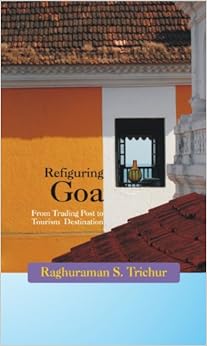
How does one make sense of this fact, that it was Indian control over Goa that deepened Goa’s image as Portuguese, Iberian and European? Raghu Trichur provides a very plausible argument in his book Refiguring Goa (2013). He suggests that “[i]ntegrating Goa into the Indian nation-state was more problematic  than occupying and liberating Goa from Portuguese colonial rule, especially if one was to consider the politics that surfaced in ‘postcolonial’ Goa over the two decades since 1961” (p.12). He elaborates that “it was only after the state sponsored development of tourism in the 1980's (two decades after Goa's liberation/occupation in 1961), was Goa effectively integrated into the Indian nation-state” (p.13). Trichur’s suggestion, then, is that the marketing of Goa as Portuguese and European was a strategy of the Congress government that sought to skirt the politics inaugurated by Dayanand Bandodkar and the bahujan groups subsequent to integration into India.

The nature of Bandodkar’s politics, and how it offered a genuine liberation for the Hindu bahujan of Goa is interestingly elaborated in India’s First Democratic Revolution (2015) a monography recently written by Parag Parobo from the department of History, Goa University. The difference between Nehruvian politics and Bandodkar’s politics was recently succinctly articulated by Kaustubh Naik: “Nehru’s vision for India was a result of his upper caste elite background which worked only to the benefits of Indian elites while the marginalized struggled to find a place for themselves within that vision. Bandodkar, with his lower caste capitalist background, set a model of governance that prioritized liberating the Bahujans from bonds of feudal and social oppression.” Indeed, the initial years of the Congress in Goa were marked by complete upper-caste dominance. This hegemony was completely rejected at the polls for almost two decades until the MGP ran out of steam, and the upper-castes were to combine forces and once again re-assert themselves through the Congress party.

There is, however more to this equation that merely trying to reformulate Goa outside of bahujan politics, and this aspect speaks directly to the desires of Nehruvian elites that marked the Congress party in Delhi and their largely upper-caste associates in Goa. This aspect can be uncovered if we ask why Goa Goa’s being European should be exciting for (elite) Indians?

To answer this question requires that we look at the politics through which Europe is constituted. The fact is that while core European values are defined by the practices in the north-west of that continent, such as Germany, The Netherlands, Britain, the South, namely Spain, Italy, Greece, has been marked off, since at least the nineteenth century, as the place largely of leisure and pleasure, tourism and adventure. Northern European, but especially British and American magnates, travelled to the South for leisure and illicit pleasure. Northern Europeans articulated their European identity by setting themselves off as different from Southern Europeans.  This logic was then applied to the rest of the world, where Europe was set off from the rest of the colonised world, just as Northern Europe was set off from the southern part of the continent.

To return to Goa, I would argue that a Portuguese Goa was appealing for the Nehruvian elites because they saw themselves as the inheritors of Britain’s paramount sovereignty in India. With Indian independence they became the British, and inherited the British gaze on the world. Thus, they inherited the British gaze on the Portuguese, as well as the Portuguese territory. Thus, if Portugal, part of the European south, was a place for leisure, so too did Goa become a place for pleasure for the brown sahibs. If European elites went to the South of Europe for their leisure, so too would the Indian elites go to Goa, their piece of Europe, for leisure. In other words, post-colonial Goa was Europeanised to cater to the fantasies of the Nehruvian elites for whose consumption India was constructed.

The problem doesn’t end with just the elites, however, since what the elites do, the upwardly mobile follow. To demonstrate how the consumption of Southern Europe, and the concomitant production of oneself as European of western plays out I would like to offer an example from the city of Bangalore from about little less than a decade ago. Around this time, there were three different real-estate developers who were offering homes around Southern European themes. There were “large Spanish homes” at Mantri España, Purva Veneziainspired by the magical landscape of Venice", and another development that sought to sell property on the basis that it would feel like home to Vasco da Gama should be return to India.

Given that in our neo-liberal times work demands so much of us, the house is increasingly cast as the space of retreat, and leisure. In such a context, it makes sense that real estate developers would market their properties to the Indian upper middle class, who seek to be western, along lines that would make sense to westerners. Thus, where the house is a space of leisure, it follows patterns of leisure that would appeal to the Northern European. Translated into the Goan context, this ensures not only the hordes of Indian tourists, and the Indian middle class who want to buy homes in Goa, but also the pastiche architecture, with sloping roofs and faux-Iberian aspects. Because of Goa’s indigenous building traditions there is something vaguely local about this contemporary architecture, but its success lies in the fact that it appeals to vague Indian notions about what southern European architecture looks like.

Between the Nehruvian elites, and the upwardly mobile groups of contemporary India, Goa is up for grabs largely because it is a space where, thanks to whitewashed churches and the presence of Catholicism, these groups can pretend that they are in Europe, and play the European. While the Estado Novo may have been responsible for initially articulating this idea, it is the Indian regime, and the comprador class in Goa, that has done more for presenting Goa as Portuguese and European. As Dale Menezes has argued, this has been done largely to suit Indian interests than groups in Goa, the marginalized sections of which continue to languish without necessary attention, or respect.

(A version of this post was first published in the O Heraldo on 16 Oct 2015)

Wednesday, March 14, 2012

Grave violations: Looking beyond the obvious


In its reported response to the violations in Curchorem, the Archdiocese has rather appropriately advised restraint in expressing their “justified anger”.  We could quibble however, over the emotion that is being referenced. Should we be angry? Or should we be upset and hurt? Anger seems to suggest a certain right to retaliation, one that in this case we have been asked to necessarily restrain. Hurt on the other hand seems to be more appropriate since it suggests the vulnerability of the person who has been the victim of the attack, while opening up, in a rather Christian manner, the possibility for reconciliation, necessary to sustain the environment for happy coexistence in the State.

However, this column would not like to dwell on semantics, nor on an exploration of the appropriate emotional response open to a Catholic in this situation. What this column would rather do is explore the explanations that are being provided for the unhappy incident in Curchorem. The logical response has been that such actions could not possibly be the work of the BJP, therefore, it must be the handiwork of the Congress, smarting under the humiliation of their rejection at the polls. The deplorable actions in Curchorem, this strand of logic informs us, were an attempt to embarrass Mr. Manohar Parrikar, our Chief Minister, and send a warning to the electorate ‘be prepared for the mess that you have invited upon yourselves’.

This could be one explanation. However this should not limit the field of possibilities that we entertain. Any investigation, criminal or social, should ideally open itself up to all possibilities, even the improbable if it would like to ensure a clearer conceptualization of the subject. This is what this column will attempt. If commonsense tells us that the BJP would not engage in such an obviously ill-timed exploit, and therefore it must be the work of the Congress party, then this column will go on to contradict commonsense and suggest some counter-intuitive possibilities.

This exploration must begin however may suggesting that it would indeed be ridiculous to suggest Mr. Parrikar’s hand in the affair. The suggestion must come not because we know Mr. Parrikar is clever enough to not encourage such an action so soon after his election, but because we know, from personal and private estimations of Mr. Parrikar, that he would not stoop to such a possibility. Mr. Parrikar may have an ideological agenda rooted in the vision of the saffron organizations in the country, but it appears that this vision extends to the centrality of the Hindu as a citizen of this country, and a disciplining of the population to making them have a sense of civic consciousness. We can dispense then, with the thought of Mr. Parrikar being culpable.

We could also perhaps dispense with the possibility that the BJP, at an organizational level has had any hand in the actions in Curchorem. To be sure, one can suggest that the BJP orchestrated this entire event so as to show up the CM as a caring man, outraged by the incident and thus gain brownie points.  This possibility is too patently bizarre to contemplate, and if true, would be simply grotesque. If such be the case, we would as a society (not merely as Catholics and Muslims) have to really gird our loins for the storm that should come. For now, this seems unlikely.

There is a need however, for the popular imagination to make a distinction between the BJP as an organization, an electoral party that seeks to come to power on a certain agenda, with a vision that has definite supporters, and other right-wing Hindutva organizations. We often make the mistake of assuming that the BJP is representative of the big bad guy. This would perhaps, be a conceptual error. We have to recognize that with the successful rooting of the Hindutva ideology in the Indian polity there are many more players in the field than just the BJP.

Let us take the example of Pramod Muthalik’s Sri Ram Sene. We cannot forget the incident in 2009 where the Sene rose to national attention for beating-up women and men, for engaging in the un-Indian activity of women drinking in pubs. The question we need to ask is how far was the Ram Sene under the control (at an organizational level) of the BJP, or indeed even of the RSS? Similarly, let us take the examples of the bomb blasts that have been occurring all across the country, whether in Hyderabad, or Pune, or Malegaon, where the perpetrators have been (surprise, surprise) not Muslim fundamentalist groups, but Hindu fundamentalist (Hindutva) groups like the Abhinav Bharat. We could even look to occurrences in Goa where the works of Dr. Subodh Kerkar, celebrating the diversity of the Ganesh icon, was met with a violent response by the Hindu Janajagruthi Samiti. In a highly volatile, and politically competitive, environment, how obedient are these groups to the BJP or the RSS, even if they are linked, at some organizational, or ideological level?

In such a situation, could we postulate that these diverse saffron groups (and they are very active in Goa) have equated the BJP victory with the raising of the saffron flag over Goa, and are now flexing their muscles, assuming their protection by the BJP controlled governmental apparatus? Goa’s case is different (as we as a society are so fond of repeating) but in light of the State’s quiet acquiescence, both in Gujarat and in Karnataka, these groups would have good reason to believe that it is open season for minority hunting, and that the State machinery will not necessarily act on them. Curchorem is not a bad place to symbolically and effectively begin such hunting given the manner in which sectarian tensions have been systematically stoked in that little town.

In conclusion, it may very well be that the whole episode is, as word on the street goes, a Congress orchestrated incident to upset the new balance of power in the State. However, any good investigation would explore all possible options, and as was pointed out in an earlier column, we need to be aware that there is more to politics that elections, and that the diversity of political players is not exhausted by political parties, and that the contests in our country and our state are not exhausted by a simple binary exhausted in the Congress-BJP rivalry.

If indeed it turns out that the incident in Curchorem was the result of Hindutva groups, then the Parrikar government would have one more agenda clearly outlined on its plate; a stern controlling of these groups, an action that was not taken seriously in any form by the Kamat-led government. Given that the BJP has promised its actions to be contrary to those played out by the previous government, we know that we will see action on this front as well.

( A version of this post was first published in the Gomantak Times  14 March 2012)

Wednesday, February 29, 2012

Heads or Tails? : This farce of good governance vs. corruption


And so it has come to pass, that the contest for the constitution of the Goa State legislative assembly, has been cast as the choice between corruption and its alleged polar opposite of good governance. We should bear in mind, that this ridiculously simplistic and erroneous equation has been made possible as a result of that tainted agitation of some months ago, the Hazare drama. This equation is ridiculous not because the Congress-wallas are lambs bleating at the altar of the common good; after all, who can deny that they are, almost to the last of them, wolves. This equation is ridiculous because ‘corruption’ emanates not from a party, but from the political and executive process in which we are all immured. Should the BJP be elected, there is no doubt that one will be witness to similar levels of hand-over-fist looting of the public treasury. It is hilarious infact, that the BJP can make it sanctimonious positions when some of its candidates are not just miners, but builders as well, when some of the individuals contesting on the BJP-alliance tickets, were in fact indicted in the PAC reported tom-tomed by Mr. Parrikar.

To certain segments of the population, the BJP’s claim to Good Governance rests on the unsullied reputation (in matters of graft that is) of its ‘Chief Ministerial candidate’ Mr. Manohar Parrikar. They present a list of impressive developmental works that he undertook for the city of Panjim, both during his stint at CM and subsequently as MLA. In the course of his term (or was it reign?) as CM too, they point to the simplicity of his life-style and his blemish-less personal track record. Commonspeak has it that indeed Mr. Parrikar is above reproach, not a single paisa entered his personal estate. The same commonspeak however suggests that his position as CM influenced the coffers of the Party. On this front, there is a lot of suggestion that indeed, figures were hiked, and contracts offered to party favourites, so that the party coffers and favourites might prosper.

The issue that emerges therefore, and one that we should take seriously, if corruption is being made the issue, is not only of fiscal corruption, but moral corruption as well. While the above scenario, of using his public office to benefit the party would come under such scrutiny, one must also examine the political ideology of the BJP, which in itself is fairly corrupt. The reference ofcourse is to the saffron agenda of making India a Hindu state.

Now Mr. Parrikar has been reported to have publicly acknowledged that the sectarian actions of his previous tenure as CM, was the result of ‘bad advice’. He vows not to repeat this ‘mistake’again. This is a rather large herring to swallow however. Given the manner in which we sneer at the ‘uneducated’ persons getting tickets on the Congress train, one does not expect a focused and educated individual such as Mr. Parrikar to be so easily swayed by ‘advice’. Perhaps Mr. Parrikar is using a euphemism, and what he means by advice, is in fact pressure; from his associates, both from within the BJP as well as his parent organization, the RSS.

Let us change track for just a moment and have a look at the track record of the BJP in one of the two states that have been racked by communal tensions; Gujarat and Karnataka. A recentreport on the saffronisation in Karnataka in the Tehelka points out that in 2008, “Once the BJP government was installed, it had a choice between broad-based development of the state and consolidation of the Sangh structure. Four years on, it’s obvious which path was chosen. In its first year itself, the government had given evidence of its agenda. Bajrang Dal activists attacked churches, with the administration scarcely taking stern action. The question of whether the government would rein in extremist elements was answered in the negative.”  There is every fear of such a systematic consolidation of the Sangh structure taking place in Goa if it comes within the shade of the saffron umbrella. Hark back to episode, where on the course of his tenure as CM, government-run schools were handed over to the ‘NGO’ Vidya Bharathi. Vidya Bharati it turned out was an RSS outfit. An outfit prone to tailoring the teaching of history towards Hindutva designs, and cultivating all manner of sectarian myths about non-Hindus. Such actions are hardly the result of bad advice that one can ignore. It is the result of a deliberate, calculated policy of the entire Sangh structure that the BJP is a part of. Such a careful scheme of deliberately poisoning the social environment of the state and country, cannot be excluded from the ambit of corruption. On this count, the BJP cannot, under any circumstance excuse itself from the charge of being corrupt.

There is another count on which when examining the reputation of Mr. Parrikar, the BJP fails to match up to its rhetoric of good governance. Mr. Parrikar’s term in office was likened to a reign. Like absolute monarch, Mr. Parrikar is reported to have done exactly what he felt needed to be done. Of course, given our ‘democratic’ times, he would be more likely compared to a fast and efficient, CEO. Good governance however, is emphatically not only about efficiency, it is also about consultation and partnership, values that are widely felt to have been markedly absent in the course of Mr. Parrikar’s term in office. Indeed, it is not surprising that it is precisely the Catholic business (and feudal) classes that feel attracted to Mr. Parrikar, and would be willing to overlook his rightist tendencies. The larger neo-liberal environment within which we live privileges such autonomous action that favours technical and authoritarian resolutions of problems, forgetting the more important fact that institutions alone cannot resolve problems.  Take the naïve claims of the India Against Corruption, an in effect right-leaning association, that seems to think that corruption is some switch that people turn on to get jobs done, and all we need is a Lok Ayukta to turn that switch off and resolve the corruption problem. Social problems emerge from a plethora of social issues, and these must be addressed, one problem at a time.

A continued interaction between individuals and associations is fundamental to the elaboration of good governance. No matter how loathsome the politics of Mr. Digambar Kamat, the man has always remained approachable. One may not get a response, but one gets a hearing; a scenario which has markedly absent from the workings of Mr. Parrikar. This lack of a hearing bears out, given the kind of cultic image that has been built around the man. All-knowing, all-capable (and all-powerful) why was there a need for civil society when he knew what you needed and how it needed to be done? The absence of a space for civil society and the dominance of the cult figure is not a mark of good governance; it is a mark of the fascist polity.

There is another argument that needs to be made in light of this building up of a personality cult around Mr.Parrikar. The man is no longer addressed as just a man, but per force becomes, as in this column, the target for the large claims that are being made on his behalf. Such a depersonalisation is deeply unfortunate, tragic even, given that Parrikar the man, as I would personally be able to attest, when relating with an individual in need, is a profoundly generous person.
In conclusion, the point has to be stressed that this column is not an argument in favour of the Congress (I), it is a plea against reducing the upcoming election to just good –governance or corruption. To quote a friend, ‘elections are fought and won on multiple considerations which go beyond communalism or corruption’. This is to say that an election is not an either-or game decided between good governance and corruption. There are plenty of other considerations that we need to consider. To ignore these considerations, is to engage in a very dangerous game of simplification. A game that later generations will eventually hold us accountable for.


(A version of this post was first published in the Gomantak Times 29 Feb 2012)