Showing posts with label António de Oliveira Salazar. Show all posts

Thursday, August 10, 2023

Through the Looking Glass: Examining memories of the Estado da Índia Portuguesa

image obtained via:
https://dsgnarchive.com/restoration-of-goan-portuguese-house-567/

A few weeks ago, while dwaddling in the bye-lanes of social media I ran into an antique image of the streets of Lisbon decorated to celebrate a public festival. The caption indicated that this was an image of the celebration of the establishment of the Estado da Índia in Lisbon. The image had been shared from its original source by a group whose postings I follow and in this group the image was accompanied by a caustic observation “When the Portuguese had a memory”.

I smiled, if somewhat sadly, at this observation because I knew it to be true. The Estado da Índia Portuguesa is only a fading memory in contemporary Portugal.  Younger generations in this Iberian country are less likely to know, or feel strongly even if they know, about the Portuguese territories in South Asia because this history is no longer fed by state propaganda. For most contemporary Portuguese, Índia Portuguesa is something that is in the past, and for some, as I will soon demonstrate, an object that is perhaps safest in the past.

There was a curious timing to my viewing this image and caption, because just a few days prior to this my attention was drawn to another link on a social media group. This link highlighted the interview conducted for the Portuguese newspaper Diário de Notícias with Luís Filipe Castro Mendes, a Portuguese diplomat who was ambassador to India between 2007 and 2011. The link drew the readers’ attention to the following quotation, which I reproduce in the original Portuguese and will then translate to English:

... vou-lhe contar uma história: uma aristocrata [Goesa], dessa classe dominante, era uma salazarista militante e um dia vem a Lisboa visitar Salazar. Ele diz-lhe que ela fala muito bem português e ela responde que é portuguesa. Ele pergunta-lhe se tinha sido o pai ou o avô que tinham ido para Goa, mas ela fica gelada e responde-lhe que a família é católica e portuguesa desde o século XVII. Na cabeça do Salazar, para aqueles lados eram todos selvagens debaixo de coqueiros e toda a civilização que tinha ido para lá era da Europa.

[I’ll tell you a story: an aristocrat [a Goan lady] of this dominant class was a supporter of Salazar and one day comes to Lisbon to visit Salazar. He tells her that she speaks Portuguese very well and she replies that she is Portuguese. He asks her if it was the father or grandfather who had gone to Goa, but she gets frosty and replies that the family is Catholic and Portuguese since the 17th century. In Salazar’s head, those parts of the world were populated by savages under coconut trees and all the civilization that existed there was that which had gone there from Europe.]

There is a moral to Ambassador Castro Mendes’ narration. It participates in the demonisation of Salazar that marks the Third Portuguese Republic and offers an example of why the confidence that the Portuguese people, in this case the segment of the Goan aristocracy of which this lady was a representative, was misplaced. Salazar, in this telling, was nothing but a racist boor and an entirely irredeemable character in the long story of Portuguese history.

This, then, is the kind of memory that is being built up in contemporary Portugal of the former Estado da Índia Portuguesa, or at least this is the way that I read Ambassador Castro Mendes’ reminiscence – that the quincentennial history of Goa with the Portuguese is intimately related primarily to Salazar and the Estado Novo and for this reason the longer history of Goa and its relationship with Portugal should therefore be treated like a bad dream that we move on from now. If Portugal has moved on from Salazar, to the Third Portuguese Republic, Goa (that central constituent of Portuguese India) has also moved on, and is now part of a democratic India, which despite the current challenges, Ambassador Castro Mendes is confident, will always remain democratic.

I would not like to contest the truth content of the anecdote related by Ambassador Castro Mendes. First, because I know the Ambassador personally, recognise him to be a scrupulously honest man and count him among my friends, even if we have somewhat different political positions. Secondly, because even if Ambassador Castro Mendes reads this anecdote that he narrated in the way I suggested above, counting on its veracity, I read it in a somewhat different manner.

My reading does not seek to reprieve Salazar, on the contrary it relies on Salazar actually having said and thought the things attributed to him, because the response of the Goan aristocrat is more interesting. When she realises that along with the nature of her Portuguese-ness, the antiquity of her noble ancestry is being questioned, she turns frosty. This is not the response of an underling. This lady is affronted and even though she is speaking with the de facto head of state she is willing to put him in his place and dispel his offensive ignorance. This is not an unusual feature of the Goan aristocracy.  Goan public memory delights in recounting how in the Portuguese Governor Fernando de Quintanilha da Mendonca Dias slapped the Goan Antonio Bruto da Costa in the course of a vigorous argument. Rather than take this humiliation lying down, Adv. Bruto da Costa returned the slap, leading to a fistfight between the two men which – according to the memoirs of an ADC present in the room – the Goan won.

This willingness to stand up for themselves was a feature of Goan elite of the times, but also speaks to the nature of Portuguese citizenship that we continue to be heirs to. Portuguese citizenship was not some gift that simply dropped from the lap of the Portuguese monarchy, and subsequently the various republics. It was a right that was wrested from the realm of the legal discourse and concretely realised through the activism and self-assertion of the Goan elite. The Goan elites, and we the Goan people who are their political descendants, were not Portuguese because of some accident of history, or some coercion. No, they were – and we are if we chose it – Portuguese because we actively engaged with the circumstances of the time and asserted our equality within the order in which we found ourselves. We would do well to remember this.

The narratives that are established by contemporary Portuguese elites, and Indian nationalist elites whether Goan or otherwise, often mask the agency demonstrated by the Goan people – whether elite or otherwise – in the course of their history. The Goans took the Portuguese framework that they were placed in, and cleverly, and bravely, asserted themselves within that frame. They asserted a unique culture within that framework, where they were Portuguese while simultaneously Goan. We should not forget that Goans were not victims of history, and they should not be.

 (A version of this post was first published in the O Heraldo published on 9 Aug 2023)

Friday, October 16, 2015

India made Goa Portuguese


Recently, there have been a number of voices that have pointed out that a part of the problem in contemporary Goa is the manner in which Goa is being consumed. Writing in The Goan Everyday, Vishvesh Kandolkar pointed out that Goa “is perceived as a perfect holiday destination with its sun, sea, and sand, apart from the Europeanised atmosphere that they [Indian elites and tourists] don’t find anywhere else in India.” Picking up on the concerns raised by Kandolkar, Dale Luis Menezes, writing in the O Heraldo also pointed that Goa’s problem lies in the fact that it is perceived as European, and following an argument by Paul Routledge, argues that Goa was created and projected as a pleasure periphery, a site of tourism and pleasure.

To make sense of these claims it is important that we delve deeper into the process that allowed Goa to be seen, or be represented as European. Most persons with some knowledge of the academic literature on Goa will point out that Goa’s character and European is the result of the Estado Novo’s claims from the late 1940s. Responding to the demand of the post-colonial Indian State that Goa be “returned” to it, Salazar’s Portugal responded that this was impossible. Goa was not Indian, they claimed, it was Portuguese. 450 odd years of Portuguese presence had ensured that Goa was strikingly different from the rest of India, and that the people of Goa had more in common with Europe than India. This way of presenting Goa has given rise to the trope of Goa Portuguesa. 
 
Not to be undone, Indian nationalists, and academics who sympathized with the Indian position, crafted another trope in response; Goa Indica. Rubbish, they claimed, Goa was merely under Portuguese control. It is, and always has been, profoundly Indian. There are some who would argue that Goa Indica was the post-colonial response to colonial propaganda of Goa Portuguesa. The problem with this argument is that Goa Portuguesa has been one of the planks on which Goa’s tourism industry has been built, especially from the 1980s. This is to say, that while Goa’s Portuguese identity may have been initially crafted by the Portuguese state, it was given added life by the post-colonial Goan, and Indian, state, and the allied institutions of film, advertising, that support the state.

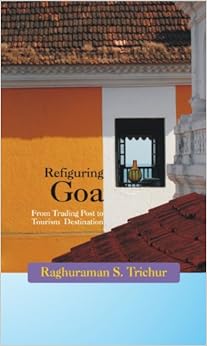
How does one make sense of this fact, that it was Indian control over Goa that deepened Goa’s image as Portuguese, Iberian and European? Raghu Trichur provides a very plausible argument in his book Refiguring Goa (2013). He suggests that “[i]ntegrating Goa into the Indian nation-state was more problematic  than occupying and liberating Goa from Portuguese colonial rule, especially if one was to consider the politics that surfaced in ‘postcolonial’ Goa over the two decades since 1961” (p.12). He elaborates that “it was only after the state sponsored development of tourism in the 1980's (two decades after Goa's liberation/occupation in 1961), was Goa effectively integrated into the Indian nation-state” (p.13). Trichur’s suggestion, then, is that the marketing of Goa as Portuguese and European was a strategy of the Congress government that sought to skirt the politics inaugurated by Dayanand Bandodkar and the bahujan groups subsequent to integration into India.

The nature of Bandodkar’s politics, and how it offered a genuine liberation for the Hindu bahujan of Goa is interestingly elaborated in India’s First Democratic Revolution (2015) a monography recently written by Parag Parobo from the department of History, Goa University. The difference between Nehruvian politics and Bandodkar’s politics was recently succinctly articulated by Kaustubh Naik: “Nehru’s vision for India was a result of his upper caste elite background which worked only to the benefits of Indian elites while the marginalized struggled to find a place for themselves within that vision. Bandodkar, with his lower caste capitalist background, set a model of governance that prioritized liberating the Bahujans from bonds of feudal and social oppression.” Indeed, the initial years of the Congress in Goa were marked by complete upper-caste dominance. This hegemony was completely rejected at the polls for almost two decades until the MGP ran out of steam, and the upper-castes were to combine forces and once again re-assert themselves through the Congress party.

There is, however more to this equation that merely trying to reformulate Goa outside of bahujan politics, and this aspect speaks directly to the desires of Nehruvian elites that marked the Congress party in Delhi and their largely upper-caste associates in Goa. This aspect can be uncovered if we ask why Goa Goa’s being European should be exciting for (elite) Indians?

To answer this question requires that we look at the politics through which Europe is constituted. The fact is that while core European values are defined by the practices in the north-west of that continent, such as Germany, The Netherlands, Britain, the South, namely Spain, Italy, Greece, has been marked off, since at least the nineteenth century, as the place largely of leisure and pleasure, tourism and adventure. Northern European, but especially British and American magnates, travelled to the South for leisure and illicit pleasure. Northern Europeans articulated their European identity by setting themselves off as different from Southern Europeans.  This logic was then applied to the rest of the world, where Europe was set off from the rest of the colonised world, just as Northern Europe was set off from the southern part of the continent.

To return to Goa, I would argue that a Portuguese Goa was appealing for the Nehruvian elites because they saw themselves as the inheritors of Britain’s paramount sovereignty in India. With Indian independence they became the British, and inherited the British gaze on the world. Thus, they inherited the British gaze on the Portuguese, as well as the Portuguese territory. Thus, if Portugal, part of the European south, was a place for leisure, so too did Goa become a place for pleasure for the brown sahibs. If European elites went to the South of Europe for their leisure, so too would the Indian elites go to Goa, their piece of Europe, for leisure. In other words, post-colonial Goa was Europeanised to cater to the fantasies of the Nehruvian elites for whose consumption India was constructed.

The problem doesn’t end with just the elites, however, since what the elites do, the upwardly mobile follow. To demonstrate how the consumption of Southern Europe, and the concomitant production of oneself as European of western plays out I would like to offer an example from the city of Bangalore from about little less than a decade ago. Around this time, there were three different real-estate developers who were offering homes around Southern European themes. There were “large Spanish homes” at Mantri España, Purva Veneziainspired by the magical landscape of Venice", and another development that sought to sell property on the basis that it would feel like home to Vasco da Gama should be return to India.

Given that in our neo-liberal times work demands so much of us, the house is increasingly cast as the space of retreat, and leisure. In such a context, it makes sense that real estate developers would market their properties to the Indian upper middle class, who seek to be western, along lines that would make sense to westerners. Thus, where the house is a space of leisure, it follows patterns of leisure that would appeal to the Northern European. Translated into the Goan context, this ensures not only the hordes of Indian tourists, and the Indian middle class who want to buy homes in Goa, but also the pastiche architecture, with sloping roofs and faux-Iberian aspects. Because of Goa’s indigenous building traditions there is something vaguely local about this contemporary architecture, but its success lies in the fact that it appeals to vague Indian notions about what southern European architecture looks like.

Between the Nehruvian elites, and the upwardly mobile groups of contemporary India, Goa is up for grabs largely because it is a space where, thanks to whitewashed churches and the presence of Catholicism, these groups can pretend that they are in Europe, and play the European. While the Estado Novo may have been responsible for initially articulating this idea, it is the Indian regime, and the comprador class in Goa, that has done more for presenting Goa as Portuguese and European. As Dale Menezes has argued, this has been done largely to suit Indian interests than groups in Goa, the marginalized sections of which continue to languish without necessary attention, or respect.

(A version of this post was first published in the O Heraldo on 16 Oct 2015)

Monday, January 9, 2012

Letters from Portugal: The politically-correct Portuguese


You know how a number of us Goans like to say ‘Hanv Portugues’ (I am Portuguese) right? Now get this; while there are some Portuguese who will indeed be flattered by this and cavalierly acknowledge that indeed being Goan makes you Portuguese, or at the very least, quasi-Portuguese; there are also a good number, especially the politically correct Portuguese, who will visibly wince when they are faced with this exuberant assertion by Goans who do not hold Portuguese nationality.

This statement is uncomfortable for the politically-correct Portuguese because it reminds them of the now-embarrassing claims of the Salazar regime, when the Estado Novo claimed that it did not have colonies, but only overseas territories, and all persons therein were in fact Portuguese. Those statements made Portugal an international pariah, out of step with a world that was marching forward into a new ‘post’ colonial order; and to make this claim of a Portuguese identity is today seen as quaint at best.

What these Portuguese don’t realize however, is that when being embarrassed by these affirmations of an also-Luso identity (because most of these Goans are not casting away their sub-continental identity), they facilitate a certain kind of racism. Etienne Balibar, a renowned scholar of citizenship studies, calls this form of a response ‘differential racism’. The kind of racism that most of us are familiar with is a biological racism, one that assumes that genetic differences, that manifest as colour and facial features for example, can be the basis for differences among human beings. Differential racism on the other hand marks differences not between races, but sees cultural differences as insurmountable. 

Sterling examples are provided by the politically-correct Portuguese. They don’t want you to say that you are Portuguese. They want you to say that you are Indian. In their mind this Indian has definite cultural features distinctly not present among the Portuguese. For example the Indians have a caste system, which the Portuguese categorically do not have. There is the usual orientalist imagery of how the Indians take their religion much more seriously than the European. Then there are the observations of how Goan Catholicism is imbued with local syncretism. Inherent in these assertions of difference is the assumption of Catholicism as European, and the existence of a kind of Catholicism that is pure, unblemished by local traditions. The unspoken affirmation is that Portuguese Catholicism is of this sort. What is being set up through these sorts of affirmations is not only that to be Portuguese one must be exactly like them, but also that these distinctions are, at the end of the day, insurmountable. Eventually it boils down to a biological racism, once a brown person, always a brown person.

The tragedy is that while the Estado Novo used the rhetoric of one Portuguese identity mischievously, it did in fact, and continues to; possess interesting possibilities to deal with racism. This rhetoric built on the longer (if restricted) history of the Portuguese Empire that recognized multiple non-continental groups as citizens of the Empire. This made it made it possible for racial discrimination to be actively challenged, either then, or now. What contemporary politically-correct Portuguese seem to not to realize is that it is possible for us to exorcise the baleful influence of the Estado Novo and reuse our common history to a much more interesting end, by affirming not difference, but the commonality of persons across borders. Engaging in this project would eventually be much more politically correct, than unwittingly raising walls of radical difference. 

(A version of this post was first published in the O Heraldo 8 Jan 2012)