Showing posts with label Archdiocese. Show all posts

Friday, March 18, 2016

Between Scylla and Charybdis: Catholics and their dilemmas


In recent times the Catholic Church across the world has hauled up not merely for the sexual abuse committed by priests against minors, but also the inept, and unjust manner in which the complaints about this abuse was received by diocesanal authorities. All too often, rather than take strict action against such priests, the response of the diocese was to transfer these offenders who merely continue their abuse. In doing so, these dioceses violated not only the integrity and dignity of these individuals, but also compromised the ministry of the Church. Priests are looked up to; they operate as figures of trust. When such figures violate this trust, and their superiors look the other way, it impacts not merely the persons involved, but the Church itself.

Not too long ago, this controversy was expertly opened up to the world through Spotlight, the Oscar winning film directed by Tom McCarthy. The film takes its name from the Boston-based newspaper, The Boston Globe's Spotlight team that investigated the misguided handling of complaints of sexual abuse committed by priests in the diocese of Boston, USA. What is great about the film is the muted manner in which it has focused on the investigative process of the Spotlight team allowing us to absorb the horror that such violations involve, rather than opt for easy sensationalism.

The sexual abuse of minors is not, however, the only crime that plagues the contemporary church. One need only look at the real-estate scandals currently rocking the Archdiocese of Goa and Daman for one example from a list of other moral and legal violations that are too long and upsetting to list here. All manner of unpleasant questions are being raised with regard to the manner in which properties belonging to, or under the care of, the Archdiocese have been sold off to property developers, at the cost of the residents and tenants of these properties. There are some who claim that the Archdiocese has a valid explanation for every case.  And yet, the scandal continues, and grows even, to the extent that some are now asking for the resignation of the Archbishop, largely because of the inept and fumbling manner in which the Archdiocese has mounted, or not, its response to these allegations.

Two sentences from Michael Kirwan SJ’s review of Spotlight in the blog of the British Jesuits help understand the crisis that impacts the Catholic Church today. The first sentence reads “The city of Boston’s strongly-knit but introverted and defensive Catholic culture thus stands indicted.” The second sentence, later in the text read, “Too often the Church’s default position towards secular media, towards secular feminism, has been defensive and oppositional.”

These two sentences captured two radically different positions that may be present within the same institutional framework. The first sentence speaks to how the failure of the Curial hierarchy can be the result of a defensive Church, a defensiveness brought about when the Catholic community in the area is a marginalized one. The second sentence suggests that the problem lies with the culture of the Curia being oppressively patriarchal.

What is often unknown, and not adequately highlighted in Spotlight, is that until recently Catholics, and the Catholic Church, in the United States lived under severe restrictions and social hostility. This kind of hostility is not dissimilar to that faced by non-Hindu groups in India. Universally too, at least from the time of the French Revolution, the Catholic Church has been pushed to the wall and represented as an evil institution. It is this culture of hostility that creates a culture where internal differences are quashed, often with the grudging consent of the victims, so as protect the larger group. In other words, external hostility works to feed authoritarian leadership and suppress democratic dissent within marginalized groups. If, therefore, justice issues within the Catholic Church are not discussed, one has to also lay the blame for it at the feet of the dominant culture.
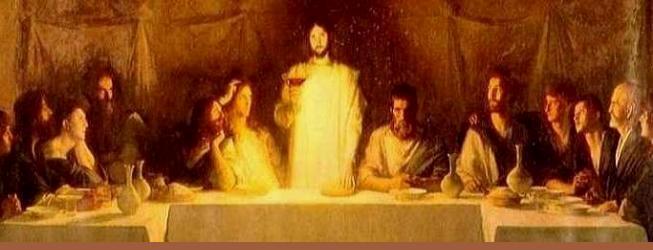
But this is not to suggest that there is a patriarchal traditional within the Curia that is not sui generis. Any institution that provides leadership invariably succumbs to the assumption that it knows best, and its ways are the best. Patriarchy, in this sense, is not merely about misogyny, but about the way in which power is wielded, excluding the voices, and indeed the concerns, especially of marginalized persons within the group. The tragedy is that when the Curia behaves in this patriarchal manner it betrays the understanding that the Church is not merely a physical institution, but also, more importantly, a mystical one. In failing to appreciate this distinction so much is lost. Indeed, as Kirwan points out the voice of God can also come from outside the church, and the Church needs to listen to it. There is also the loss in terms of those who find this a reason to move away from the Catholic Church into the embrace of agnosticism or other churches.

Resolving the crisis the Church faces lies in finding a path between the two problems Kirwan identifies. And yet, this is an awkward position. How do we go forward? Carrying the question before statal authorities, especially when the state is hostile, or seeking to assert its own power, poses a great risk. One way in which this tension can be resolved was demonstrated by some of the protestors in Goa who have presented their claims to the Apostolic Nuncio. In doing so they have shown great nuance. Taking the issue, not before the state, that could possibly prove hostile, but a superior authority within the Church structure, they have opened up a space for the conflict to be resolved internally. One prays that the authorities within the Archdiocese of Goa will recognize this opportunity and respond appropriately, and create systemic change rather than leaving room for a conflict that we can ill afford.

Friday, February 5, 2016

The Church in Goa and the assembling of Konkani culture


Towards the end of last year Naguesh Karmali alleged that Church in Goa is doing what the Portuguese could not do to finish Indian culture.  “The suppression by Church today is much larger than the way Portuguese suppressed it in the 16th and 17th century”, he is reported to have said.

The souls of hundreds of dead Catholic priests must have begun clamouring for justice when they heard this baseless and hateful assertion. For, the fact is that a good amount of “culture”, Indian, Goan, or otherwise, in Goa today, was either formulated by Catholic priests in the sixteenth and seventeenth centuries and then more assiduously developed since the 1960s.

Nationalism and its child, post-colonialism have assumed – often erroneously – that Christianization under the aegis of European expansion resulted in the destruction of culture. However, this was not necessarily the case. Much local culture is the result of European intervention and interpretation. This position derives from larger arguments that suggest that the need to understand local cultures, customs, and laws, in order to govern the territories, and the subsequent misunderstanding by the British, or the misrepresentation by local groups, especially elite groups, resulted in the Indian cultures that we are witness to today.

Going by this understanding, in Goa too, local culture, and in fact Konkani culture was developed by the missionaries.  Prior to the coming of the Europeans, it would be difficult to suggest that there was such a thing as society, in the sense of a community committed to the care of its constituents. There was a caste polity, and while the castes could understand each other, they did not share a common culture as we understand it today. For example, the language of the dominant castes, was definitely not the language of the oppressed castes. Konkani, as a single language spoken, and eventually written, by a wide variety of groups was created by missionaries trying to preach the Christian faith to locals. By this understanding, Konkani was the result of missionary intervention and seen as the language of untouchable Christians. It was for this reason that poor Varde Valaulikar had to struggle so hard to convince his caste fellows to abandon Marathi and claim Konkani as their own.

The Church’s patronage of Konkani in the Nagri, Sanskritized variant, became even more aggressive in recent times. This was soon after the Vatican Council II. Spurred on by the permission to translate the liturgy into vernacular languages, the hierarchy of the Catholic Church in Goa lost no time in switching over to Konkani. They produced a liturgy, songs, music. Read through the issues of Renovação, the bulletin of the Archdiocese, and one can sense the systematic way through which they went about installing Konkani in the liturgical life of Goan Catholics.

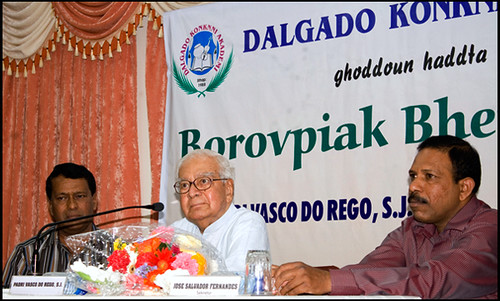
Their interventions were not restricted to the spiritual lives of Catholics alone. Rather, they also supported secular initiatives to promote Konkani in Goa. Take, for example, the fact that it was Diocesan schools that first made the switch to the Konkani medium in the Nagri script. In 1964 Fr. Vasco do Rego pioneered Konkani primary education by getting four schools in the vicinity of Loyola High School, Margão, to introduce Nagari Konkani as the medium of instruction in the primary section. Later, in the 1990s, when the State government refused to support English as a medium of instruction, the Archdiocese adopted Nagari Konkani despite vociferous and sustained protests from parents.

Some have argued that this was because the Diocese had no choice in the matter. This is but one side of the story. The other side of the story is that there were a great number of linguistic nationalists within the Church, and they rubbed their hands with glee at this opportunity. What is also true is that even before the pronouncements of the Vatican Council II, the universal Catholic Church had been priming itself to make space for vernaculars alongside Latin.

Uncharitable voices often argue that the Catholic Church did so because the Vatican was trying to suck up to the newly independent nations. While this may be true in part, what must not be discounted is that already, from the early 1900s, a number of Catholic thinkers were committed to producing distinct national Catholic cultures. The Church has always been producing nuanced vernacular versions of Christianity, as can be seen in Goa. However, in the twentieth century, a world in the grip of racist ideologies, ultimately traceable to the Romantic movement, was unable to appreciate these nuances. The forms of the Catholic Church were seen as European, rather than universal, and sought to be replaced wholescale with “native” culture. In doing so, these Catholic leaders played along with nationalist forces. However, they did this out of conviction that they were doing the right thing, not out of fear of the nationalists.

As I have suggested, the clergy in Goa were no different, and have played a significant role in assembling a more sanskritic Konkani identity for Goa.  It is a shame that this selfless yeoman service, even if misguided, not only goes unsung by their former collaborators, but worse, is neatly swept under the carpet to suit the interests of a wicked cabal.

(A version of this post was first published in the O Heraldo dated 5 Feb 2016)

Saturday, January 9, 2016

Konkani Stalwarts and the Archdiocese


The hierarchy of the Archdiocese of Goa must not know what has hit it. While used to accolades from the leadership of the Nagari Konkani movement, more recently the same leadership has been subjecting the Archdiocese to the most vicious attacks. A month ago Naguesh Karmali made the bold suggestion that the Catholic Church in Goa was suppressing Indian culture in a manner that exceeded that of the sixteenth and seventeenth century Portuguese. Uday Bhembre has directed ire against the Catholic Church on other occasions. For his part, Raju Nayak, editor of the Marathi daily Lokmat, indicated that the Archbishop’s choice to address his guests at the Christmas reception in English rather than Konkani demonstrated a certain lack of Indian-ness of the Catholic Church in Goa.

In this column I would like to examine the manner in which Sandesh Prabhudesai, another Konkani stalwart, positions the Church in his book Clear Cut: Goa behind the Glamour (2014). Clear Cut is a collection of the op-eds Prabhudesai has written over a period of years. While the writing is uneven it nevertheless demonstrates the nature of his concerns, the most constant of which is securing a Goan identity through Konkani.

Reading Prabhudesai’s musings, one gets a sense of his opinion of the Catholic Church. Take, for example, the following sentence from the article ‘Medium of Destruction’ (p. 20), written originally on 29 March 2011. Not explicitly referring to the schools managed by the Archdiocese, he says that “the Konkani medium has been ‘exploited’ purely to get salary grants for the teachers and not to impart education in proper Konkani” (p. 21). Nonetheless, he admits in another article titled ‘What does Parrikar's MoI Policy Mean?’ (originally written in 2012 ) that “only Konkani medium schools run by the Church are shifting to English medium” (p. 35). What Prabhudesai seems to be suggesting, therefore, is that the Konkani medium was “exploited” by the Archdiocese way back in 1990, and that the Archdiocese had no inherent love for Konkani, but switched to Konkani only to financially sustain its schools. Incidentally, his suggestion is not very different from that of the opinion expressed by Raju Nayak in his recent editorial, who went so far as to suggest that the Archdiocese was in fact in favour of English right from the very beginning. Indeed, if one reads Clear Cut carefully, one is struck by the similarity between Nayak’s opinion and Prabhudesai’s as regards the Archdiocese’s relationship to Konkani.

What one gets from these writings, is of the Archdiocese as a manipulative institution. The idea of a manipulative Archdiocese is further elaborated in ‘What does Parrikar’s MoI Policy Mean?’ Here Prabhudesai writes: “As expected, Chief Minister Manohar Parrikar followed the suit [sic] of  his predecessor Digambar Kamat and surrendered his Bharatiya Janata Party (BJP) before the Church, to work out a ‘political’ solution to the long-pending controversy over Medium of Instruction (MoI).” The critical words to focus on here are “surrendered…before the Church”. There are a number of objectives that Prabhudesai seems to accomplish in this one phrase.

The first objective is that these words seem to suggest that the Archdiocese is an institution that can make or break governmental decisions whenever it wishes. To suggest that the Catholic Church is a major force in local politics is a common trope in Goan reportage. While it sometimes enjoys this power, this is not always the case. The fact is that the Catholic Church in Goa, just as in India, is in fact pinned, as it has been for some decades now, in the grip of Hindu majoritarian politics. All too often, as has been the case of the Archdiocese’s action in the post-colonial history of the Konkani language, the Archdiocese has gone out of its way, and in fact contrary to the wishes of many Catholics, to please the leaders of the Nagari Konkani establishment.

The second objective of the use of “surrender” seems to be Prabhudesai’s intention to shame the BJP into pursuing the anti-minority position that they are popularly identified with. Prabhudesai’s recourse to this strategy of shaming is particularly troublesome because it appears to insist that the BJP not respond pragmatically, but hold on, come hell or high water, to its ideological position. Using the metaphor of a war, tt seeks to provoke the rank and file to shame and anger so that they may prevail on their leadership.

Even more important, this phrase suggesting surrender seems to ignore the fact that the power-brokers of the Archdiocese are not acting on their own accord, but rather responding to the firm demands of hundreds, if not thousands of bahujan Catholics have indicated in no uncertain terms that they wish to have their children educated in English, not the brahmanised Nagari Konkani invented early in the twentieth century. Left to themselves, I have no doubt that the brahamnical leadership of the Archdiocese would have continued to pander to their brahmin cousins in the Nagari leadership. If Parrikar were surrendering, therefore, he would have been surrendering before the wishes of citizens represented in this case by the Archdiocese. No shame in this.  Once again, this denial that the Diocesan leadership is in fact acting in line with the desires of large sections of the laity, is a line taken more recently by Nayak.

It should be observed that I am not engaging in a blanket defence of the actions of the Archdiocesan leadership. There is much evidence to suggest that all is not well in many cases of the sale of church properties. Even if made in good faith, the fact is that various groups within the Church in Goa do not see eye to eye on the issue of the sale of properties. What is interesting, however, is that Prabhudesai, in particular, does not seem to problematize this democracy deficit in operation of the Archdiocese. His single point of critique is limited to his understanding of the Konkani issue.

In a recent op-ed taking issue with Nayak’s editorial, Kaustubh Naik suggests that Nayak’s stance denies “the minorities the agency to make their own life choices”. Naik is spot on in this analysis. In portraying the Church as a manipulative and dictatorial institution, and seeking to shame Parrikar for negotiating with the Archdiocese, what Prabhudesai appears to do is to prevent Catholic groups in Goa from using the Archdiocese as one more representational body to get their legitimate rights recognized by the government. Indeed, the thought of shame gains traction only if there is the suggestion that the Church or Archdiocese has no legitimacy being an actor, or representing Goan Catholics, in Goan politics. As the recent shenanigans of the BBSM demonstrates, politics is not determined solely by the ballot. In such a circumstance, there is no harm in the Goan Catholics utilising the structures of the Archdiocese to organise and articulate their demands. In denying them this choice, Prabhudesai denies political agency, or choice, to the Catholic communities in Goa, forcing them into a field that is dominated entirely by apparently secular liberal, or soft Hindutva rhetoric and politics; a politics that Sandesh Prabhudesai seems to subscribe to.

(A version of this post was first published in the OHeraldo on 8 Jan 210)

Wednesday, March 14, 2012

Grave violations: Looking beyond the obvious


In its reported response to the violations in Curchorem, the Archdiocese has rather appropriately advised restraint in expressing their “justified anger”.  We could quibble however, over the emotion that is being referenced. Should we be angry? Or should we be upset and hurt? Anger seems to suggest a certain right to retaliation, one that in this case we have been asked to necessarily restrain. Hurt on the other hand seems to be more appropriate since it suggests the vulnerability of the person who has been the victim of the attack, while opening up, in a rather Christian manner, the possibility for reconciliation, necessary to sustain the environment for happy coexistence in the State.

However, this column would not like to dwell on semantics, nor on an exploration of the appropriate emotional response open to a Catholic in this situation. What this column would rather do is explore the explanations that are being provided for the unhappy incident in Curchorem. The logical response has been that such actions could not possibly be the work of the BJP, therefore, it must be the handiwork of the Congress, smarting under the humiliation of their rejection at the polls. The deplorable actions in Curchorem, this strand of logic informs us, were an attempt to embarrass Mr. Manohar Parrikar, our Chief Minister, and send a warning to the electorate ‘be prepared for the mess that you have invited upon yourselves’.

This could be one explanation. However this should not limit the field of possibilities that we entertain. Any investigation, criminal or social, should ideally open itself up to all possibilities, even the improbable if it would like to ensure a clearer conceptualization of the subject. This is what this column will attempt. If commonsense tells us that the BJP would not engage in such an obviously ill-timed exploit, and therefore it must be the work of the Congress party, then this column will go on to contradict commonsense and suggest some counter-intuitive possibilities.

This exploration must begin however may suggesting that it would indeed be ridiculous to suggest Mr. Parrikar’s hand in the affair. The suggestion must come not because we know Mr. Parrikar is clever enough to not encourage such an action so soon after his election, but because we know, from personal and private estimations of Mr. Parrikar, that he would not stoop to such a possibility. Mr. Parrikar may have an ideological agenda rooted in the vision of the saffron organizations in the country, but it appears that this vision extends to the centrality of the Hindu as a citizen of this country, and a disciplining of the population to making them have a sense of civic consciousness. We can dispense then, with the thought of Mr. Parrikar being culpable.

We could also perhaps dispense with the possibility that the BJP, at an organizational level has had any hand in the actions in Curchorem. To be sure, one can suggest that the BJP orchestrated this entire event so as to show up the CM as a caring man, outraged by the incident and thus gain brownie points.  This possibility is too patently bizarre to contemplate, and if true, would be simply grotesque. If such be the case, we would as a society (not merely as Catholics and Muslims) have to really gird our loins for the storm that should come. For now, this seems unlikely.

There is a need however, for the popular imagination to make a distinction between the BJP as an organization, an electoral party that seeks to come to power on a certain agenda, with a vision that has definite supporters, and other right-wing Hindutva organizations. We often make the mistake of assuming that the BJP is representative of the big bad guy. This would perhaps, be a conceptual error. We have to recognize that with the successful rooting of the Hindutva ideology in the Indian polity there are many more players in the field than just the BJP.

Let us take the example of Pramod Muthalik’s Sri Ram Sene. We cannot forget the incident in 2009 where the Sene rose to national attention for beating-up women and men, for engaging in the un-Indian activity of women drinking in pubs. The question we need to ask is how far was the Ram Sene under the control (at an organizational level) of the BJP, or indeed even of the RSS? Similarly, let us take the examples of the bomb blasts that have been occurring all across the country, whether in Hyderabad, or Pune, or Malegaon, where the perpetrators have been (surprise, surprise) not Muslim fundamentalist groups, but Hindu fundamentalist (Hindutva) groups like the Abhinav Bharat. We could even look to occurrences in Goa where the works of Dr. Subodh Kerkar, celebrating the diversity of the Ganesh icon, was met with a violent response by the Hindu Janajagruthi Samiti. In a highly volatile, and politically competitive, environment, how obedient are these groups to the BJP or the RSS, even if they are linked, at some organizational, or ideological level?

In such a situation, could we postulate that these diverse saffron groups (and they are very active in Goa) have equated the BJP victory with the raising of the saffron flag over Goa, and are now flexing their muscles, assuming their protection by the BJP controlled governmental apparatus? Goa’s case is different (as we as a society are so fond of repeating) but in light of the State’s quiet acquiescence, both in Gujarat and in Karnataka, these groups would have good reason to believe that it is open season for minority hunting, and that the State machinery will not necessarily act on them. Curchorem is not a bad place to symbolically and effectively begin such hunting given the manner in which sectarian tensions have been systematically stoked in that little town.

In conclusion, it may very well be that the whole episode is, as word on the street goes, a Congress orchestrated incident to upset the new balance of power in the State. However, any good investigation would explore all possible options, and as was pointed out in an earlier column, we need to be aware that there is more to politics that elections, and that the diversity of political players is not exhausted by political parties, and that the contests in our country and our state are not exhausted by a simple binary exhausted in the Congress-BJP rivalry.

If indeed it turns out that the incident in Curchorem was the result of Hindutva groups, then the Parrikar government would have one more agenda clearly outlined on its plate; a stern controlling of these groups, an action that was not taken seriously in any form by the Kamat-led government. Given that the BJP has promised its actions to be contrary to those played out by the previous government, we know that we will see action on this front as well.

( A version of this post was first published in the Gomantak Times  14 March 2012)