Showing posts with label Catholic. Show all posts

Friday, March 18, 2016

Between Scylla and Charybdis: Catholics and their dilemmas


In recent times the Catholic Church across the world has hauled up not merely for the sexual abuse committed by priests against minors, but also the inept, and unjust manner in which the complaints about this abuse was received by diocesanal authorities. All too often, rather than take strict action against such priests, the response of the diocese was to transfer these offenders who merely continue their abuse. In doing so, these dioceses violated not only the integrity and dignity of these individuals, but also compromised the ministry of the Church. Priests are looked up to; they operate as figures of trust. When such figures violate this trust, and their superiors look the other way, it impacts not merely the persons involved, but the Church itself.

Not too long ago, this controversy was expertly opened up to the world through Spotlight, the Oscar winning film directed by Tom McCarthy. The film takes its name from the Boston-based newspaper, The Boston Globe's Spotlight team that investigated the misguided handling of complaints of sexual abuse committed by priests in the diocese of Boston, USA. What is great about the film is the muted manner in which it has focused on the investigative process of the Spotlight team allowing us to absorb the horror that such violations involve, rather than opt for easy sensationalism.

The sexual abuse of minors is not, however, the only crime that plagues the contemporary church. One need only look at the real-estate scandals currently rocking the Archdiocese of Goa and Daman for one example from a list of other moral and legal violations that are too long and upsetting to list here. All manner of unpleasant questions are being raised with regard to the manner in which properties belonging to, or under the care of, the Archdiocese have been sold off to property developers, at the cost of the residents and tenants of these properties. There are some who claim that the Archdiocese has a valid explanation for every case.  And yet, the scandal continues, and grows even, to the extent that some are now asking for the resignation of the Archbishop, largely because of the inept and fumbling manner in which the Archdiocese has mounted, or not, its response to these allegations.

Two sentences from Michael Kirwan SJ’s review of Spotlight in the blog of the British Jesuits help understand the crisis that impacts the Catholic Church today. The first sentence reads “The city of Boston’s strongly-knit but introverted and defensive Catholic culture thus stands indicted.” The second sentence, later in the text read, “Too often the Church’s default position towards secular media, towards secular feminism, has been defensive and oppositional.”

These two sentences captured two radically different positions that may be present within the same institutional framework. The first sentence speaks to how the failure of the Curial hierarchy can be the result of a defensive Church, a defensiveness brought about when the Catholic community in the area is a marginalized one. The second sentence suggests that the problem lies with the culture of the Curia being oppressively patriarchal.

What is often unknown, and not adequately highlighted in Spotlight, is that until recently Catholics, and the Catholic Church, in the United States lived under severe restrictions and social hostility. This kind of hostility is not dissimilar to that faced by non-Hindu groups in India. Universally too, at least from the time of the French Revolution, the Catholic Church has been pushed to the wall and represented as an evil institution. It is this culture of hostility that creates a culture where internal differences are quashed, often with the grudging consent of the victims, so as protect the larger group. In other words, external hostility works to feed authoritarian leadership and suppress democratic dissent within marginalized groups. If, therefore, justice issues within the Catholic Church are not discussed, one has to also lay the blame for it at the feet of the dominant culture.
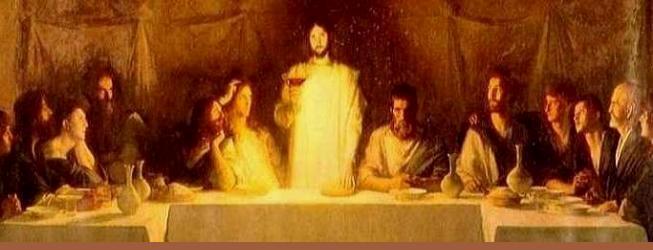
But this is not to suggest that there is a patriarchal traditional within the Curia that is not sui generis. Any institution that provides leadership invariably succumbs to the assumption that it knows best, and its ways are the best. Patriarchy, in this sense, is not merely about misogyny, but about the way in which power is wielded, excluding the voices, and indeed the concerns, especially of marginalized persons within the group. The tragedy is that when the Curia behaves in this patriarchal manner it betrays the understanding that the Church is not merely a physical institution, but also, more importantly, a mystical one. In failing to appreciate this distinction so much is lost. Indeed, as Kirwan points out the voice of God can also come from outside the church, and the Church needs to listen to it. There is also the loss in terms of those who find this a reason to move away from the Catholic Church into the embrace of agnosticism or other churches.

Resolving the crisis the Church faces lies in finding a path between the two problems Kirwan identifies. And yet, this is an awkward position. How do we go forward? Carrying the question before statal authorities, especially when the state is hostile, or seeking to assert its own power, poses a great risk. One way in which this tension can be resolved was demonstrated by some of the protestors in Goa who have presented their claims to the Apostolic Nuncio. In doing so they have shown great nuance. Taking the issue, not before the state, that could possibly prove hostile, but a superior authority within the Church structure, they have opened up a space for the conflict to be resolved internally. One prays that the authorities within the Archdiocese of Goa will recognize this opportunity and respond appropriately, and create systemic change rather than leaving room for a conflict that we can ill afford.

Saturday, June 29, 2013

Itinerant Mendicant: In the Court of the Virgin


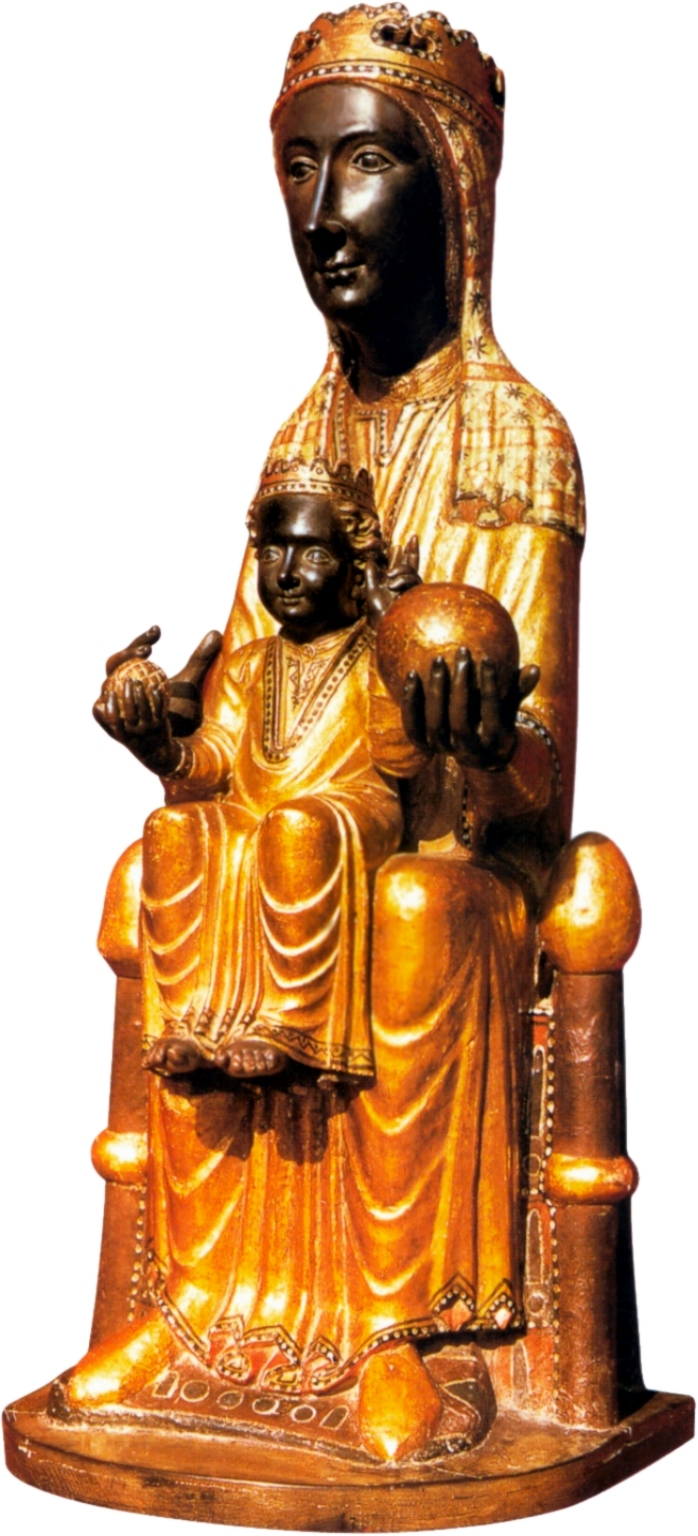
The Sanctuary of the Virgin of Monserrat lies in the Monserrat mountain some thirty-eight kilometres outside of the Catalonian-Spanish city of Barcelona. This sanctuary is home to a Benedictine monastery that legend holds was built around the image of the Virgin Mary seated with her son Jesus in her lap. The monastery was reportedly built around the image because when the monks tried to move the image, they found it impossible to move beyond a certain distance, and were thereby convinced that it was the divine wish of the mother of Christ that her image remain where it had been found. In some traditions, this image of the Virgin is understood to be a replica of an original that was carved by the hand of St. Luke himself. Interestingly, the image portrays the mother of Christ as a dark-hued lady, and is one of the Black Madonnas scattered across Europe.

However, it is not an itinerant’s reminisces of a fabulous shrine that concern this column, but the comparisons that one could make with the sub-continent having visited this European Catholic shrine. Reading books on Catholic practices in Goa, one comes across endless reams seeking to demonstrate how similar some of the practices of Goan Catholicism are to Hinduism, and how some of the Goan churches seem to operate like temples. In such a context, what would it be like to compare a European church to a Hindu temple? It was exactly such an opportunity that presented itself subsequent to this visit to the shrine of the Virgin of Monserrat.

Anthropological studies, especially of South Indian temples, have demonstrated how the temple is not merely a “religious” space, but the centre of a polity over which the deity is understood to be the sovereign ruler. Within this understanding, the temple is the palace of the deity, where royal rituals are carried out, and “devotees” are in fact subjects who go to petition the ruler for favours, just as today we visit politicians for similar boons. Based on the kind of patronage the temple enjoys, the temple complex could range from a simple shed, to an agglomeration of structures, including tanks, courtyards and other buildings.

With this understanding in place it becomes easier to see how the shrine of Monserrat operates very much as a Hindu temple does. The complex consists, not merely of the shrine that houses the image of the Virgin, but includes, like many Hindu temples do, a series of courtyards. Situated at varying levels, the three courtyards at Monserrat, like the Hindu shrine, offer even from the outside various levels of access to the deity within. Much like Hindu temples it is in these spaces where pilgrims gather, and locals offer up performances, be they human towers (castellers), or local dances (sardana) that are held to be “in honour” of the Virgin.

The Virgin is not merely an object of veneration of the Catholic cult, but has also been incorporated into Catalonian nationalism. Thus, on September 11, 1881, Pope Leo XIII declared the vVrgin of Montserrat patroness of Catalonia. As if to further underscore the icon’s status as a sovereign figure, in 1947 the icon was installed into a larger work of art so as to appear as if the Virgin was seated on a throne. As a result, one gets the impression quite like that of the Hindu deity who is installed as the sovereign presiding over its royal court, the central figure capturing one’s eye, commanding awe and respect. Given the icon’s reputation as a miracle worker, in a manner reminiscent of the parikrama, the shrine in Monserrat allows for pilgrims to que up, caress the globe in the Virgin’s hand, and exit from the opposite side, where they can light candles either in thanksgiving for prayers answered, or as further petitions.

The object of this comparison however, is not to demonstrate that there is a Hindu logic that underpins the operation of the universe, but to demonstrate that Catholic churches and their rituals in Goa, are in fact just as Catholic as in any other part of the world.

(A version of this post was first published in The Goan, dtd. 29 June 2013)

Sunday, December 18, 2011

The Portuguese language and the future of Goan Liberation


A popular rhetorical cliché used on the anniversaries of Indian independence, inquires if indeed, we Indians are really free. This cliché urges us to consider independence not as a single moment in time, but as a process towards realizing a utopian society free of all social evils and problems. It would not be out of place therefore, to ask a similar question of Goan liberation, and stress that liberation cannot mean a single moment in time, but must necessarily be seen as a process, of our deepening commitment to the democratic project.


The introduction of Indian democracy to Goa has been an interesting process. Unfortunately however, it has also meant the abandonment, or erasure of the Portuguese language in Goa. It should be stressed however, that the learning of Portuguese by the contemporary Goan, is not unconnected with the larger project of greater democratization of Goan society. On the contrary, the fulfillment of the democratic project is critically tied to more Goans learning and using the Portuguese language.

This stress on the Portuguese language is not to give this language a rightful place in Goan history, nor to legitimize the traits of those Goans who have a marked ‘Portuguese’ aspect in their lifestyle. Such an argument borders on recognizing Portuguese for its value as Portuguese, and does not hold much value from a cultural-nationalist point of view. An argument that would (and should) hold value from a nationalist position, is one that is tied to the manner in which Portuguese is linked to the arrangement of power in contemporary Goan society.

To wholly understand the significance of this argument, it is essential that we underline a well-rehearsed argument; colonialism in any part of the world, and this holds true for Goa as well, was not merely the result of unilateral foreign domination. On the contrary, colonialism persisted thanks to the participation of local elites in the colonial project.  Thus, as English ensured access to power in the colonial British-Indian administration, and education in English models of education ensured participation in the power forms of the British Empire, so too in Goa, the adoption of Portuguese was critical to gaining power not merely in the administrative and political sphere, but also in the social. Righting this balance of power is critical to the democratic project.

In colonial times the Portuguese language was so intimately associated with elite groups, both Hindu as well as Catholic, that the knowledge of Portuguese was, and continues to be, effectively a caste marker of the dominant groups in Goan society. Thus for example, at least among Catholic circles, despite the predominance that English has come to take as a marker of social mobility and status, to come from a ‘Portuguese speaking background’, continues to indicate one’s (longer) privileged location within the hierarchies of Goan Catholic society.  Furthermore, it is not uncommon to have it pointed out, that Portuguese was not a lingua franca within Goa but one largely used by the elites. In making this seemingly innocent factual assertion however, one is simultaneously also subtly marking the boundaries of Portuguese heritage within Goan society. Thus for example, as a result of this logic, it is overwhelmingly the lifestyles and material culture of the landed elite that have been focused on as representations of Indo-Portuguese architecture, while those of the more humble are largely ignored. These demarcations ensure a privileged focus on the lifestyles and material culture of just this small elite segment of Goan Catholic society, casting the rest into a kind of cultural barbarity. Take for example the manner in which the vibrant Tiatr tradition, primarily because it was not, and continues to not be, the entertainment of the Goan elites, is constantly shrugged off as ‘lacking standard’ despite the fact of its stellar role as a medium of social analysis and entertainment. To encourage a broader learning of Portuguese would effectively challenge this link between social status and the language. If more Goans become ‘Portuguese speaking’, it would make nonsense of the ‘Portuguese speaking background’ marker that we currently use, effectively frustrating, albeit partially, the manner in which social difference is articulated today.

More critically, and moving beyond the possibly restricted frames of the Goan Catholic, knowledge of Portuguese was critical to the maintenance of control over the State administration as well as State documentation of land rights. Not a few family, and caste group, fortunes were made by virtue of this restricted access to the language in colonial Goa. Even though English has now replaced Portuguese as a State language; as the continuous stream of persons perusing land records in the State archives in Panjim would indicate, Portuguese continues to be critical to being able to assert, and mask, claims to land. Today, when subaltern groups in contemporary Goa face even an greater threat of access to land rights, it would be a  strategic error to allow control of the interpretation of Portuguese language documents and laws, to be based in the hands of just the few, largely ‘upper’ caste, groups that have resumed learning the Portuguese language.

The popular history of the Portuguese period in Goa has largely been restricted to the gory tales of the initial conquest of the island of Goa, of the Inquisition, and the dramatization of the anti-colonial episodes in the territory’s history. To a large extent, this nationalist history dissuades Hindus from subaltern castes from studying the language. This has ensured that it is solely dominant-caste narratives that are incorporated into the histories of the territory, preventing alternative and liberatory narratives to emerge from a re-reading of the texts and narratives of the period of Portuguese sovereignty over the territory.  It is little known for example, that the knowledge of Portuguese is critical to the bahujan challenge to Hindu upper-caste groups’ monopolistic control of the Goan temples. This monopolistic control of the temples was forged in particular through these latter groups’ knowledge of Portuguese.

Finally, is the argument that rests on the recognition that the emergence of equality is facilitated when there is parity in representational power. While a number of Portuguese scholars work on Goan history and society, it is extremely difficult to find Goan scholars who work on explaining Portuguese society, and its history unrelated to Goa. When we are able to effectively build up this band of scholars, who can represent the workings of the Portuguese to Goa, India, and the world; and engage in Portugal’s press and academy, with their representations of Goa; then we would lay the definitive foundations for greater equality between the two spaces. To do this however, requires that the Goan learn Portuguese.

For these reasons therefore, the learning of Portuguese by the contemporary Goan, is an essential component of our democratic project that the action of the Indian Union in December 1961 sought to forward.

(Published in the commemorative section of the O Heraldo 19 Dec 2011)

Sunday, August 7, 2011

Letters from Portugal: Culture Shock!

Speaking somewhat flippantly, but not entirely unseriously, one of the lovely things about being Catholic is that it allows you to be at home in the world. You know that where ever you may go, no matter what the language spoken in the region, there is a set of people who move through the same motions as you when in community prayer. So all you have to do is bob along with the ritual motions, mumbling the prayers in your language underneath your breath, and voila, you can imagine yourself back home, worshiping the way in which you did when you were little.

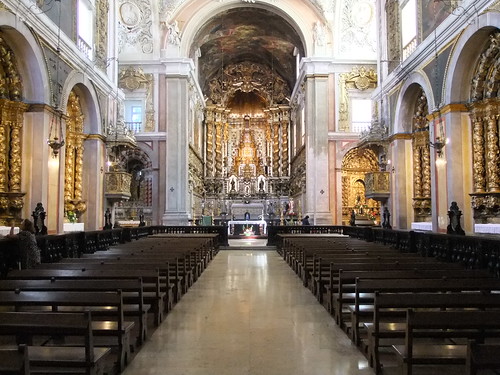
For this reason, in the course of my many travels, and especially when homesick, the local church has provided a space to return to the womb, be it St. Paul’s Church in San Francisco (that operated as the set for the film Sister Act), the Mesquita in Cordoba or the Igreja de Santa Catarina and the Capela do Rato in Lisbon.

There are times though when all is not quite what you expect it to be; my experiences in the churches in Lisbon having been along those lines. There is a certain, shall we say, laxity among those who attend Mass in Lisbon. It should be borne in mind that while Portugal is referred to as a ‘Catholic country’, (whatever that may mean) at least in the urban centers, and among younger generations, there are not too many who attend church on a regular basis. It appears therefore, that a Church in decline is grateful that there are people attending Mass in the first place, and would rather not berate the requirements of comportment when the precious few wander in.

And such comportment! Take for example the situation where once they enter the church there is no expectation of sitting in silence until the priest enters to commence the Mass. Oh no! They enter and chatter, fall on each other in greeting, kissing and exchanging all manner of information. I kid you not, this one time, when entering the uncommonly crowded Capela rather late, I almost passed out, seeing a couple snuggle up to each other, apparently to save space for more people. If you go to church a couple or more minutes earlier, in the hope for a quiet prayer, more often than not, you are wont to hear someone chattering away. You could ofcourse leave this private, intense prayer time for once the entire Mass is over. But this option presents its own challenge. You see, at least in one of the locations I frequent for Mass, the congregation bounds out of church the moment the priest leaves the altar; regardless of the fact that the choir is still singing the recessional hymn. It is only in the villages, my informants assure me, that people still wait for the hymn to end. This leaves you looking like a yokel, when you stand, refusing to budge, until the hymn ends!

And yet for all of these shocking transgressions of propriety around the time of the Mass, there are some norms that the Portuguese follow that speak to the lack in Goan practice. For example the respect shown to the Blessed Sacrament as it makes its way from the altar to the tabernacle after the Communion rite. Almost without fail, the congregation stands up, as it should, in respect. In the often woefully empty Igreja de Santa Catarina, they continue to follow a touching custom, where after the Communion rite, the Blessed Sacrament is held aloft as it makes its way to the tabernacle and is shielded part of the way by an embroidered umbrella.

A home away from home it appears, can at times allow for culture shock!

(A version of this post was first published in the O Heraldo 7 Aug 2011)

Wednesday, July 27, 2011

Sneezing at the Brahmanical: Polemics at the Global Goans Convention

Responding to earlier columns, a friend recently asked for a definition of the word ‘brahmanical’. While perhaps a definition of the term will not be forthcoming, at least not in this column, perhaps examples of brahmanical thought, in this case history-writing, could be provided. A rather interesting example of the same was provided in the course of the first sessions of the Global Goans’ Convention held in London over July 22- 24.

The most striking example of brahmanical history-writing was provided by Dr. Damodar R. SarDesai, who is Professor Emeritus at the University of California in Los Angeles. That he is a historian is a somewhat tragic indicator of the manner in which brahmanical polemics, such as displayed in his presentation, are so often accepted as the acceptable basis of social science. Conversely however it is precisely because he is a historian, that we can see the manner in which polemics is converted to history.

For Dr. SarDessai, reflecting on 50 years of ‘Liberation’, the period of Portuguese sovereignty in Goa was one long and dark period of trial, tribulation and lack of development. He was able to say this however because he was speaking from the position of the brahmanised dominant castes of Goa. He did not recognize the fact that the initial period of Portuguese sovereignty allowed to the oppressed castes in the region, the possibility of conversion to Catholicism and thus social mobility. In later periods of Portuguese sovereignty, it allowed non-dominant Hindu caste groups similar options of social mobility, especially after the Novas Conquistas were added to the Catholic territories of the Velhas Conquistas. This acquisition, allowed for these caste groups, to not only change residence, and hence escape persecution of their ‘upper’ caste feudal overlords, but it also allowed them to represent themselves in the process of the shift, as a different caste group entirely, increasing in this process their social standing. Much later, the Portuguese State offered any options, especially to the Gomantak Maratha Samaj, for education and social mobility.

These facts are inconvenient to a brahmanical history, that because they see the pre-colonial period from the point of view of the dominant castes, see this period as a happy conflict-free time. The other side of this happy story however is that this pre-colonial time was an unhappy time for suppressed groups and for all its faults, colonialism also provided space for the partial liberation of these non-dominant groups. Brahmanical polemics do not necessarily see the post-colonial period as a necessarily happy one either. Until the post colonial order works to the benefit of the dominant castes, the brahmanical will not be appeased. Thus in Dr. SarDessai's polemic, it was not sufficient that the Portuguese were ejected from Goa, the first, and confirmedly anti-brahmanical Chief Minister of Goa, was mentioned but once, and in so flippant a manner, it left the audience wondering as to the man's ultimate worth.

A column of this length cannot do justice to the absolute horror that was the presentation of Dr. SarDessai. What should for the moment suffice to demonstrate its horror was the response of Dr. Teotónio R. De Souza. Dr. De Souza is recognized within the field of Goan and ‘Indo-Portuguese’ history as an authority. What is often not openly stated, by whispered and smiled at is the fact that Dr. De Souza does not normally spare a kind word for the period of Portuguese sovereignty. Dr. De Souza was forced however, by Dr. SarDessai’s polemic, to abandon his (no-doubt carefully crafted) text, and ad-lib a response to Dr. SarDessai. In a muted manner, perhaps owing to the presence of Indian government officials and non-academics in the room, Dr. De Souza sought to tone down Dr. SarDessai’s assertions.

Perhaps the rebuttal comes to late however, because Dr. De Souza has himself many occasions built his version of Indian nationalist history of Goa on brahmanical lines. An example of this foundational presence of brahmanical thinking was obvious when he argued that the specificity of Goa (as with any other place) was contributed to through the presence of the minorities in Goa. This assertion is brahmanical because it accepts the brahmanical assertion that Hindus across the subcontinent are the same, they are one single and indivisible community. Such assertions while patently untrue, are necessary to ensure the domination of the brahmanised groups (and the supremacy of brahmanical thought) that control the destinies of post colonial India. We should at the same time recognize however, that Dr. De Souza seems to have been forced into this position of speaking of the Catholic, because it was obvious in the course of Dr. SarDessai’s presentation, that his intense disparaging (bordering on hatred even) of the Portuguese formed an ideal basis on which to denigrate the cultural condition of the Goan Catholic. It should be pointed out simultaneously, that more recently, especially when he argues of the presence of 'many liberations', Dr. De Souza seems to be moving toward a more complex understanding of the moment of the integration of Goa into the Union of India. In doing so he seems to be recognizing the limiting frames that nationalism and especially brahmanical nationalism present to the study of Goa, colonialism, and the post-colonial. One suspects that it is the rise of right-wing Hindu nationalismto this rethinking, that spurs Dr. De Souza since Dr. De Souza persists in (rightly) calling out instances of Portuguese superciliousness in the academy. Dr. De Souza further betrayed the brahmanical influences on his thought when he responded to Dr. SarDessai, that the success of the Portuguese lay in the fact that they also managed to convert one-third of the population to Catholicism. Dr. De Souza made another error here, where he clearly (if unconsciously) buys into the generally accepted idea that it is only the Catholics that were ‘tainted’ by the Portuguese, while the ‘Hindus’ retain their cultural purity and authenticity. Once more, nothing could be further away from the truth. In the course of their working with the Portuguese State, as well as in the course of everyday market relations, the brahmanised groups in Goa were, and are, also children of the Portuguese (and other Catholic and European) cultural influences. This impress exists on their food, their language, their dress and every other cultural institution they may seek to present as authentic and untouched. Why then, assume that the Goan Catholics alone are the mark of Portuguese success? One does so, because of the brahmanical assertion that it not only in upper caste practice, but more specifically in Hindu practice that authentic ‘Indian-ness’ is captured

What was perhaps most striking about Dr. SarDessai’s address however was the fact that he found it necessary to humiliate and insult the Portuguese (and their lack of effective colonization) in order to retrieve the honour and prestige of the brahmanised groups he spoke for. Those who have reflected on the workings of caste will know that humiliation – whether verbal, when we point to someone’s birth in a ‘lower’ caste, invariably to ‘put them in their place’, or physical, through the practices of untouchability – is the most significant strategy of casteist and hence the brahmanical order. Interestingly however, when one humiliates the Portuguese for ineffective colonization (or development), one is praising the British style of colonization and development. This move then, demonstrates that close ties that the brahmanical makes with the colonial. In this move we realize that brahmanical thinking, is not necessarily an ancient framework that necessarily returns us to a moment of pre-colonial innocence, but in fact a contemporary development that gains its power from colonial (and especially British) intellectual frameworks. Through this lineage, the brahmanical is connected to the racist and other exploitative frameworks that held sway in the nineteenth century.

What should be mentioned in conclusion, is that it isn’t poor Dr. SarDessai alone who should be blamed. That he is the carrier of an infectious brahmanical thought process is true. However, his pronouncements were by and large accepted silently by the audience, because Dr. SarDessai was able to quote from a stock of knowledge that has gained credibility over time. Merely because it has gained credibility over time however does not make it right, it only makes the task of dealing with it, and the sneaky manner in which it secretes itself into our work, that much more difficult.

Jai Bhim!

(Comments are welcome at www.dervishnotes.blogspot.com)