Some months ago,
the State government honoured the memory of Sant Sohirobanath by organising a
book exhibition in tandem with a festival of devotional music. What a clever
sleight of hand! Along with this column, there were other voices that protested
the manner in which the state government is shamelessly promoting caste Hindu
hegemony in Goa.
Some months ago,
the State government honoured the memory of Sant Sohirobanath by organising a
book exhibition in tandem with a festival of devotional music. What a clever
sleight of hand! Along with this column, there were other voices that protested
the manner in which the state government is shamelessly promoting caste Hindu
hegemony in Goa.There were a number of arguments raised to defend the commemoration of the Sant when the government’s decision was revealed to the public. Of these, two were significant. The first suggested that the Sant was part of the bhakti tradition of the subcontinent and this was a good thing. The second suggested that it represented the validation of the spiritual in the face of the materialism that contemporary society seems to be mired in. This column will deal primarily with the suggestion that the bhakti tradition is an undeniably positive tradition.

The bhakti
tradition has been much celebrated largely because it is seen as having challenged
the hegemony of the brahmin and vedic priesthood over access to the deities.
The bhakti movement is credited with enabling the common person, and especially
lower caste persons, to have direct access to the deity and the salvation that
this access promised.
There is indeed a robust anti-caste critique in the visions of those who are seen as a part of the bhakti movement. Gail Omvedt, a significant authority on dalit-bahujan assertion in the subcontinent, has penned a book titled Seeking Begumpura (2008) that references the utopia that animated the works of many dalit-bahujan sants and poets.
 And yet, this is
not sufficient reason for us to uncritically accept the bhakti movement as an
unmitigated good. In her book Language, Politics, Elites and the Public Sphere (2001), Veena Naregal points out
that the relations between the emerging dissenting devotional practices and the
ruling elites is still not very well understood. She refers to the case of
the celebrated bhakti poet Eknath to make her point. Naregal highlights that
when castigated by his brahmin peers for writing in the vernacular languages,
Eknath “claiming not to be a deviant, [he] justified his writing in the
vernacular as a popularisation of the high religious texts” (p.15). Indeed,
Naregal goes on to quote the celebrated scholar Sheldon Pollock, who argued that,
“the work of vernacularisation was not necessarily a subaltern process, but
actually represented attempts by political elites to re-articulate their
authority in localised idioms” (p.15).
And yet, this is
not sufficient reason for us to uncritically accept the bhakti movement as an
unmitigated good. In her book Language, Politics, Elites and the Public Sphere (2001), Veena Naregal points out
that the relations between the emerging dissenting devotional practices and the
ruling elites is still not very well understood. She refers to the case of
the celebrated bhakti poet Eknath to make her point. Naregal highlights that
when castigated by his brahmin peers for writing in the vernacular languages,
Eknath “claiming not to be a deviant, [he] justified his writing in the
vernacular as a popularisation of the high religious texts” (p.15). Indeed,
Naregal goes on to quote the celebrated scholar Sheldon Pollock, who argued that,
“the work of vernacularisation was not necessarily a subaltern process, but
actually represented attempts by political elites to re-articulate their
authority in localised idioms” (p.15). This insight can
be further buttressed by the recognition of the fact that Eknath may not have
been the only person of the period who was seeking to popularise brahmanical
texts and create a political culture defined by Brahmanism. Naregal places
Eknath within the period c. 1533-99. In
her work on the politics around the Telugu language, Language, Emotion, Politics in South India: The Making of a Mother Tongue (2010), Lisa Mitchel makes a similar point about the eleventh
century composition of the Mahabharata in Telugu by the poet Nannaya.
Challenging the idea that fired with the love for his mother-tongue Nannaya was
articulating a Telugu identity, Mitchell in fact argues that this composition
of the Mahabharata can be seen “as an attempt to prevent the spread and
expansion of already existing anti-brahmanical heterodox identity by expanding
orthodox meanings and practices” (p. 50). By composing the Mahabharata in
Telugu, Nannaya was actively countering an already established heterodox Jain
identity that used Telugu as a medium for spreading itself. Looking at this
history, she points out that the Telugu language was in fact a weapon, a medium
and a tool for accomplishing a specific purpose, the expansion of elite culture
and identity into new realms.
This insight can
be further buttressed by the recognition of the fact that Eknath may not have
been the only person of the period who was seeking to popularise brahmanical
texts and create a political culture defined by Brahmanism. Naregal places
Eknath within the period c. 1533-99. In
her work on the politics around the Telugu language, Language, Emotion, Politics in South India: The Making of a Mother Tongue (2010), Lisa Mitchel makes a similar point about the eleventh
century composition of the Mahabharata in Telugu by the poet Nannaya.
Challenging the idea that fired with the love for his mother-tongue Nannaya was
articulating a Telugu identity, Mitchell in fact argues that this composition
of the Mahabharata can be seen “as an attempt to prevent the spread and
expansion of already existing anti-brahmanical heterodox identity by expanding
orthodox meanings and practices” (p. 50). By composing the Mahabharata in
Telugu, Nannaya was actively countering an already established heterodox Jain
identity that used Telugu as a medium for spreading itself. Looking at this
history, she points out that the Telugu language was in fact a weapon, a medium
and a tool for accomplishing a specific purpose, the expansion of elite culture
and identity into new realms.From his fieldwork in Karnataka, the eminent sociologist M. N. Srinivas also noted that the practice of Harikatha served to popularise a sanskritic theology among the non-brahmanical groups. Such Sanskritic practices exposed the populace to new ideas and values and hitherto unknown terms such Karma, dharma, papa, punya, maya, samsara and moksa which found frequent expression in the vast body of Sanskrit literature, sacred as well as secular.
Seen in this light the Bhakti tradition is not necessarily the innocent, liberating project that defenders of the Sohirobanath project make it out to be.
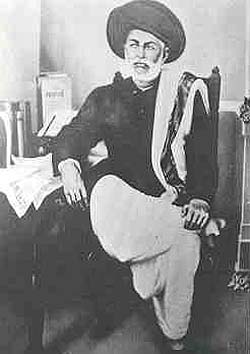 There is a
strain of rhetoric in this country that resorts to challenging unpalatable
research by claiming foreign bias. However, no less a person that the renowned
Dalit-bahujan activist, Mahatma Phule was sceptical of the texts produced by
the bhakti poets of Maharashtra. In his polemical tract Shetkarayacha Aasud (Cultivator's Whipcord, [1881] 2002) Phule
suggests that the bhakti tradition emerged as an ideological response to the
liberation that Islam was providing. “From amongst the bhat brahmans, Mukundaraja and Dnyanoba lifted some imaginary parts
from the Bhagavat-bakhar, and wrote
tactical books in Prakrit called Viveksindhu
and Dnyaneshwari and crazed the
ignorant farmer to such an extent that the farmers started to think of the
Mohammedans as low, along with the Quran, and started hating them instead.”
Bhakti, then, rather than uplifting the marginalised, befuddled their minds,
made them hate their liberators and pushed them deeper into the hands of their
brahmanical oppressors. We know enough about the nature of the Hindu Right’s
vigorous assertions, both in Goa and India, to be aware that the sudden celebration
of Sant Sohirobanath probably has nothing to do with any love for promoting
universal brotherhood. On the contrary, it has probably more to do with
snipping bahujan-dalit assertion in Goa, and casting non-Hindus as enemies.
There is a
strain of rhetoric in this country that resorts to challenging unpalatable
research by claiming foreign bias. However, no less a person that the renowned
Dalit-bahujan activist, Mahatma Phule was sceptical of the texts produced by
the bhakti poets of Maharashtra. In his polemical tract Shetkarayacha Aasud (Cultivator's Whipcord, [1881] 2002) Phule
suggests that the bhakti tradition emerged as an ideological response to the
liberation that Islam was providing. “From amongst the bhat brahmans, Mukundaraja and Dnyanoba lifted some imaginary parts
from the Bhagavat-bakhar, and wrote
tactical books in Prakrit called Viveksindhu
and Dnyaneshwari and crazed the
ignorant farmer to such an extent that the farmers started to think of the
Mohammedans as low, along with the Quran, and started hating them instead.”
Bhakti, then, rather than uplifting the marginalised, befuddled their minds,
made them hate their liberators and pushed them deeper into the hands of their
brahmanical oppressors. We know enough about the nature of the Hindu Right’s
vigorous assertions, both in Goa and India, to be aware that the sudden celebration
of Sant Sohirobanath probably has nothing to do with any love for promoting
universal brotherhood. On the contrary, it has probably more to do with
snipping bahujan-dalit assertion in Goa, and casting non-Hindus as enemies. Phule was in
fact categorical on this point. In Ghulamgiri
(Slavery, [1872] 2002), he asserts that “There were several brahman authors
like Mukundaraj, Dnyaneshwar and Ramdasa, among the plenty that mushroomed all
over, who wasted their talents in composing silly books. None of them dared to
even touch the rope of bondage tied around the necks of the shudras. Obviously,
they lacked the courage to renounce such wicked practices and deeds openly. So
they made a distinction between ‘Karma Marga’ (the Path of Action) and ‘Dnyana Marga’
(the Path of Knowledge), assigning every wicked practice to the former and
atheist opinion to the latter. Then they wrote heaps of hollow books like these
and allowed their selfish brahman brothers to continue robbing the shudras.”
Phule was in
fact categorical on this point. In Ghulamgiri
(Slavery, [1872] 2002), he asserts that “There were several brahman authors
like Mukundaraj, Dnyaneshwar and Ramdasa, among the plenty that mushroomed all
over, who wasted their talents in composing silly books. None of them dared to
even touch the rope of bondage tied around the necks of the shudras. Obviously,
they lacked the courage to renounce such wicked practices and deeds openly. So
they made a distinction between ‘Karma Marga’ (the Path of Action) and ‘Dnyana Marga’
(the Path of Knowledge), assigning every wicked practice to the former and
atheist opinion to the latter. Then they wrote heaps of hollow books like these
and allowed their selfish brahman brothers to continue robbing the shudras.” We would do well to learn from Phule that just as some of the bhakti poets were using vernacular languages to extend the reach of brahmanical power, contemporary Hindu nationalist associations, and the state itself, are using bhakti to sanskritise Dalit-Bahujan groups and convert them into brahmanised Hindus. This strategy would not have been problematic had it led to genuine empowerment of the Dalit-Bahujan groups. As noted by Ronki Ram, the problem with Sanskritisation is that this process reinforces the structural logic of Hinduism by asking Dalits to internalize the very same social system that they ought to contest in the first place. Sanskritisation forces Dalit-bahujans to imbibe outmoded cultural patterns of the upper castes without seeking any radical change in the hierarchical and oppressive structures of the brahmanical social order.
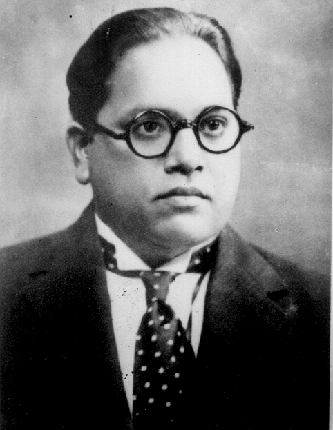 Dr. B.R.
Ambedkar minced no words about the regressive impact of a narrowly defined
Bhakti. In his final speech to the Constituent Assembly on 25 November, 1949,
he pointed out that “in India, Bhakti or what may be called the path of
devotion or hero-worship, plays a part in its politics unequalled in magnitude
by the part it plays in the politics of any other country in the world. Bhakti
in religion may be the road to the salvation of the soul. But in politics,
Bhakti or hero-worship is a sure road to degradation and to eventual
dictatorship.”
Dr. B.R.
Ambedkar minced no words about the regressive impact of a narrowly defined
Bhakti. In his final speech to the Constituent Assembly on 25 November, 1949,
he pointed out that “in India, Bhakti or what may be called the path of
devotion or hero-worship, plays a part in its politics unequalled in magnitude
by the part it plays in the politics of any other country in the world. Bhakti
in religion may be the road to the salvation of the soul. But in politics,
Bhakti or hero-worship is a sure road to degradation and to eventual
dictatorship.” Seen in the light of scholarship and enlightened activism, the uncritical celebration of the Bhakti tradition through the symbol of Sant Sohirobanath does not bode well. It only presages the continued brahmanisation of Hindus of Goa, and worsens the shackling of the dalit-bahujan groups who are being directed to expend their energy on religion, rather than the assertion of the rights that are being denied them.
(A version of this post was first published in the O Heraldo dated 6 March 2014)


_at_Panjim,_Goa,_India_01.jpg)