Showing posts with label Kerala. Show all posts

Wednesday, December 13, 2017

A Cure for Foolishness


When I first encountered this work by Navelcar I knew, because of earlier conversations with the artist, that these two lines of calligraphy were not some orientalist scribbling. The artist had shared with me that, as a boy, he had learned to read and write Urdu from a Catholic teacher in the neighbouring village of Aldona. Given my own inability to read Urdu, I turned the image over to friends on social media who revealed that the script was, in fact, Arabic. At this point differences emerged in interpretation. One friend argued that it looked like the work of someone practicing to write in Arabic, with the first line marked by errors and the second correcting those errors. This explanation made sense, since the artist has eschewed a title for this piece. A second appraisal of the text suggested that both lines were actually the same, just written in slightly different styles. “The difference lies in a slight variation in the cursive ‘h’, the ‘lā’ and the hamza...,” my friend offered. Both assessments were clear in their estimation, however, that the text before us captures the Arabic proverb “Alhamaq da' la dawa' lahu.” This translates to: “Foolishness/stupidity is a disease that has no cure/treatment.” The language and the choice of proverb with which to practice his calligraphic skills reveal interesting dimensions of the artist’s personality. 

Asked to write a curatorial essay for an exhibition in Hyderabad of the works of Goan artists in 2015, I encountered the sheer diversity of global experiences that animate their works. Taking cue from the erstwhile authoritarian Estado Novo’s proclamation: “Portugal não é um país pequeno” (Portugal is not a small country), and choosing to subvert it, my essay notes that “Goa is not a small country.” Having lived through the Estado Novo and traversed the pluri-continental Portuguese world, it is my suspicion that Navelcar, whose art bears the influence of these experiences, would agree with my reframing of the Salazarist claim.

Subsequent to Goa’s legal disconnection from the Portuguese world due to the annexation of the territory by the Indian Union in 1961, Goan identity has been reformulated by Indian nationalists to reflect a narrower character. Following the national lead, itself obsessed with brahmanical origins, Goan elites have crafted a local identity that is focussed on an imagined Sanskritic past, when in fact Goan culture is knit from heterogeneous strands. Navelcar’s efforts in this untitled piece counter this Indian nationalist tendency, demonstrating instead the centuries-old, and continuing, connections between Goans and the larger Indian Ocean world within which they are situated.

The ties between Goans and Arabs predate the migration of the former to the Gulf states as a result of the economic boom of the 1950s. The eastern coastline of the Arabian Sea was frequented by Arab traders even prior to the latter’s conversion to Islam. For example, the myths associated with the figure of Cheraman Perumal, the Chera ruler of the territories  that now constitute contemporary Kerala, evidence this ancient proximity. In one myth, the ruler, a contemporary of the Prophet Mohammed, witnessed the splitting of the moon. On learning from visiting Arab traders of a similar event involving the Prophet, Perumal is reported to have renounced his kingdom, travelled to Mecca, and converted to Islam. In the context of such exchange, one could enquire whether Navelcar’s present work operates as a suggestion of the “stupidity” or “foolishness” of contemporary identity-framers who tether Goan identity to a Sanskritic one alone, while obscuring the various pluri-continental strands that have and continue to constitute Goan identities.

Further, Arabic is not a language internal to Goan heritage alone. It is also inherent to the other spaces through which this exhibition tracks the journey of Navelcar: Portugal and Mozambique. Arabic was an Iberian language prior to the establishment of the Frankish kingdom of Portugal. As such, a reconnection with the language is critical to the future of Portugal if it is to move away from those historiographies of the country that are racialized and parochial. Being part of the Swahili coast, Arabic similarly maintains a visceral presence in parts of Mozambique. It turns out, therefore, that Arabic is not as alien to Navelcar’s world as it might first appear. Thereupon, his artistic practice could be viewed as a challenge to the postcolonial nationalisms that besiege the various locations in his world: Goa, Portugal, and Mozambique.

If such is the artist’s intent, then Navelcar’s choice of idiom, and his practice at perfecting his Arabic calligraphic skill, suggest that there is in fact a cure for foolishness. The remedy lies in the opening of one’s self to the larger world. Foolishness, after all, is not so much a naturally existing state, but a stubborn refusal to see the world as it is.

(A version of this text was first published in the catalogue organised by R. Benedito Ferrao that accompanies the exhibition 'Goa / Portugal / Mozambique - The Many Lives of Vamona Navelcar' organised by the Al-Zulaij Collective, at the Fundação Oriente India from 12 Dec 2017 - 12 Jan 2018.)

Friday, September 5, 2014

Rights trump culture: Lessons in fighting Hindutva


There was a significant amount of virtual rejoicing some weeks ago when the vice-president of the state BJP unit, Wilfred Mesquita, announced that "Prohibition cannot come to Goa... because Goa's culture is to drink." Mesquita’s statement came in the wake of a number of recent controversies involved with moral policing both within the country and also in Goa. Both Chief Minister Parrikar and his colleague Sudhin Dhavalikar had expressed opinions about the need to ban the consumption of alcohol in public. Given that the state government of Kerala had announced a decision to enforced a gradual prohibition of alcohol in that state, and the abandon with which the Hindu right has been going about its agenda of cultural rectification of the country the Dhavalikar-Parrikar comments understandably unnerved many in the state.
We owe a debt of gratitude to Dr. Mesquita for having had the moral courage and the good sense to point out that prohibition is out of the question when alcohol is a part of the social rituals among a good portion of the Goan public. May he live long and prosper.
As relieved as we may be by Misquita's statement, it needs to be pointed out that basing the decision to not ban the consumption of alcohol on the basis of its presence in “culture” is not a reassuring fact. Indeed, such a logic is problematic because it is still very much within the Hindutva realm of reasoning.

Hindu nationalism is a cultural nationalism. This is to say that it is a nationalism that privileges culture (as defined by Hindu nationalists) first. All else, including rights, comes after this definition of culture. The opposition to prohibiting an act on the basis of culture is to give primacy to culture, not to rights. Thus, what would happen if there was no culture of social drinking in Goa? Would it be ok to ban drinking then?

This question is important because it is at the root of determining the extent of the censorship powers of the State. The question is one of the extent of the powers of the state to curtail activities of persons, and of the recognition of right of the individual to choose. If I choose to drink, then regardless of whether it is a part of our culture or not, I should be able to drink, and have the right to purchase alcohol for consumption.

Phrasing the question in terms of alcohol, whose consumption is marred by instances of alcoholism, is not the best way to phrase a question of rights. Indeed, members of the right often use the most extreme example to make their case and carry through decisions. If we replaced alcohol with skirts, for example, we may see the dangers involved in invoking culture as the basis to allow, or prohibit an activity. If the wearing of skirts were not commonplace among women in Goa, would it be legitimate to ban the wearing of skirts? Of course not, because one would then be treading on the rights of women to wear skirts should they choose to do so. The law is known to place reasonable restrictions on the rights that citizens enjoy. Should one gravely inconvenience others provisions already exist to remand persons causing a nuisance through drunken behaviour. In the presence of this reasonable restriction the introduction of prohibition does nothing more than allow for the state to exercise unreasonable authority over the ordinary lives of people.

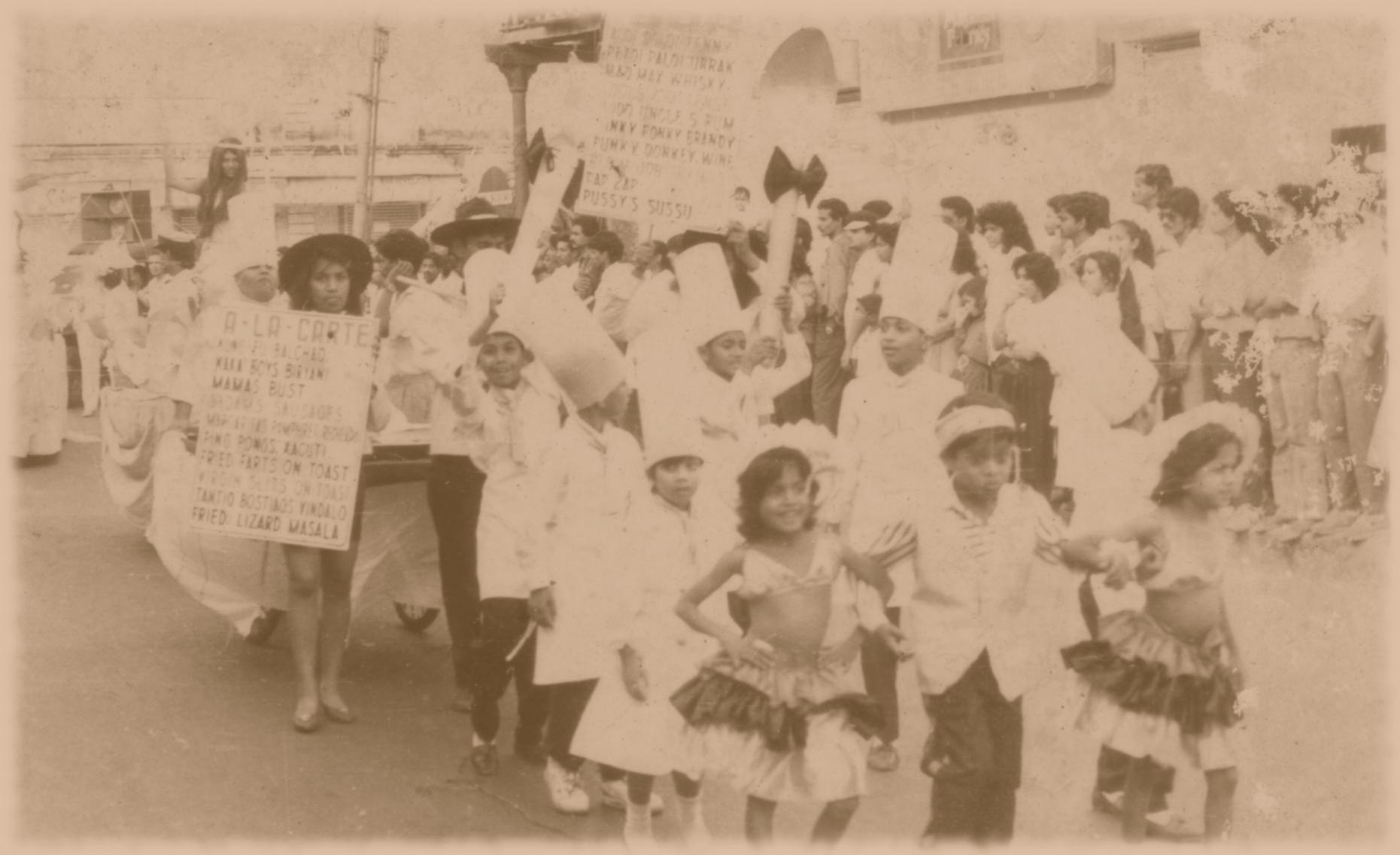
Problematising culture as a way to attack or defend culture also helps to make us aware how institutions that are today crying foul, have been a part of the gradual drift towards the right. Back in the 1980s, the hierarchy of the Catholic Church in Goa came out strongly against the celebration of Carnaval insisting that it was not a Catholic celebration. Indeed, it did so more recently, once again when Parrikar waded into debates on what is or is not appropriate local culture. In doing so the hierarchy sought to delegitimise Carnaval celebrations. In doing so they were committing a number of errors that haunt us today and will no doubt haunt us in the future. The hierarchy was effectively suggesting that only the religious lives of the Catholics in Goa was worthy of respect. The rest could be dismissed and done away with. They were also setting themselves up as the determiners of all cultural activities that persons who confess the Catholic faith engage in. This was, and continue to be a dangerous position. As much as the Catholic Church has a right to advise its members on the manner of their comportment, it cannot determine what is, or is not part, of the activity of Catholics in Goa. While the hierarchy of the Catholic Church in Goa may not be fond of carnival, it ought to have taken a broader perspective and indicated that while Carnaval was not a Catholic religious feast, and the hierarchy had reservations with regard to some of the ways in which it is celebrated, it would not deny that Carnaval is a significant celebration with historical roots in Goa, and especially among Catholics in Goa. We live in a complex world and the only way in which we can prevent institutions, both statal and otherwise, from becoming autocratic monsters is by paying close attention to the rights of individuals.

Despite making culture the basis on which he dismissed the prohibition of alcohol, Mesquita also needs to be congratulated for not making the social consumption of alcohol a feature of Catholics alone. Almost all reports indicate that his statement was “Goans drink at wedding and parties. How can it be banned?” Thus, it was not Catholics drink at social events, but Goans.  This makes sense given that it is not merely Catholicism that determines whether people drink alcohol socially or not, since people were fermenting and producing alcohol long before both Europeans and Christians came to this territory. The European, and possibly Christian, origins of the consumption of alcohol is just one strand in the history of alcohol consumption in the territory.

To return to the thrust of my argument, making culture the basis on which decisions are made will also push us further into the ire of the Hindutva tiger. Given that it is the non-brahmanical culture of Goa that they see as a problem, decisions to protect certain social activities on the basis of culture will work to only strengthen the resolve of these groups to attack the cultural manifestations of Catholics, and other non-brahmanical groups, in Goa. We need to turn the tables on the forces of the right (which includes not merely the forces of Hindutva) and assert that rights are the basis of public policy.

Mesquita's statement may have won us the battle therefore, but will it win us the war?

(A version of this post was first published in the O Heraldo on 5 Sept 2014)

Wednesday, November 23, 2011

Naraka Shoora: Turning Traditions on their head


Some weeks ago, sometime around the eve of Diwali, a friend of mine posed a question that would have made proud the masters who crafted the Agamas and Dharmashastras. ‘At what time is it’, he asked, ‘that the Narakasura, whom we consign to flames on the eve of Diwali, becomes a Narakasura?  Is it when the head-mask is put on? Or when the lights are put on? Or is it when the music starts? Or the moment the frame is made? Is there a specific moment?’ Continuing in this Agamic tradition, a friend of his opined that the real moment should actually start, when the effigy of the Narkasur is burnt down and the Diwali lamps are lit up. At the same time however, this respondent lamented that nowadays, we concentrate more upon creating Narkasur (the symbol of evil) than that quintessential mark of the Goan Diwali, the Akashdivo.

Kancha Ilaiah
When lamenting this inversion of the ‘traditional’ rules of the Diwali celebrations however, this contemporary Agamist may have grabbed the wrong end of the stick. Take the example of the public Ganesh festival, which has come a long way from the time of its invention by Lokmanya Tilak, and is today marked by loud film-music and often by drunken young men dancing to these popular tracks. While the poor Lokmanya must be turning in his grave, the contemporary intellectual Kancha Ilaiah has suggested that these trends, rather than being lamented should be seen as the Dalitisation of the Ganesh festival. Ilaiah’s argument would be that while Tilak’s public festival was intended to consolidate the population along nationalist, brahmanical, and thus elitist lines, the trend otherwise so lamented, should be seen as a populist correction of this trend.

In other parts of the country, the Dalitisation, or de-brahmanisation, of popular Hindu festivals has proceeded apace along rather different patterns.  This trend has been led by Dalit student organisations who have argued that the myths surrounding Hindu gods and goddess and their festivals are in fact symbolic representations of the history of 'upper' castes’ domination over the indigenous population of the country – SC, ST and OBCs.  To correct this history, they therefore re-interpret these events from a Bahujan perspective. Thus for example, the members of the All India Backward Students Forum (AIBSF) in the JNU campus in Delhi suggested that Dussehra was in fact a celebration of the killing of the Sudra king Mahishasa by the upper-caste woman Durga.  Similarly on the campus of the Osmania University, on the eve of Diwali, some students cast Naraka Chathurdashi as “Narakasura Vardhanti,” the death anniversary of Naraka. They reinterpreted the event as commemoration of the killing of the Dalit hero Naraka by the brahmanical figure Krishna, who killed Naraka to suppress the revolt by Dalits against upper castes.  Arguing that the Asura was appended to a name to demonise the character, Narakasura was now called “Naraka Shura”. In this reworking of the name, Naraka remains the name of entity, while the Asura is cast away to make Naraka a Shur-Vir, or brave warrior.

The event at the JNU campus not surprisingly, did not go down well. Upper-caste students taking offense to this inversion and demonization of brahmanical deities assaulted the students of the AIBSF. This sort of confrontational violence has not been universal however, and the modern history of Kerala and the Onam festival is perhaps an interesting example.

Mahabali returns to Kerala
Most people today, both within Kerala and without, see the festival of Onam as the moment when the mythical king Mahabali returns to his former realm, thanks to a final boon by the Vishnu’s Vaman avatar, to check on the well-being of his subjects. It is to welcome him and reassure him that all continues to be well, that Onam is celebrated with pomp and style. Writing on the historical evolution of this festival however, J. Devika argues that ‘Onam used to be, in many parts of Kerala, … more a celebration of Vishnu, rather than Maveli — Mahabali — and domestic rituals associated with Onam celebrated not Mahabali but Vamanamurty.’ She points out that a different interpretation of Onam was forged ‘in the decades in which the movement for uniting Malayalam-speaking regions into Kerala gathered force, one in which the left was certainly a hegemonic presence. Brahmanical mythology according to which Kerala was founded by Parasurama the warrior sage was insistently attacked by left-leaning and anti-caste intellectuals …who launched a scathing attack against the setting up of a depiction of Parasurama outside the venue of the Aikya Kerala Conference in the 1940s.’ As in the case of Goa, Puranic legends cast Parashurama as the mythical creator of Kerala, and clearly, the Aikya Kerala movement, set up to consolidate the Kerala state was seeking to draw on this origin myth to create a  popular history for the nascent Kerala sub-nation. As a result of this attack, Onam was converted from a festival focused on the Vaman avatar, to a celebration of the benevolent asura king Mahabali, an idea that was spread in school text books, and through them into popular imagination.

Mahatma Jotiba Phule
This overturning of the Mahabali- Vaman avatar relationship however, has a much longer tradition than that involved in the consolidation of Malayalam speaking territories into the State of Kerala. This tradition can be said to date back to the efforts of the 19th century philosopher and social reformer Mahatma Jotiba Phule. In a recent book,  The World of Ideas in Modern Marathi: Phule,Vinoba, Savarkar, G. P. Deshpande points out that Phule con­trasted Baliraja, the shudratishudra king, with Vamana, the brahmanical avatara, to make a point about the nature of power relations between caste  groups in the sub-continent.  Deshpande argues that the extent to which Phule returned to this myth in his work would allow us to see Phule as possibly constructing all recorded history as the history of the Vamana-Baliraja struggle. Not surprisingly, Phule is an important figure in the political pantheon of Dalit political groups.

The exploring of the social relations and social history encoded within the myths that form the basis of Hindu festivals may not be as simple a task as a merely intellectual discussion however. The attempt of the AIBSF on the JNU campus ended up with upper-caste students assaulting the members of the AIBSF. Given the sensitivity with which we in India take our religious figures, one can see that suggesting that it is not the Asura, but the Vishnu avatar who is the bad guy, may fall nothing short of asking for the cataclysmic to break down on us. The Dalit activist on the other hand, would argue that the un-deifying of the Vishnu avatar is central to undoing the brahmanical violence, perpetuated on Dalit communities on a daily basis, and in allowing Dalit communities to construct a history that explains the conditions that they find themselves in.

The options are admittedly not easy, and we don’t have to necessarily take a call now. We need to merely recognize that this social process is on, and watch for what happens. The Agamas were/are scriptures that lay out the ritual guidelines for the appropriate construction of an image that will subsequently be infused with the spirit of the deity. Given the attempts that are on to re-evaluate popular myths and interrogate belief-systems, it appears that the almost Agamic questions that were referred at the start of this column, are not entirely out of place?

(A version of this post was first published in the Gomantak Times 25 Nov 2011)