The name Manohar Malgonkar should be a name familiar to most literate Goans. 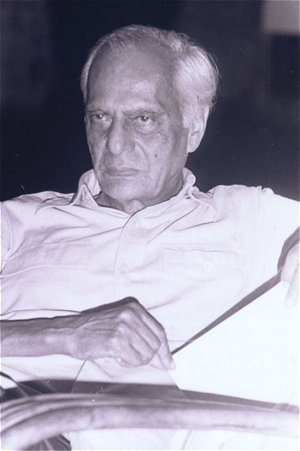

If I purchased this book however, I purchased out of a nostalgic desire for my own childhood. A time of simple and innocent frames within which to understand
And yet, I was arrested by his description of the Saptakoteshwara temple in Narva.  For those who are unfamiliar with the structure and its history, this temple houses a deity who used to formerly inhabit the
“Whatever really prompted Shivaji to have the temple restored, the important thing is that whoever carried out the work did so with restraint and good taste, and taking care that it did not clash wit the distinctive style of the inner shrine or with the environment.…the Saptakoteshwar temple is one of those rare structures that fit snugly into their natural settings, almost as though the hollow in the hills and the brooding jungle and the cluster of the temple buildings are part of some balanced artistic composition. There is very little scope for slapdash additions and alterations, and almost none for expansion. The slightest thing that is out of accord sticks out like a sore thumb. The electric pole put in an awkward angle in front of the traditional deepastambha or lamp-tower of the temple, might have passed muster in a city street; here it looks like an act of vandalism.”
Beautiful prose apart, one has to applaud the man for his aesthetic sensibilities. The fashion designer Wendell Rodricks has in a number of his writings indicated his horror at dresses that are embellished with bows, sequins and flounce, all piled in for good measure. Good architects will similarly tell you that when embellishing a building, one really needs to know where and when to stop. Shivaji’s architect, and who knows, Shivaji himself, knew when to stop, and this act of mercy was appreciated so many centuries later by Mulgonkar.
 Mulgonkar’s words regarding the Saptakoteshwara temple could just as well apply to another building in the Goan ‘New Conquests’. My reference here is to the Church of the Holy Cross in Quepem. The façade of this church is deceptively simple and almost crude. But perhaps this is because it prepares you for the perfection of its interior. For indeed, there is nothing else that can describe the interiors of this building but perfection. The placement of its windows, their relationship with the body of the Church, the snug altars that while obedient to the restrictions of space do not compromise on elegance or grandeur. The
If the 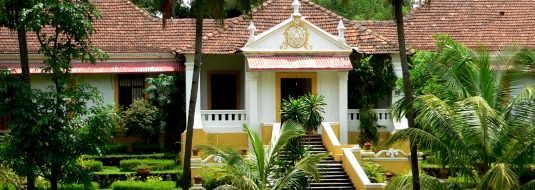
It is a pity therefore that the
But until such time as we have to mourn the death of these gems of Goan architecture, let us raise a toast to their continued existence, to the people who conceived them, built them and preserved them for us today to behold.
(First published in the Gomantak Times 7 July 2010)


