Showing posts with label public sphere. Show all posts

Wednesday, April 25, 2012

The Speaking State: Strategies in a time of utopian politics


On the third of April Mr. Vijay Samant from the village of Bastora wrote an open letter to the Chief Minister Mr. Manohar Parrikar. This letter, he also sent to a number of the prominent newspapers in the State with hope for publication, and no doubt, the initiation of a public debate. Unfortunately for both Mr. Samant as well as our larger society, that letter remained largely unpublished, at least until the nineteenth of this month. 

Mr. Samant’s letter to the Chief Minister hinges on his concern regarding the 'abolition of house tax for personal dwelling houses in panchayat area(s)'. The letter indicates that given that there are a number of apartment blocks, and ‘holiday homes and Portuguese-style houses in coastal belt
panchayat areas which are equipped with swimming pools, saunas, DG sets etc. located in many villages especially in the coastal belt, such a move not only closes the door to an age-old revenue generation option for village panchayats’, but also smacks of ‘a typical populist and cheap policy initiative’. Mr. Samant makes an argument that is typical of a number of critics of Mr. Parrikar’s pre-election manifesto, and budget, that it is filled with populist sops; and fears that Mr. Parrikar’s actions have been populist measures aimed at securing power, rather than engaging in a long-term establishment of mature governance mechanisms for the territory.

This column will not debate the pros and cons of the Chief Minister’s action. What it will do however is to focus on the possible significance of Mr. Samant’s letter. To be sure there have been a number of open letters that have been written to politicians in power, both in Goa and without. However in the context where Mr. Parrikar’s position in power is being heralded as the possible start for utopian politics, this letter assumes a larger significance than what one would normally grant it, and is an interesting location from where to contemplate the changes we would hope Mr. Parrikar would bring to realize better (rather than merely good) governance in Goa.
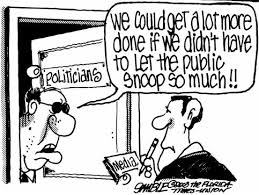
As stressed in the last installment of this column, the inauguration of Mr. Parrikar’s stewardship is looked forward to as the mark of a new era. We expect things to be done differently now. If a letter of the nature of Mr. Samant’s, had been written in the course of Mr. Kamat’s time as CM, there would have been no hope of a response. Furthermore, for very real reasons, Mr. Kamat’s tenure was seen as a time when the State was ruled with an eye to the accrual of personal profit rather than common interest and benefit. From Mr. Parrikar therefore, there is the hope that his promise of good governance will mark the commencement of open governance. For this reason alone, i.e. of the hope that is placed on Mr. Parrikar’s shoulders, a letter such as Mr. Samant’s should not be seen as just another open letter, but one heralding a new kind of politics. A politics that is utopian, more participatory, and hopeful of responsive governance.

For someone who is acclaimed to be a good administrator, with a technocratic predelictions, when queries, such as those initiated by Mr. Samant, are raised, one should reasonably look forward to what we could call, the Speaking State. To every query put to it, rather than the stony silence, or the helpless hand-waving, of the Kamat-government, the authorities of the State respond in detail, explaining its logics through which the particular decision has been reached.

There are a number of reasons why the Parrikar-government should set a precedent in initiating this development of the Speaking State. To begin with, Mr. Parrikar unfortunately comes along with the reputation of being a glib speaker, wriggling out of earlier verbal statements, by claiming misinterpretation, or misquotation. This does unfortunate damage to his reputation. Statements in writing, in the public sphere would go a long way to challenging this perception. Furthermore, setting up a system where the State can be relied on, and expected to deliver a reasoned response for its actions, could perhaps be Mr. Parrikar’s lasting contribution to ensuring a system of accountability of the State in Goa. Past experience, especially of the recently concluded Kamat administration, demonstrates that this has been woefully lacking in the past years. More importantly, effecting this response would set up the necessary requirements for the development of an educated public sphere, encouraging substantial debate, hinging on reasoning and larger policy goals, rather than flimsy common-sense and mud-slinging that largely marks Goan public debate. A reasoned response by Mr. Parrikar, to Mr. Samant, in the neat, precise manner that he has demonstrated on earlier occasions, even if those earlier responses have largely been verbal ones, would set a welcome precedent on this front as well.

Mr. Parrikar, or any Chief Minister, cannot however be expected to respond to every such letter individually. Once more this letter opens to us a possibility; of the office of the Chief Minister, and eventually those of the legislators, being composed of educated, policy-wise persons, who can identify letters, and issues of concern in the public sphere to the Chief Minister, aiding his response.  This letter opens to us therefore, the possibility of opening a new form of politics, encouraging a more dialogical representative system.

To move on to other players in this episode, in not publishing Mr. Samant’s letter, the Goan newspapers have failed in their duty toward the construction of this public sphere. In failing to publish this letter, and with the normally vitriolic Goan Observer alone publishing the letter, the newspapers seem to have sent a couple of messages. First, that critical discussion is not encouraged within the Goan public sphere. This only goes to underline another perception of Mr. Parrikar, one that dates from his earlier period in office; that he is hostile to criticism. This silencing of critical voices then, does no favour to Mr. Parrikar; on the contrary, it builds the platform for the persistence of such criticism. What these newspapers fail to realize though, is that the era of the complete dominance that the corporate-house run newspaper has over making (or breaking) Goan news is at an end. With the lively adoption of the virtual space by the Goan middle-class, issues can be introduced even when boycotted by the newspaper. The newspaper can still however, through its editorial role, play a valuable role in shaping coherent, informed debate, which is critical to creating a public sphere that is necessary if the utopia that we all expect with the coming of Mr. Parrikar to power is to come into being. Another impact of the disregard of Mr. Samant’s letter, puts him in the unfortunate position of looking like an enemy of the public, and Mr. Parrikar, rather than the public-spirited individual, that he clearly is. This is a role we must all look forward to play. In silencing his voice, the newspapers have done a great disservice to this man, who is, as has been argued above, in fact a herald of the hope that is placed in Mr. Parrikar for responsive governance.

(A version of this post was first published in the Gomantak Times dtd 25 April 2012)

Wednesday, November 2, 2011

Newspapers and democracy: On stings, advertorials and ethics


Despite all the good that they bring, in terms of revelations of the dirty underbelly of our society, governmental operation or otherwise, there is always this nagging feeling that all is not quite right with the route of the ‘sting operation’. Our legal system, like most today, is based on the centrality of the conscious subject. Thus for example, one cannot compel an individual to give evidence against oneself. Despite the unpopularity of this idea among various segments of people, to do otherwise would result in fairly authoritarian systems, which would absolutely undermine the freedom and dignity of the individual.

Faithful readers of the Gomantak Times will realize that reference is being made here to the sting operation conducted by the journalist Mayabhushan Nagvekar against the ‘paid news’ services that the O Heraldo seems to offer. The point of this column is not to condemn Nagvekar for his operation, nor to hastily condemn the O Heraldo before the whole episode has been investigated and run its course. The aim of this column is to explore the suggestions made by the editor of the O Heraldo in his response, to Nagvekar’s charge.

The editor's statement to the allegations by Nagvekar, published on the website of MXMIndia,  suggested that ‘Herald is the only newspaper which used the tag “advertorial” on top of their news pages so that the difference between editorial and advertorial is clearly established.’ This suggestion seeks to draw a line between the practices effected by O Heraldo and other newspapers. The editor is suggesting here, that in doing so, O Heraldo, is in fact the more ethical of the pack. If this is true, this is a fair statement to make. However, the question we should be asking is whether it is ethical in the first place to allow “advertorials” in a newspaper, whether indicated as such, or simply placed there for the unsuspecting to swallow, hook, line and sinker.

It appears that we are not surprised today when a newspaper is seen as a commercial institution, geared toward generating a profit for its owners. We must not forget however, that the newspaper has come into this position of being able to generate profit primarily because it served larger ends. This larger end was the creation of the informed public sphere, or civil society, the basis of the modern bourgeois democracy.  The very notion of the public sphere is based on numerous ideas of honour.  The idea that ‘the public’ is of value, is educated, thus worthy of honour demonstrated in the form of presenting one’s idea passionately, without guile or artifice. This presentation of an opinion also relied on the idea of the honour of the writer, the journalist, who staked his honour on this guileless presentation. Finally, is the idea of civil society, where unlike in the ancien regime where decisions were made without reference to the people, reached through private arrangements, governance would be effected through the results of open discussion.

The newspaper served thus as a mouth-piece for ideological groups, each group proclaiming its position, creating through this process of publication, and reading, and subsequent response, the public sphere, a democratic space that could be relied on by the Government to carry on its task of responsible and responsive governance. Profit comes late into this equation, initially as a means to sustain an initiative, and convert a good idea, into an institution. The newspaper sold itself initially on the idea that what was being presented was an idea, unburdened by guile, personal or corporate profit. Indeed, the respect, the almost unparalleled access that the journalist receives is based on this history, this expectation that the journalist is representing one’s honourable opinion, one based on convictions, not on other extraneous circumstances.

One would be hard pressed to suggest that the ‘advertorial’ matches up to this hallowed history. Under the set of circumstances that create the advertorial, the journalist is not someone who presents her impassioned opinion, or a balanced review of a position. On the contrary, the journalist is now a hired hand. You pay money to the journalist, and the journalist is commissioned like some portraiture artist to paint a flattering likeness of the situation or person being presented to the reading public.

There is another possibility however that does not violate the political traditions of the newspaper as an institution. This is when the advertorial is not crafted by a journalist who works at the newspaper, but is merely a public relations agent. The job of this agent is precisely to be this hired hand – though one hopes that such agents also have ethical considerations that animate them. In such a case, the advertorial is just another form of the kinds of advertisements that we encounter on the birthday of a politician, of national events when we are force-fed ‘news’ of the greatness of the politician whose anniversary is being celebrated, or of the government in power. To be fair, this tradition, with the dubious exception where the government places ads to lavish praise on the electoral party in power, is a valid exercise of the public space created through the newspaper. The purpose of the newspaper is to present a point of view, and if the fan-base of a political leader seek to demonstrate why they love him, this is a part of the newspaper’s political tradition. We need to remember however, that where the elected representative is treated as a king, relations between the representative and the electorate are not the ideal relationship one imagines where representative is responsible to the electorate, or to a wider public, but one between subject and King.

Where the advertorial steps outside of the political tradition is when it takes up editorial space proper. When money alone determines what becomes news and what not. In the cynical world of late capitalism this position may not be shocking, but as idealist democrats, we reserve our right to be shocked by this practice. We reserve this right to be shocked because the point of a democracy is that whether rich or poor, everyone has the equal right to speak and to be heard. In a democracy, the poor especially have a right to have access to institutional frameworks that will speak truth to power. When money begins to start determining what makes it to the editorial page and what not, then democracy is in big, big trouble. When money determines whether a citizen is able to prove her point, or not, then democracy is in even deeper trouble.

Given the age of the  O Heraldo, and the rich political history of Goa that it represents, we owe to it the opportunity of believing it when its Editor suggests that they were striving to be honest to the political traditions of the newspaper when they indicate whether an item in the newspaper is ‘advertorial’ or ‘editorial’. However, may we also suggest to the Herald, that perhaps this distinction that they employ is riddled with problems, and it behooves them to move beyond this practice that has so unfortunately taken root in our democracy?

(A version of this post was first published in the Gomantak Times 2 Nov 2011)