 Perhaps you have shared this experience when visiting the ‘western world’? The persons of South Asian descent there have an uncanny way of locating you in the crowd and staring, if even for a moment, at you. Finding these looks rather disconcerting, I complained to a friend some time ago that I had no idea how to respond to these, at times searching, glances. I had no idea what these glances were supposed to mean. How was I to respond to them?
The route to response was suggested sometime yesterday at a seminar that bore the title of this column. Speaking at the seminar, Brackette Williams, an anthropologist based in the

Sitting in the audience, recognizing the truth of Williams' observation, I sank somewhat into my seat, feeling like Judas at the Last Supper. When we do see those glances and choose to look away, or not acknowledge them, what we are doing is refusing to acknowledge a relationship between ourselves and that person. What we are trying to do is to distance ourselves from ‘those people’. We can justify this distancing to ourselves. Invariably, it is one created by or justified by class. And yet, after Williams' observation, how can we not acknowledge that at the end of the day, it is about race?
 Williams' observations, forced a recollection of Kiran Desai’s observations in her book The Inheritance of Loss. Observing on the antics of South Asians as they queue up before the U.S. Embassy, to apply for a visa, she points out how those from the upper rungs of this society, distinguish themselves from the socio-economic ‘lower orders’ of their society. This distinguishing is achieved through the looks of scorn for the ‘lower orders’ lack of English, manners or some other civilizing feature. It is achieved through our dress, or it is achieved best of all, through the rich, cultivated tones of our ‘posh’ accents. Desai perhaps captures it best in the phrase where she describes how Biju struggles to get a visa to the
Class is such a cunning way in which we mask our own racism. And we often do not have to traverse to foreign
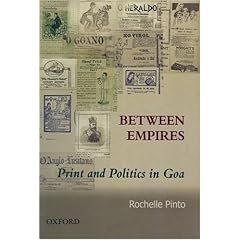 climes to practice this racism. Read Rochelle Pinto’s book, Between Empires for a discussion on how the nineteenth century elite Goans in Bombay sought to distinguish themselves from their more vernacular brethren who populated the Coors in that city. These elite Goans, westernized to an extent of being able to justifiably see themselves as ‘European’, marked themselves out from the other Goans in the city. We continue those inherited practices today, when we turn our nose up at the Tiatr, at the language and the literature produced by those who write Konkani in the Roman script, and when we shut our ears to Cantaram.
Social scientists claim that Racism is a particularly difficult concept to elaborate because one can never pin it down. This is perhaps because race and racism is one of the foundational concepts of the international order that structures our national and local existence as well. It is the systemic logic that manifests itself in even the smallest actions we undertake. These contemplations apart however, we do now have an explanation for the, until yesterday inexplicable, glances shared between coloured persons as they pass each other in the streets of the ‘western’world.
Therefore, for the times that we have erred in not acknowledging our brethren in the street; mea culpa, mea culpa, mea maxima culpa.
(A version of this essay was first published in the Gomantak Times on March 10 2010)


