Ever since the government of Maharashtra
imposed a complete ban on the slaughter of any kind of cattle there has been a
huge hue and cry from diverse segments of the Indian population. Before we go
any further, it needs to be pointed out that while the state of Maharashtra has
gone a step further by banning the slaughter of any kind of cattle, there have
been bans on the slaughter of cows in a variety of states, and in others there
are restrictions and innocent looking regulations that make it difficult to slaughter
cattle. If there is a problem, then the problem lies in the fact that rather
than protesting the creeping Hindutva-isation of India, we have allowed matters
to get to this state of affairs.
Ever since the government of Maharashtra
imposed a complete ban on the slaughter of any kind of cattle there has been a
huge hue and cry from diverse segments of the Indian population. Before we go
any further, it needs to be pointed out that while the state of Maharashtra has
gone a step further by banning the slaughter of any kind of cattle, there have
been bans on the slaughter of cows in a variety of states, and in others there
are restrictions and innocent looking regulations that make it difficult to slaughter
cattle. If there is a problem, then the problem lies in the fact that rather
than protesting the creeping Hindutva-isation of India, we have allowed matters
to get to this state of affairs.

The first issue that we need to deal with is the issue of the sacrality of the body of the cow. Most people, upper-caste Hindu, or otherwise, offer up this belief as reason for the ban. ‘The cow is like a mother to us’, they argue. The standard response to this has been to suggest that while one is entitled to believe whatever one wishes, one does not have a right to impose this belief on the rest of the population.
In response to this argument some scholars
have pointed out that this concern for the body of the cow is not some ancient
belief, but in fact a belief that achieved prominence in the nineteenth
century, in the course of nationalist mobilization. While we are taught in school that the
nationalist movement was a glorious struggle against British rule, more balanced
historiography indicates to us that a good amount of the nationalist
mobilization was in fact mobilization by upper-caste Hindus of lower-caste
Hindus against non-Hindu religious groups, including the Muslims, Christians
and Dalits.
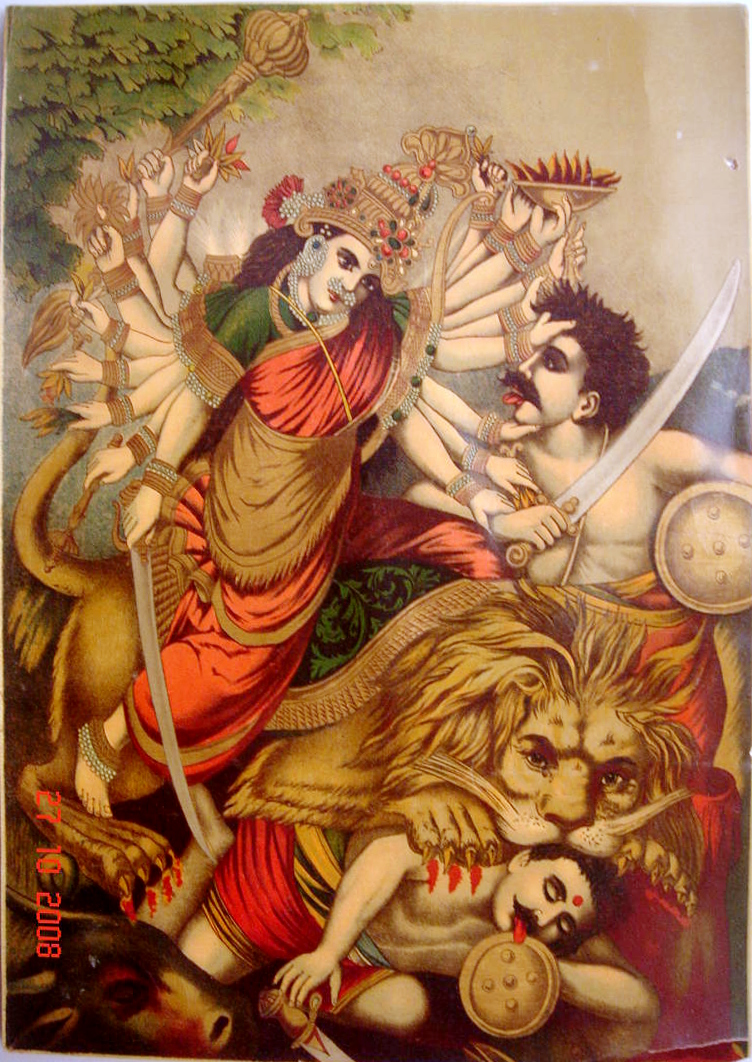 Christopher Pinney has done some really interesting work in demonstrating how the image of Durga as Mahishasuramardini,
or the killer of the Asura Mahisha, manipulated what should have been a bull,
into the image of a cow. Similarly, the image of the Asura, was made to look
like that of Muslim or Dalit butchers, so as to appear as if they had killed
the cow. He points out that even though the Asura and the Goddess are supposed
to be in battle, there is blood only on the blade of the Asura. This allows for
the interpretation that the Asura was in fact a butcher, had slaughtered a cow
and that Durga was punishing them for this act of cow slaughter. In the
discussion around this picture, we have a clear image of the politics of
Hindutva: mobilize hatred against the Muslim, Dalit, or Christian, to ensure
caste Hindu hegemony.
Christopher Pinney has done some really interesting work in demonstrating how the image of Durga as Mahishasuramardini,
or the killer of the Asura Mahisha, manipulated what should have been a bull,
into the image of a cow. Similarly, the image of the Asura, was made to look
like that of Muslim or Dalit butchers, so as to appear as if they had killed
the cow. He points out that even though the Asura and the Goddess are supposed
to be in battle, there is blood only on the blade of the Asura. This allows for
the interpretation that the Asura was in fact a butcher, had slaughtered a cow
and that Durga was punishing them for this act of cow slaughter. In the
discussion around this picture, we have a clear image of the politics of
Hindutva: mobilize hatred against the Muslim, Dalit, or Christian, to ensure
caste Hindu hegemony. 
The hegemony works because the values that are being promoted are the values of the Hindu upper-caste. As so many works have already pointed out, the eating of beef was not anathema to a number of groups that would have identified themselves as Hindu. A number of middle, and lower caste groups would routinely eat beef, as it offers the cheapest source of protein to impoverished groups. What we see in the ban on the slaughter of cattle, therefore, is the extension of State legality to caste-based legal principles. What we have is the rolling back of constitutional provisions of equality, to allow for the beliefs of dominant caste groups to rule the roost in India.
 I bring up this aspect of extension of
legality because another aspect of this ban on beef recently struck me. What
the various states of India have ensured through this ban on beef also amounts
to an infringement on the right to property. If one owns a cow, or breeds cows,
either to feed oneself, or to gain profit through the sale of their meat, these
laws are placing an unfair restriction on the practice of one’s business.
Surely the sentiments of another, religious or otherwise, are no good reason to
place a restriction on the business practice of another? The state of
Maharashtra has gone a couple of steps further than most other states in India.
By banning the slaughter of any kind of cattle, what they have done is effected
what the legal system of the U.S. would call a taking. If one were to try to
put this in terms of the Indian legal system, by preventing the logical use of
one’s property, they have effectively acquired the same property. What they
have done, is to make cattle wards of the state, and yet saddle the individual
with the cost of maintaining this property. Given that the Modi regime has
ridden to power on the basis of claiming to be pro-business, this scary way of
disrespecting the right of private property is odd. However, given that the
laws of Manu generally assert the right of upper-castes to the property of
those beneath them, it appears that this ban on cattle slaughter is very much
in keeping with the principles of Hindutva that guide the prime minister and
the party he leads. In other words, the Modi regime’s suggestion of being
business friendly is just a scam. It is nothing of the sort.
I bring up this aspect of extension of
legality because another aspect of this ban on beef recently struck me. What
the various states of India have ensured through this ban on beef also amounts
to an infringement on the right to property. If one owns a cow, or breeds cows,
either to feed oneself, or to gain profit through the sale of their meat, these
laws are placing an unfair restriction on the practice of one’s business.
Surely the sentiments of another, religious or otherwise, are no good reason to
place a restriction on the business practice of another? The state of
Maharashtra has gone a couple of steps further than most other states in India.
By banning the slaughter of any kind of cattle, what they have done is effected
what the legal system of the U.S. would call a taking. If one were to try to
put this in terms of the Indian legal system, by preventing the logical use of
one’s property, they have effectively acquired the same property. What they
have done, is to make cattle wards of the state, and yet saddle the individual
with the cost of maintaining this property. Given that the Modi regime has
ridden to power on the basis of claiming to be pro-business, this scary way of
disrespecting the right of private property is odd. However, given that the
laws of Manu generally assert the right of upper-castes to the property of
those beneath them, it appears that this ban on cattle slaughter is very much
in keeping with the principles of Hindutva that guide the prime minister and
the party he leads. In other words, the Modi regime’s suggestion of being
business friendly is just a scam. It is nothing of the sort.  There is one last point that needs to be
addressed before concluding this opinion. The Hindu Right has suggested that
the slaughter of cattle is evidence of traits of cruelty in those who eat meat.
This is a bizarre suggestion that must be actively contested. People who eat
beef, do not do so because they are cruel. They do not slaughter animals for
fun. They do so because they are in need of food. The need to feed oneself is a
basic human need. Further, when people slaughter animals, they do not eat only
the best portions of the meat. On the contrary, they have found ways to make sure every part of the animal’s body is used effectively, whether as food, or
as some other product. What I found particularly interesting is that a good amount of the social media outrage was trained on the fact that they would not be able to enjoy a steak anymore. I found this outrage misplaced, and perhaps representative of elite tastes. My own experience of beef is of eating not just steak, but other parts of the animal, like the stomach, intestines, hoof, tongue, brain. There is a certain respect for the animal that is embodied
in these practices consequent on slaughter. The suggestion that persons who eat
meat gain pleasure from the slaughter of animals is a vicious lie that must be
contested vigorously.
There is one last point that needs to be
addressed before concluding this opinion. The Hindu Right has suggested that
the slaughter of cattle is evidence of traits of cruelty in those who eat meat.
This is a bizarre suggestion that must be actively contested. People who eat
beef, do not do so because they are cruel. They do not slaughter animals for
fun. They do so because they are in need of food. The need to feed oneself is a
basic human need. Further, when people slaughter animals, they do not eat only
the best portions of the meat. On the contrary, they have found ways to make sure every part of the animal’s body is used effectively, whether as food, or
as some other product. What I found particularly interesting is that a good amount of the social media outrage was trained on the fact that they would not be able to enjoy a steak anymore. I found this outrage misplaced, and perhaps representative of elite tastes. My own experience of beef is of eating not just steak, but other parts of the animal, like the stomach, intestines, hoof, tongue, brain. There is a certain respect for the animal that is embodied
in these practices consequent on slaughter. The suggestion that persons who eat
meat gain pleasure from the slaughter of animals is a vicious lie that must be
contested vigorously.
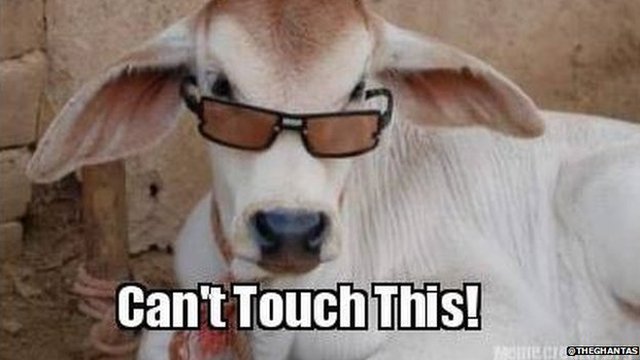 On the contrary, it can be suggested that
if there is one group that is guilty of cruelty to animals, it is those who
have urged this ban on cattle. In doing so, the Hindu Right has converted an
animal that was slaughtered for food into a symbol of a culture war. Prior to
the unreasonable drama that the Hindu Right has brought down upon us, the cow
did not have any particular significance for those who eat beef. With this ban,
however, groups are now encouraged to look at the cow as a route through which
to express their disgust for the Hindu Right. This is a very cruel attention
that they have brought upon this otherwise innocent animal. This just goes to
show the depths of cruelty embodied in Hindutva. Not only does it visit harm on human beings, and
manipulate one group against the other, but it also draws innocent animals into
its politics of hate.
On the contrary, it can be suggested that
if there is one group that is guilty of cruelty to animals, it is those who
have urged this ban on cattle. In doing so, the Hindu Right has converted an
animal that was slaughtered for food into a symbol of a culture war. Prior to
the unreasonable drama that the Hindu Right has brought down upon us, the cow
did not have any particular significance for those who eat beef. With this ban,
however, groups are now encouraged to look at the cow as a route through which
to express their disgust for the Hindu Right. This is a very cruel attention
that they have brought upon this otherwise innocent animal. This just goes to
show the depths of cruelty embodied in Hindutva. Not only does it visit harm on human beings, and
manipulate one group against the other, but it also draws innocent animals into
its politics of hate.
(A version of this post was first published in the O Heraldo on 6 April 2015)