Showing posts with label EU. Show all posts

Monday, June 27, 2016

Diana and Actaeon: Brexit and the end of empires


‘Diana and Actaeon’ this was the allusion that struck me when I heard the news of Britain’s vote in the recently conducted EU referendum, popularly known as Brexit.

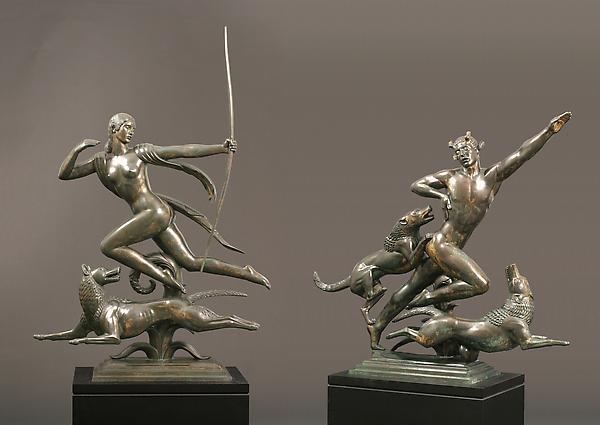
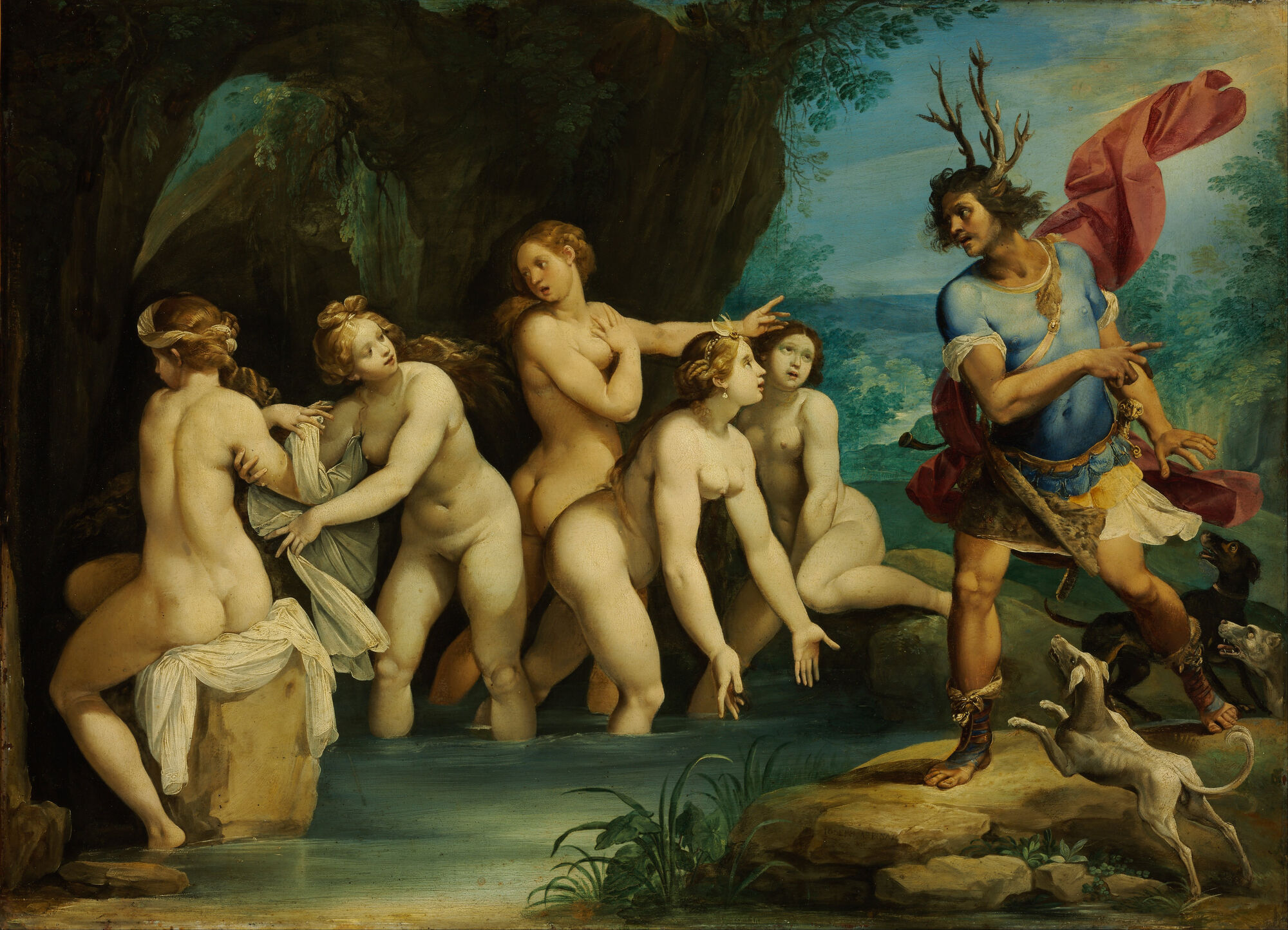
The myth of Diana and Actaeon can be found within the Roman poet Ovid’s epic narrative, Metamorphoses. The tale recounts the fate of a young hunter named Actaeon and his encounter with the chaste Diana, goddess of the hunt. In the myth, Actaeon unwittingly stumbles upon Diana bathing nude in a spring with help from her escort of nymphs. The nymphs scream in surprise and attempt to cover Diana, who, in a fit of embarrassed fury, splashes water upon Actaeon. The hunter is transformed into a deer and, robbed of his ability to speak, promptly flees in fear. It is not long, however, before his own hounds track him down and, failing to recognize their master, tear him apart.

Diana and Actaeon by Paul Manship, 1925.

The myth can be interpreted in multiple ways. In one interpretation, Actaeon could represent David Cameron. Before the 2015 elections in Britain, Mr. Cameron had pledged to hold the referendum on EU membership if his party, the Tories, won a majority. The pledge to hold a referendum was a way of mollifying members of his own party and others, who were unhappy about the UK’s membership in the EU. In making this promise, Cameron disturbed a delicate scene very much like that of the goddess bathing. Given the fact that despite authorizing the referendum Cameron had in fact been campaigning to stay within the EU makes him a figure very much like the unwitting Actaeon, who really had no intention of intruding on Diana’s bath. Regardless of his intentions, however, Cameron has faced an Actaeon-like fate, having now promised to step down from the post of Prime Minister. Only time will tell if this exit marks the end of his political career, but for now, the allusion holds.

Another way to read the myth in the current context is to see Actaeon as the English constituent of Great Britain, who will now be set upon by the hounds that the English have held on an imperial leash for so long. Like so many political entities, Britain is a cobbling together of various entities. Britain was constituted by the imperial ambitions of the English, who first added Wales to their imperium and subsequently Scotland and Ireland. There is a long history of resistance to English imperial rule that has resulted in the assertion of regional identities, as in the case of the Welsh, and wars of independence, as in the case of the Irish. More recently, the Scots made an unsuccessful bid for freedom through a referendum to leave the UK. However, in the wake of Brexit, which shows that the Scots overwhelmingly chose to stay in the European Union, and it was the English who chose to leave it, there is every likelihood that the Scots will demand another referendum. This time round, the English may not be so lucky and find their imperial union being torn apart. England may regret that it trespassed upon a site that it should have left alone in the first place.

Diana and Actaeon by
Giuseppe Cesari, 1603-1606.
A third contemporary reading of the myth could allow Britain to be seen as Diana, who has cursed the Actaeon EU to now potentially be torn apart by the Eurosceptic hounds. No sooner was the Brexit result announced than a host of largely right-wing hyper-nationalist leaders across Europe begin baying for their own version of the referendum. Marie Le Pen, the leader of the National Front in France, made one such demand, as did the Islamophobic, anti-immigration Geert Wilders from the Netherlands. Similar noises also emerged from the Italian Lega Nord or Northern league. In the case of this group, the League would also like to break up the current state of Italy, and there are many in this outfit who would ideally like to get rid of the south of the country, a section that they feel is unduly burdening the more prosperous north of Italy.

While the leadership of the EU suggests that all is under control, one wonders whether this is mere bravado and if Britain has unleashed not merely Actaeon’s hounds but also the dogs of war. Europe was very similarly tied up in a set of international treaties and riven with ethnic tensions on the eve of the Second World War. What was also at stake at the time of this war, and the first, was the future of various empires. In the First World War, it was the future of the Ottoman Empire and the Austro-Hungarian Empire. In the second, it was that of the Japanese and German Empires. There are some who argue that the EU is in fact a non-coercive imperial formation. What is currently at stake, therefore, is the future of another empire. Given the larger state of the world, which exists in a state of armed conflict and the intervention of third-party states, and the fact that a number of treaties that have kept Europe stable during the past fifty years are now coming undone, one wonders if this is what the beginning of the end of the world order as we know it is going to look like.

(A version of this post was first published in The Goan Everyday on 26 June 2016)

Saturday, August 31, 2013

Europeans of An Other Colour: Why the Goans are Portuguese


On 13 May, 2013, the Goan Ethernet was aflame with outrage at statements made by Sir Andrew Green, chairperson of Migration Watch, and carried in the Daily Star and the Daily Mail. The Daily Star reported, “An Indian national from Goa can obtain Portuguese citizenship if their parents were Portuguese citizens prior to 1961,” and quoted Green as saying, “They can then move straight to the UK with their family. On arrival they can avail themselves, immediately, of all the benefits available to UK citizens.” The Daily Mail seems to have been spurred on by Green’s statement, going on to claim that “[a] number of Indian nationals from the former Portuguese territory of Goa are thought to have taken advantage of the loophole. Indians living in Goa can claim they have Portuguese heritage and so claim Portuguese citizenship. They can then move directly to Britain - without ever having to visit Portugal - and bring a family without meeting any qualification test.”
Given the manner in which the matter regarding Goan access to Portuguese citizenship has been reported in the British press, as academics studying Goa and the Goan community, we believe that there is a need to redress such misrepresentations and firmly call out, not only the wilful amnesia about Britain’s imperial past, but also the Anglo-centric interpretation of colonialism, the post-colonial, and de-colonised world order that motivates such representations. In so doing, our aim is to address not merely a need for Goans and others of former Portuguese India to assert the legitimacy of their actions, but to also enable a view of the global order from a position that is more respectful of the formerly colonised.

Addressing the aforementioned inherently Anglo-centric bias of the colonial and post-colonial context requires commencing with a review of the Western European encounter with South Asia. This engagement traces back to the late 15th century with the Portuguese “discovery” of the sea-route to the fabled Indies. It resulted in the establishment of what came to be known as Estado da Índia Portuguesa, or the Portuguese State in India, which was centred in Goa in 1510. The boundaries of Portuguese India, which extended to other enclaves beyond Goa were firmly fixed only in the 18th century in the face of contestation with, not just local, but other European powers as well. As a result of this early entry into South Asia, by the time the British departed from the subcontinent upon handing over power to two nation-states - India and Pakistan - the Portuguese State in India would outlast their English counterparts and have existed for approximately 450 years. This Portuguese state was markedly different from the one that the British had created in the course of their time in the subcontinent. Most significant, for the misrepresentations that we seek to correct, was the fact that through the length of its presence in the subcontinent, the Portuguese state attempted to recognise natives as citizens, or bearers of rights equal to those of persons from the metropole. As a consequence, Goa was represented by non-white parliamentary representatives from 1834 when the declaration of the constitutional monarchy in Portugal created the space for a national parliament. These rights were extended universally in 1910 with the commencement of the First Portuguese Republic, only to be eclipsed somewhat during the course of the dictatorial Estado Novo, or New State, headed by Dr. António Oliveira Salazar. Nonetheless, the rhetoric of equality was firmly established and constantly referred to by Portuguese Indians, whether living in Goa, or as migrants to British India or, indeed, British East Africa where many Goans lived and worked, as bearers of Portuguese citizenship. Within this colonial framework, even if only in legal theory, racial and cultural difference was in fact surmountable.

This situation was certainly different from that existent in British India, or in any other part of the British Empire for that matter, where the only status enjoyed by the natives was as that of subjects of the British crown. As a result, one could argue that it was the failure of the British state to extend the much coveted status of imperial citizen to the comprador British Indian elites that caused members of that echelon to then set up their claim for independence from the Crown. The nationalist claims that these elites initiated rested on the creation of a national culture that accepted the racial and other differences that the British colonial system enforced. This situation ensured that extant differences were perpetuated rather than challenged.

The Portuguese State in India came to a definitive close with the actions of the Indian state in 1961, when the Indian armed forces invaded the Portuguese territory of Goa. While an anti-colonial movement was afoot in the region, the eventual decolonisation of Goa cannot be said to have resulted primarily from the anti-imperialist movements of its own soil due to the military intervention of the Indian state and its subsequent denial of the right of self-determination to the Goan populace. Additionally, in an imperialist act that was echoed in the newly independent nation’s actions in Kashmir and the north-east of the country, the formerly British India unilaterally integrated the territory of Goa into itself. If India was able to get away with this, it was because the developing post-colonial order was awash in racist and ethnocentric perspectives engendered to a large degree by British colonial practices. These were predicated on the assumption that territorial contiguity and the presence of the Hindu religion across the geographic expanse, though not exclusively or without diversity, gave India ample right to take over marginal territories such as Goa and Kashmir.

The significant fact that the Goan people were legally Portuguese citizens was given short shrift and eclipsed by an act of the Indian parliament that bestowed on them Indian citizenship. Hindered by an effectively xenophobic understanding of Indian-ness, and its relationship with the countries that surround it, in contrast to many other legal regimes, the Indian state does not permit its citizens to hold multiple nationalities. Therein, unlike British Indian subjects, in being made a part of the Indian state, Goans and other Portuguese Indians lost their Portuguese citizenship, and the ability to be both South Asian and European, only to have Indian citizenship thrust upon them, and be fixed as solely Indian.

It was only subsequent to the normalization of relations between India and Portugal that a number of former citizens of the Portuguese State of India were able to reclaim their Portuguese citizenship. It is precisely because of the unfounded allegations of the Daily Mail that it should be stressed that these Portuguese Indians are not petitioning for new citizenship, nor exploiting a loophole. What they are doing is reclaiming a legitimate right that was lost owing to the actions of the Indian state. There is no need for them to prove their Portuguese character as the Daily Mail suggests, for their parents, if not they themselves, were Portuguese, and 450 years of Goa being a part of Portugal has made those Goans as Portuguese as any other person in continental Europe who holds Portuguese citizenship. The Daily Mail’s claim is profoundly offensive since it is based on the racist assumption that only Caucasians can be Portuguese and European. This assumption is of course buttressed by the fact that the colonial practices of states like Britain considered only whites to be properly British or European.

The British nation’s historical record when it comes to matters of who is deemed British enough is a controversial one. Note that in the 1960s and 70s, the aftermath of decolonisation in East Africa and Africanisation policies, emergent from impoverishment due to colonisation, saw the vilification and expulsion of Asians who were then denied entry to the United Kingdom despite being holders of UK passports as colonial subjects. In 1972, when 50,000 Asians were expelled from Uganda by Idi Amin, the very notion of the Commonwealth was proven to be one in name only because, by 1968, the right of colonial-era UK passport holders to enter Britain had been withdrawn in response to an increase in economically induced out-migration from Kenya in 1967. It is important to stress here that not only were Asians – Goans included – in East African countries because the British administration of those colonies had recruited them, but also that their labour had benefitted the Empire. Goans were given British subjecthood to serve the colonial administration in many cases. In so much as Goans were nominally British, their UK passports served more as travel documents than a guarantee of citizenship rights, as became painfully evident in the post-colonial period. While Goans and other colonised groups had been British “enough” to serve the regime, it became apparent that was no longer the case once their usefulness had been outlived. This was a profound abdication of national  and legal responsibility, not least for the racialised political climate induced by years of British colonial rule in Africa. In fact, the colonial legacy continues to reveal itself as is the case with the revelation this year of the destruction of records relating to violent and deadly atrocities committed against Kenya’s Mau Maus who rebelled against British rule.     

For all the problems that Portuguese colonialism produced, and the racism that accompanied it, what must be underscored is that it is also differentiated by the legal rhetoric that recognised, and continues to recognise, the multiple groups outside of Portugal as equally Portuguese. Thus, the Portuguese Indians who recover their Portuguese citizenship and then migrate, not merely to Britain but across the world, trace a path similar to other Portuguese nationals who are currently in flight from a Portugal laid low by the European crisis. Portuguese legal history and flows of migration are often ignored by the largely Anglo-centric understanding of the world. The recognition of the Lusitanian milieu allows for a reconstruction of European-ness outside of the racist frameworks that currently delimit it.  It permits a corrective to the manner in which the post-colonial world was constructed along racist lines, restricting the ability of persons to freely move internationally. While white privilege has ensured an ease of travel for some, the accompanying racism leads to the outcries as evidenced in the reports by the Daily Star and Daily Mail, as well as the ritual humiliations of non-white travellers at embassies, consulates, and immigration check-points globally. In challenging this racism that underlies the statement attributed to Sir Andrew Green, there is also an option opened up for Europe wherein the racism that undergirds the European project can be challenged, and in re-understanding the flows of capital and populations that have contributed to European hegemony today, the current crisis can be utilised as a way to reimagine the European Union’s association with the world outside itself and as the product of its own history.

(Co-authored with R.Benedito Ferrão and first published at Kafila on 31 Aug 2013.)

(I would also like to recognize the efforts of The Goan Voice in drawing our attention to the reportage of Green's statements.)


Monday, May 21, 2012

Letters from Portugal: The Modernity Deficit Complex


The Portuguese suffer from what I call the modernity deficit complex. Let me explain this with an illustration. Some weeks ago, a friend of mine placed the link to a video on her Facebook wall. The message that accompanied the link, a message that received a fair number of “Likes”, suggested that one could “safely substitute the Portuguese flag for the Italian and you get a sense of life in Portugal...” The video itself is hilarious. It consists of a contrast of two kinds of experiences in various episodes in life; from attempting to cross the road at a zebra crossing, to waiting for a bus, attempting to find parking, to political engagement. The first experience is represented by a flag of the European Union, while the second, which demonstrates the difference in Italian experiences from “the rest of Europe” is represented by the Italian flag. The experiences of the EU flag are what we all associate with the European experience, orderly, systematic, the text-book case of what is ideal. The experiences of the Italian flag however are a complete disaster. While in the EU case, one waits for a bus around five minutes and then hops into it, in the Italian case, the bus takes well over an hour to arrive, when it does, it leaves without the waiting individual. When the politicians in the EU illustration systematically take their place in power and leave it once their term is up, the Italian politicians, the video suggests, refuse to let go, and grow tentacles to cling onto State power. The suggestion of the video then, as well as its adoption by my Portuguese friend, suggested that Italy and Portugal, were not really European, they were simply members of the European Union, and failed to act genuinely European.
What was amusing about the video however, was that one could have easily substituted the EU flag for a label which said “modern” or “civilized”, and replaced the Italian flag for the Indian to get a “a sense of life” in India according to a good number of India critics. When we do this then, we get a sense of how the EU, both in its self-representation and in its estimation by others, represents the civilized norm. Clearly however, this norm, that is perceived as European, is not uniformly experience by all Europeans equally. There are some Europeans, who feel that they are not really European, but are only European in name. The question that emerges then is, where exactly is this ideal Europe located? Which are the countries that represent, not just for those outside of Europe, but those within the EU as well, the European ideal, and in this process, ideal modernity? Who are these ‘real moderns’?

One does not have to live very long in Portugal to realize that these moderns are vaguely identified as ‘the countries of the North’. Press further however, and this vague idea begins to disintegrate, and one realizes that it isn’t even most of Northern Europe that these impressions of modernity belong to, but more specifically countries like Belgium, Holland, Germany, the Scandinavians. The scope of modernity therefore is rather limited to a small set of Northern European democracies, democracies that are marked by societies that are perceived to be rather well-ordered and disciplined.

To return to the Portuguese however, their self-flagellation about not being modern, continues in other forms. Thus for example, the suggestion received on numerous occasions, whether it be intimate conversations, or animated dinner discussions, that the Portuguese do not have an educated elite. The grumble is that, unlike other places, the Portuguese social elites, are not particularly educated, nor cultured. One of the ideas that circulates for example, is that these elites in a rather hierarchized society, are quite comfortable with not having to obtain higher education, or read outside of the prescribed course work when they do take up professional courses. The fact that they are well-born, and they are in possession of plenty of money, is quite sufficient. One will recognize in this description of the Portuguese, a possible description of Indian elites as well, but let us leave this discussion for another moment and focus on the fact that once more, the Portuguese imagine ideal norms of civilized, and hence modern, society being located elsewhere, and not in their own country.

This idea of not being modern enough however, can work both ways, both as self-criticism, and often strangely enough, as a suggestion that we should be grateful for not being so messed up like those societies that have achieved modernity. Take for example the rather astute observation by another Portuguese friend. This friend pointed out that the Portuguese translation of the popular American television comedy series, Modern Family, is not a literal translation. On the contrary, the Portuguese translation, which is Uma Familia Muito Moderna (A VERY Modern Family) has an interesting twist, given that it suggests, that it is not merely a modern family we are talking about, but a VERY modern family. It has to be stressed here, that this translation is peculiar not to the Portuguese language, but only to Portugal, since the Brazilian translation is simply Familia Moderna (Modern Family). The family we are speaking about then, is deemed in the Portuguese case, to be an example of an excess of modernity. The implicit suggestion then, is that too much of modernity can be bad for you.

A glance at the storyline of Modern Family may possibly help us identify what is this modernity that is deemed as too much. The drama revolves around three families, related to each other through Jay Pritchett, the patriarch of this family, and his children, Claire Dunphy and Mitchell Pritchett. Jay Pritchett commences this excess of modernity, not merely by being divorced, but being married, as a white older man to a much younger Colombian (hence coloured) woman Gloria. Together with Gloria, Jay raises her son Manuel (or Manny), who is a somewhat odd boy, eminently cultured, way too old for his years, and whose character partakes of an unsure sexuality. Will the boy grow up to be gay, we are forced to wonder, or is he just extremely cultured? Claire, Jay’s daughter, is a fulltime mother of three children and married to Phil Dunphy, a real estate agent and man who just tries too hard to be a ‘cool’ father. Being the only other heterosexual adult male in the drama, his character struggles with some kind of desire for his step-mother-in-law. The Dunphys have three children: Haley, the stereotypical teenager, Alex, the smart middle child, and Luke, the offbeat only son. Jay’s son Mitchell, who is a lawyer, and gay, brings to this ‘modern family’ his (male) partner Cameron, who while having grown up on a farm, and possessing various skills that we identify as hyper-masculine, is best described as a flaming queen. Together, they have adopted a Vietnamese baby, Lily, and together strive to be good parents.
One will admit to some amount of ambiguity to the name of the series in the US as well, but given that the ambiguity already exists in ‘Modern Family’, one could also suggestion that highlighting this ambiguity with ‘Very’ is a reference to the deep discomfort that Portuguese society is expected to experience with regard to this otherwise normal modernity.  The suggestion then, is that, this modernity is not us. We Portuguese, are not like this. We prefer to be not quite so modern. 

In light of all of this, surely then, the Portuguese can be said to experience a curious relationship with modernity, if not an outright Modernity deficiency complex?

(A version of this post was first published in the O Heraldo dtd. 21 May 2012)
In light of all of this, surely then, the Portuguese can be said to experience a curious relationship with modernity, if not an outright Modernity deficiency complex?
http://www.epaperoheraldo.in/Details.aspx?id=5211&boxid=23134328&uid=&dat=5/21/2012

Wednesday, November 16, 2011

Letters from Portugal: No dia 24, não vou trabalhar


Reports tell us that the protest in Lisbon on 15 October, as part of the Global Day of Protest was one of the largest demonstrations in the world on that day. This is in fact quite surprising for a country that, since the upheaval around the 25 of April 1974, has not been marked by grand demonstrations.  But then today the Portuguese have much to be afraid for; the consumerist paradise that was constructed in the years following their entry into the European Union seems to be falling apart with every passing day. Not a day passes when we are not informed that there are to be more cuts on social spending, that taxes have increased, and the Christmas bonus that is normally handed out will be culled. 

Eavesdropping on a conversation brought home the realization, that in a country marked by low salaries, the Christmas bonus, which amounts to the salary of a whole extra month, is very often the key to balancing basic household expenditures. Minus this bonus a good many homes will fall into very serious economic crises. Add to this, the general privatization of the economy and the sale of public assets. But, as if to add insult to injury are the suggestions that emanate from the Prime Ministerial Office that in the city of Lisbon, there are plans to curtail the hours of the metro system so that it stops even before midnight. This suggestion was responded to by one Portuguese person, as sending the message to the people that the role that the State had decided to play, was to only to ensure that the population could get to work. Beyond this limited objective, where the citizens are now seen as the route through which the State will pay off a debt, the State under the new leadership seems committed to abdicating its responsibilities.

It is for these reasons that the Portuguese landed up, from the leftist radicals, members of Catholic religious orders, and members of the comfortably placed Portuguese middle-class, to make their displeasure obvious. It was a heady experience, this sense of revolution; this boy getting up on one of the stone lions that sits guard before the Assembleia da República and burning a newspaper carrying the statement of the Prime Minister, the stand-off between the police and the people, and the general assembly of the people that followed. This general assembly saw divergent groups make their position, from the black boy who pointed out that it wasn’t, or it could not be just a ‘white’ thing, but the rights of the blacks in Portugal needed to be counted as well; to the person who pointed out that underneath the uniform they wore, the police-persons were their brothers, sisters, uncles, and aunts. They may stand as a force between us and the Assembleia, but they would suffer the say cuts as those on the other side of that line. And then there were those leftist radicals (one has to love them for the sense of symbolic drama they bring to any demonstration), who urged an occupation of the Assembleia. 

In the course of this public assembly emerged a voice demanding a ‘Greve Geral’, a general strike of the population of Portugal, attempting a complete paralysis of the system, indicating how widely unpopular the budgetary cuts and other fiscal interventions were. This move was, as is to be expected, widely popular at the public assembly, and has been growing in strength, with various unions pledging their support to this general strike, and public discourse and discussion around the benefits of the strike growing. How effective this strike, scheduled for the 24 day of this month, will be in paralyzing the country, and in forcing some sort of rethink of the position this country finds itself in, remains to be seen.

It was under these circumstances that a little Facebook movement, called ‘Trabalhar’, popped up. The strap-line to this title read ‘No dia 24, eu vou trabalhar’ (on the 24th I will go to work). This ‘movement’ suggests that “Portugal is in an emergency, a situation brought about by the previous government. A general strike would work only to further harm the economy and send a negative signal to the outside world. On the 24 November, I will go to work, just as I do on other days”.

What is amusing about this little ‘movement’ is that like the comment on the decision to curtail the working hours of the Lisbon Metro, it has latched onto work. It seems to suggest that all that is at issue here, is about getting to work, as if hard work is lacking in the country, and it is hard work that will resolve the issues of this country. Nothing could be further from the truth. If there is a truth about Portugal’s current crisis, it is that as was famously pointed out by Alessio Rastani in that famous interview with the BBC, it is not governments that rule the world, but rogue financial institutions that rule the world through their speculative actions. To make the strike on the 24th about working or not working then, is to deliberately obfuscate a significant point.

A good look at Portugal would cure us of the fantasy that the trivializing of larger issues to petty party politics is the unique curse of our country. Here a situation, where the governance is effectively in foreign hands, is being further compromised, not through a strike that could call for a general reckoning, but by making the issue of party politics, and viewing the whole situation from the narrow perspective of the country’s financially secure groups. Furthermore, what the general strike would prove is also that life is not about work alone. On the contrary, we work, only because we want to live. It is a shame that we are being made to apologize when we assert this right to not live by bread alone.

(A version of this post was first published in O Heraldo 13 Nov 2011)