Some
weeks ago I had the opportunity to view an illustration by the artist Angela
Ferrão which is reproduced with this column. Titled, The Extraction of Goan Identity, the image was clearly inspired by
the horrific acts of 16 May 2015 when the village of Tiracol was set upon by
men and machinery with a view to surreptitiously destroy the orchards and pave
the way for a golf course and hotel. The image depicts a landscape ravaged by
the destruction of trees, of gaping holes and mounds of loose soil, and the
presence of cranes and other earth-moving equipment. Indeed, one could suggest
that Ferrão has also illustrated the miserable outcomes of mining in Goa. To
that extent, Ferrão’s image speaks beyond the immediate scenario of Tiracol and
to the larger way in which Goa is being ‘developed’, and forces us to ask
fundamental questions about the future we desire for Goa.

My
interest, however, was piqued by another element in the image. Squat in the
centre of the foreground is an issue that Ferrão clearly identifies as central
to the problem of Goan future: “Out Migration of Goans”.
 I
was delighted when I saw this articulation because it dovetailed with my own
estimation of the problem. The out migration of Goans is one of the significant
issues faced by contemporary Goa. What was particularly heartening, however,
was that while the artist identifies out migration of Goans as one of the problems,
she does not similarly identity migration to Goa as a problem. I think that
while the migration into Goa of “outsiders” is popularly seen as a major
problem threatening the survival of a Goan identity, this in-migration to Goa turns
problematic primarily because of the out migration of Goans, and the denigration
of extant Goan cultural practices.
I
was delighted when I saw this articulation because it dovetailed with my own
estimation of the problem. The out migration of Goans is one of the significant
issues faced by contemporary Goa. What was particularly heartening, however,
was that while the artist identifies out migration of Goans as one of the problems,
she does not similarly identity migration to Goa as a problem. I think that
while the migration into Goa of “outsiders” is popularly seen as a major
problem threatening the survival of a Goan identity, this in-migration to Goa turns
problematic primarily because of the out migration of Goans, and the denigration
of extant Goan cultural practices. Making this argument does not mean that I seek to blame
Goans, as some are wont to do. Rather, I believe that rather than blame Goans,
or the migrants into Goa, the root of the problem lies in the structures which
cause Goans to leave, as well as those structures that make it possible for
lived cultural practices of Goans to be denigrated, even as an unreal Goan-ness
is celebrated to feed the profits of the tourism industry and the coffers of
the Indian state.
Making this argument does not mean that I seek to blame
Goans, as some are wont to do. Rather, I believe that rather than blame Goans,
or the migrants into Goa, the root of the problem lies in the structures which
cause Goans to leave, as well as those structures that make it possible for
lived cultural practices of Goans to be denigrated, even as an unreal Goan-ness
is celebrated to feed the profits of the tourism industry and the coffers of
the Indian state. Coincidentally, it was as I was formulating these thoughts
that I came across an article by Haineube Newme titled “The
root causes of racism against North Easterners”. Reading through his reflections I was struck by the similarity in his analysis
of the problem. Newme suggests that the racism against persons from the North
East of India does not emerge from personal racism, but, rather, is fed by an
institutional racism. “The North
Eastern regions have been neglected economically and socially”, he argues.
Goans and people from the North East both seem to have one thing in common, and
that is a high rate of migration. So to phrase it in Newme’s words “The
relevant question would be: why have so many people fled their villages or
towns and come to live in the metropolitan Indian cities?” Newme could be
speaking about Goa when in response to this question he asserts: “Comparably,
if greater opportunities of living were being provided, North Eastern states
can be better places to live than the other cities of India. One can enjoy
better environment, beautiful landscape and better sanity in the North Eastern
region. But, the region suffers from a dearth of employment, development and
better education opportunities. The reason as to why many people have fled to
various cities like Delhi, Bangalore, Chennai etc. is nothing but to search for
better educational scope or survival as they do not see any hope in home states
to fulfil their needs.” Once again the pertinence of Newme’s articulation to
Goa is striking.
Coincidentally, it was as I was formulating these thoughts
that I came across an article by Haineube Newme titled “The
root causes of racism against North Easterners”. Reading through his reflections I was struck by the similarity in his analysis
of the problem. Newme suggests that the racism against persons from the North
East of India does not emerge from personal racism, but, rather, is fed by an
institutional racism. “The North
Eastern regions have been neglected economically and socially”, he argues.
Goans and people from the North East both seem to have one thing in common, and
that is a high rate of migration. So to phrase it in Newme’s words “The
relevant question would be: why have so many people fled their villages or
towns and come to live in the metropolitan Indian cities?” Newme could be
speaking about Goa when in response to this question he asserts: “Comparably,
if greater opportunities of living were being provided, North Eastern states
can be better places to live than the other cities of India. One can enjoy
better environment, beautiful landscape and better sanity in the North Eastern
region. But, the region suffers from a dearth of employment, development and
better education opportunities. The reason as to why many people have fled to
various cities like Delhi, Bangalore, Chennai etc. is nothing but to search for
better educational scope or survival as they do not see any hope in home states
to fulfil their needs.” Once again the pertinence of Newme’s articulation to
Goa is striking. 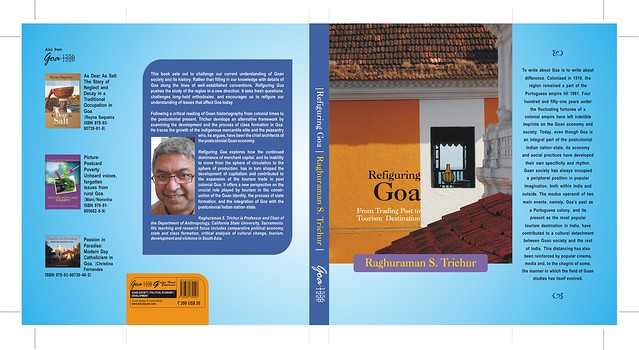 In
his insightful book Refiguring Goa,
Raghu Trichur has pointed out that since integration into India, Goa’s economic
‘development’ seems to have been restricted to mercantile capitalism. Thus, while merchant capital encourages the
production of commodities, for example iron-ore, or of Goa as a tourist destination,
it does not transform the relations of production that produce these
commodities. The result is that the emancipation that could be a part of
capitalist development is not realized, and unequal labour and social relations
continue to be sustained. It is because tourism, or other employments
opportunities within the state, do not provide Goans dignified labour that so
many migrate. Hence there is a dual onslaught, where Goa’s
landscape is capitalised, to allow external and internal capitalists to purchase
Goan property, even while poorer locals have no scope to rise socially. It
is precisely this that forces a systematic process of Goan sale and migration.
In
his insightful book Refiguring Goa,
Raghu Trichur has pointed out that since integration into India, Goa’s economic
‘development’ seems to have been restricted to mercantile capitalism. Thus, while merchant capital encourages the
production of commodities, for example iron-ore, or of Goa as a tourist destination,
it does not transform the relations of production that produce these
commodities. The result is that the emancipation that could be a part of
capitalist development is not realized, and unequal labour and social relations
continue to be sustained. It is because tourism, or other employments
opportunities within the state, do not provide Goans dignified labour that so
many migrate. Hence there is a dual onslaught, where Goa’s
landscape is capitalised, to allow external and internal capitalists to purchase
Goan property, even while poorer locals have no scope to rise socially. It
is precisely this that forces a systematic process of Goan sale and migration. These
observations allow us to respond to Chief Minister Parsekar’s recent defence of
the golf project in Tiracol on the grounds that it will
provide employment. The question that those of us who are interested in
substantial development must ask is not whether it will provide employment or
not, but what sort of employment it will provide. This is where the
distinction, recently raised by Amita Kanekar, between two types of tourism
come in. On the one hand is the small scale tourism that first emerged in Goa
that allowed former tenants to change their lives and prospects. On the other
hand is corporate tourism that follows the logic of mercantile capitalism.
These
observations allow us to respond to Chief Minister Parsekar’s recent defence of
the golf project in Tiracol on the grounds that it will
provide employment. The question that those of us who are interested in
substantial development must ask is not whether it will provide employment or
not, but what sort of employment it will provide. This is where the
distinction, recently raised by Amita Kanekar, between two types of tourism
come in. On the one hand is the small scale tourism that first emerged in Goa
that allowed former tenants to change their lives and prospects. On the other
hand is corporate tourism that follows the logic of mercantile capitalism. Another
observation Newme makes is to point out that “North Easterners are considered
as outsiders 'polluting' the existing Indian culture.” This observation ties in
with my own assertion, that the migration into Goa is assumed to be a threat
primarily because of the disparaging of Goan cultural practices. It is through
this dismissal of Goan culture, and especially the elements that predominate
among Catholics, that this racism is institutionalised. Take for example, the condescending manner
towards tiatr and cantaram as examples, or the absolute
refusal to recognise the Roman script in Konkani. From many Catholics one hears
the helpless words “what is left for us here?” It is the fact of this dismissal
of the locals, and their practices, that allows for a displacement of Goan
culture. Were Goan cultures not faced with such official dismissal, it is
unlikely that the presence of migrants would have been seen in quite the same
way as it is today.
Another
observation Newme makes is to point out that “North Easterners are considered
as outsiders 'polluting' the existing Indian culture.” This observation ties in
with my own assertion, that the migration into Goa is assumed to be a threat
primarily because of the disparaging of Goan cultural practices. It is through
this dismissal of Goan culture, and especially the elements that predominate
among Catholics, that this racism is institutionalised. Take for example, the condescending manner
towards tiatr and cantaram as examples, or the absolute
refusal to recognise the Roman script in Konkani. From many Catholics one hears
the helpless words “what is left for us here?” It is the fact of this dismissal
of the locals, and their practices, that allows for a displacement of Goan
culture. Were Goan cultures not faced with such official dismissal, it is
unlikely that the presence of migrants would have been seen in quite the same
way as it is today. _slider_main.jpg?1386696718) The
Goan Hindu is not spared from this onslaught either. It appears that they too
suffer from a feeling of not being Indian, i.e. Hindu, enough. Witness the
spate of temple demolitions across Goa, where perfectly stable temples are
brought crashing down so that newer temples in “Indian” style can come up. Or
take the rather interesting article
written on the changes in weddings among Goan Hindus by Padmavathi Prabhu
in the Navhind Times in January this year. Prabhu celebrates the trend where
elements of North Indian (Punjabi and Doabi) Hindu weddings are incorporated
into these weddings. However, the question needs to be asked, would other
customs be adopted if one were secure in one’s traditions, and not marked by a
feeling of shame? It is only when one feels outside the paradigms of power,
that one begins to adopt the customs of others, and those who are in power.
The
Goan Hindu is not spared from this onslaught either. It appears that they too
suffer from a feeling of not being Indian, i.e. Hindu, enough. Witness the
spate of temple demolitions across Goa, where perfectly stable temples are
brought crashing down so that newer temples in “Indian” style can come up. Or
take the rather interesting article
written on the changes in weddings among Goan Hindus by Padmavathi Prabhu
in the Navhind Times in January this year. Prabhu celebrates the trend where
elements of North Indian (Punjabi and Doabi) Hindu weddings are incorporated
into these weddings. However, the question needs to be asked, would other
customs be adopted if one were secure in one’s traditions, and not marked by a
feeling of shame? It is only when one feels outside the paradigms of power,
that one begins to adopt the customs of others, and those who are in power.
So
why are we speaking of all of this when it is the case of Tiracol that should
fall squarely within our cross hairs of our immediate concerns? Because all of
this continues an argument I began in my previous column. Both these columns
point to the importance of articulating a person-centred economics. There is a
need for the state in Goa to articulate a developmental programme as if people
matter. Should the state fail to do so, then it would only go on to support the
institutional racism that we are witness to, and aid in the ongoing systematic
dismantling of Goa. Tiracol is not the beginning, it is just one more step of
the process, and if not addressed it will only get worse.
(A version of this post was first published in the O Heraldo on 12 June 2015)