Showing posts with label tribal. Show all posts

Wednesday, November 24, 2010

Drama around the NRP Sagres II : Attempting an inter-cultural dialogue

Last week this column tilted at the protests by the ‘freedom fighters’ and the ‘Hindu’ nationalists suggesting that they were contributing to the problem rather than resolving one, by creating an environment where dialogue was not possible. In the process however, the column also suggested that all was not well with some strands of contemporary Portuguese nationalist tropes that draw on colonial images and understandings. One of the arguments the column sought to make, was that both these nationalisms worked to support each other, and continue the post-colonial mess we find ourselves in.

However it is because we are inextricably twined together that dialogue is both necessary and the only option. Demonstrating perhaps the value of dialogue, the column generated a response from three Portuguese men, all of who have some sort of connection with, or interest in, India. Today’s column will extract portions of these responses from ‘the Portuguese’ and seek to dialogue with them, conceding some arguments, and disagreeing with others.

One of the respondents argued that “Saying there's a transfer of culture does not mean you don't recognize other peoples’ cultures. I suggest you read Fernão Mendes Pinto who in the XVI century spoke of the superiority of the Chinese over the Europeans! But you need a really very sharp anthropological look to recognize your cultural debt to the Bororo people... Even in India, tribals are seen as less civilized, aren’t they? I don’t agree, but that they are seen as such is a fact.”

The second of the respondents partially disagreed saying, “Good points, but not sure I share your conclusions towards the end. In any case, "a disco of fados, a Gallo de Barcelos, and scarves celebrating the Portuguese football team" are not "culture" (in general) but "a culture" (specific). And yes, I would say that, in comparison with other colonial encounters, the Portuguese was far more symmetric in terms of what you call mutual transfer/exchange of culture.”

The third of the respondents felt that “Jason falls into that common trap of academics: over-interpretation. The posters say nothing of what he reads there, they are not that smart. Their inspiration is not nationalistic tropes about civilizing missions, it is the internationalistic tropes about tour operating.”

To the first of the respondents, I would like to agree that the descriptions of Portuguese culture do not unilaterally deny the transfer of culture from the various parts of the world, and the former Portuguese territories to the Portuguese metropolis. On the contrary, there is a good amount of the mythology of the country that acknowledges and celebrates this mixture. However, we must acknowledge, if we are to challenge and move forward, that there is a dominant tendency, that seeing Portuguese culture as European, falls into the trap of acknowledging it as superior and having contributed more than it has received. As an illustration, but also to complicate the image and point out that it is not always an ‘us’ south Asians (colonized etc.) versus ‘them’ Portuguese (colonizers etc), contemplate the following anecdote, recounted by a Portuguese historian. He pointed to the historical works of Teotonio De Souza as significant to the intellectual world of the Indo-Portuguese. Too many of the rest he argued, were still using terribly antiquated notions. He pointed with some horror, to the works of a Portuguese historian of Goan origin who still used ideas like India being in a state of barbarity until the Europeans (namely the Portuguese) brought culture and Christianity!

Sticking with history, the first respondent should be reminded that merely because Fernão Mendes Pinto spoke of Chinese superiority, does not make him representative of Portuguese society for that time, nor for the same society in different other periods. Once again, this does not deny the capacity of the Portuguese to recognize superiority or merit in the Other. It merely affirms the fact that societies are polyphonic – they speak with many voices. The voice of Fernão Mendes Pinto was one of these voices, and possibly at times, a marginalized voice.

The more interesting observation of the second respondent was to repeat the Lusotropical illusions that the Portuguese colonizers were more symmetric in the exchange of culture. Lusotropicalism thrives on the idea of Portuguese colonialism being a good, equitable and gentle colonialism. A response to this idea would not be to counter Portuguese colonialism as bad, violent and inequitable, but point out that the reason we do not see British colonialism as symmetric, is because of the way the British colonial state represented its colonialism; as non-interfering in the cultures of others, and of not mixing racially with its subject populations. The transfer of culture is not a conscious choice, it occurs through unconscious actions in the daily lives of people. Where the colonial state was not around to bar such quotidian mixings, as very often the Portuguese state was unable or ideologically unwilling to do, one sees a greater amount of mixing. We have to bear in mind that we should not, as we often do, take the representations of the colonial British too seriously.

To finally address the last respondent; yes, it is possible that the last column was an over-interpretation. That possibility exists. But as with all columns, the point was not to establish an unassailable and definite truth, but to contemplate the possibility of the general points being argued. The posters of the Euromilhões lottery were merely an excuse. To however deny entirely the possibility of colonial stereotypes continuing to populate contemporary Portuguese imagination would be to affirm the possibility that colonial imagery still does play a role, and that the contemporary Portuguese are unwilling to talk about it. Furthermore, tourism is not an innocent bread-winning exercise. Tourism rests critically on colonial imagery, as well as colonial relations. One does not see mass-tourism from the global south to the global North. The touristic locations of the North are marketed differently from those of the South. Furthermore, as the subsequent column will go on to explain, the character of tourism in Goa, is not so distinct from that in Portugal.

To conclude, dialogue, as in the act of speaking to each other, may possibly help more than violent protests. Dialogue is not a one-way street, in pointing out possible problems with the Portuguese we open up the space for them to point out our own weaknesses. For example, as first respondent pointed out, don’t most Indians see the tribals of South Asia as less, or uncivilized? Do we not for this reason see our colonization of resources in their homelands as legitimate?

(A version of this post was first published in the Gomantak Times 24 Nov 2010)

Wednesday, December 23, 2009

Of Recognition, Facts and Strategies: A Letter to the Editor after UTAA’s demonstration

Dear Editor,

I write this letter to you to thank you for your front page editorial on the issue of this newspaper dated seventeenth December 2009. In placing the editorial on the front page you have in many eyes; not just mine alone, reprieved the local media from a morass that many of us fear that it is headed into. News is not about the ‘neutral’ reporting of random (and increasingly irrelevant) facts alone, but as you have so strikingly indicated, about creating issues for the larger public and fostering positive politics. But your editorial did more than just set standards for media, it also helped refocus the priorities of the people of Goa, who, it appears, seem to by and large operate in blissful ignorance of the scheduled caste and scheduled tribe members of our society.

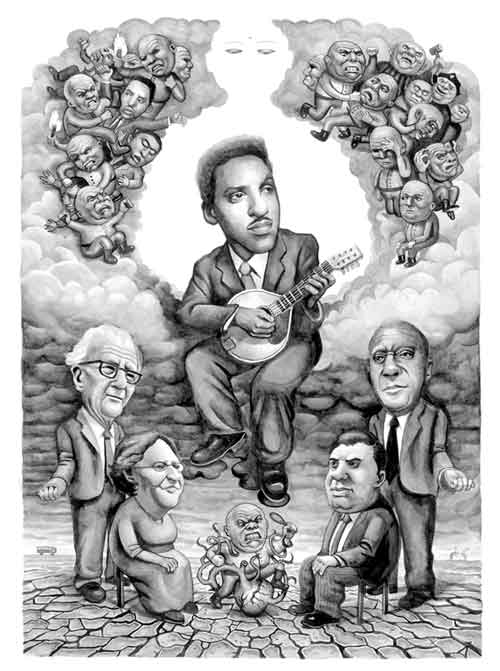
In the opening of your editorial, you quoted Bayard Rustin, an American civil rights activist who argued that “When an individual is protesting society’s refusal to acknowledge his dignity as a human being, his very act of protest confers dignity on him.” In so quoting, you brought the debate to the heart of the matter, allowing us to counter all of the irrelevant criticisms that have subsequently been leveled against the protest that occurred on the sixteenth of December.

Acknowledging the dignity of a human being requires also that we acknowledge the existence of an individual. As already argued, we in Goa do not even acknowledge the existence of the scheduled groups and their needs. You pointed out that the protestors brought the ‘upper-caste Digambar Kamat-led government to its needs’, but the fault is not just this particular government, but the manner in which the entire society conspires in constructing Goa as an upper-caste almost paradise. All of the issues that we have been arguing for the past few months, those of the destruction being done to Goa etc, while critical and relevant, have failed to take into consideration this segment of the population, and argue the issues with their perspective in mind. Had they done so, our strategies and indeed, our achievements would today perhaps have been radically different.

It is for this reason then, because the protestors addressed the basic issue of recognition, in not one, but two different and associated forms, that they have cut for us, in their action on the sixteenth, a path that should have been trudged ages ago.

Associated with one of the groups fighting the big-capital take over of Goa via the Regional Plan, I was witness to the farce of representations to the Chief Minister and his government. No matter how logically argued or passionately represented, these written statements received no response from a silent and non-committal state. We were constantly asked to rely on the word of the Chief Minister, who would assure us that he would ‘try his best’. Our representations were like the flailings of an attention-deprived child, before an emotionally unmoved, and punishingly silent parent. We were faced with the toughest and most insurmountable barrier of all; Silence.

In the face of this silence, I had on numerous occasions, argued with a number of groups that it is this silence that we need to break. In the face of this silence, we need to up the level of civil disobedience, lay siege to the State secretariat, until our rightful demands are met. The silence of the Government rests on the sure knowledge that we will not challenge the daily rhythm of life, and until we hamper this carefree rhythm, until we get the silent to recognize us, we will, unfortunately not be listened to. The United Tribal Association Alliance (UTAA), on the sixteenth broke that compact, and they managed to draw the Chief Minister into dialogue. Viva!

They did more than draw him into dialogue however. This Chief Minister, like others, has often engaged in the farce of dialogue. Words, are cheap, it is actions that count. And on this latter front, despite its verbal assurances, this government has failed to act. UTAA to its credit broke through this sham and demanded a ‘written assurance’. We must remember that the modern State and its bureaucracy operate through the action of writing. When we represent in writing therefore, we deserve a response in writing. Else once more we flail pointlessly before a false Baal. Two successes therefore, and two lessons for the Goan activist to learn from. First, this government will not listen until you lay siege to it, prevent ‘business as usual’, and to paraphrase you, ‘drag it to its knees’. Second, no success until and unless you get a response (i.e. recognition) from the State, in writing.

I have not seen the written assurance of the Chief Minister and so do not know the form and content of its assurance. However I do know that a mere line indicating “I will get so-and-so done, by such-and-such date” is pointless. Our demands are valid because of a sound reasoning that lies behind it. A written response from the government must necessarily respond to these demands, point by point, acknowledging in writing the validity of our claims, and acknowledging in print its failure to do so. Only then do we move governance, from the scam it currently is, towards a democratic respect for justice and due process.

What was critical in the protest by UTAA was the fact that it operated in the best traditions of civil disobedience. No property was harmed, but what was placed in harms way was the body of the protestor. It also demanded that imperial forms of governance, that place a veil between the governor and the governed are cast aside, to allow for direct contact. We would carry this tradition further if we linked it to this recognition of responsible writing.

Very often we resort to the cliché that when the interests of the most marginalized are addressed the whole system sets itself in order. UTAA’s actions on the sixteenth, that have addressed two lacunae in the operation of our democracy, seem to have pointed to the validity of the cliché. I will end this letter, reinforced once more with thanks, with the knowledge that perhaps while all is not well with the state of Goa, there is as yet, still hope!

(Published in the Gomantak Times 23 Dec 2009)

Thursday, June 4, 2009

Fight the Good Fight: A People’s Tribunal and an activist’s Epiphany

On numerous occasions well-meaning friends have come up to me asking me why I have railed, raved and ranted against some of the positions of the GBA. ‘They are trying so hard’ they’d say, ‘why not give them a little credit’. In a wonderfully self-reflexive and honest column in the Herald yesterday, Venita Coelho laid out what exactly was my (and others’) gripe with the positions that the GBA and associated groups and individuals had been taking for a long time, “It was all about land and land use – and not about people and the reality of their lives at all”. Welcome to my world Venita, we are now on the same page!

For another healthy slice of the reality of people’s lives, I would have recommended attendance at the Peoples’ Tribunal held on the “Restoration of Adivasi Homelands in Goa” organized by the Gawda Kunbi Velip and Dhangar Federation (GAKUVED). Over the two days at the end of the last month, close to 60 tribal persons from Goa presented their woes before a jury, indicating the wide number of problems they faced, none of which have been even remotely touched by the Regional Plan 2021 process.

The sorry fate of the tribals of Goa is primarily because of the invisibilisation that they have been subjected to. Goa is constructed both internally and externally by discourses that would see Goa as either Dourada (Indo-European) or Indica (Brahmanical). The originary myth of the first is that of the creation through contact with the Iberian west, the originary myth of the second is of creation through the peaceful extension of the land by brahmanical settlers. Both myths have a basis in fact and both have done much to deprive the tribal population of the rights of dignified existence. As a result of the operation of these two frameworks, the woes of the tribals have as yet never been articulated systematically, and the Tribunal was probably the first time such a systematic articulation was achieved. For this reason alone, the Tribunal was a momentous occasion.

It became clear, in the course of the Tribunal that there were at least three categories of problems that the Goan tribals face. The first emerged from among those who lived on the fringes of Goa’s forests. Like tribals in the rest of India, their interaction with the Forest Department officials is far from ideal. They are harassed by the operation of the Forest Department, their rights not settled and very often are illegally assaulted and interrogated by Forest department officials. The space of the Communidade emerged as the second arena of problems faced by the Goan tribal. All too often their names are not recorded in the Government’s land survey records as the tenant. This is despite their being present on, and tending to the land for at least two generations, and very often also having Portuguese-era documents to prove their title. Somehow, subsequent to the ‘Liberation’ their presence on the land, and their rights on it, were cleanly erased. As a result today, they are unable to claim Government benefits and schemes, unable to extend their homes, get electricity or water and are made to beg for permissions, not from the Government offices, but from the Communidades. The third category of cases is the threat of mining. Many of the tribals who are educated are first generation learners. Their primary skills lies in tending the land. this they have done for generations now. The extension of mining leases threatens to destroy their homesteads (and livelihood bases) either through appropriation for mining, through the illegal dumping of mining rejects in their fields and forests, or through the destruction of the fresh water aquifers that quench not only their thirst but all of Goa. Listening to this last category of problems, the audience realized with a shock that the large sightings of wild-life in Goa, and the large number of reports of crop destruction or at least straying into villages, was the result of the aggressive extension by industry into the forest areas. As is normally the case however, rather than deal with industry, it is the tribal who gets caught by the Governmental machinery.

In the context of the Regional Plan, it also became clear that there was wild confusion as to what was the status of their proposals. Would proposals in the light of recent information be accepted? Further, it became clear that there was no uniform system that was followed with regard to the articulation of the village plan. Interestingly some villages in Sattari that were in opposition to the Eco-I status of lands in their village had this decision taken in the chamber of their Legislator in Porvorim. Interesting!

On another front, one that would have been hilarious if it weren’t so tragic, it appears that most developmental schemes formulated by the Government have compounded rather than relived the condition of the tribals. One case in point was that of the Bandharas, that dam water in the rivers, but instead of proving any use, make impossible the traditional cultivation of the river bed. When Venita therefore realizes that planning is about people and their problems, and listening closely to what the facts on the ground, as articulated by the people say, she has hit the nail squarely on the head.

Both Venita and the representatives at the Peoples’ Tribunal would have agreed on one fact. That a mere gram sabha deciding the Village Plan is not enough. What is necessary is an honest collation of the factual conditions in the village, and the building of claims and decisions on the basis of those conditions. What was very clear through the representations however, and through the dossier submitted prior to the Tribunal, was that what was required was first a recognition of their land rights (rather than solely that of the landlords) and secondly a system for consultation with the tribal groups in villages across the State.

The next couple of columns will identify a few issues that emerged in the course of this Peoples’ Tribunal and deal with them at some length.

Before concluding however, we must recognise that Venita’s epiphany, and the Peoples’ Tribunal were made possible primarily because both the GBA and GAKUVED looked outside of Goa for inspiration. This is not to say that Goa is lacking of ideas, but that they have hit on a very vital ingredient for successful social mobilization; networking. All too often Goan struggles have refused to take lesson from similar struggles in other parts of India. The tragedy of the Regional Plan process is exactly this. Rather than looking across our borders for communities that have already invented the wheel, we attempted to invent it ourselves. In the process, we have failed to draw strength from across our borders. But, as Venita’s realization, and the Peoples’ Tribunal indicate, it is not yet too late and there is much that can still be salvaged.

One last point. It should be seen as part of a divine plan that the GBA consultation that Venita benefited from and the Peoples’ Tribunal occurred at around the same time. If networking and listening to the voices of the people are the lessons that we are being asked to learn, then surely, the renewed process towards a Regional Plan must see a networking between these two groups?

(Published in the Gomantak Times 3rd June 2009)