 There is no need for us to worry about Tiatr. The now century old tradition is
alive and kicking and shows no sign of slowing down. If there is one thing that
needs to be addressed, however, it is the practice of shaming that Tiatr is
often subject to. Too often, Tiatr is compared to Indian drama forms that were
formed in the course of the anti-imperial nationalist movement in British
India. These drama forms took a good amount of inspiration from Western
European traditions and sought to articulate similar plays in vernacular
mediums. A part of this process was to also ‘purify’ vernacular dramatic
traditions. Thus, art forms like Bhavai
in Gujarat, Tamasha in Maharashtra
were sought to be made ‘respectable’. What is often not discussed, however, is
that both the nationalist movement as well as these attempts in the theatrical
world were often made by upper-caste persons. Their attempt was to assert
upper-caste control over the art form and determine what was acceptable and
what not. In this process, the subaltern caste groups who had birthed these art
forms were excluded on the basis of their lack of aesthetic refinement and
‘vulgarity’. Where these subaltern groups did not submit meekly to upper-caste
assertions, these performers were shamed most vigorously and systematically.
This is also true of Tiatr. Indeed, a critical reading of the history of Tiatr
would suggest that the form was born from the attempt to clean up the Khell that were being performed by
migrant Goan groups in Bombay. Fortunately, however, once the form of the Tiatr
was set up, the subaltern Goan groups reasserted their control over the art
form. This reassertion is at the root of the constant criticism that Tiatr
draws; that it is lacking in standard.
There is no need for us to worry about Tiatr. The now century old tradition is
alive and kicking and shows no sign of slowing down. If there is one thing that
needs to be addressed, however, it is the practice of shaming that Tiatr is
often subject to. Too often, Tiatr is compared to Indian drama forms that were
formed in the course of the anti-imperial nationalist movement in British
India. These drama forms took a good amount of inspiration from Western
European traditions and sought to articulate similar plays in vernacular
mediums. A part of this process was to also ‘purify’ vernacular dramatic
traditions. Thus, art forms like Bhavai
in Gujarat, Tamasha in Maharashtra
were sought to be made ‘respectable’. What is often not discussed, however, is
that both the nationalist movement as well as these attempts in the theatrical
world were often made by upper-caste persons. Their attempt was to assert
upper-caste control over the art form and determine what was acceptable and
what not. In this process, the subaltern caste groups who had birthed these art
forms were excluded on the basis of their lack of aesthetic refinement and
‘vulgarity’. Where these subaltern groups did not submit meekly to upper-caste
assertions, these performers were shamed most vigorously and systematically.
This is also true of Tiatr. Indeed, a critical reading of the history of Tiatr
would suggest that the form was born from the attempt to clean up the Khell that were being performed by
migrant Goan groups in Bombay. Fortunately, however, once the form of the Tiatr
was set up, the subaltern Goan groups reasserted their control over the art
form. This reassertion is at the root of the constant criticism that Tiatr
draws; that it is lacking in standard.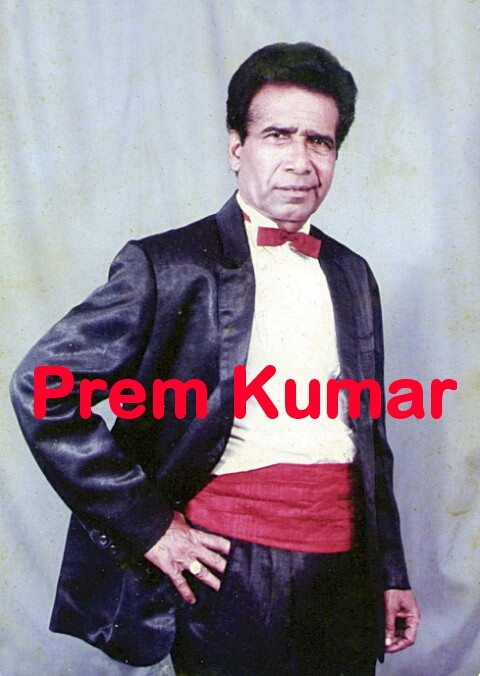 In recent times
it has become somewhat commonsensical to lay the blame for this shaming at the
doorstep of the proponents of Nagari Konkani. While this may be politically
expedient, this is not the whole truth. Tiatr is often shamed by its own
proponents, largely because they have internalised the criticisms levelled by
persons from the broader Indian nationalist theatrical traditions. Take, for
instance, an anecdote about the tiatrist Prem Kumar that is often recounted by
Tiatr activists. The story goes that Prem Kumar once took Vasant Joglekar, a
significant name from the world of Marathi theatre to watch a tiatr at P.T.
Bhangwadi. The tiatr apparently had a scene where the home of a landlord was
shown against the backdrop of a jungle. Joglekar must have responded derisively
to this juxtaposition of a landlord’s home against a jungle because Prem Kumar
is reported to have been ‘put to shame’ by Joglekar’s reaction which initiated
Prem Kumar’s lifelong quest to ‘uplift’ the Konkani stage.
In recent times
it has become somewhat commonsensical to lay the blame for this shaming at the
doorstep of the proponents of Nagari Konkani. While this may be politically
expedient, this is not the whole truth. Tiatr is often shamed by its own
proponents, largely because they have internalised the criticisms levelled by
persons from the broader Indian nationalist theatrical traditions. Take, for
instance, an anecdote about the tiatrist Prem Kumar that is often recounted by
Tiatr activists. The story goes that Prem Kumar once took Vasant Joglekar, a
significant name from the world of Marathi theatre to watch a tiatr at P.T.
Bhangwadi. The tiatr apparently had a scene where the home of a landlord was
shown against the backdrop of a jungle. Joglekar must have responded derisively
to this juxtaposition of a landlord’s home against a jungle because Prem Kumar
is reported to have been ‘put to shame’ by Joglekar’s reaction which initiated
Prem Kumar’s lifelong quest to ‘uplift’ the Konkani stage.
What is tragic
in this scenario is that Joglekar’s sensibilities were seen as beyond question,
rather than limited by his own agendas and cultural background. Unfortunately
confined by brahmanical sensibilities and nationalist anxieties perhaps he
missed crucial clues in the backdrop?
 I recently had
the opportunity to view Mario Meneze’s Suicide
at a Tiatr festival in Velsão-Pale and was struck by the backdrops that were
used in the course of the Tiatr. The curtain that was used when the Cantarist
came on was of a scene of the city of London with the famous Tower Bridge as
the centre. Curiously, it was marked by a very Goan balustrade that framed the
lower length of the curtain. The second interesting background, used to
indicate the environment outside of the house of the protagonist was of the
Brandenburg Gate in Berlin. Now one could, like Tendulkar scoff at these
backdrops. For example, why London? And if London, why that Goan balustrade in
the scene? Can they not be realistic in their depiction? Worse still, Menezes
is writing a play about Goa, and allows for a scene from Berlin to depict the
Goan village space? Does he have no sense of geography? Alternatively, one
could put aside one’s prejudices, and look at these backdrops anew and realise
that they are testament to the cosmopolitan world that the Goan lives in.
I recently had
the opportunity to view Mario Meneze’s Suicide
at a Tiatr festival in Velsão-Pale and was struck by the backdrops that were
used in the course of the Tiatr. The curtain that was used when the Cantarist
came on was of a scene of the city of London with the famous Tower Bridge as
the centre. Curiously, it was marked by a very Goan balustrade that framed the
lower length of the curtain. The second interesting background, used to
indicate the environment outside of the house of the protagonist was of the
Brandenburg Gate in Berlin. Now one could, like Tendulkar scoff at these
backdrops. For example, why London? And if London, why that Goan balustrade in
the scene? Can they not be realistic in their depiction? Worse still, Menezes
is writing a play about Goa, and allows for a scene from Berlin to depict the
Goan village space? Does he have no sense of geography? Alternatively, one
could put aside one’s prejudices, and look at these backdrops anew and realise
that they are testament to the cosmopolitan world that the Goan lives in.
Realism in
theatre is highly over-rated. Theatre is not real life; it is a representation
of reality, and as such, relies profoundly on symbols. I would like to read the
curtains used at the staging of Suicide
as the example of the sophisticated use of symbols. The Goan balustrade running
through the bottom of that first curtain was not a mistake. On the contrary it
symbolised the Goan’s view on the world. For close to two centuries now Goans
have been migrant workers going beyond the subcontinent to the world at large.
Indeed, so wide is the diaspora that London now stands in for what Bombay
represented earlier; a second home for Goans. In such a scenario, that
balustrade symbolises Goan ownership of that London vista. It tells to the
audience that the migrant Goan may be out of Goa, working in London, but she or
he is still firmly rooted within Goa. They inhabit both worlds.
Similarly the
Brandenburg gate. To read the backdrop literally would be to miss the wider
point that theatre is capable of making. Given that this curtain was used to
denote the outside of the home, it made a very nuanced point. Berlin is indeed
a part of the Goan outside. But once again, it is an outside that is still
sensible to a Goan audience many of whom have friends and family who are widely
travelled.
 These symbols
are often lost on those who are concerned about the lack of standard in Tiatr.
The loss is largely because the audience of the Tiatr is itself not respected.
They are seen as lacking in sophistication and needing to be taught high
culture. What the crusaders for the uplift of Tiatr’s standard don’t seem to
recognise, however, is that in their zeal to emulate the theatre forms inspired
by Indian nationalism they are limiting their own perspectives. They fail to
see that the cultural realm of the Goan is not limited to Goa or to India. It
encompasses the world. This world is not simply placed up on a stage and
worshipped. Rather, it is consumed, digested and then regurgitated so that like
the Tower Bridge and the Brandenburg gate, they seem to be the most natural
thing in a village in South Goa.
These symbols
are often lost on those who are concerned about the lack of standard in Tiatr.
The loss is largely because the audience of the Tiatr is itself not respected.
They are seen as lacking in sophistication and needing to be taught high
culture. What the crusaders for the uplift of Tiatr’s standard don’t seem to
recognise, however, is that in their zeal to emulate the theatre forms inspired
by Indian nationalism they are limiting their own perspectives. They fail to
see that the cultural realm of the Goan is not limited to Goa or to India. It
encompasses the world. This world is not simply placed up on a stage and
worshipped. Rather, it is consumed, digested and then regurgitated so that like
the Tower Bridge and the Brandenburg gate, they seem to be the most natural
thing in a village in South Goa.
(A version of this post was first published in the O Heraldo dated 23 May 2014)