 Recently,
there have been a number of voices that have pointed out that a part of the
problem in contemporary Goa is the manner in which Goa is being consumed.
Writing in The Goan Everyday, Vishvesh
Kandolkar pointed out that Goa “is perceived as a perfect holiday
destination with its sun, sea, and sand, apart from the Europeanised atmosphere
that they [Indian elites and tourists] don’t find anywhere else in India.”
Picking up on the concerns raised by Kandolkar, Dale
Luis Menezes, writing in the O
Heraldo also pointed that Goa’s problem lies in the fact that it is
perceived as European, and following an
argument by Paul Routledge, argues that Goa was created and projected as a
pleasure periphery, a site of tourism and pleasure.
Recently,
there have been a number of voices that have pointed out that a part of the
problem in contemporary Goa is the manner in which Goa is being consumed.
Writing in The Goan Everyday, Vishvesh
Kandolkar pointed out that Goa “is perceived as a perfect holiday
destination with its sun, sea, and sand, apart from the Europeanised atmosphere
that they [Indian elites and tourists] don’t find anywhere else in India.”
Picking up on the concerns raised by Kandolkar, Dale
Luis Menezes, writing in the O
Heraldo also pointed that Goa’s problem lies in the fact that it is
perceived as European, and following an
argument by Paul Routledge, argues that Goa was created and projected as a
pleasure periphery, a site of tourism and pleasure.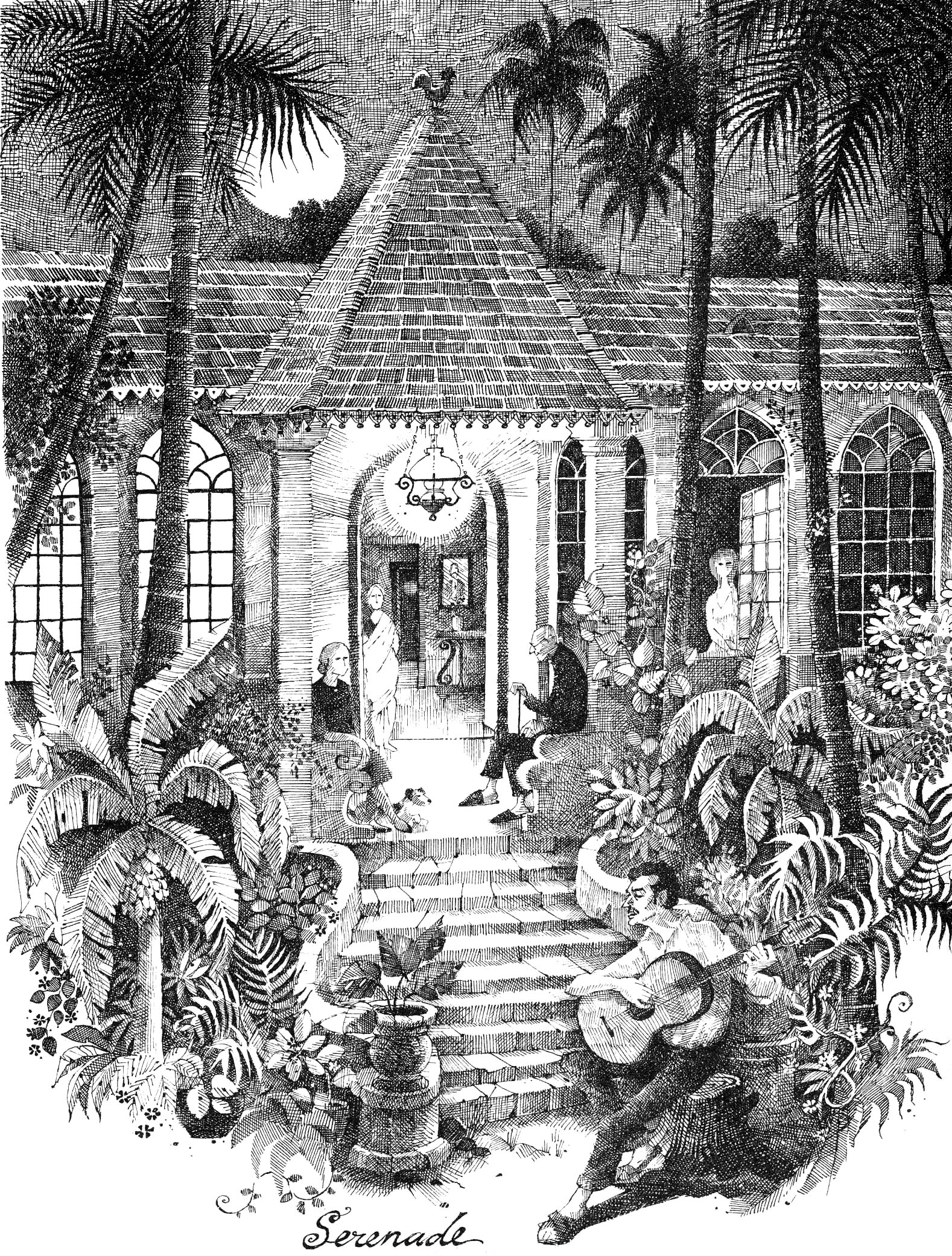 To
make sense of these claims it is important that we delve deeper into the
process that allowed Goa to be seen, or be represented as European. Most
persons with some knowledge of the academic literature on Goa will point out
that Goa’s character and European is the result of the Estado Novo’s claims from the late 1940s. Responding to the demand
of the post-colonial Indian State that Goa be “returned” to it, Salazar’s
Portugal responded that this was impossible. Goa was not Indian, they claimed,
it was Portuguese. 450 odd years of Portuguese presence had ensured that Goa
was strikingly different from the rest of India, and that the people of Goa had
more in common with Europe than India. This way of presenting Goa has given
rise to the trope of Goa Portuguesa.
To
make sense of these claims it is important that we delve deeper into the
process that allowed Goa to be seen, or be represented as European. Most
persons with some knowledge of the academic literature on Goa will point out
that Goa’s character and European is the result of the Estado Novo’s claims from the late 1940s. Responding to the demand
of the post-colonial Indian State that Goa be “returned” to it, Salazar’s
Portugal responded that this was impossible. Goa was not Indian, they claimed,
it was Portuguese. 450 odd years of Portuguese presence had ensured that Goa
was strikingly different from the rest of India, and that the people of Goa had
more in common with Europe than India. This way of presenting Goa has given
rise to the trope of Goa Portuguesa. 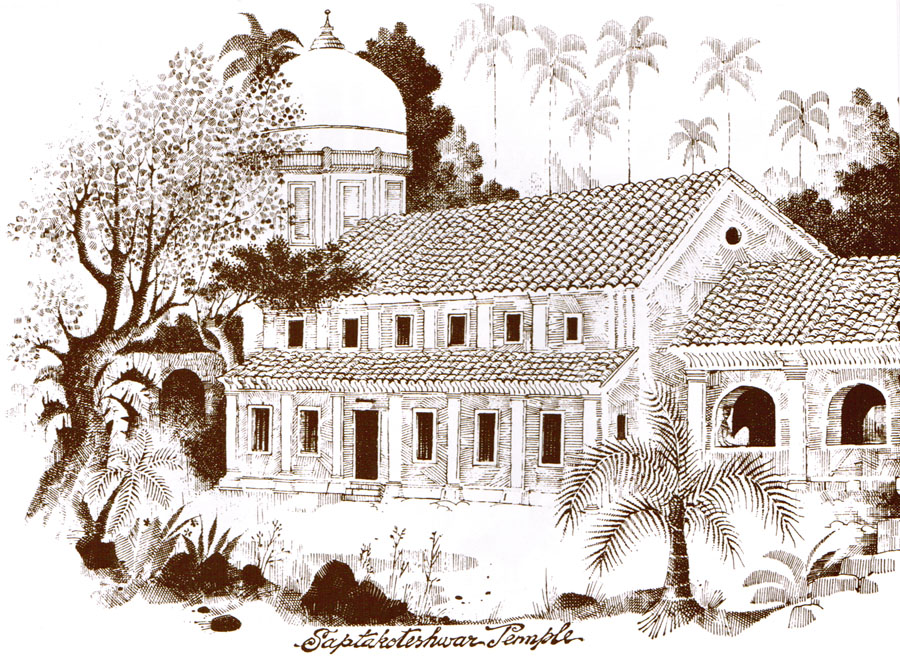 Not
to be undone, Indian nationalists, and academics who sympathized with the
Indian position, crafted another trope in response; Goa Indica. Rubbish, they claimed, Goa was merely under Portuguese
control. It is, and always has been, profoundly Indian. There are some who
would argue that Goa Indica was the
post-colonial response to colonial propaganda of Goa Portuguesa. The problem with this argument is that Goa Portuguesa has been one of the
planks on which Goa’s tourism industry has been built, especially from the
1980s. This is to say, that while Goa’s Portuguese identity may have been
initially crafted by the Portuguese state, it was given added life by the
post-colonial Goan, and Indian, state, and the allied institutions of film,
advertising, that support the state.
Not
to be undone, Indian nationalists, and academics who sympathized with the
Indian position, crafted another trope in response; Goa Indica. Rubbish, they claimed, Goa was merely under Portuguese
control. It is, and always has been, profoundly Indian. There are some who
would argue that Goa Indica was the
post-colonial response to colonial propaganda of Goa Portuguesa. The problem with this argument is that Goa Portuguesa has been one of the
planks on which Goa’s tourism industry has been built, especially from the
1980s. This is to say, that while Goa’s Portuguese identity may have been
initially crafted by the Portuguese state, it was given added life by the
post-colonial Goan, and Indian, state, and the allied institutions of film,
advertising, that support the state.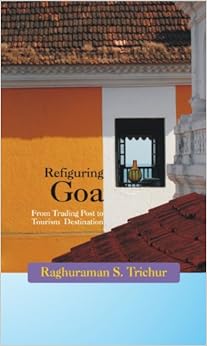 How
does one make sense of this fact, that it was Indian control over Goa that
deepened Goa’s image as Portuguese, Iberian and European? Raghu Trichur
provides a very plausible argument in his book Refiguring Goa (2013). He suggests
that “[i]ntegrating Goa into the Indian nation-state was more problematic
than occupying and liberating Goa from Portuguese colonial rule, especially if
one was to consider the politics that surfaced in ‘postcolonial’ Goa over the
two decades since 1961” (p.12). He elaborates that “it was only after the state
sponsored development of tourism in the 1980's (two decades after Goa's
liberation/occupation in 1961), was Goa effectively integrated into the Indian
nation-state” (p.13). Trichur’s suggestion, then, is that the marketing of Goa
as Portuguese and European was a strategy of the Congress government that
sought to skirt the politics inaugurated by Dayanand Bandodkar and the bahujan
groups subsequent to integration into India.
How
does one make sense of this fact, that it was Indian control over Goa that
deepened Goa’s image as Portuguese, Iberian and European? Raghu Trichur
provides a very plausible argument in his book Refiguring Goa (2013). He suggests
that “[i]ntegrating Goa into the Indian nation-state was more problematic
than occupying and liberating Goa from Portuguese colonial rule, especially if
one was to consider the politics that surfaced in ‘postcolonial’ Goa over the
two decades since 1961” (p.12). He elaborates that “it was only after the state
sponsored development of tourism in the 1980's (two decades after Goa's
liberation/occupation in 1961), was Goa effectively integrated into the Indian
nation-state” (p.13). Trichur’s suggestion, then, is that the marketing of Goa
as Portuguese and European was a strategy of the Congress government that
sought to skirt the politics inaugurated by Dayanand Bandodkar and the bahujan
groups subsequent to integration into India.  The
nature of Bandodkar’s politics, and how it offered a genuine liberation for the
Hindu bahujan of Goa is interestingly elaborated in India’s First Democratic Revolution (2015)
a monography recently written by Parag Parobo from the department of History,
Goa University. The difference between Nehruvian politics and Bandodkar’s politics
was recently succinctly articulated
by Kaustubh Naik: “Nehru’s vision for India was a result of his upper caste
elite background which worked only to the benefits of Indian elites while the
marginalized struggled to find a place for themselves within that vision.
Bandodkar, with his lower caste capitalist background, set a model of
governance that prioritized liberating the Bahujans from bonds of feudal and
social oppression.” Indeed, the initial years of the Congress in Goa were
marked by complete upper-caste dominance. This hegemony was completely rejected
at the polls for almost two decades until the MGP ran out of steam, and the
upper-castes were to combine forces and once again re-assert themselves through
the Congress party.
The
nature of Bandodkar’s politics, and how it offered a genuine liberation for the
Hindu bahujan of Goa is interestingly elaborated in India’s First Democratic Revolution (2015)
a monography recently written by Parag Parobo from the department of History,
Goa University. The difference between Nehruvian politics and Bandodkar’s politics
was recently succinctly articulated
by Kaustubh Naik: “Nehru’s vision for India was a result of his upper caste
elite background which worked only to the benefits of Indian elites while the
marginalized struggled to find a place for themselves within that vision.
Bandodkar, with his lower caste capitalist background, set a model of
governance that prioritized liberating the Bahujans from bonds of feudal and
social oppression.” Indeed, the initial years of the Congress in Goa were
marked by complete upper-caste dominance. This hegemony was completely rejected
at the polls for almost two decades until the MGP ran out of steam, and the
upper-castes were to combine forces and once again re-assert themselves through
the Congress party.
There
is, however more to this equation that merely trying to reformulate Goa outside
of bahujan politics, and this aspect speaks directly to the desires of
Nehruvian elites that marked the Congress party in Delhi and their largely
upper-caste associates in Goa. This aspect can be uncovered if we ask why Goa
Goa’s being European should be exciting for (elite) Indians?
 To
answer this question requires that we look at the politics through which Europe
is constituted. The fact is that while core European values are defined by the
practices in the north-west of that continent, such as Germany, The
Netherlands, Britain, the South, namely Spain, Italy, Greece, has been marked
off, since at least the nineteenth century, as the place largely of leisure and
pleasure, tourism and adventure. Northern European, but especially British and
American magnates, travelled to the South for leisure and illicit pleasure.
Northern Europeans articulated their European identity by setting themselves
off as different from Southern Europeans.
This logic was then applied to the rest of the world, where Europe was set
off from the rest of the colonised world, just as Northern Europe was set off
from the southern part of the continent.
To
answer this question requires that we look at the politics through which Europe
is constituted. The fact is that while core European values are defined by the
practices in the north-west of that continent, such as Germany, The
Netherlands, Britain, the South, namely Spain, Italy, Greece, has been marked
off, since at least the nineteenth century, as the place largely of leisure and
pleasure, tourism and adventure. Northern European, but especially British and
American magnates, travelled to the South for leisure and illicit pleasure.
Northern Europeans articulated their European identity by setting themselves
off as different from Southern Europeans.
This logic was then applied to the rest of the world, where Europe was set
off from the rest of the colonised world, just as Northern Europe was set off
from the southern part of the continent. To
return to Goa, I would argue that a Portuguese Goa was appealing for the
Nehruvian elites because they saw themselves as the inheritors of Britain’s
paramount sovereignty in India. With Indian independence they became the
British, and inherited the British gaze on the world. Thus, they inherited the
British gaze on the Portuguese, as well as the Portuguese territory. Thus, if
Portugal, part of the European south, was a place for leisure, so too did Goa
become a place for pleasure for the brown sahibs. If European elites went to
the South of Europe for their leisure, so too would the Indian elites go to
Goa, their piece of Europe, for leisure.
In other words, post-colonial Goa was Europeanised to cater to the fantasies of
the Nehruvian elites for whose consumption India was constructed.
To
return to Goa, I would argue that a Portuguese Goa was appealing for the
Nehruvian elites because they saw themselves as the inheritors of Britain’s
paramount sovereignty in India. With Indian independence they became the
British, and inherited the British gaze on the world. Thus, they inherited the
British gaze on the Portuguese, as well as the Portuguese territory. Thus, if
Portugal, part of the European south, was a place for leisure, so too did Goa
become a place for pleasure for the brown sahibs. If European elites went to
the South of Europe for their leisure, so too would the Indian elites go to
Goa, their piece of Europe, for leisure.
In other words, post-colonial Goa was Europeanised to cater to the fantasies of
the Nehruvian elites for whose consumption India was constructed. The
problem doesn’t end with just the elites, however, since what the elites do,
the upwardly mobile follow. To demonstrate how the consumption of Southern
Europe, and the concomitant production of oneself as European of western plays
out I would like to offer an example from the city of Bangalore from about
little less than a decade ago. Around this time, there were three different
real-estate developers who were offering homes around Southern European themes.
There were “large Spanish homes” at Mantri España, Purva Venezia “inspired by the magical landscape of Venice", and another development that sought to sell property on the basis that it would feel like home to Vasco da Gama should be return to India.
The
problem doesn’t end with just the elites, however, since what the elites do,
the upwardly mobile follow. To demonstrate how the consumption of Southern
Europe, and the concomitant production of oneself as European of western plays
out I would like to offer an example from the city of Bangalore from about
little less than a decade ago. Around this time, there were three different
real-estate developers who were offering homes around Southern European themes.
There were “large Spanish homes” at Mantri España, Purva Venezia “inspired by the magical landscape of Venice", and another development that sought to sell property on the basis that it would feel like home to Vasco da Gama should be return to India. 
Given
that in our neo-liberal times work demands so much of us, the house is
increasingly cast as the space of retreat, and leisure. In such a context, it
makes sense that real estate developers would market their properties to the
Indian upper middle class, who seek to be western,
along lines that would make sense to westerners. Thus, where the house is a
space of leisure, it follows patterns of leisure that would appeal to the
Northern European. Translated into the Goan context, this ensures not only the
hordes of Indian tourists, and the Indian middle class who want to buy homes in
Goa, but also the pastiche architecture, with sloping roofs and faux-Iberian
aspects. Because of Goa’s
indigenous building traditions there is something vaguely local about this
contemporary architecture, but its success lies in the fact that it appeals to
vague Indian notions about what southern European architecture looks like.
Between
the Nehruvian elites, and the upwardly mobile groups of contemporary India, Goa
is up for grabs largely because it is a space where, thanks to whitewashed
churches and the presence of Catholicism, these groups can pretend that they
are in Europe, and play the European. While the Estado Novo may have been responsible for initially articulating
this idea, it is the Indian regime, and the comprador class in Goa, that has
done more for presenting Goa as Portuguese and European. As Dale Menezes has
argued, this has been done largely to suit Indian interests than groups in Goa,
the marginalized sections of which continue to languish without necessary
attention, or respect.
(A version of this post was first published in the O Heraldo on 16 Oct 2015)


