Showing posts with label British-India. Show all posts

Tuesday, October 4, 2016

Portuguese citizenship and the debugging of Indian imaginations


I read with interest the recent opinion piece “The Portuguese nationality bug”  on the vexed issue of the rights of Portuguese Indians to Portuguese citizenship and was disappointed by the author’s refusal to see the larger picture. I suspect that this is because the author seeks to resolve the question within the narrow frames of Indian nationalism. As a result, the argument forwarded in the op-ed seems to buttress the rights of the state over those of citizens. Such legality will only strengthen the growing authoritarianism of the Indian state over subjects who, while formally citizens, increasingly lack the space to realize this condition.

In the opinion piece citizenship is presented as a status that is conferred by a state. This is not only a peculiarly lawyerly perspective but also a dated idea. Unsurprisingly, the argument refers to a judgment of the US Supreme Court from 1875. The wider field of contemporary citizenship theory recognizes that citizenship is more than a status, rather a condition to be realized. In these more recent understandings, as evidenced in the Universal Declaration of Human Rights (1948) for example, rights are not conferred by a state, but inhere in the individual. Even the Indian Constitution recognizes that it is the people who constitute the state as evidenced in the famous lines of the preamble “We the People of India….” Thus, a post-colonial political theory recognizes that states are actually constituted by the people, which formally recognize the rights of people. With the passage of time as our appreciation of the depths of rights grows, states are required to recognize these evolving rights. Indeed, this was very much the case with India as well when from about the 1950s the existing fundamental rights were dramatically expanded through the interpretations offered by the Supreme Court.

Of the many rights that inhere in individuals, surely the right of citizenship is the most fundamental.If there was one single right that the anti-colonial nationalist movements fought for, it was the right of citizenship. As in the case of British India, the initial demand was for the right to imperial citizenship, and it was only because the British, hobbled by a racist imagination, failed to recognize this right, that the Indian nationalists pressed forward for a national citizenship.

Citizenship must necessarily be distinguished from nationality. These are two distinct concepts and must theoretically be kept separate. While citizenship involves a gamut of rights that allow one to be a political subject, nationality is the status of belonging that the nation confers on some individuals, and restricts from others. This is to say, the first deals with rights, while the second is the realm of cultural belonging. One of the reasons why the debate on the Portuguese Indian rights to Portuguese citizenship is so vexed is because the various parties fail to recognize the fundamental differences between these two concepts. This is obvious even in the opinion piece where there is a constant switch between the terms nationality and citizenship as if they were the same.

This failure is not surprising given that the nation-state form that has been taken up across the world purposely seeks to conflate the concept of the state and the nation. The famous philosopher Hannah Arendt refers to this as “the transformation of the state from an instrument of the law into an instrument of the nation”. Taking up this idea, other scholars have pointed out that “It was this conquest that defined citizens of the state as nationals whether defined racially, ethically, culturally or even religiously”. There is, in fact, no good reason for the two concepts to be conflated. A state can compromise multiple nations, while nations need not have a state. Take the case of Belgium, which is composed of people that identify with two different nationalities, the Flemish and the Walloon. Or take India, which can be said to comprise different nationalities, but refuses to recognize, and in principle rightly so, that each of these nations needs its own state. Indeed, the foundation of the contemporary international order as an association of nation-states can be traced back precisely to the racist imaginations of the colonial order. To this extent, the assertions of Portuguese Indians to retaining their Portuguese citizenship while also accepting that of India stands to offer the world a model in terms of post-colonial citizenship precisely because it is born of an early modern experience that differs dramatically from the colonial experience rooted in late-modernity.

What does come out in striking clarity from the argument in the opinion piece referred to above is the legal position of the former citizens of Portuguese India in the Indian republic. In addition to the legal formulation that the argument the op-ed relies on, and the military action of 1961, this population is not a liberated population able to act on equal footing with other individuals from British India, but in fact a subjugated population whose “rights” depend on what the State of India grants them. The noted philosopher Partha Chatterjee has recently articulated a concept of political society that addresses precisely this point. He argues that not all who are formally recognized as citizens enjoy rights. Chatterjee suggests that these people are members not of civil society, but political society. Members of political society do not enjoy rights, which are permanent and inhere in the individual; they are merely extended temporary concessions when these excluded groups challenge the status quo. Once the status quo is secure these concessions can and often are revoked.

Reading the argument in “The Portuguese nationality bug” in the context of this framework, given that the citizenship rights of Portuguese Indians seem to depend on the whims of the Indian state, one can see that what the Portuguese Indians enjoy are not rights that inhere in the individual and are not granted by the state, but merely temporary privileges that can be, and are, rolled back when the State feels like. The privilege of Indian nationality was extended to these groups when the Indian state needed to consolidate its hold over the newly conquered territories creating the mirage of extension of citizenship when in fact the recognition of their pre-existing rights is what would have constituted acceptance into Indian civil society.  It needs to be noted that this is not the position of the Portuguese state that recognizes the continuing rights of citizens in territories over which it formerly claimed sovereignty.

The argument also fails to appreciate the federal nature of the Indian Union, a vision that is embodied in the Constitution. The Indian constitution patently allows for a diversity of legal regimes within the Indian Union. Take, for instance, Art. 370 of the Constitution that allows for Kashmir to have its own constitution. This particular article is the subject of much vituperation but the fact is that such resentment against Art. 370 has been the result of Hindu nationalist opposition. Ironically it is Hindu nationalism which is contrary to the constitutional mandate. Art. 370 must therefore be seen as embodying the basic structure of the Indian constitution that makes space for a federal structure that incorporates widely different polities within a single structure. Consider also the fact that Buddhist monks and nuns in Sikkim get a double vote to ensure the representative of the Sangha in the legislature. This argument for legal pluralism can also be buttressed by reference to the reports on the conclusion of the Indian state’s negotiations with the Naga activists. Though the terms of the agreement are still secret, if a dubious news report is to be believed it appears that the Indian state, under Prime Minister Modi, has agreed to the Naga demand for a separate Constitution, as well as a separate flag. Such an agreement, if true, would testify to the capacity of the Indian Union to accommodate legal difference within a single federal structure.

A resolution of the question of the Portuguese citizenship of denizens of the former Portuguese India could contribute to the failing health of the Indian Union. It would allow an assertion of the dignity of the rights-bearing individual in opposition to asserting the right of a potentially tyrannical Indian state. It would contribute to the constitutional imagination of a federal India, an imagination that has unfortunately been undermined by the desires of Hindu nationalists and successive central governments.

For too long a time the question regarding the legitimacy of Portuguese Indians holding on to both Portuguese and Indian citizenship is being debated in a dry and inspired manner. Given that the question is admittedly complex, the resolution cannot be obtained through a niggardly attention to the letter of the law. Rather, what is required is a reference not merely to the spirit that animates laws, but to the larger questions of postcolonial justice and the rights of individuals, this is to say a reference to political theory and the philosophy of law. What is required is not a debugging of Portuguese nationality, but Indian imaginations.

(A version of this post was first published in the O Heraldo dated 4 Oct 2016)

Monday, February 29, 2016

Let’s Talk About Rights!


Growing up in the 1980s in Goa from time to time I would hear the more vociferous men in my family swear: “These bloody Indians!” Attending school where a steady diet of Indian nationalism was a part of the curriculum, we youngsters would be horrified. Surely, these figures of parental authority couldn’t speak like they did? Besides, weren’t we Indian? It was at this early age that I realised that to be Goan is not the same as being Indian. And it was possible for Goan history to read Indian nationalism differently. I have spent the rest of my life trying to figure the differences out.

A politicised Goan, such as myself, looks on this season, where allegations of being anti-national are being flung like confetti, with some cynicism. Not unlike Muslims in India, Goans, and especially Goan Catholics, have been used to be seen as de-nationalised, if not anti-national, for a while now. This critical evaluation has only heightened since some years when it came to be understood that many Goans have been “giving up” Indian nationality for Portuguese citizenship.

A common misunderstanding of the situation in Goa is that this devolution of the Indian passport has to do with pride in their Portuguese connection, and an application for citizenship. Appreciating the nuances of the situation requires disabusing a number of misunderstandings.

To begin with, it is not merely Goans who are giving up their Indian citizenship, but persons from the larger Portuguese state of India or Estado da Índia (EI), which in 1961 included the territories of Goa, Daman, Diu, and Dadra and Nagar Haveli. These persons are able to acquire Portuguese citizenship not because of any continental ancestry, but because of a legal history that differs significantly from that of British India. Where residents of British India were merely subjects of the British Crown and never citizens, native Christian residents of Portuguese India were almost from the very beginning of the presence of the EI in the early 1500s, seen as equal subjects of the crown. With the inauguration of the Portuguese constitutional monarchy in the mid-1800s, citizenship of all subjects was formally recognised, and subsequently deepened when the Portuguese Republic was declared in 1910. As citizens of Portugal a restricted electorate of persons from Goa were able to elect persons to represent their interest in the Portuguese Parliament in Lisbon. This marked a significant distinction from the situation in British India where natives had no Parliamentary presence, and even Dadabhai Naoroji, the first Indian in the British parliament, was elected by Britishers to represent an English constituency.

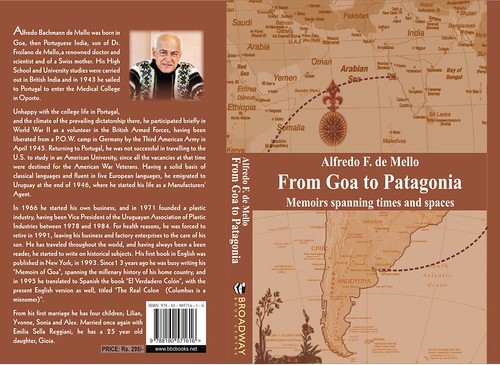
Indeed, so dramatically different was the situation in British India from that which obtained in Portuguese India that Goans were often able to assert themselves against the British. Take, for example, this anecdote from the city of Bangalore in the year 1940. In his memoirs, From Goa to Patagonia: Memoirs spanning times and spaces (2006: 146), Alfredo de Mello recounts his altercation with a Revered Xavier who had recently joined the staff of the famous Bishop Cotton’s school:
 
“One evening, while the Cotton's Cadets were drilling in the field with their 1914 vintage rifles and polished bots, Rev. Xavier and I were watching them and he remarked; ‘How come you are not marching with them?’, and I replied: ‘I am a foreigner, Sir, belonging to a neutral country’, and Rev. Xavier, in a tone that dripped with contempt, retorted: ‘Why don't you become a British subject? Don't you know that we are the salt of the earth?’

Trying to control my nerves and smarting under such a presumption, I said, ‘I am a Portuguese citizen, Sir, and not a subject like yourself. Furthermore …[e]very dog has its day. Portugal had its glorious quarter of an hour in History, as a world power, in the sixteenth century, and yours is about to end’.”

The situation where former citizens of the EI can continue to claim Portuguese citizenship is the result of the unorthodox manner in which Goa was integrated into India. Portugal was governed by an authoritarian regime from the mid-1930s until 1975 that refused to countenance the idea of Goa’s independence or integration into India, until India did so by force in 1961. When India annexed these territories in 1961 it failed to recognise that the residents were in fact Portuguese citizens and unilaterally extended Indian citizenship to them. Indian control over the territories that constituted the EI was not recognised by Portugal until the regime fell in 1975. At this point, the Portugal recognised the ancient constitutional rights of the residents of the now lost territories. Thus, when residents of the former EI renounce their Indian passport, they are not applying for Portuguese citizenship; merely asserting their pre-existing right to Portuguese citizenship. 

The recovery of this right lay somewhat dormant from 1975 until recently. It was with Portugal joining the European Union that a Portuguese passport gained a completely new significance. If there are so many persons queuing up to assert their right to a Portuguese passport, it thus has less to do with Portuguese nationalism, though this cannot be discounted in some cases, and more to do with making an economic choice.

The assertion of this right by citizens of the former EI has upset nationalists both in Portugal and in India. Some Portuguese nationalists desire that this right be curtailed or withdrawn entirely. Portuguese citizenship, they argue, should be given only to those who speak the Portuguese language, know something of Portuguese history, and have a love for Portugal. Like most nationalistic assertions often tend to be, these too are offensive. Citizenship is not a gift given for good behaviour, it is a fundamental right, and such rights are sacrosanct. They cannot be withdrawn on the basis of some petty excuse. Further, one could argue that the retention of the right to Portuguese citizenship is a part of post-colonial justice.


Most Indian nationalists are similarly unable to recognise the fact that the actions under discussion are the result of a law and a right. This should give some idea of how the operation of Indian nationalism has dulled Indian appreciation for law and rights. Indian nationalism crafts the recovery of this right as a treacherous betrayal of the motherland refusing to recognise that given the absence of a legally existing state of India before 1947, residents of Portuguese India in fact had Portugal as a legal motherland. As is often the case, Indian nationalism also comes with its communal twist. Even though the persons renouncing Indian citizenship belong to the various faiths that constituted the Portuguese empire, it is largely Catholics who are charged as anti-national for giving up Indian citizenship.

To the question what do citizens of the former EI think of nationalism, the response would be why should they think of nationalism? They are thinking of their economic futures, and asserting their rights, and this is far more important than any nationalism.


(A version of the post was first published in the Indian Express  on 28 Feb 2016)

Friday, October 16, 2015

India made Goa Portuguese


Recently, there have been a number of voices that have pointed out that a part of the problem in contemporary Goa is the manner in which Goa is being consumed. Writing in The Goan Everyday, Vishvesh Kandolkar pointed out that Goa “is perceived as a perfect holiday destination with its sun, sea, and sand, apart from the Europeanised atmosphere that they [Indian elites and tourists] don’t find anywhere else in India.” Picking up on the concerns raised by Kandolkar, Dale Luis Menezes, writing in the O Heraldo also pointed that Goa’s problem lies in the fact that it is perceived as European, and following an argument by Paul Routledge, argues that Goa was created and projected as a pleasure periphery, a site of tourism and pleasure.

To make sense of these claims it is important that we delve deeper into the process that allowed Goa to be seen, or be represented as European. Most persons with some knowledge of the academic literature on Goa will point out that Goa’s character and European is the result of the Estado Novo’s claims from the late 1940s. Responding to the demand of the post-colonial Indian State that Goa be “returned” to it, Salazar’s Portugal responded that this was impossible. Goa was not Indian, they claimed, it was Portuguese. 450 odd years of Portuguese presence had ensured that Goa was strikingly different from the rest of India, and that the people of Goa had more in common with Europe than India. This way of presenting Goa has given rise to the trope of Goa Portuguesa. 
 
Not to be undone, Indian nationalists, and academics who sympathized with the Indian position, crafted another trope in response; Goa Indica. Rubbish, they claimed, Goa was merely under Portuguese control. It is, and always has been, profoundly Indian. There are some who would argue that Goa Indica was the post-colonial response to colonial propaganda of Goa Portuguesa. The problem with this argument is that Goa Portuguesa has been one of the planks on which Goa’s tourism industry has been built, especially from the 1980s. This is to say, that while Goa’s Portuguese identity may have been initially crafted by the Portuguese state, it was given added life by the post-colonial Goan, and Indian, state, and the allied institutions of film, advertising, that support the state.

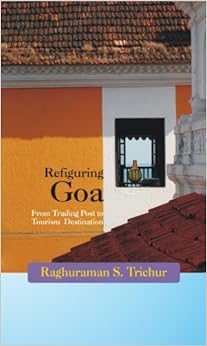
How does one make sense of this fact, that it was Indian control over Goa that deepened Goa’s image as Portuguese, Iberian and European? Raghu Trichur provides a very plausible argument in his book Refiguring Goa (2013). He suggests that “[i]ntegrating Goa into the Indian nation-state was more problematic  than occupying and liberating Goa from Portuguese colonial rule, especially if one was to consider the politics that surfaced in ‘postcolonial’ Goa over the two decades since 1961” (p.12). He elaborates that “it was only after the state sponsored development of tourism in the 1980's (two decades after Goa's liberation/occupation in 1961), was Goa effectively integrated into the Indian nation-state” (p.13). Trichur’s suggestion, then, is that the marketing of Goa as Portuguese and European was a strategy of the Congress government that sought to skirt the politics inaugurated by Dayanand Bandodkar and the bahujan groups subsequent to integration into India.

The nature of Bandodkar’s politics, and how it offered a genuine liberation for the Hindu bahujan of Goa is interestingly elaborated in India’s First Democratic Revolution (2015) a monography recently written by Parag Parobo from the department of History, Goa University. The difference between Nehruvian politics and Bandodkar’s politics was recently succinctly articulated by Kaustubh Naik: “Nehru’s vision for India was a result of his upper caste elite background which worked only to the benefits of Indian elites while the marginalized struggled to find a place for themselves within that vision. Bandodkar, with his lower caste capitalist background, set a model of governance that prioritized liberating the Bahujans from bonds of feudal and social oppression.” Indeed, the initial years of the Congress in Goa were marked by complete upper-caste dominance. This hegemony was completely rejected at the polls for almost two decades until the MGP ran out of steam, and the upper-castes were to combine forces and once again re-assert themselves through the Congress party.

There is, however more to this equation that merely trying to reformulate Goa outside of bahujan politics, and this aspect speaks directly to the desires of Nehruvian elites that marked the Congress party in Delhi and their largely upper-caste associates in Goa. This aspect can be uncovered if we ask why Goa Goa’s being European should be exciting for (elite) Indians?

To answer this question requires that we look at the politics through which Europe is constituted. The fact is that while core European values are defined by the practices in the north-west of that continent, such as Germany, The Netherlands, Britain, the South, namely Spain, Italy, Greece, has been marked off, since at least the nineteenth century, as the place largely of leisure and pleasure, tourism and adventure. Northern European, but especially British and American magnates, travelled to the South for leisure and illicit pleasure. Northern Europeans articulated their European identity by setting themselves off as different from Southern Europeans.  This logic was then applied to the rest of the world, where Europe was set off from the rest of the colonised world, just as Northern Europe was set off from the southern part of the continent.

To return to Goa, I would argue that a Portuguese Goa was appealing for the Nehruvian elites because they saw themselves as the inheritors of Britain’s paramount sovereignty in India. With Indian independence they became the British, and inherited the British gaze on the world. Thus, they inherited the British gaze on the Portuguese, as well as the Portuguese territory. Thus, if Portugal, part of the European south, was a place for leisure, so too did Goa become a place for pleasure for the brown sahibs. If European elites went to the South of Europe for their leisure, so too would the Indian elites go to Goa, their piece of Europe, for leisure. In other words, post-colonial Goa was Europeanised to cater to the fantasies of the Nehruvian elites for whose consumption India was constructed.

The problem doesn’t end with just the elites, however, since what the elites do, the upwardly mobile follow. To demonstrate how the consumption of Southern Europe, and the concomitant production of oneself as European of western plays out I would like to offer an example from the city of Bangalore from about little less than a decade ago. Around this time, there were three different real-estate developers who were offering homes around Southern European themes. There were “large Spanish homes” at Mantri España, Purva Venezia “inspired by the magical landscape of Venice", and another development that sought to sell property on the basis that it would feel like home to Vasco da Gama should be return to India.

Given that in our neo-liberal times work demands so much of us, the house is increasingly cast as the space of retreat, and leisure. In such a context, it makes sense that real estate developers would market their properties to the Indian upper middle class, who seek to be western, along lines that would make sense to westerners. Thus, where the house is a space of leisure, it follows patterns of leisure that would appeal to the Northern European. Translated into the Goan context, this ensures not only the hordes of Indian tourists, and the Indian middle class who want to buy homes in Goa, but also the pastiche architecture, with sloping roofs and faux-Iberian aspects. Because of Goa’s indigenous building traditions there is something vaguely local about this contemporary architecture, but its success lies in the fact that it appeals to vague Indian notions about what southern European architecture looks like.

Between the Nehruvian elites, and the upwardly mobile groups of contemporary India, Goa is up for grabs largely because it is a space where, thanks to whitewashed churches and the presence of Catholicism, these groups can pretend that they are in Europe, and play the European. While the Estado Novo may have been responsible for initially articulating this idea, it is the Indian regime, and the comprador class in Goa, that has done more for presenting Goa as Portuguese and European. As Dale Menezes has argued, this has been done largely to suit Indian interests than groups in Goa, the marginalized sections of which continue to languish without necessary attention, or respect.

(A version of this post was first published in the O Heraldo on 16 Oct 2015)