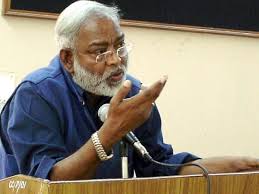
On the fourth of February, the
Archbishop Emeritus Raul Gonsalves released a book authored by Fr. Desmond de
Souza on the social teachings of the Church. Titled ‘The Concerned Face of the
Church’, the Catholic Association of Goa, under whose aegis the book was
released, invited John Dayal, a nationally recognized Catholic activist to
deliver the key-note address. Dayal began his address by pointing to a rather
disturbing observation. He pointed out that the Catholic Church in India has
educated a number of Indians, rich and poor, contributing immensely to the
rising of this nation. However, when Christian religious are murdered, raped
and harassed, when Christians are attacked and their property destroyed, one
does not hear a single voice of protest from any of these non-Catholic
educated. Perhaps Dayal overstated him case while making this broad claim.
Surely there has been at least one, if not a handful of Hindu voices that have
joined their voice to the chorus of Christian protests. There was an element of
an ‘Us’ vs. ‘Them’ through the course of Dayal’s address that was deeply
problematic, bordering on what some would call communal. However, if one does
not make the broad sweep that Dayal did, but look at the issue more broadly, he
does have a point. Why is it that it is the very people who have been educated by
educational institutions of the Church are very often the ones instigating
hatred for the Indian non-Hindu?

Dayal had an answer for this
dilemma, and his answer credited the fact that we, ‘the Church’, were seen by
these recipients of Christian
caritas
as service-providers. In the minds of the vast majority of this country,
non-Catholic and Catholic, these Christian educational institutions were seen
merely as service-providers. The recipients of Catholic education had received
education yes, but they had also paid a fee for their education; the debt, as
they saw it therefore, was discharged. Connecting with the theme of the book
that was being released, the social teachings of the Church; in his analysis of
the problem, Dayal argued that we ought to take the Christian understanding of
the word service more seriously. Christian service was not merely a commodity
that was up for sale, but an overflowing of
caritas,
a virtue that combined love and charity, a sentiment that he argued was
uniquely Christian.

There were a couple of things
however that Dayal did not do in his analysis of a genuine problem. First,
he did not question the complicity that the Catholic Church in India has
developed with nationalism. Much Catholic education is equally twined with the
cause of making India the nation great, rather than focusing solely on
developing the spiritual character of the student. As Christ told us so many
millennia ago, one cannot serve both Caesar and God. In the moment of truth,
one has to choose between the two. Secondly, Dayal did not ask the caste
question. He did not ask how the fact that the overwhelming majority of
students of Christian educational institutions are in fact persons from upper/
dominant caste groups, and how these people have a sense of entitlement impacts
on the situation. They see themselves as natural leaders, born to rule the
nation, and as such expect to be catered to. This is their right. This column
will not explore the second question; it has expended much space on this
question, and thus will look at the first.

Addressing the first question
requires us to return to take a look at some of the other persons who spoke at
the release of the book. The voice the author, Fr. de Souza, in particular
stood out. Fr. de Souza indicated that for a long time the teachings of Christ discordant
with the status-quo were torn off from the teachings of the Church and cast
into a waste-bin. From this waste-bin they were found by Karl Marx and
reintroduced into the world as an emancipatory agenda for the masses. If the
Church can be held guilty of having abandoned one facet of the teachings of
Christ, then the Marxists were guilty of ignoring the other facet, that which stayed
in the books. After the II Vatican Council, there was in some quarters an
unhealthy over-dependence on these Marxian principles to interpret the
Christian mission. It was this imbalance that could be credited with having
robbed the Christian service of the element of mission.
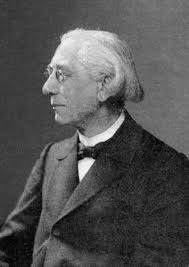
There
is another link with this story however that must be told, and this is the
manner in which the understanding of mission itself had changed for some time
before the II Vatican Council. Moving away from the more orthodox view that the
Christian mission was about the conversion of souls; inspired by the work of
Gustav Warneck a Protestant theologian, the Church adopted the plantio principle. This principle understood
"Christian Mission" to mean "the totality of an action which is
aimed at planting and organizing the Christian Church among
non-Christians." In addition, this principle called for 'a systematic
spreading of the visible Church through deep-rooted measures which would lead
to the emergence of local clergies and hierarchies in the Missions'. For most
of the Anglo-American and German Protestant mission theoreticians of the
nineteenth and early twentieth centuries, the goal of the Mission therefore was
the establishment of independent local Churches. The stress therefore was not
on the catechumenate, but rather activities which would lead to the
organization of an indigenous clergy, a task which would not be thought of without
education and the school.
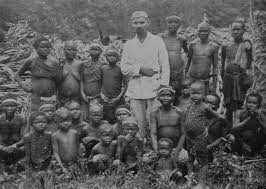 Catholicism’s
own foray into this principle came via the efforts of Fr. Pierre Charles S.J. who
pointed out that 'One may reply that because the goal of the mission is to
convert pagans, we establish schools in order to bring about conversion and to
entice to our missionary enterprise those who would otherwise not come to us
and listen to us in our churches. But this answer would rather be grotesque.
The goal of the mission is not only to convert the unbelievers; it is also to
sustain and ameliorate the converts....If you teach arithmetic, it is your duty
to make sure that your pupils also comprehend [and utilize] it; otherwise do
not teach it....The religious objective simply disappears and is superseded by
a humanitarian goal. You may entertain the secret hope that your educational
effort may produce religious results, but you should not make that hope the
primary motive of your enterprise...'
Catholicism’s
own foray into this principle came via the efforts of Fr. Pierre Charles S.J. who
pointed out that 'One may reply that because the goal of the mission is to
convert pagans, we establish schools in order to bring about conversion and to
entice to our missionary enterprise those who would otherwise not come to us
and listen to us in our churches. But this answer would rather be grotesque.
The goal of the mission is not only to convert the unbelievers; it is also to
sustain and ameliorate the converts....If you teach arithmetic, it is your duty
to make sure that your pupils also comprehend [and utilize] it; otherwise do
not teach it....The religious objective simply disappears and is superseded by
a humanitarian goal. You may entertain the secret hope that your educational
effort may produce religious results, but you should not make that hope the
primary motive of your enterprise...'
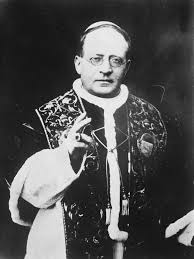
Caught
up in the anti-colonialist and nationalist fervor of those times, these efforts
received Papal blessing even before the II Vatican Council. As we can see
however, both from the quote from Fr. Charles as well as from Dayal’s
reflections, the religious objective of mission (that is not merely restricted
to conversion, but Christian witnessing) came to be superseded by the
humanitarian goal, that in turn, with the materialist emphasis since the
Vatican Council has been cannibalized by the human goal, namely nationalism.
Inspired by such ideas, the works of great Catholic educationists in India,
such as Fr. Heras S.J., was to produce not just good souls, but great Indians.
Indeed the Xavier’s College in Bombay was indeed the location of nationalist
struggle as the efforts of these priests worked to convince Goan students then
of their Indian, not Portuguese identity (which is not to suggest that their
Portuguese identity was any more real than their sub-continental one).
In
sum, the problem that Dr. Dayal raised must seriously address fundamental
questions that get occluded when we uncritically embrace the more materialist
interpretations of the social teachings of the Church. In the face of
aggressive nationalism these questions may not be easy to address, but we stand
the greater risk of falling into uncritical minoritarianism if we fail in this
regard.
(Most of the quotations in this text are from Omenka, Nicholas Ibeawuchi. 1989. The School in the Service of Evangelization: The Catholic Educational Impact in Eastern Nigeria, 1886-1950. BRILL.)
(A version of this post was first published on the Gomantak Times dtd 8 Feb 2012)


