Showing posts with label conversion. Show all posts

Monday, April 6, 2015

Of wolves, sheep and wolves in sheep's clothing: The secular liberal in the emerging Hindu Raj


I was, apparently, not the only one to be perplexed by Jagdish Bhagwati’s denouncement of the insecurity expressed by Christians in India. This widespread bemusement should not come as a surprise; after all, Bhagwati did expend three of the eleven paragraphs of his article protesting his fides. He assures us that despite the crude manner in which he dismisses the concerns of a community that has faced not merely arson attacks against its religious structures and institutions, but rape, desecration, and belligerent rhetoric, his arguments are not antagonistic, or communal, but secular, and rational. This is because he comes from a “from a family that is impressively pro-Indian-minorities”, some of his dearest friends are non-Hindu, and he himself earned his basic degrees from a Christian institution.

Many who read his offensive dismissal, and call for strict action, wondered if Bhagwati had lost his marbles. After all, did not the argument “I have many left handed friends, hence I speak for left-handed people”, or “I’m not Islamophobic! Some of my best friends are Muslim!” run out of credibility in the 70s? I would argue, however, that Bhagwati’s protestations are not the sign of a feeble mind, nor of a man out of step with contemporary reality, but rather a strikingly clear indication of a variety of political equations in contemporary India. In this response, I would like to highlight and protest against Bhagwati’s callous attitude, as well as point to the manner in which his position is in fact indicative of the manner in which Nehurvian secularism is being bridged with Modi’s Hindtuva regime.

What is striking about the first of Bhagwati’s reasons for his secular location is the fact that he has placed his familial connections up front and centre. However, this is not an average family; Bhagwati has gone through some pain to demonstrate that his friends and family are all either extremely powerful, highly qualified professionals, or come from dominant caste groups. While Bhagwati would prefer that we focus on the fact that all of these individuals hail from different religions I would rather point to the fact of their location within networks of privilege. Marriage between people from elite backgrounds, no matter what their caste, or confessional backgrounds is not necessarily a mark of secularism in contemporary India. It is primarily a mark of the desire to maintain privilege. Marital liaisons across sectarian differences are the hallmark of dynastic marriages across the world, whether ancien régime Europe, pre or early modern India.

The fact that he chooses to highlight these marital connections demonstrates facts about how power was wielded, as well as how secularism was understood, in Nehruvian India. Power was structured dynastically. This meant that while the Nehru-Gandhi presided at the top, the pyramid of power was structured by a variety of families in alliance and allegiance to this family, while these families maintained the structure of power downwards, from Delhi toward every federating region in India. As Bhagwati demonstrates, it was not necessary that these alliances be rooted in marriage alone. On the contrary, one could also establish familial friendships. These friendships were often engendered through education in Christian institutions which introduced these native elites to a more universal language of privilege embodied in Euro-American, i.e. ‘Western’, forms. To enter into the structures of power of Nehruvian India, one had to belong either via blood, or through participation in culture. The sad truth, however, is that access to this culture, was possible largely through belonging to existing structures of privilege, most often belonging to a dominant caste.

Bhagwati’s articulation also demonstrates that the locus of secularism in Nehruvian India was these educated and ‘cultured’ elites. It was their practices that were assumed to embody secularism. The question was not of the fact of the entire gamut of their practices, but a selective reading of some of their practices. These practices included the fact of their marriages across caste and religion, their gustatory practices where they ate food at the home of privileged friends from other confessional groups, but especially Ashraf Muslims, and the affective links with Christian institutions that gave them the veneer of being Christianised.

On reading earlier opinions on the state of secularism and fascist violence in India, many have inquired of me, why instead of making strident condemnations of Prime Minister Modi I choose to “attack” secular liberals, and Nehruvian secularism. The logic for this critique is revealed in Bhagwati’s article given how his statements demonstrate the continuum between the apparently secular liberal, and the outright Hindu nationalist. Reflecting on the practice of Indian secularism, Paul Brass observed that there were many similarities in the way secular nationalists and Hindu nationalists crafted an Indian history: “first, that Indian history has displayed a striving for unity of the subcontinent and its peoples that has persisted through time; second, that unity must never again be compromised; third, that unity is essential to achieve India's rightful place in the world as a great power; fourth, that any threat to that unity must be squashed by the utmost force, should any group be recalcitrant enough to resist. In all these respects, secular and Hindu nationalists agree, as they do on the great goal that inspires it, namely, that of transforming India into a great, modern state.” So many of the elements outlined by Brass are so obviously present in Bhagwati’s text, not least in his assertion that there is a need to “forcefully” expose the apparently false claims made by Julio Ribeiro, as well as his plea to the latter to “join those of us who would like to see religious harmony, not the religious discord that can only subtract from our humanity.” This “humanity”, if of course best captured in the slogan so dear to Nehruvian secularism “unity in diversity”.

Underneath its façade of unity in diversity practiced by groups of elite families, Nehruvian secularism hid the fact that upper-caste Hindu culture was the de facto logic of Indian-ness. As long as things were hunky dory the façade remained in place. No sooner was non-Hindu difference asserted than the fangs were bared, the assertions dismissed and Hindu supremacy asserted. In his interesting study of the Doon School, Sanjay Srivastava calls this politics “Hindu contextualism”. Srivastava explains that Indian nationalism resolved the religious question—at least at the Doon School— through “the establishment of a supra-context which was Hindu” i.e. upper-caste Hindu. It was only within this context of “hierarchised encompassment” that religious pluralism was allowed. This hierarchy is evidenced in the manner in which Bhagwati references non-Hindu religious groups in India, in the condescending terms of “another minority much loved in India”. Condescension, it must be remembered, is only capable from a location of privilege and power. What Bhagwati seems to not realise is that majorities and minorities do not exist normally, but are actively constituted.

This distinction of citizens into majority and minorities is the legacy of the anti-colonial nationalist movement, but the condescension that allows Bhagwati to reference Christians and Sikhs as much loved minorities is a legacy of Nehruvian secularism. This patronising position also enables Bhagwati’s dismissal of Christian concerns when he says “So, if there was anything to the Christian fears today, I should be the first to join the protests. But the truth is that these fears are totally groundless and are, at best, a product of a fevered imagination.” Not only does Bhagwati dismiss the concerns raised by Christian groups, he also displaces their right to air their concerns by claiming that they need not speak at all, since given his location, he can speak just as effectively for them. His statements are a demonstration of the practices of Nehruvian secularism that continue, though in more frightening proportions, into Modi Hindutva.

Bhagwati’s text goes on to demonstrate that problems that both secular nationalists and Hindu nationalists have with Christians in India, namely conversion. One icon for this problematic relation with Christians in India is Mother Theresa who is celebrated as long as she offers service to the Republic of Dominant Caste Indians, and reviled if she asserts her desire to attract people to Christianity. It must be underlined that conversion is a problem largely because Hinduism is imagined as the defining marker of Indian-ness, and conversion to a religion deemed foreign is seen as the colonization of consciousness and the route to denationalisation. But Bhagwati’s fear goes beyond an apparently harmless ideological desire to maintain Hindu culture as dominant. His is also a fear of numbers indicated so clearly when he says, “In fact, [Hinduism] being a religion that does not normally convert, only a minuscule number of Hindus will do this [convert] whereas a far higher proportion of Christians and Muslims will.” In other words, not only are we back to the poppycock of a non-aggressive Hinduism, but also the majoritarian fears that Hindus will be reduced to a minority if Muslim and Christian groups are allowed to persist with their right to conversion.

It needs to be emphasized that fear is not restricted to Bhagwati and the largely upper-caste members of the Hindu Right alone, but was shared by Gandhi as well. It was to ensure that a Hindu majority was produced that he insisted against the provisions of the Ramsay Macdonald Award in August 1932 that granted separate electorates to minorities in the dominion of India. To impose his will, Gandhi went on a hunger strike that forced Dr. Ambedkar to agree that Untouchables abandon the demand for a separate electorate and be included as Hindus. In other words, Gandhi was responsible for producing India as a Hindu majority state, against the wishes of the untouchables.

Bhagwati imagines his trump card is the argument that if conversion is allowed for Christians and Muslims it must be allowed to Hindus as well. No person committed to an egalitarian legal regime would have any disagreement with such a proposition. What he does not seem to recognise, is that the Indian state, does not provide, and indeed, has almost never provided, a level playing ground for the freedom of religion. Where Hindu nationalism and its associated form of Hinduism are the privileged ideology and religion one must recognise that if there is any coercion involved with conversion, it comes into play when persons are forced to convert to Hinduism. Failing any state support, it is difficult to imagine coercion when persons choose to align with Christianity, Islam or Buddhism. Indeed, conversions to these latter faith practices are signs of protest against the brahmanical order that the Indian state upholds. Any shift away from Hinduism is filled with the threat of statal and extra-statal violence.

Bhagwati’s article may demonstrate the problems with Nehurvian secularism, but his assertion at this point in time also highlights the continuing, and growing, problems with the Indian republic. Additionally it also focuses attention on the manner in which these groups and families who formerly pledged allegiance to the Nehru-Gandhi family are now coalescing around the Sangh Parivar. This shift of elite groups towards the BJP should be read as a matter of great concern, given that it demonstrates how consent is being manufactured for the deeply troubling acts of the BJP regime both at the Centre, as well as in states where they hold sway.

This response to Bhagwati would not be complete without one final argument. It would be wrong and irresponsible to suggest that there is no difference between Nehruvian secularism and Modi’s Hindutva regime. The former allowed for a modicum of participation to dominant caste elites among minority groups, and the exercise of power was veiled. In the case of the Modi led state all pretence has been dropped, and the space for non-Hindu elites is also shrinking. This was perhaps abundantly clear with Julio Ribeiro’s recent cry of anguish. While Ribeiro’s cry does capture the sense many Christians in India feel, as was recently pointed out, it should also be seen as a cry from the tribe of elite Christians who had pledged their life in service to the Indian state. That Bhagwati fails to read this demand for continued inclusion but brushes it off as mischievous says a lot about the climate in the country.

(A version of this post was first published in DNA India on 1 April 2015)

Monday, March 30, 2015

Deepening Hindutva or citizenship? Julio Ribeiro and the choices before Indian Christians


Julio Ribeiro’s interventions in various national newspapers over the last few months have consistently made a case about the predicament of the Christian communities in India. However, no other article seems to have grabbed the attention of the national media than the one in which he asserted that he felt like a foreigner in his own country. Ribeiro’s assertion followed the increase in violent attacks against Christians, and their churches and saints across India. At a time of crisis, like the one India is facing at the current moment, it would be expected that those who face persecution from the Hindu Right would stick together. But, as much as we need to stick together to offer a common resistance, it is also important that we use this moment to engage in fruitful discussion so that we may work out the way forward. It is in this spirit that we offer this critical response to the recent op-ed authored by Ribeiro.

Following on the cliché of every crisis offering an opportunity, we suggest that rather than compromise with Hindu nationalism the present moment should be used as a moment to deepen the experience of Indian citizenship.  Hindu nationalism should be seen not as a sudden entrant into Indian politics, but a force that has frustrated the realisation of the constitutional promises of egalitarian citizenship since the very beginning of the Indian state.  Even as Ribeiro protests his current discomfort, his formulations unfortunately remain within the realm of Hindu nationalism and we propose to point a way out of the crisis, both for him and other embattled groups within the Republic.

Our primary difference with Ribeiro stems from the fact that we differ in chronology. He inquires whether it is “coincidence or a well-thought-out plan” that violence against Christians intensified after the BJP government came to power. While it is true that there has been an escalation of violence against Christians since the Modi-led Government came to power, the systematic targeting of Christians has been a part of the history of the Indian nation-state since Independence, and some would argue in the course of the national formation itself. We would like to draw attention to the Niyogi Committee Report published in 1956 that held activities of Christian missionaries and conversions to be a threat to the Indian state. The Niyogi Commission, it should be pointed out, was the product not of an openly Hindu Rightist political party, but the Congress Party. The Report was subsequently followed by the passage of multiple Freedom of Religion bills that seek to limit the right to conversion. Later, in the 1960s, the Catholic Bishops Conference of India (CBCI) faced a good amount of trouble when, in the words of Cardinal Simon Pimenta, foreign missionaries in India “had been asked by the government to leave the country – visas were not being renewed; no fresh visas were issued for others who had been detailed by their superiors for work in India”. Such instances indicate the persistent hostility with which Christian activity and groups have been viewed in India.

As many studies of the history of Christianity, and conversion movements in India have emphasised, Indian nationalism has seen the conversion to Christianity as the conversion to a ‘foreign’ religion, and thus an act violative of the very soul of the Indian nation. Further, conversion to a ‘foreign’ religion was viewed as a challenge to India’s spiritual self-sufficiency. The problem that Christians have had in India, therefore, clearly predates the current government, even though the arrival of the current government has seen a scary intensification of activities. In other words, the problem with Christianity could be said to be part of the national make-up, and not merely an agenda of the BJP and the Hindu Right alone. The recent intensification of violence against Christians can be seen as a culmination of decades of such suspicion and violence.

Contrary to Ribeiro’s suggestion that Hindutva violence emerged full-grown with the Modi Government, our argument is that the history of Indian nation-state has seen a steady deepening of Hindutva, rather than constitutional citizenship. Reviewing this longer history it becomes obvious that conversion to Christianity, or the threat of conversion, is a primary reason for the hostility of the Indian state and its elites to Christianity. As long as Christians do not rock the boat, it seems that they are tolerated. This has caused a number of Christians, Ribeiro included, to distance themselves from conversion. Ribeiro captured a common perception among some parts of Indian Christian society when he suggested in an interview to the Economic Times that “some fringe Christian groups convert people in large numbers but the government should find out who they are and take action against them. Mass conversions should be opposed as they create problems in society but it is a thing of the past”.

In making a case for the toleration of only stray and individual conversions to Christianity, and asking for governmental intervention in case of mass conversions, Ribeiro is merely toeing the problematic position of the Indian state. In addition to this, he is taking up a position that is marked by his upper-class and upper-caste location. Indeed, it would be our argument, that any resolution of the problem of Christian groups in India can be resolved only if we are able to address the caste and class issues head on.

Mass conversions, whether to Christianity, Islam, or Buddhism, have been measures of social protest against brahmanical violence that is daily visited upon marginalised social groups in the subcontinent. To ask for a halt on such conversions on the grounds that they cause problems in society is to not only miss the mark completely but to in fact articulate the Hindutva position! Rather than create problems in society, these conversions draw our attention to the problems that would fail to otherwise garner attention from the privileged segments of Indian society. More importantly, when they convert from Hinduism, these communities are not merely changing their religion, but in fact adopting a route toward the deepening of their citizenship experience. In casting off Hinduism, they are making an emphatic claim that they are ready for a new experience of life, hitherto unavailable under the contemporary political conditions of the Indian nation-state.

All too often rather than extend the protection of the law state functionaries stand by or participate in the persecution of Dalit groups, making mockery of the egalitarian constitutional provisions. To these groups, therefore, conversion is a critical part of realising Indian citizenship as promised by the Indian constitution. Hindutva’s problems with conversion stem precisely from the fact that these social processes challenge the upper-caste hegemony that Hindutva is based on. Indeed, early anti-caste mobilizations such as that of Mahatma Phule in Maharashtra, and E.V. Ramasamy in the Madras Presidency, drew actively from missionary rhetoric against caste, setting up an early confrontation between Christian proselytization and the upper-caste elites that have dominated the Indian national project.

Upper-caste and upper-class Christians deal with mass conversions, and seek to secure their comfort within the national narrative, by finding space for themselves within brahmanical mythologies, and associating themselves with brahmanical individuals and groups. Take, for example, Ribeiro’s employing the cliché “accident of history” that members of his social group, not excluding priests from this group, use to describe the process through which their ancestors converted to Christianity. It is as if they wish they had rather not been converted. There is a shame associated with their Christian present that they strive to wash off. A strategy often used by this group, is evidence in the manner in which Ribeiro brings his ancestors and the Parashurama myth into his complaint against Prime Minister Modi. He argues that his ancestors were possibly converted forcibly, in the kind of mass conversions that he would get banned. Ribeiro then suggests a brahmanical heritage for his ancestors, linking himself to the Saraswat brahmin Defence minister Manohar Parrikar. The journalist Rajdeep Sardesai recently drew a huge amount of flak for bragging about his Saraswat connections to two ministers in the national cabinet. If Sardesai was pilloried for his casteism, there is no reason why Ribeiro should be let off the hook either. After all, both Sardesai and Ribeiro are seeking different forms of security through their caste fraternity. To be fair to Ribeiro, he has been honest in an earlier article about his upper-caste location. The problem, however, is that he does not go far enough and his protest remains at a rhetorical level. Merely recognising one’s problematic location is not enough. This recognition needs to be translated into corrective action as well.

If one looks at conversion movements in India (whether in Islam, Christianity or Buddhism) outside the frame of Indian nationalism and upper-caste locations, the element of protest against casteism within those movements is glaringly obvious. A sensitivity to the caste question would also ensure that rather than feel obliged to answer for the crimes of the Inquisition, Christians in India would be able to question the reasons why this particular episode is being raised, and who is raising it. Although we do not wish to downplay the seriousness of the Inquisition, nonetheless, we are also against the charge that the Christians of India today need to solely bear the burden of these crimes. The fact is that Ribeiro and many upper-caste Christians along the Kanara and Malabar coast are uncomfortable with the history of Christianization in the sixteenth century and thus employ the cliché of this history being an “accident”. What such an understanding does is to paint all conversion to Christianity as “forced”, when in fact there is also evidence for voluntary conversions. The manner in which upper-caste Christians from Goa, the Kanara and Malabar coasts understand conversion and Christianization is not very different from the Indian nationalist position, and is de facto a Hindutva position.

While the existence of some amount of forced conversions cannot be denied, Ribeiro has very little evidence to show that his ancestors were forcibly converted. On the flip side, there is solid research to indicate that within the core territories of the Portuguese Estado da Índia, conversions were undertaken, among other reasons, because it was seen that the new religion offered ways in which people could escape their location within the local hierarchy. We would argue that it is important that the voices of brahmanical groups among Indian Christians not be privileged at this moment in Indian history. We make this argument largely because this leads to skewed understandings of the history of Christianization in India and its ramifications in contemporary times. Rather than forcing a challenge to the violence of the casteist order that is fundamental to the Indian state these voices often urge a negotiation and compromise with it. If the Christians in India are to wriggle out of the mess that they find themselves in then it is imperative that the challenge be directed not only at the BJP government and its masters in the Hindu Rightist organisations, but also at the language and logic of Indian nationalism.

The manner in which the compromise with Indian nationalism is effectuated is strikingly obvious in the manner in which Pakistan and Muslims are framed in Ribeiro’s recent interventions. In speaking on behalf of Christians to be left alone, Ribeiro indicates that Christians are a “peaceful people”. Ribeiro then contrast Christian peacefulness with Muslim belligerence when he suggests that if the Hindu “extremists later turn their attention to Muslims, which seems to be their goal, they will invite consequences that this writer dreads to imagine”. A similar statement was made in Delhi at the time of the attack on the church in Delhi’s Vasant Kunj neighbourhood. In that instance, the priest suggested that ‘“We are peace-loving people. If it had been another community, Muslims, khoon kharaba ho jaata” (Blood would have been shed)’.

This peaceful versus belligerent contrast seems to be a general malaise amongst Christians in India. As Nidhin Sobhana remarks, “Over the years, in several Christian gatherings, across caste groups, I have been a mute listener to thick accounts of the enemy. I know of Christians who refer to Muslims as ‘Anti-Christ’. For me, the single most important feature of these descriptions is their startling similarities to Caste Hindu descriptions of Muslims. It is as if they share a common word bank of epithets to describe Muslims. The image of the bearded enemy, walking down the street after his evening prayers is programmed in one’s mind. The scale of hatred may vary from indifference, antagonism to explicit acts of hostility. However, the image is fixed, unchanging”.

What Ribeiro and other Christian leaders do not seem to realise is that this trope of Muslim violence is not only one of the founding tropes of Indian nationalism, but also that it is born from the same logic that is now directing its ire against Christians.  As the scholar Rupa Viswanath has recently pointed out, Indian political history has been marked by the manner in which the political elites have sought to constitute majorities, and manage minorities. This may have been part of the logic that Ribeiro recounts where he was sent to Punjab to manage a separatist violence which was fuelled by a long-standing resentment towards Indian state repression. While the details of the separatist movement in Punjab are too complex to get into here, it needs to be pointed out that the Sikh militants were a creation of the postcolonial Indian state. They were born from the requirement, during the late 1970s and early 1980s, to win votes from an electorate swaying away from Indira Gandhi’s Congress after her widely criticised ‘emergency’. In other words, religious identities were used to manage complex political problems. This strategy was perpetuated by sending in a Christian, member of another minority group, to act as a moderator. This choice hid the fact that this Christian addressed the resolution of the conflict not from his faith tradition, nor from his marginalised location within the national body, but from the position as an empowered functionary of the Indian state.

What Viswanath means by constitution and management is very much in line with our use of the term minoritised, in preference to the more usual option of minorities. Both these perspectives suggest that ‘majorities’ and ‘minorities’ do not exist, rather they are actively produced. Crudely put Indian nationalism is a product of upper-caste, especially Hindu upper-caste, desires to control the destinies of the subcontinent. This process was managed largely through the constitution of a Hindu majority. A critical moment in the constitution of this majority was when Gandhi sought to prevent the assertion of Dalit difference from Hinduism, and through the Poona Pact ensured that they would be considered Hindus. It was this production of a Hindu majority that resulted in the creation not of equal citizens, but a variety of minority groups. As Ribeiro’s example demonstrates, rather than mobilize alongside other minoritised groups it was now left for the minorities to play the role of diligent pupils before a bad-tempered school-master, vying to outperform each other as the ideal minority. An excellent example of how this plays out is once again provided by Ribeiro when he indicates “it warmed the cockles of my heart that ordinary Hindus, not known to me, still thought well of me and would like to be friends 25 years after my retirement….” In other words, to prove his innocence Ribeiro insists that he has the goodwill of “ordinary Hindus”. In other words, play by Hindu rules, or suffer the consequences. Two groups, the Parsis, and western-educated Christians have fulfilled this role within the Indian nation-state, largely because led by upper-caste leaders they played by the casteist rules of the Indian nation-state.

One group that historically did not quite play by these rules were segments of the upper-caste Muslim elites of colonial India. H.M. Seervai, former Advocate General of Bombay, jurist and author, opines in Partition of India: Legend and Reality, that M.A. Jinnah’s object was not partition but ‘parity’. It was their failure to play along with caste Hindu majoritarianism that earned the various Muslim communities of India the wrath of the Indian nation-state. Rather than being recognised as victims of Indian nationalism, they have been unfairly cast as violent trouble-makers.

Ribeiro’s suggestion that the Modi-led government seeks to make “India a saffron Pakistan” are equally blemished. These comparisons, unfortunately, are driven by the Islamophobia that has been a foundational element of Indian nationalism. So enthralled have we been by this fear of Muslims that we have been blinded to the manner in which Hindutva was taking firmer root all around us. It is not that India has only now become saffron. It always was. On the contrary, as this text keeps emphasizing, the shade of saffron has merely become deeper in the past few months.

In sum, rather than cast ourselves against similarly beleaguered Muslim communities in India, it would make much more sense to challenge the narratives of Indian nationalism. This challenge to Indian nationalism would require that rather than seek to effectuate a temporary compromise with Indian nationalist logics, we should perhaps go back to the drawing board and rethink the way in which we would like to see the future of the India project.

The final argument that we would like to make involves reflecting on the irony that it has been Ribeiro, a former strong man of the Indian state, who has come out in anger against the Modi government, which celebrates precisely this kind of strong man politics. As Ribeiro has rightly pointed out, there are a number of Christians who have faithfully served the Indian state, often compromising their religious ethics in its service. Some would argue that Ribeiro’s own record in terms of human rights is not without blemish. This is not the point we would like to stress however. What we would like to point out is that despite his committed service to the Indian nation-state, the same state seems unwilling and unable to secure his safety, and that of his community. This should be a valuable lesson for the various minoritised groups who believe that they can use Hindutva to climb up the social ladder. Hindutva has been crafted to secure the hegemony of the upper-caste Hindu groups that dominate various parts of the Indian state. Non-Hindu upper castes groups, and Hindu bahujan groups may tussle for second place, and indeed individuals within these groups may ascend to power. However, Hindutva will not allow entire groups parity. Increasingly it appears that the destiny of these groups is second-class citizenship, or genocidal destruction. If we desire parity, then it is imperative that we recognise that the fault lies not in the Hindu Right alone, but in the structures of Indian nationalism.

While we sympathize and empathize with the insecurities faced by Julio Ribeiro and his need to speak out against the growing violence against Christians in the country, it is also important to highlight what we see as the conceptual flaws in his argument and the manner in which he positions himself as a Christian and as an Indian. There is an option that is opening up to various Christians as well as other minoritised groups in the country. We can continue to play by the rules of casteist India, or we can challenge the norms and rework the way in which the India project is run. 

(A version of this post was first published in the DNA India as a two-part article on 27 March 2015, and 28 March 2015

This post was written with Dale Luis Menezes).

Friday, January 23, 2015

Unapologetic Christians: Slaves and the Freedom Project


In the context of this business of Ghar wapsi, and the recent release of the novel Swapna Saraswat, it appears that tales about the terrible destruction wrought by the Portuguese have received a renewed lease of life. We in Goa need to be concerned about the myths these kinds of fictional accounts spread largely because, as Victor Ferrao has pointed out in his book Being a Goan Christian: The Politics of Identity, Rift and Synthesis (2011), the contemporary Christian in Goa is seen as a clone of the Portuguese and made responsible for the deeds of the early modern Portuguese in Asia, as well as the Christian missionaries of the time.

But what is it exactly that the contemporary Christian needs to feel regret for? The popular answer is forced conversions and the fires of the Inquisition. While I will not engage in the issue of the Inquisition in this column, I will address the issue of forced conversions that is raised with annoying frequency.

The core question that needs to be asked when dealing with the issue of forced conversions was very neatly raised by Uma Chakravarti in her celebrated essay “Whatever Happened to the Vedic Dasi?Orientalism, Nationalism, and a Script for the Past” (1990). In this article Chakravati points out that the myth of a golden age of Indian womanhood as located in the Vedic period was constructed only in the nineteenth century. Furthermore, this myth was articulated by foregrounding the Aryan woman "as the only object of historical concern" (p. 28). Completely left out of the picture was the Vedic dasi, women who had been captured, subjugated and enslaved by the conquering Aryans. It is for this reason that she posed the question of her title “Whatever Happened to the Vedic Dasi?”

Chakravarti’s question makes us realise that pre-modern India was not a land of free people. On the contrary it was a land divided into masters, and slaves, with a large part of the population being held in servitude by a small segment of population that was free and slave-holding. The caste-system was an integral part of this system of slavery. When the Portuguese arrived in the city of Goa, Ilhas and subsequently in Salcette and Bardez, they would have found free castes like the Saraswat, Dessai, Chatim, ashraf Muslim and a few others. The rest of the population, the ancestors of today’s Bahujan and Dalit communities would have existed in varying degrees of serfdom; tied to the land, and to their masters.

Pre-modern Goa would not have been a pleasant place. It was a society marked by human sacrifice, both voluntary, as well as involuntary. Look closely at many of the rituals followed by contemporary Hindus, and one will see the past of human sacrifice. For example, the ugly dolls often strung on contemporary constructions are substitutes for the bodies of slaves who would have been sacrificed to protect the emerging building.

When the Christian missionaries came into the city of Goa and its surroundings, it was this blood thirsty culture that their Christian morality caused them to attack. Remember that Sati was one of the first abhorrent practices that Albuquerque banned on taking power. Should one be apologetic for this destruction of the local culture or celebrate this destruction?

Similarly the conversion of local populations was not effected entirely through force and cunning. Rather, as Angela Barreto Xavier points out in “Disquiet on the island:Conversion, conflicts and conformity in sixteenth-century Goa” (2007) marginalised caste groups were more amenable to conversion than the free, land-owning and dominant castes. This is not surprising given that Christian missionaries extended themselves to ensure material support to those that converted. In the case of the village of Chorão that Xavier studies this material support was a palm-grove to offer accommodation to the marginalized segments of the village. In Xavier’s words, “They [members of this marginalized caste] had good reason to expect a better living in a Christian order—and they actually had the best reasons to dissent against the old order (p. 281)”. That their conversion was in fact dissent is made powerfully clear by Xavier when she points out that after their baptism these local persons “dressed and ate forbidden food, and behaved differently. That is to say, they openly transgressed their old rules (p. 282).” In the sway of the propaganda by Hindu nationalist groups and Indian nationalism, we have come to believe that caste is merely about the community one is born into. The fact is that until the advent of Christianity and until freedom provided by the Dalit framer of the Constitution of India, caste, especially for the lower castes, meant the inability to wear certain clothes, eat certain foods, and behave in particular manners. The conversion to Christianity, therefore, was definitely a challenge to the power of upper caste groups.

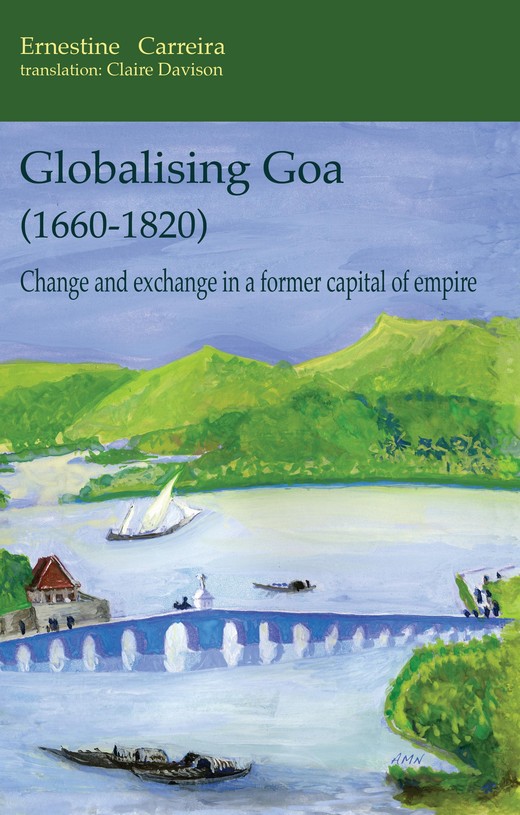
In her book Globalising Goa (1660-1820) (2014) Ernestine Carriera points out that the Christian missionaries also ensured laws that would make it impossible for Christians to be slaves (pp. 392-393) and that this new scenario was opposed by local Muslim and caste Hindu slave owners. While most persons focus on episodes such as these to stress the strategies that were used by Christian missionaries, what often escapes attention is the fact that we are dealing with slavery here. If we place our sympathy with the slaves then we are able to read the story of Christianisation from quite a different light. From this perspective, the story of the Christianisation is a story of the liberation of depressed castes from the cruelty of their upper-caste owners. If these upper-caste tyrants were forced to flee because they refused to brook this new situation of freedom then we need have no sympathy for them at all.

If at all we have been thus far sympathetic to the fictional accounts like Swapna Saraswat, then it is because we have thus far been listening to the myths of local savarnas peddled largely through coffee-table books supported and authored by dominant castes (both Catholic and Hindu) rather than the histories of Bahujan and Dalit castes. If these latter castes, most of who are quite contently Catholic, have no memory of conversion trauma then it is because conversion would have provided a welcome release from the more horrific aspects of caste life.

The majoritarian Catholic presence in the Old Conquests also brought relief to the non-Catholic Bahujan populations once the New Conquests were integrated into the Estado. Once the dominant castes converted to Christianity, the social mobility available to middle-rung and marginalised castes decreased and caste reasserted itself once again. Nevertheless, the horrors of the pre-modern system were muted. As the centuries progressed the Old Conquests began to get depopulated due to service castes withdrawing their services from the Christian upper-castes and migrating to obtain labour that would not be couched in daily and ritual humiliation. In his essay titled “Humiliation in a Crematorium” Peter R. de Sousa points out that the vacated space came to be occupied by Dalit-Bahujan groups who migrated from the New Conquests fleeing from the “the pernicious laws of Manu...which operated in the Konkan socio-cultural landscape”. De Sousa might as well have included cruel landlords to the list of horrors that the Dalit-Bahujans were fleeing from. The religious freedom that the leaders of the New Conquests negotiated for themselves when these territories were added to the Estado merely meant continuing impunity to treat lower castes like chattel. De Sousa argues that this migration from New to Old Conquests gave the Dalit-Bahujan a chance to “reinvent themselves”. This reinvention he refers to is perhaps the manner in which depressed castes were able to represent themselves as members of the Bhandari caste, which would explain the preponderance of this caste in in contemporary Goa.

The rhetoric of the Hindu Right, and that of their Ghar Wapsi project, rests on the suggestion that pre-modern South Asia was a society of free individuals. The fact is that it was not, it was a land of widespread servitude and slavery. Colonial rule and Christianity came as a welcome relief to many of the people who converted. This is not to say that slavery disappeared altogether. It definitely did not. However, the presence of Christianity allowed for a variety of previously unavailable challenges to the caste order. Those who converted made as much use of Christianity and the missionaries as the Hindu Right imagines the missionaries made use of the marginalised castes.

The vision of the Hindu Right is the vision of a caste ordered past. The question we need to pose when faced with novels like Swapna Saraswat is whose stories are they telling, and whose stories are they actively erasing. In other words, what ever happened to the pre-modern das and dasi?


(A version of this post was first published in the O Heraldo on 23 Jan 2015)