Showing posts with label Temples. Show all posts

Saturday, June 14, 2014

Churches and temples and mosques! Oh My!


The reverend Christian theologian was sitting in the upper room and preaching to a small community that was gathered around him. This theologian had built a career around inter-faith dialogue and was talking of how Christian sites were often built over the sacred sites of other faiths. “For example”, he said “the Basilica of Bom Jesus is built over the tank of a temple and can today be seen under the altar of the church.”
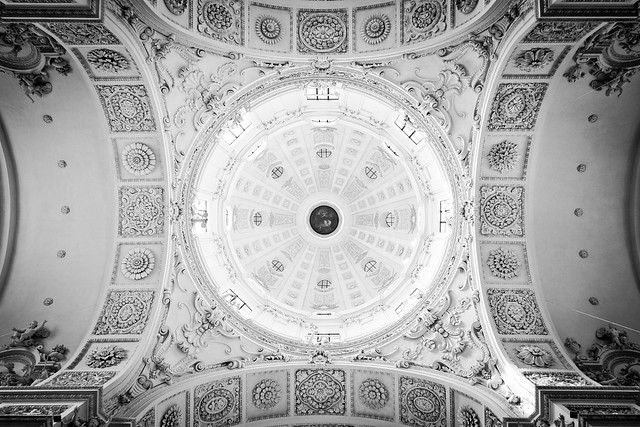
This was about as much as the angry young man could take. He sprang up and challenged the old man. “You’ve got your facts all wrong” he charged. The Basilica was built on the maidan outside of the walls of the Bijapuri city of Goa. There was no temple there. And that’s not all, the church you are referring to is the church of St. Cajetan. And here too you are wrong. The church sits within what was the very heart of the citadel of the fortified Bijapuri city. The well we see today is the result of the architect’s attempt to drain the soil so that he could sink the massive foundations he needed to raise the huge dome of St. Cajetan’s. Further, we need to decide who were the bad guys, the ‘Muslims’ or the ‘Portuguese’, they both cannot have destroyed the same temple can they? That is, if there was any temple destroyed in the first place!”

That great temples were destroyed and the Goan churches of today were raised over them is a shibboleth of much popular Goan history. But this nugget of information may be more myth than actual history. The churches of Old Goa, as has already been pointed out, were built within the Bijapuri city of Goa, and if anything, the churches were built over mosques. The Cathedral is reported built over the Jama Masjid of the city.

The scene becomes ever more complex if one leaves the urban contexts of the city of Goa and heads into the villages that surrounded this core of Portuguese domination in the sixteenth century. To begin with, most people make the mistake of assuming that the countryside around the city was a Hindu space. This is a popular misconception. The land was teeming not just with Hindus (that is to say brahmanised castes) but with a variety of subaltern and untouchable groups, as well as Muslims and other social and cultural groups. If sacred sites were taken over, then these sites could have also belonged to groups beyond the brahmanised castes. Indeed, because of what we know of the history of the location of Goan churches, one could safely assume that if a sacred site was repurposed then it was the shrines of the marginal groups that suffered this fate.

In his marvelous book Whitewash, Red Stone that discusses the Goan-ness of churches in Goa, Paulo Varela Gomes makes the astute observation that most of the early churches in Goa were not built in village centres, but rather on the peripheries of villages. This was the case because there was no centre in the European sense of the term. Rather, villages were organised according to castes, each caste having its own little ward, set apart from those of the others. Within such a society, Varela rather persuasively suggests, rather than risk identifying the church with a particular group, these priests built their churches outside of the villages in spectacular locations. Think of the church of Penha da França, or that of Curtorim. Where settlements do exist around these churches, whether in the case of Margão or Chinchinim, these were later developments with the village shifting toward the church, following the lead of powerful families that sought to replicate European urban forms.

What then do we make of the fond myths that have been told and retold for generations? Take the case of Margão for instance. We are told that the (Brahmin) villagers of Margão offered any space in the village for the church, but requested that their temples be spared. Unheeding the Bishop is said to have cast a sword into the air and toward the temple of Damodar causing this temple to be displaced to make way for today’s Church of the Holy Spirit.

The strength of this story rests on the conflation of the Damodar of the story with the great lord of Zambaulim. There are, however, a number of crucial details in the popular retelling of the foundation of the church in Margão that could tell us a different story. According to legend, the Damodar in question was a brahmin male who was killed on the outskirts of the village as he returned with his bride after his death. Hell hath no fury like a brahmin spurned, even worse a brahmin who has been killed before he could realise his desires. Their tormented souls turn into Pisacha and wreak havoc on the realm of the living. It was to pacify this soul, therefore, that a shrine would have been built. A minor shrine to a demonic being is different from a central shrine of a brahmanical deity patronised by the dominant caste of the village. We can conclude therefore, that it was no great temple that was destroyed in Margão, but if at all, a minor little marker, perhaps not so different from the shrines (of all religions) that continue to spring where a person has met a violent death.

Contrary to widespread beliefs today, temples did not come up at the whim and fancy of people. There was an entire cosmology that allowed for temples to emerge. To sustain its growth the brahmanical order would first set up the temple of a brahmanical or brahmanised temple. Other deities would then be constructed as minor and hierarchical relations constructed between this main deity and the minor deities. In this process, those who worshipped the inferior deity were also crafted as inferior. This is another story, however, and it connects with the theme of this column only to the extent of making the point that we need to realise that very often, the missionaries chose to avoid sites of the dominant castes and constructed their churches outside of village centres. The myth of the destruction of temples to facilitate the building of churches over them therefore needs to be revisited and systematically examined for the facts in each case. 

(A version of this post was first published in the Herald dated 13 June 2014)

Sunday, December 18, 2011

The Portuguese language and the future of Goan Liberation


A popular rhetorical cliché used on the anniversaries of Indian independence, inquires if indeed, we Indians are really free. This cliché urges us to consider independence not as a single moment in time, but as a process towards realizing a utopian society free of all social evils and problems. It would not be out of place therefore, to ask a similar question of Goan liberation, and stress that liberation cannot mean a single moment in time, but must necessarily be seen as a process, of our deepening commitment to the democratic project.


The introduction of Indian democracy to Goa has been an interesting process. Unfortunately however, it has also meant the abandonment, or erasure of the Portuguese language in Goa. It should be stressed however, that the learning of Portuguese by the contemporary Goan, is not unconnected with the larger project of greater democratization of Goan society. On the contrary, the fulfillment of the democratic project is critically tied to more Goans learning and using the Portuguese language.

This stress on the Portuguese language is not to give this language a rightful place in Goan history, nor to legitimize the traits of those Goans who have a marked ‘Portuguese’ aspect in their lifestyle. Such an argument borders on recognizing Portuguese for its value as Portuguese, and does not hold much value from a cultural-nationalist point of view. An argument that would (and should) hold value from a nationalist position, is one that is tied to the manner in which Portuguese is linked to the arrangement of power in contemporary Goan society.

To wholly understand the significance of this argument, it is essential that we underline a well-rehearsed argument; colonialism in any part of the world, and this holds true for Goa as well, was not merely the result of unilateral foreign domination. On the contrary, colonialism persisted thanks to the participation of local elites in the colonial project.  Thus, as English ensured access to power in the colonial British-Indian administration, and education in English models of education ensured participation in the power forms of the British Empire, so too in Goa, the adoption of Portuguese was critical to gaining power not merely in the administrative and political sphere, but also in the social. Righting this balance of power is critical to the democratic project.

In colonial times the Portuguese language was so intimately associated with elite groups, both Hindu as well as Catholic, that the knowledge of Portuguese was, and continues to be, effectively a caste marker of the dominant groups in Goan society. Thus for example, at least among Catholic circles, despite the predominance that English has come to take as a marker of social mobility and status, to come from a ‘Portuguese speaking background’, continues to indicate one’s (longer) privileged location within the hierarchies of Goan Catholic society.  Furthermore, it is not uncommon to have it pointed out, that Portuguese was not a lingua franca within Goa but one largely used by the elites. In making this seemingly innocent factual assertion however, one is simultaneously also subtly marking the boundaries of Portuguese heritage within Goan society. Thus for example, as a result of this logic, it is overwhelmingly the lifestyles and material culture of the landed elite that have been focused on as representations of Indo-Portuguese architecture, while those of the more humble are largely ignored. These demarcations ensure a privileged focus on the lifestyles and material culture of just this small elite segment of Goan Catholic society, casting the rest into a kind of cultural barbarity. Take for example the manner in which the vibrant Tiatr tradition, primarily because it was not, and continues to not be, the entertainment of the Goan elites, is constantly shrugged off as ‘lacking standard’ despite the fact of its stellar role as a medium of social analysis and entertainment. To encourage a broader learning of Portuguese would effectively challenge this link between social status and the language. If more Goans become ‘Portuguese speaking’, it would make nonsense of the ‘Portuguese speaking background’ marker that we currently use, effectively frustrating, albeit partially, the manner in which social difference is articulated today.

More critically, and moving beyond the possibly restricted frames of the Goan Catholic, knowledge of Portuguese was critical to the maintenance of control over the State administration as well as State documentation of land rights. Not a few family, and caste group, fortunes were made by virtue of this restricted access to the language in colonial Goa. Even though English has now replaced Portuguese as a State language; as the continuous stream of persons perusing land records in the State archives in Panjim would indicate, Portuguese continues to be critical to being able to assert, and mask, claims to land. Today, when subaltern groups in contemporary Goa face even an greater threat of access to land rights, it would be a  strategic error to allow control of the interpretation of Portuguese language documents and laws, to be based in the hands of just the few, largely ‘upper’ caste, groups that have resumed learning the Portuguese language.

The popular history of the Portuguese period in Goa has largely been restricted to the gory tales of the initial conquest of the island of Goa, of the Inquisition, and the dramatization of the anti-colonial episodes in the territory’s history. To a large extent, this nationalist history dissuades Hindus from subaltern castes from studying the language. This has ensured that it is solely dominant-caste narratives that are incorporated into the histories of the territory, preventing alternative and liberatory narratives to emerge from a re-reading of the texts and narratives of the period of Portuguese sovereignty over the territory.  It is little known for example, that the knowledge of Portuguese is critical to the bahujan challenge to Hindu upper-caste groups’ monopolistic control of the Goan temples. This monopolistic control of the temples was forged in particular through these latter groups’ knowledge of Portuguese.

Finally, is the argument that rests on the recognition that the emergence of equality is facilitated when there is parity in representational power. While a number of Portuguese scholars work on Goan history and society, it is extremely difficult to find Goan scholars who work on explaining Portuguese society, and its history unrelated to Goa. When we are able to effectively build up this band of scholars, who can represent the workings of the Portuguese to Goa, India, and the world; and engage in Portugal’s press and academy, with their representations of Goa; then we would lay the definitive foundations for greater equality between the two spaces. To do this however, requires that the Goan learn Portuguese.

For these reasons therefore, the learning of Portuguese by the contemporary Goan, is an essential component of our democratic project that the action of the Indian Union in December 1961 sought to forward.

(Published in the commemorative section of the O Heraldo 19 Dec 2011)

Wednesday, August 26, 2009

Learning from the Ganesh fiasco: Temples, Churches, their demolition and reconstruction

The issue of the demolition of older structures, be they temples or churches and the erection of new buildings is a topic that causes much consternation in heritage sensitive circles. The attempt at demolition, renovation is invariably opposed by heritage circles leading to a standoff between the demolitionists and the conservationists. As with all standoffs, neither side will blink first, there is no communication, leaving all of us that much poorer for the situation. Given that the Ganesh fiasco from last week was framed along the lines of the right to the freedom of expression (of artistic sensibilities) I wonder if it would not be instructive to study the heritage debate from this angle.

If the argument of the Hindu Janajagruthi Samiti (HJS) is that the appropriate form of Ganesh has been fixed in the past and we would do better to turn back to the past for inspiration, then the argument of the Kerkar supporters was that artistic creativity is constantly evolving and must be allowed to flower. The issue of creation of new temples and churches over older structures can similarly be looked at from this angle. These new temples and churches stem from the innate desire of people to create. This creation does not necessarily stem from an older idiom, but it nevertheless represents their aspirations, their emotions and their vision of themselves.

None of these arguments should be construed to imply a personal validation of these projects of demolition and reconstruction however. On the contrary I would find myself on the side of the heritage activists on the issue of preservation. And yet, there is another point of view that I believe needs to be understood and respected.

The issue was perhaps captured best when the priest of some slated-for-demolition temple told this prominent heritage activist “So! You’re the one they call Deshmukh? You guys are very xana! You live in Panjim, in bungalows, and drive cars and you want our God to live in a hut!!” The problem with most approaches to heritage is the strange relationship it has with the past. While appreciative of the past, a good number of heritage activists are not willing to use it to mount a critique of the present. Thus the preservation of heritage is the preservation of a few artifacts as representative of the past, while ‘development’ is allowed to rumble on undisturbed. The problem with the temples is that for the managements of these temples, as captured by our priest above, the deity is not apart from modern and contemporary life, S/He lives in it. As such, as the most esteemed member of the community, it cannot do that the rest of us live in concrete homes, tiled with granite and marble, lit with electric light, and the deity be made to live in a tiled mud house, red cement flooring and oil-fed lamps. The management of these temples does not recognise a distinction between the modern and the archaic, that the heritage activists do, for them the temple and ‘real life’ are a continuous part of one whole and the temple has to be articulated within the idiom of the contemporary. The new temples that are coming up therefore, are an expression of contemporary creativity, and our engagement with it needs to be along lines similar to what we proposed in the Ganesh fiasco.

It is for this reason, that these kinds of heritage activists would do well to perhaps rethink their relationship to the past, using their fascination for the past to mount a stout critique of present practices of development. To the credit of some of our activists in Goa, going by their participation in the movements of our times, this is already being done. However there is perhaps one more engagement that is possibly necessary before we can persuade communities across Goa to not pull down their temples and churches. This would be an active engagement with the larger public in Goa, communicating the basis on which we see structures of the past as beautiful and worth preserving.

Another one of the possible reasons why these structures are coming down, is that communities in charge of their management are unable to read the buildings for the statement that they were (and are) making. Or perhaps the statement that needs to be made is changing. There is clearly, a break with tradition in a manner that the new development does not speak to the older. One possible way to remedy the first situation is to flood the public domain with information regarding the manner in which one can read Goan structures. Dr.Paulo Varela Gomes, the soon-to-depart Delegate of the Fundacão Oriente has done a wonderful job of proposing a manner in which we can read the specificities of the Goan Church. He argues that the Goan Church is not merely a reproduction of foreign elements thrown together, but a confident articulation of a local sensibility, not found anywhere else in the world. Subsequent to his explanation of the buildings, it is impossible not to look at the Churches and chapels across Goa with new eyes. Indeed, the very placement of stones start to tell you elaborate and complex stories! With such knowledge, the destruction, or even an alteration of a Church becomes an extremely difficult proposition.

How does one supply this knowledge to people across the Goan territory, such that they the language of the stones is made comprehensible to all, and not just an erudite few? This perhaps is the challenge for heritage activists, and the lesson from the Ganesh fiasco, that there is a need for active dialogue and conversation, not merely at the time of the confrontation, but as a part of daily life itself. The responses at the time of confrontation are invariably not amenable to dialogue. The time is too late for that. Indeed, what we often resort to are legalistic responses. These responses may use official force to prevent a punch-up but nevertheless leave gaping wounds in our psyche, making us prime ourselves for another confrontation. The challenge before us then is, to we create viable options and systems for dialogue that are not one-off events, but perpetual engagements. Such engagements would allow for creativity to continue to march forward, but always in a healthy engagement with the past.

(Published in the Gomantak Times August 26 2009)

Wednesday, June 17, 2009

Learnings from the Peoples’ Tribunal: Common Property, Communidades, Temples and Churches

A critique leveled against this column last week, when it entered into the debate on the ‘Political Economy of the Church’ was that it ignored the issue of the lands and properties controlled by the temple committees in the State. It was pointed out, that the temple committee’s in the State are like the Church, also custodians of vast properties, that are effectively held privately, under the ridiculous proposition that they are private temples, and hence in that sense family properties.

To respond to this issue, we need to address a fundamental myth about communal institutions in Goa, be they the Communidades or the Temple Trusts in the State. Since perspective, or the position from which we understand the issue, is also important, let us adopt the perspective of those who are edged out of the whole equation, be it Communidade or Temple; the tribal communities of Goa.

In the course of the recently held Peoples’ Tribunal for the Restoration of Tribal Homelands, the institution of the Communidade emerged as a major location of conflict with regard to the livelihood rights of the tribal groups of Goa. In a large number of cases before the tribunal, it turned out that despite have Portuguese-era documents that attested to their rights in the land, the names of tribals in possession of, and husbanding properties, were not present in the Survey Records dating from the 1960s (that is under the Indian dispensation). In some cases, illiteracy has resulted in some people having no documents at all to prove their presence on the land. The result is that they are by and large unable to avail of any government service related to the land, since they have to get a No Objection Certificate (NOC) from the Communidade office. The Communidade in most places (both New Conquests and Old Conquests, and the majority of the stories came from the New Conquests) is run by dominant caste groups, who either dissuade them from pursuing the matter, or tell them to buzz off. In any case, the Communidade officials do not cooperate with the tribals to establish the fact that they have in fact been tenants of the Communidade, and are thus entitled to the rights that come with such a fact. As a result, when these Communidade lands are sold by the Communidade or acquired by the State, the tribal communities who are either wholly or substantially dependent on land have no stake in the process or benefit from the sale.

The case of temple properties is somewhat similar. The temples are claimed as family temples by a handful of upper-caste groups and vast properties cornered by these groups, while the tribals, to whom the deity originally belonged and who tend the properties of the temple, are reduced to persons who are merely tolerated. Once more rights are denied in pretty much the same way as in the case of the Communidades.

How did this situation come to be? The situation it should be noted is universal. In almost every society that makes a transition – through colonialism – to a capitalist society with written rules, the less resourceful groups get pushed out. They get pushed out because the colonizer does not speak with them to ascertain their rights in the whole process. It is the dominant group that represents the working of the social system and the rights of various groups. In this process, they either outrightly exclude marginal groups, or underplay the rights that they had in the working of the system.

In Goa thus far we have been treated to the myth that the communidades are composed of gãocars who are members of the ‘founding families’ of the village. This story should hold as much water in today’s world as the idea of ‘old families’. All families are as old as the other, what we mean when we say ‘old family’ is that the family has been powerful for a long time. Similarly ‘founding families’ are those clans/ caste groups who were dominant in the village at the time. The rest of the village groups, were subservient to these dominant groups, but definitely not without traditional rights. It was these rights that got excluded at the time of the framing of the Foral of Afonso Mexia in the early 1500’s and formed the basis of the Communidade system.

Much later in time, the Portuguese realised the need to regulate the Temples and formulated the Lei de Mazanias. Once more, upper caste groups were able to take control of the process and through relying on the already established myth of ‘founding families’, and the fact that they were literate and able to manipulate records, argue that the temples (and their properties) were family temples.

The release from Portuguese rule should have ideally led to a release from the mistakes of the Portuguese (feudal) past into the socialistic future we were promised. However this was not to be. As mentioned above, the Survey of the 1960’s has in fact made life even more difficult for Goa’s tribal groups, since their Portuguese era land documents, held valid under the Portuguese are no longer recognized by judicial authorities. Even worse, the possibly liberative recognition by the Portuguese State embodied in the Code of the Communidades, that the village lands were not owned by the State, but were the property of the village, was not recognized by the Indian State. Liberation from the point of view of the Goan tribal then, has yet to come.

What is the solution to this problem? Tribal activists argue that the answer lies in the recognition of their right of private property over the lands that they were tenants to, or rely on. My personal position stems from a recognition of the situation that in fact existed prior to the Portuguese arrival, a system that was de facto in place over large parts of Goa, until the capitalist expansion began hardly 3 decades ago. There can be no private ownership of land. Land does not exist to be owned. Land is the property of the village in which every member of the village (gãocar or not) has an equal right to benefit from. Land unused by a family, returns to the village pool, to be re-allotted elsewhere. This is not a utopian system, it exists in the North-east protected under the very same Special Status provisions of the Indian Constitution that are desired by some for Goa.

This argument is NOT an argument against private property. It is an argument in favour of a tendency toward equal access to land, and against the notion of ownership of land, while respecting the right to occupy land. It is also an argument that privileges democratic control over resources (like land) that are already seen as common property.

To return to the issue of the Church and property, we must recognize that the contemporary Church has taken some steps toward democratizing the operation of local Churches, and access to its resources. Caste based confraternities and fabricas have been done away with, at least on paper, and the operation of the local Church opened up to all caste groups. What is required now is to push for these on-paper-reforms to be equitably enforced (without animosity to formerly dominant caste-groups). This is an example that Goan temples riven with inter-caste disputes would do well to adopt.

Under this circumstance, it does not appear as if greater governmental control will resolve anything. What is required is for either effecting changes in governance structure to make the institution more representative of village communities. And subsequently ensure that these institutional changes don’t remain on paper. This task requires a social movement not governmental control. If anything, we know that putting our faith in the government will result in more sale of common property for dubious ‘public purpose’ schemes.

(Published in the Gomantak Times 17th June 2009)