“ek baras meiN ek baar hee jagti holi kee jwaala
ek baar hee lagti baaji jalti deepoN kee maala
duniya waaloN kintu kisi din aa madiraalay
meiN dekho
din meiN holi raat diwaali roz manaati
madhushaala”
But once
a year do the flames of Holi rise.
But once is the dice rolled and the garlands of lamps lit.
Yet, come to the tavern people of the world and behold,
But once is the dice rolled and the garlands of lamps lit.
Yet, come to the tavern people of the world and behold,
Where
every day is Holi, a every night Diwali.

The verse above is
extracted from the poem Madhushala penned by the celebrated Hindustani poet
Harivansh Rai Bachchan. Drawing from the tropes of Islamic mysticism, while
using the trope of alcohol, the tavern and worldly excess, the poem was in fact
intended to be a mystical allusion to the exercise of finding truth in the
world.
Poor Bachchan, up in
heaven, must probably be thanking his stars that he wrote the poem when he did,
because he would have probably been at a loss to find the appropriate metaphors
in a day and age when every day is treated as Holi and every night Diwali.
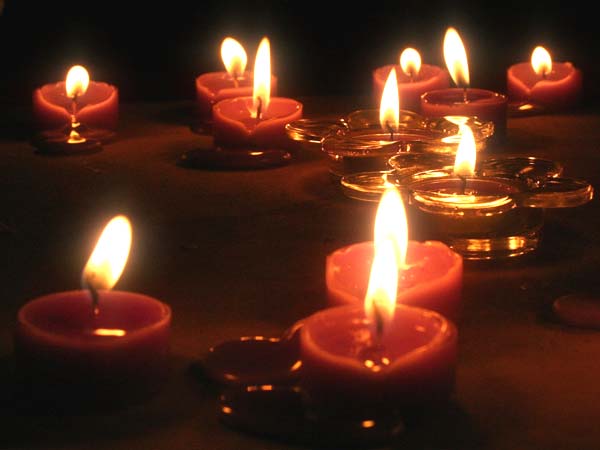
In an age of
consumerist excess, especially in the urban world, we seem to have forgotten
the meaning and the existence of the darkness of the night. The beauty of
Diwali of yore was that the lamps that were lit could be read as an invitation
to philosophical contemplation; a testament to the power of nature, the
determination of the human being to overcome the challenges of nature, and an
invitation to recognize that overwhelming nature made human existence itself
bare.
Unfortunately,
however, like so much of Hinduism, Diwali too is being held hostage by the
forces of the Hindu right. I am referring in particular to a post from Dr.Subramanian Swamy that suggested that the pleas that Diwali be marked by a
restrained use of fireworks was one more conspiracy against Hindus. His
argument was that given that the larger amount of noxious gases are released by
industries and automobiles, one should really not create a problem about the
pollution caused by fireworks on a single day’s celebration.
As usual Swamy misses the point, that the point is not about the amount of pollution, but about the concentration of it in a single evening. If only the noise and smoke were restricted to a single evening though! Further, Swamy seems to not see that given the Diwali occurs just once a year, the fact of abjuring noise and smoke pollution would make a powerful symbol that would aid our tackling with other pollutions through the rest of the year.
As usual Swamy misses the point, that the point is not about the amount of pollution, but about the concentration of it in a single evening. If only the noise and smoke were restricted to a single evening though! Further, Swamy seems to not see that given the Diwali occurs just once a year, the fact of abjuring noise and smoke pollution would make a powerful symbol that would aid our tackling with other pollutions through the rest of the year.

Suggesting to some
neighbours that we hold a Diwali celebration without fireworks, a neighbor
responded “Diwali without fireworks is like Holi
without colour or Christmas without Santa!” I was struck by the comment since,
as Bachchan observed in his poem, Diwali was originally about the strings of
lights, not of noise. What made her response odd was that Santa Claus can
hardly be seen as integral to Christmas. Indeed, some Christians would argue
that the problem is that the emphasis in our consumerist times has shifted from
the infant Jesus to Santa Claus.
Given that this Christmas-is-about-Christ-not-Santa
argument is often articulated by right-wing Christians, I am hesitant to
endorse it totally. I endorse it only to the extent that despite the fact that
Santa Claus is the tool through which Christmas has become more than just a
Christian festival, it has also become the symbol of the consumerist excess
that has demolished the potency of Christmas as a festival of hope and sharing.

A better example that one could give when
arguing for a softer Diwali is that eschewing crackers would perhaps make it a
more moral festival. It would assert celebrations that are based not on selfish
pleasure and the assertion of privilege, but the assertion of a politics of
justice. After all this is what the politics of Diwali is made out to be isn’t
it? The politics of a just Diwali would be a politics that asserts that noisy
crackers are a violence on those who are not bursting the crackers, those who
are old and infirm. The abjuring of crackers would make a statement in favour
of labour and against the perilous conditions, often endured by children, in
which most crackers in India are produced.
The search for the morality in our
celebrations of Diwali would perhaps also awaken us to the moral economy of the
festival. This moral economy suggests that excess is best appreciated when it
occurs as an aberration. A festival of lights loses relevance when our every
night obliterates all form of natural darkness. A reference to nature would
also suggest that it is against the background of nature that excess can be
ideally judged. The moonless night (Amavasya) of the month of Kartik is held to
be the darkest night of the year, and it against this darkness that the brave
lights of Diwali shine forth. This could be argued to be the context of Diwali.
Lose this context of darkness and one loses the meaning of the festival itself.
 I have often thought that the lamps of
Diwali offer a remarkable statement of bravery in the face of vulnerability,
possibly from a recognition of the fact that those brave lights last only so
long as their oil, and only as long the wind does not snuff them out. A shift
of emphasis away from these oil (or wax) lamps, to electricity and noise shifts
the emphasis away from resolute vulnerability to rude assertion. It is perhaps
for this reason that members of the Hindu right would prefer that Diwali be
celebrated with the violent assertions of noise and absolute assertion of
masculine power over the softness of the autumn night.
I have often thought that the lamps of
Diwali offer a remarkable statement of bravery in the face of vulnerability,
possibly from a recognition of the fact that those brave lights last only so
long as their oil, and only as long the wind does not snuff them out. A shift
of emphasis away from these oil (or wax) lamps, to electricity and noise shifts
the emphasis away from resolute vulnerability to rude assertion. It is perhaps
for this reason that members of the Hindu right would prefer that Diwali be
celebrated with the violent assertions of noise and absolute assertion of
masculine power over the softness of the autumn night.
Whichever way you choose to celebrate
Diwali, however, Diwali Mubarak.
(A version of this post was first published in the O Heraldo dated 31 October 2014)


