Showing posts with label citizenship. Show all posts

Tuesday, October 4, 2016

Portuguese citizenship and the debugging of Indian imaginations


I read with interest the recent opinion piece “The Portuguese nationality bug”  on the vexed issue of the rights of Portuguese Indians to Portuguese citizenship and was disappointed by the author’s refusal to see the larger picture. I suspect that this is because the author seeks to resolve the question within the narrow frames of Indian nationalism. As a result, the argument forwarded in the op-ed seems to buttress the rights of the state over those of citizens. Such legality will only strengthen the growing authoritarianism of the Indian state over subjects who, while formally citizens, increasingly lack the space to realize this condition.

In the opinion piece citizenship is presented as a status that is conferred by a state. This is not only a peculiarly lawyerly perspective but also a dated idea. Unsurprisingly, the argument refers to a judgment of the US Supreme Court from 1875. The wider field of contemporary citizenship theory recognizes that citizenship is more than a status, rather a condition to be realized. In these more recent understandings, as evidenced in the Universal Declaration of Human Rights (1948) for example, rights are not conferred by a state, but inhere in the individual. Even the Indian Constitution recognizes that it is the people who constitute the state as evidenced in the famous lines of the preamble “We the People of India….” Thus, a post-colonial political theory recognizes that states are actually constituted by the people, which formally recognize the rights of people. With the passage of time as our appreciation of the depths of rights grows, states are required to recognize these evolving rights. Indeed, this was very much the case with India as well when from about the 1950s the existing fundamental rights were dramatically expanded through the interpretations offered by the Supreme Court.

Of the many rights that inhere in individuals, surely the right of citizenship is the most fundamental.If there was one single right that the anti-colonial nationalist movements fought for, it was the right of citizenship. As in the case of British India, the initial demand was for the right to imperial citizenship, and it was only because the British, hobbled by a racist imagination, failed to recognize this right, that the Indian nationalists pressed forward for a national citizenship.

Citizenship must necessarily be distinguished from nationality. These are two distinct concepts and must theoretically be kept separate. While citizenship involves a gamut of rights that allow one to be a political subject, nationality is the status of belonging that the nation confers on some individuals, and restricts from others. This is to say, the first deals with rights, while the second is the realm of cultural belonging. One of the reasons why the debate on the Portuguese Indian rights to Portuguese citizenship is so vexed is because the various parties fail to recognize the fundamental differences between these two concepts. This is obvious even in the opinion piece where there is a constant switch between the terms nationality and citizenship as if they were the same.

This failure is not surprising given that the nation-state form that has been taken up across the world purposely seeks to conflate the concept of the state and the nation. The famous philosopher Hannah Arendt refers to this as “the transformation of the state from an instrument of the law into an instrument of the nation”. Taking up this idea, other scholars have pointed out that “It was this conquest that defined citizens of the state as nationals whether defined racially, ethically, culturally or even religiously”. There is, in fact, no good reason for the two concepts to be conflated. A state can compromise multiple nations, while nations need not have a state. Take the case of Belgium, which is composed of people that identify with two different nationalities, the Flemish and the Walloon. Or take India, which can be said to comprise different nationalities, but refuses to recognize, and in principle rightly so, that each of these nations needs its own state. Indeed, the foundation of the contemporary international order as an association of nation-states can be traced back precisely to the racist imaginations of the colonial order. To this extent, the assertions of Portuguese Indians to retaining their Portuguese citizenship while also accepting that of India stands to offer the world a model in terms of post-colonial citizenship precisely because it is born of an early modern experience that differs dramatically from the colonial experience rooted in late-modernity.

What does come out in striking clarity from the argument in the opinion piece referred to above is the legal position of the former citizens of Portuguese India in the Indian republic. In addition to the legal formulation that the argument the op-ed relies on, and the military action of 1961, this population is not a liberated population able to act on equal footing with other individuals from British India, but in fact a subjugated population whose “rights” depend on what the State of India grants them. The noted philosopher Partha Chatterjee has recently articulated a concept of political society that addresses precisely this point. He argues that not all who are formally recognized as citizens enjoy rights. Chatterjee suggests that these people are members not of civil society, but political society. Members of political society do not enjoy rights, which are permanent and inhere in the individual; they are merely extended temporary concessions when these excluded groups challenge the status quo. Once the status quo is secure these concessions can and often are revoked.

Reading the argument in “The Portuguese nationality bug” in the context of this framework, given that the citizenship rights of Portuguese Indians seem to depend on the whims of the Indian state, one can see that what the Portuguese Indians enjoy are not rights that inhere in the individual and are not granted by the state, but merely temporary privileges that can be, and are, rolled back when the State feels like. The privilege of Indian nationality was extended to these groups when the Indian state needed to consolidate its hold over the newly conquered territories creating the mirage of extension of citizenship when in fact the recognition of their pre-existing rights is what would have constituted acceptance into Indian civil society.  It needs to be noted that this is not the position of the Portuguese state that recognizes the continuing rights of citizens in territories over which it formerly claimed sovereignty.

The argument also fails to appreciate the federal nature of the Indian Union, a vision that is embodied in the Constitution. The Indian constitution patently allows for a diversity of legal regimes within the Indian Union. Take, for instance, Art. 370 of the Constitution that allows for Kashmir to have its own constitution. This particular article is the subject of much vituperation but the fact is that such resentment against Art. 370 has been the result of Hindu nationalist opposition. Ironically it is Hindu nationalism which is contrary to the constitutional mandate. Art. 370 must therefore be seen as embodying the basic structure of the Indian constitution that makes space for a federal structure that incorporates widely different polities within a single structure. Consider also the fact that Buddhist monks and nuns in Sikkim get a double vote to ensure the representative of the Sangha in the legislature. This argument for legal pluralism can also be buttressed by reference to the reports on the conclusion of the Indian state’s negotiations with the Naga activists. Though the terms of the agreement are still secret, if a dubious news report is to be believed it appears that the Indian state, under Prime Minister Modi, has agreed to the Naga demand for a separate Constitution, as well as a separate flag. Such an agreement, if true, would testify to the capacity of the Indian Union to accommodate legal difference within a single federal structure.

A resolution of the question of the Portuguese citizenship of denizens of the former Portuguese India could contribute to the failing health of the Indian Union. It would allow an assertion of the dignity of the rights-bearing individual in opposition to asserting the right of a potentially tyrannical Indian state. It would contribute to the constitutional imagination of a federal India, an imagination that has unfortunately been undermined by the desires of Hindu nationalists and successive central governments.

For too long a time the question regarding the legitimacy of Portuguese Indians holding on to both Portuguese and Indian citizenship is being debated in a dry and inspired manner. Given that the question is admittedly complex, the resolution cannot be obtained through a niggardly attention to the letter of the law. Rather, what is required is a reference not merely to the spirit that animates laws, but to the larger questions of postcolonial justice and the rights of individuals, this is to say a reference to political theory and the philosophy of law. What is required is not a debugging of Portuguese nationality, but Indian imaginations.

(A version of this post was first published in the O Heraldo dated 4 Oct 2016)

Monday, February 29, 2016

Let’s Talk About Rights!


Growing up in the 1980s in Goa from time to time I would hear the more vociferous men in my family swear: “These bloody Indians!” Attending school where a steady diet of Indian nationalism was a part of the curriculum, we youngsters would be horrified. Surely, these figures of parental authority couldn’t speak like they did? Besides, weren’t we Indian? It was at this early age that I realised that to be Goan is not the same as being Indian. And it was possible for Goan history to read Indian nationalism differently. I have spent the rest of my life trying to figure the differences out.

A politicised Goan, such as myself, looks on this season, where allegations of being anti-national are being flung like confetti, with some cynicism. Not unlike Muslims in India, Goans, and especially Goan Catholics, have been used to be seen as de-nationalised, if not anti-national, for a while now. This critical evaluation has only heightened since some years when it came to be understood that many Goans have been “giving up” Indian nationality for Portuguese citizenship.

A common misunderstanding of the situation in Goa is that this devolution of the Indian passport has to do with pride in their Portuguese connection, and an application for citizenship. Appreciating the nuances of the situation requires disabusing a number of misunderstandings.

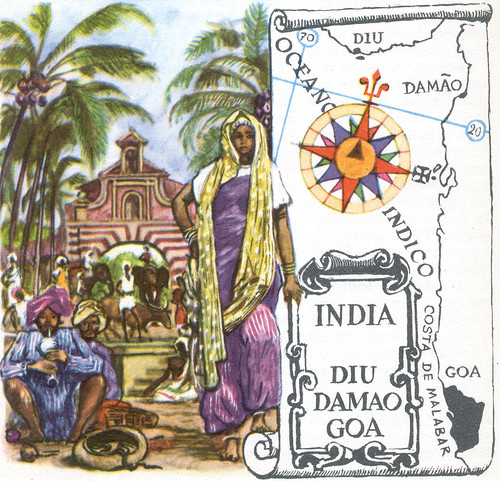
To begin with, it is not merely Goans who are giving up their Indian citizenship, but persons from the larger Portuguese state of India or Estado da Índia (EI), which in 1961 included the territories of Goa, Daman, Diu, and Dadra and Nagar Haveli. These persons are able to acquire Portuguese citizenship not because of any continental ancestry, but because of a legal history that differs significantly from that of British India. Where residents of British India were merely subjects of the British Crown and never citizens, native Christian residents of Portuguese India were almost from the very beginning of the presence of the EI in the early 1500s, seen as equal subjects of the crown. With the inauguration of the Portuguese constitutional monarchy in the mid-1800s, citizenship of all subjects was formally recognised, and subsequently deepened when the Portuguese Republic was declared in 1910. As citizens of Portugal a restricted electorate of persons from Goa were able to elect persons to represent their interest in the Portuguese Parliament in Lisbon. This marked a significant distinction from the situation in British India where natives had no Parliamentary presence, and even Dadabhai Naoroji, the first Indian in the British parliament, was elected by Britishers to represent an English constituency.

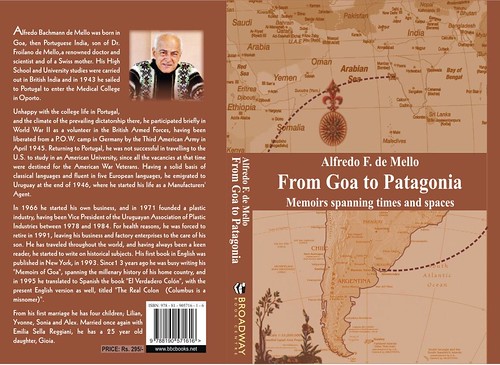
Indeed, so dramatically different was the situation in British India from that which obtained in Portuguese India that Goans were often able to assert themselves against the British. Take, for example, this anecdote from the city of Bangalore in the year 1940. In his memoirs, From Goa to Patagonia: Memoirs spanning times and spaces (2006: 146), Alfredo de Mello recounts his altercation with a Revered Xavier who had recently joined the staff of the famous Bishop Cotton’s school:
 
“One evening, while the Cotton's Cadets were drilling in the field with their 1914 vintage rifles and polished bots, Rev. Xavier and I were watching them and he remarked; ‘How come you are not marching with them?’, and I replied: ‘I am a foreigner, Sir, belonging to a neutral country’, and Rev. Xavier, in a tone that dripped with contempt, retorted: ‘Why don't you become a British subject? Don't you know that we are the salt of the earth?’

Trying to control my nerves and smarting under such a presumption, I said, ‘I am a Portuguese citizen, Sir, and not a subject like yourself. Furthermore …[e]very dog has its day. Portugal had its glorious quarter of an hour in History, as a world power, in the sixteenth century, and yours is about to end’.”

The situation where former citizens of the EI can continue to claim Portuguese citizenship is the result of the unorthodox manner in which Goa was integrated into India. Portugal was governed by an authoritarian regime from the mid-1930s until 1975 that refused to countenance the idea of Goa’s independence or integration into India, until India did so by force in 1961. When India annexed these territories in 1961 it failed to recognise that the residents were in fact Portuguese citizens and unilaterally extended Indian citizenship to them. Indian control over the territories that constituted the EI was not recognised by Portugal until the regime fell in 1975. At this point, the Portugal recognised the ancient constitutional rights of the residents of the now lost territories. Thus, when residents of the former EI renounce their Indian passport, they are not applying for Portuguese citizenship; merely asserting their pre-existing right to Portuguese citizenship. 

The recovery of this right lay somewhat dormant from 1975 until recently. It was with Portugal joining the European Union that a Portuguese passport gained a completely new significance. If there are so many persons queuing up to assert their right to a Portuguese passport, it thus has less to do with Portuguese nationalism, though this cannot be discounted in some cases, and more to do with making an economic choice.

The assertion of this right by citizens of the former EI has upset nationalists both in Portugal and in India. Some Portuguese nationalists desire that this right be curtailed or withdrawn entirely. Portuguese citizenship, they argue, should be given only to those who speak the Portuguese language, know something of Portuguese history, and have a love for Portugal. Like most nationalistic assertions often tend to be, these too are offensive. Citizenship is not a gift given for good behaviour, it is a fundamental right, and such rights are sacrosanct. They cannot be withdrawn on the basis of some petty excuse. Further, one could argue that the retention of the right to Portuguese citizenship is a part of post-colonial justice.


Most Indian nationalists are similarly unable to recognise the fact that the actions under discussion are the result of a law and a right. This should give some idea of how the operation of Indian nationalism has dulled Indian appreciation for law and rights. Indian nationalism crafts the recovery of this right as a treacherous betrayal of the motherland refusing to recognise that given the absence of a legally existing state of India before 1947, residents of Portuguese India in fact had Portugal as a legal motherland. As is often the case, Indian nationalism also comes with its communal twist. Even though the persons renouncing Indian citizenship belong to the various faiths that constituted the Portuguese empire, it is largely Catholics who are charged as anti-national for giving up Indian citizenship.

To the question what do citizens of the former EI think of nationalism, the response would be why should they think of nationalism? They are thinking of their economic futures, and asserting their rights, and this is far more important than any nationalism.


(A version of the post was first published in the Indian Express  on 28 Feb 2016)

Tuesday, October 19, 2010

Trouble over a siesta: The Goan, the migrant and the public park…

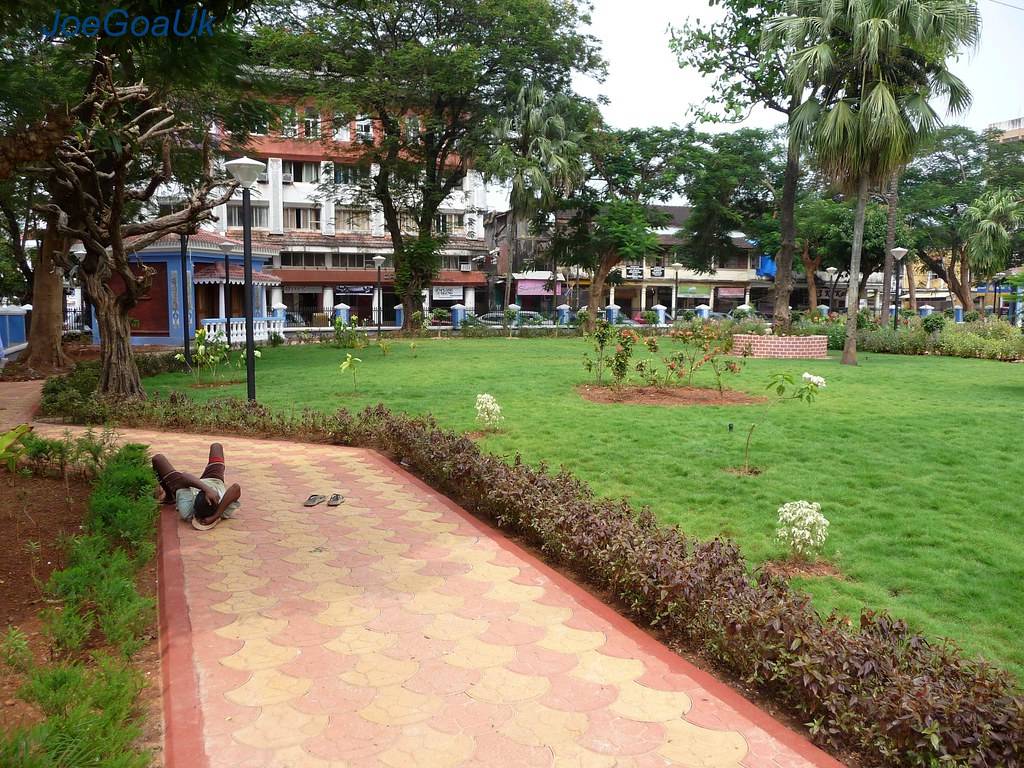
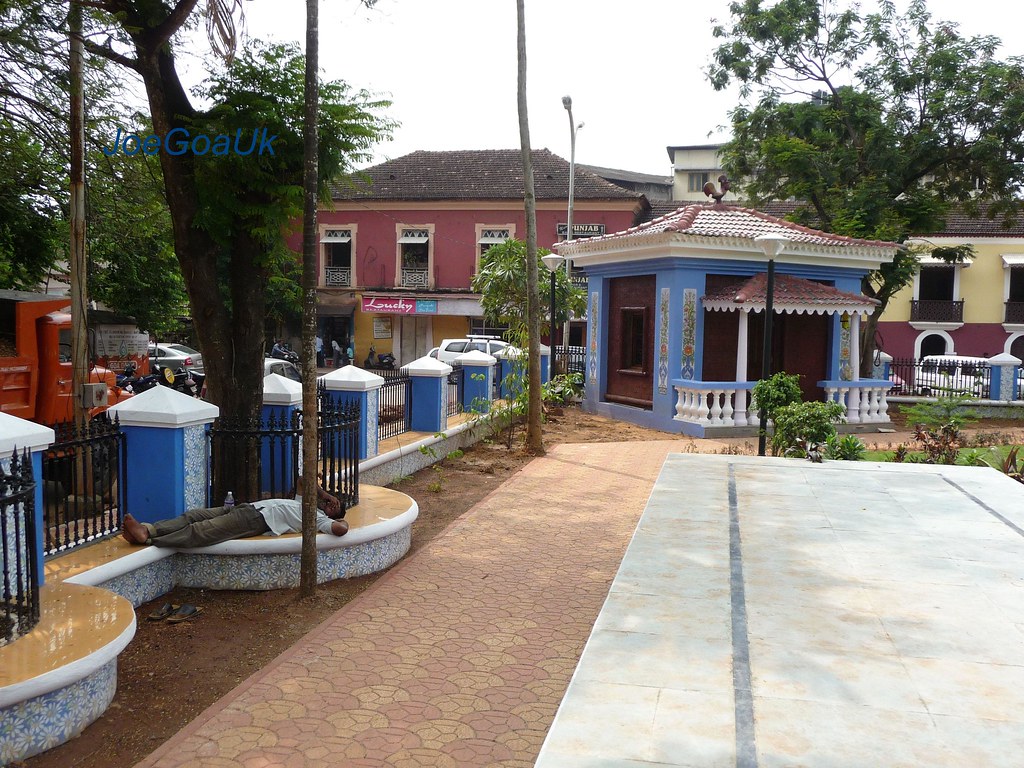
Not too long ago, Panjim’s long languishing Jardim Municipal was renewed and once more open to the public. For this action, we must give thanks to the Panjim Municipality and the other departments (and politicians) that engaged in the refurbishment. We have to be particularly thankful for this renewal because it was rumoured that a portion of the garden was to be converted into a multi-storey parking lot. One must give thanks for small mercies when they are afforded to us; and especially because the choice of renewal of the garden over the possibility of a multi-storied parking lot represents a commitment towards public spaces, rather than the trend towards the privatization of spaces that we are currently facing.

A day after the gala opening of the garden, a consistent visual archivist of Goa sprayed a couple of images of the garden in various Goa related cyber-groups on the internet. These images were not congratulatory images, but rather evidence for the complaint that he now mounted against the public uses of the garden. The images showed labourers sleeping on the newly planted lawns, and some men urinating in corners of the gardens. The images provoked the usual comments of rage, and chest-beating, both from Goans abroad and within Goa. It is to these comments that I would like to address this week’s column.

This column has often pointed out to the qalb or upheaval that Goan society is facing. ‘Save Goa’ is just one manifestation of a larger change. What is bothersome about this qalb is that it very often represents itself as progressive. It uses the language of decentralization, peoples’ democracy, need for public spaces even, to challenge the capitalist onslaught that Goa is facing. As valid as this battle and the arguments invoked may be (and they are!), very often these same valid critiques are employed by groups that are not particularly democratic themselves. While they embrace the ‘Save Goa’ slogan, what they seek to do is reaffirm the structural inequality in Goan society. I would argue that the complaints over the fact of labourers using the lawns of the Jardim Municipal for a siesta are in fact reflections of the social inequality that some of us would like to reinstate in Goa, under the guise of saving Goa. My interest does not lie in castigating these forces, but indicating why it is precisely in supporting the right of the migrant-labourer to sleep on the lawns, or indeed recognizing what makes us urinate on street corners, that we can lay the foundations for the Goa of our dreams.

The first argument I would like to make is that by sleeping on the lawn, the migrant-labourer is being the unwitting foot-soldier for the Goan dream. He is staking our continued claim to the public open spaces that were a feature of the fast-disappearing Goan landscape. The public open spaces are available not merely to be cordoned-off pretty images that our archivist is suggesting. They are present so that they can be used by the people. And this use is not limited merely to labourers lying on the lawns, they also include little Goan children playing on these very same lawns. As long as the lawns are not destroyed in this process, why should people be denied this small luxury? Indeed, these labourers lying on the lawns are also a reality-check, indicating that there are still people in our Republic, who do not have access to decent standards of labour.

The problem that little Goan children face with regard to playing spaces was brought home to me by Cecil Pinto my fellow columnist, who pointed out the manner in which the guards (acting on orders) invariably prevent his children from running across the lawns of public gardens. The logic that this Goan visual-archivist and the guard share in common is a privatizing logic. Pretty spaces to look at and not use result when we do not feel the need to use the public space anymore but merely whiz past from one private space to another in our little private vehicles. This is part of a larger enclosure movement that is on-going in Goa – think back to the manner in which the Government was contemplating the conversion of the old premises of the Escola Medica (GMC) into a mall. I repeat therefore, that what the labourer, in taking his afternoon siesta on the lawns, is doing is to be the foot-soldier in the larger battle that the Goan is fighting against the system. Indeed, it is not just in sleeping on the lawns that the labourer extends this solidarity to the Goan cause. A priest-friend once remarked to me, that when he takes his post-dinner constitutional around the city of Panjim, invariably what he finds is that it is ‘outsiders’ who use the public spaces as ‘we Goans once did’. Indeed, the liveliest public spaces in Panjim, and perhaps the safest, are where the migrant workers congregate to meet with each other, and unwind after their day’s work. ‘They use the space like Goans’, was my priest friend’s assertion. If they use the space as Goans, then it appears that we gain a couple of insights into this whole Goan identity question. First, that Goa is composed as much of its urban spaces, as it is by the open spaces of the villages. Secondly, it is in using these public spaces that we became properly Goan. That is to say, we were not born Goan, we were socialized into being Goan, by the use of the constitution of public space in Goa. Thus, anyone can become Goan with their adoption of certain mannerisms and a public manner. Indeed, contrary to the helpless hand-wringing of the Konkani ‘lovers’ in the State, Konkani is adopted by ‘outsiders’ at as fast a rate as it is being abandoned by ‘Goans’. The final insight that we gain from this priest’s insight, is that the Goan is increasingly abandoning the public space and retreating into the private. This is not a good sign at all given that democracy and indeed group identities are produced through our presence in public spaces.

Finally, what of those men urinating in the corners of our spanking new park? Clearly I will not suggest that public urination is a shot in our continuing effort to ‘Save Goa’. If so, then as was suggested so long ago, we could have pissed all our troubles away! However as with lying on the lawn, the public urination is indication of the absolute lack of decent and hygienic public facilities on offer more generally. In fact even such sanitary facilities when placed have more recently been effectively privatized by requiring payment to use the toilet.

In sum, we need to watch out for the manner in which our unequal Goan past may push us toward neo-liberal strategies to manage our cities. These strategies while looking good, would infact spell the doom that we are struggling so hard against. In the meanwhile, we need to put together a medal for the blissfully unaware labourer who spurred this entire discussion! Viva Goa!

(First published in the Gomantak Times 20 Oct 2010)

Wednesday, June 23, 2010

A Post-Colonial agenda for IFFI 2010: Pointing the significance and relevance of 2010 to a peoples’ history

A couple of days ago, Dr. Nandkumar Kamat, from the Goa University, made a rather interesting suggestion via email to the Chief Minister of Goa. Rather than be an occasion to mindlessly spend huge amounts of state revenue, he has suggested that the International Film Festival of India (IFFI), now held annually in Goa, be themed for the year 2010 to commemorate “Colonialism and peoples’ struggles / movements across the world”. To this already interesting proposition he adds one more laudable suggestion; rather than invite an actor or actress from Bombay, who as he says leave no ideas behind, why not invite Arundhati Roy to inaugurate the festival? Roy, he suggests, could also be asked to speak on “Colonialism down 500 years a topic which would be suitable considering the completion of 500 years of Goa's conquest by Afonso de Albuquerque, on 25th November 2010 and foundation of colonial rule in Asia”.

This is perhaps one of the more incredible suggestions that have been made regarding the IFFI and perhaps in the intellectual and cultural life of the State. Subsequent to his email to the Chief Minister Dr. Kamat has requested public support for this suggestion and it is incumbent on all of us to support this suggestion and ensure that it gets converted from an idea to solid fact. This column today, seeks to be not just a public show of support for Dr. Kamat’s stellar suggestion, but a request to all those who may read this column to send emails of support to the Chief Minister’s email id and ensure that the proposal is converted to reality.

There are a number of reasons why this proposal must be supported wholeheartedly.
The organization of recent IFFI has been disappointing to say the least. Rather than an occasion to reflect on the messages that film can and do generate, the focus seems to be on creating a hedonistic bubble where movie stars can be feted. Where a number of Goans believed that the arrival of IFFI would contribute to the intellectual and cultural life of ordinary Goans, we have been disappointed to see that rather that critical world cinema, it is Hindi potboilers that have been dished out to the Goan public as a part of the festival. To theme the IFFI in the manner Dr. Kamat suggests would perhaps reorient the Entertainment Society of Goa (ESG), the local organizers of the IFFI to ensure it contributes to an enhancing the referents for local cultural articulations.

But Dr. Kamat’s suggestion has value beyond the limited scope of a renewal of the possibilities of the IFFI. Some weeks ago a Coimbra based researcher remarked that there was an almost eerie silence, both in Portugal and in Goa as regards the fact that the year 2010 marks 500 years since the formal establishment of the Portuguese State in Goa. Kamat seems to underscore this fact and points that this event that inaugurated the long durée of colonialism in Asia deserves some reflection. Kamat’s suggestion is wonderfully nuanced in that is skips over the polemics that often govern this field to nudge us in the direction of recognizing that colonialism and the struggles that challenge it did not end with formal decolonization. The colonial relationship has been continued, if not renewed, under the aegis of the national states that were left behind by the colonial regimes. It is because these national states fail to mirror the desires of substantial sections of its people that popular movements of discontent plague these post-colonial states across the world. India is but one of those states.

Dr. Kamat further nuances our appreciation of the moment of 2010 and i
ts possible commemoration by pointing out the double significance of the year, a century since 1910 when formal citizenship rights were definitively extended and claimed by a wide variety of Goans. In doing so, he once more eases us out of nationalist jingoism, to make sure our focus is on the rights of peoples, rather than some nationalist one-upmanship. The point of the commemoration of 2010 is not about Portugal, or India, it is about focusing on the need for the recognition of the rights of people.

Dr. Kamat’s suggestion is rather daring in that it challenges both the Goan and Indian state to display its true commitment to democracy. By inviting Arundhati Roy he argues, ‘the government and state of Goa would be able to demonstrate that the most dissenting voice is given a public platform in this state and we're not a ‘failed democracy’. In so doing, Kamat rightly points out that democracy is sustained not by quinquennial elections, but in fact only by ‘our own willingness to welcome dissent and dissenters’.


As wonderful as his suggestion is however, it is possible that it has come a little too late in the day for the IFFI 2010. This should however not dampen our spirits. By a queer twist of history, the year 2010 melts into the year 2011, the latter marking fifty years of the end of the Portuguese State in India. If 1510 opened a new chapter in global history, and 1910 opened new possibilities for the Goan, then so did 1961. If we cannot get the IFFI to
focus on colonialism and peoples’ struggles in 2010, then 2011 would be just as well. If however the organizers of the IFFI refuse to comply, then there is nothing that should stop the people of Goa from organizing their own festival in which they could commemorate the dates that are significant not just to their own history, but the global history of colonialism and peoples’ rights. There is a precedent here in the actions of the Ganv Ghor Rakhon Manch who in 2008 organized parallel to the IFFI, the Goan Peoples’ Film Festival. Organized in a remarkably short time, the festival managed to attract some attention and international support. There is no reason why this story should not be repeated, with Arundhati in attendance, in 2010. One hopes however that the Goan government will take Dr. Kamat’s suggestion seriously. In doing so it would redress the unjustified silence in marking 2010, it would reorient the IFFI to make it more meaningful than just a bash for national and international film stars. In this latter aspect, this reorientation would only add to the prestige of the IFFI, and simultaneously enrich the cultural lives of the Goan people, which is the primary reason why some of us welcome the IFFI in Goa.

Thank you Dr. Kamat, and all power to your suggestion. As for you dear Reader, remember your emails to the Chief Minister!

(First published in the Gomantak Times, 23 June 2010)