Showing posts with label IFFI. Show all posts

Monday, January 20, 2014

When Death Comes to Goa: A review of The Coffin Maker


The sad truth about The Coffin Maker (not yet released) is that it is a very bad re-articulation of the Hollywood film Meet Joe Black (1998). Set within the context of the lifestyles of New York’s corporate elites, the latter film focussed on exploring the idea of Death taking on a human form to experience the variety of human emotions, crafting a complex story involving multiple characters. In contrast, The Coffin Maker attempts to set this exploration within a Goan context. The result is a narrative about the interaction of Anton Gomes, the eponymous coffin maker, with Death in the weeks prior to the former’s death. The film vaguely attempts to deal with the complexities of human emotions, but effectively restricts itself to love. Failing dramatically in this attempt, the film constantly lapses into pop-philosophy, among other things, comparing love to warm buttered bread, and boyhood lust. In short, if Meet Joe Black was somewhat limited as a film, The Coffin Maker is an unmitigated disaster, whose errors are compounded by the fact that it also sets the story within the shell of an ethnographic description of Goan society that it dramatically misunderstands and misrepresents.

Born in the context of Goan experiences with democracy in the late 1800s, a much-bandied Goan idiom suggests that when there are two Goans in a room, one can expect three opinions. One opinion that all Goans nevertheless share is that they are tired of the manner in which they and their state have been represented by the Indian media. Featured in this year’s edition of the Goa-based International Film Festival of India (IFFI), The Coffin Maker gained some attention in the local press by being represented as the first Indian film to have gotten Goa right. Hence the large turnout of locals at the special screening of the film the day after the conclusion of the festival. While, true to form, local opinion may have been divided at the end of the film, there were nonetheless many who were visibly and vocally upset at one more film getting Goa and Goans so dramatically and offensively wrong.

The film commences with the standard trope of the drunk Goan Catholic. In this film that character is Alloue, the grave-digger of the village where The Coffin Maker is set, who remains drunk through the film. Like many Indian film productions, this one too perpetuates the long standing trope of using drunken Christians to provide comic relief while not contextualising them, or their alcoholism. However, Alloue is not the only alcoholic in the film, given that the coffin-maker Anton Gomes, played by Naseeruddin Shah, similarly seems to have a troubled relationship with alcohol. The film portrays Gomes taking swigs of a potent liquor, perhaps feni, straight from the bottle that he carries to work in his bag of tools. To compound the image of Goa being a land of drunks, the film contains another gratuitous scene where Anton is seen dining with his wife where they imbibe enough alcohol to dance drunkenly in the streets of Panjim. That one does not see Goans consuming alcohol anywhere else in the entire film only goes to reinforce the suggestion that when Goans drink alcohol, they drink to get drunk.

The use of this trope could have possibly been forgiven were it not for two facts. First, this film suggests that it is representing the ‘real’ Goa. Secondly, this film compounds the problems of stereotyping Goans by adding to the cache of usual stereotypes. Given the manner in which the film has clearly sought to highlight what it considers ‘traditional’ and ‘authentic’ Goan life, and focuses on one individual and his story, this film is clearly not attempting to be a regular Bollywood masala flick. In not doing so, it seems to tread into the realm of the ethnographic documentary. However, this effort is so marked by bad research that the faux authenticity worsens matters by convincing non-Goan audiences that this is the ‘real Goa’. Thus, for example, in its ill-researched enthusiasm to reproduce Goan village life, the film has almost every local use the Konkani variants for mother****er and other allied cuss words with alarming frequency. While it is not being suggested that Goans do not swear, the profusion of swearing was so bad, and so out-of-the ordinary, I began to cringe chronically after a certain point in time.

While billed as a bilingual film in Konkani and English, there is in fact very little Konkani in the film beyond the mispronounced Konkani cuss words. The English that the film has the Goans speak is in fact an extremely bad representation of the Bombay-English that developed in colonial Bombay. This form of English was popular among various kinds of residents of colonial Bombay, like the East Indians, Goan Catholics and Parsis, and was present in Goa only as a minority language form of Bombay-returned Goans. There are a variety of Konkani-English language forms present in Goa, but the fact is that none of these were represented in the film. This film is in fact multi-lingual given that, thanks to the shoddy execution, the actors often fall back on North Indian exclamations, expletives (madarch**d, behench**d), and Hindi as well. The film is also marked by its use of Portuguese, which keeping in form with the way in which other languages are used, is mispronounced, and appears in unlikely social locations. Looking at this liberal use of language, one could well say that this film is been marked by the aesthetic use of language. Language is used not necessarily to convey the dialogues between characters, but merely to effect aesthetic flourishes to give the audience an ‘authentic’ experience of what Goa is allegedly like.

It is in the overwhelming presence of such flourishes that The Coffin Maker reveals itself not merely as a badly-researched film, but one more addition to the orientalist representation of Goa, Goans and in particular Goan Catholics. As is well known, in his book titled Orientalism the celebrated scholar Edward Said argued that European powers represented the Middle East as "almost a European invention ... a place of romance, exotic beings, haunting memories and landscapes, remarkable experiences".  The success of Orientalism as an explanatory concept lies in the fact that it can be used to demonstrate the manner in which hegemonic, or colonial powers, similarly represent cultures and peoples that are either colonized or incapable of representing themselves. Just as the Middle East or South Asia was represented by the European colonial powers as places of mystery, romance, and landscapes, so too are Goa and Goans by the Indian media. This media produces Goa not as it exists, but as a space for Indians to lose themselves in European exotica. Thus, even though Portuguese was always a minority language, and has practically died out as a publicly spoken tongue, the film forces it into the mouth of a street-food vendor. Similarly, even though all statues of Portuguese heroes were torn down from public spaces subsequent to Goa’s integration into India, and Vasco da Gama is hardly a daily reference even to those steeped in Goa’s Portuguese past, the film still insists on inserting references to the non-existent statues of Vasco-da-Gama into the dialogue between characters.

Displaying the standard orientalist disregard for exactitude in relation to social reality, the film joyfully plays with the social structure among Goan Catholics, marrying the daughter of a doctor to a carpenter’s son. Seeking to exemplify the imaginary essence of Goa, the film pulls out features that an Indian audience or a visiting Indian to the territory is likely to identify as key features of the state. Thus, this bizarrely mismatched couple is made to reside in a home that is popularly misrepresented as a Portuguese home and is in fact typical to Goa’s upper-caste elites and colonial middle-class. That the internal arrangement of the home bears no resemblance to how such homes were, and continue to be, used is another feature that the film seems blissfully unaware of. What the film definitely was aware of, and sought to draw the audience’s attention to, was the existence of caste among the Catholics in Goa. More sensitive members of the audience could perhaps see the shame of caste as responsible for Anton not wanting his son to also become a coffin maker. Nevertheless, even this possible reference to caste was unfortunately left at the level of a flourish, since when Anton goes on to command his son to become anything else, he inexplicably references only other ‘lower’-caste and ‘lower-status’ jobs like those of a tailor and a carpenter, even though Anton’s son is a college-going student. The references to caste, therefore, once again works to cast the Catholics in Goa as weird aberrations who are neither properly Hindu, nor properly Catholic; cultural bastards, or accidents of history.

The most damning way in which this film demonstrates its orientalising tendencies is how, despite locating the story in Goa, there is only one non-Catholic character in the film. This runs against the hard facts of Goan demography and reveals the manner in which the film seeks to create a Goan Neverland for its audiences. This representation of Goa as practically devoid of non-Catholics is both a lie as well as politically irresponsible since Catholics in Goa are not only a mere 26 odd and reducing percent of the population, but also a culturally embattled minority. Thus, while their existence is fetishized by films such as The Coffin Maker, their cultural mores are actually under threat. Take, for example, the manner in which the Roman script in which most Catholics write Konkani has, until recently, been denied governmental support; or the manner in which their cultural and literary productions are deemed as lacking standard. A creeping Hinduisation of the state ensures that the dietary preferences of Goan Catholics - pork and beef - are prohibited from state premises, as was the case during the course of the IFFI. More disturbing is the fact that the misrepresentation of Goa as Catholic (and hence Western and European) territory is used as fodder by local Hindu rightists to aggressively assert that the true character of Goa is brahmanical.  The recent statement by Goa’s Chief Minister that Catholics in Goa were in fact culturally Hindu being a case in point.

The Coffin Maker is thus best described as a film that seeks to represent Goa from within Indian perceptions of what Goa ought to be like. Consequently, if there is one relationship that the film manages to capture perfectly, it is the relationship between that of India and Goa. Where every Goan character in the film speaks a vile patois, Death, played by Randeep Hooda, is the only character to speak the English of India’s educated classes. India then intrudes into the orientalist Goan Neverland only in the form of death. This is not an inappropriate cameo in the context where India and its elites, either through state practice or representative norms, seem to wilfully push every minority group within its boundaries to the brink of collective death.

Friday, December 13, 2013

Why What Happens In Goa Matters


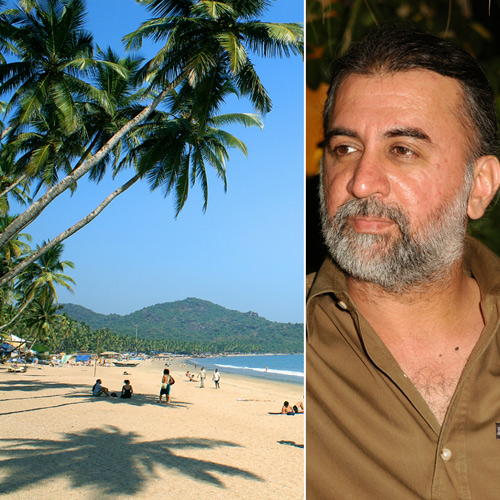
Much opinion has already been generated of Tarun Tejpal’s alleged attempt to rape his junior colleague, and no doubt much more will be written. In addition to these diverse positions, it appears that it may be possible to also use this incident to gauge the nature of the Indian nation-state and its relationship  with the peoples and territories that constitute  its national peripheries.

This gauging can begin from what many commentators have dismissed as a “passing” statement from Tejpal himself. In 2011, on the eve of ThinkFest’s first edition, Tejpal had suggested to early birds at the event's plush venue: "Now you are in Goa, drink as much as you want, eat... sleep with whoever you think of, but get ready to arrive early at the event as we have a packed house."

Then, as much as today, the intense responses to this statement from Goans were seen by Indian commentators as akin to making a mountain of a mole hill. To these media pundits Tejpal’s statement was merely an off-the-cuff remark that should not be taken too seriously. Indeed, some have gone as far as to say that it should still not be taken too seriously, and in any case does not compare in severity with the crime that Tejpal has been accused of.

This article does not attempt to equate these two incidents involving Tejpal, but it would like to suggest that the relationship between them is much deeper than these national commentators would allow for.

To begin with, the very fact that there is a disagreement over how to view this statement suggests the widely divergent perspectives of Goans and the Indian elites who frame national news. This dismissal of the Goan response also manifests another way in which ‘mainstream’ India sees Goans as simple, emotional and not given to balanced thought. Further, it demonstrates how local contexts are not given enough importance in the mainstream’s evaluation of things.

This occlusion is typical of the way in which Indian secular nationalism has been argued to operate. Secular nationalism has consistently sought to look at issues from a purportedly objective position. However, this position is marked by the privileged perspective and interests of a nationalist elite that is largely North Indian, upper-caste, Hindu and male. It is the common-sense of this group that largely determines what matters in the republic and what doesn't. Perspectives from the margins, whether it is the south of the country, non-upper caste, non-Hindu, female, or, simply, positions that do not fit into the national imagination of what is appropriately Indian, are routinely ignored. Thus, if Goan anger in 2011 was overlooked, it was because these commentators also view Goa as a place of fun and frolic, much like Tejpal.

If there was a reason why many Goans reacted at all it is because of the systemic manner in which their state has been treated as a pleasure periphery of the nation. California-based scholar Raghuraman Trichur has proposed that it is through tourism, rather than politics, that Goa has been incorporated into the Indian imagination.  This small state on the country's Western coast is indeed seen as part of its pleasure periphery , India’s very own piece of locally available Europe.

The roots of this image of Goa can be traced back to colonial times. One of the primary sentiments motivating the British Indian native elites’ demand for freedom was their failure to upgrade their status from imperial subjects to that of imperial citizens. The latter would have allowed them parity with the metropolitan British not only in British India, but across the breadth of the Empire where Indians were a critical part of the imperial machinery. At the root of their freedom struggle, therefore, was the pique at not being considered equal to whites.

Procuring Goa subsequent to Indian independence, and framing it as a piece of Europe, provided added consolation. This was where British Indians could enjoy the privileges of Europe as first class citizens and masters. The active participation of the Goan state and the tourism industry only aided in cementing this notion. In the process, Goa has frequently been the subject of marketing campaigns  suggesting it is on holiday 365 days  a year, promising nothing short of surf, sand, and sex.

In many ways Tejpal’s personal association with Goa demonstrates all that is wrong with India's relationship with this state.  

Tejpal's 2011 statement clearly demonstrates what he thought of Goa: a place where rules don't matter and one can behave as one wishes. It would not be amiss to suggest that there is a hint of that infamous American idiom, “What happens in Vegas stays in Vegas”. People who live in Goa will testify that all too often, the behaviour of tourists adheres to a similar belief. However, it is evident from the explosion of responses to the charge against Tejpal that this is not always true, that what happens in Goa, does not always stay in Goa.

And as if to prove he is not an exception but the rule, no sooner did the International Film Festival of India (IFFI) begin in Goa shortly after ThinkFest, that a festival official was charged with sexual harassment. In this particular incident, the official was accused by a female subordinate of suggesting that they could have drinks and then engage in “all other things (aur sab kuch)”. Where Indian culture is actively defined as a non-alcoholic one, arrival in Goa, with its more balanced response to the public and convivial consumption of alcohol, is seen as opening the doors for licence and licentiousness.

Another way in which Tejpal typifies the national elite’s colonial relationship with Goa is his ownership of a property in the village of Moira.

Those familiar with the Indian upper-middle classes will know that a second home in Goa is de rigueur. Ideally, it must be a building that goes under the erroneous name of a “Portuguese house”. That these properties are unlike anything in Portugal is hardly the point. Calling them Portuguese homes denies a unique Goan identity, and allows the Indian elites to produce the myth that they are in an Indian piece of Europe.

One way in which colonialism operates is to deny the local identity and assert only the national, while simultaneously exploiting the local for the benefits that it offers the colons. Possession of such homes mirrors the holiday-making of contemporary Northern Europeans, but also of English grandees from the nineteenth century. These grandees would own properties in southern Europe, host their friends , and use these locations to engage in romantic interludes and sexual practices that would have invited disapproval in their own countries.

Tejpal’s house in Goa fits neatly into this model, given that it is also rented out as a Portuguese villa when the Tejpals are away. It is not ironic that while this property is marketed as one offering a taste of the openness that marks Goan society, locals have criticised the Tejpals for erecting a 2-metre high boundary wall.

Once again, Tejpal's is not the only infraction; numerous similar properties violate the regulation capping the height of a boundary wall at 1.5 metres. What is striking is his response to a public statement that challenged his purported disregard of building regulations. After dismissing all the allegations as false, in a tone reminiscent of the white man’s burden, Tejpal suggested he was doing Goa a favour since “the house we bought was an old ruin in an inner village”.

The final nail in the coffin is how another one of Tejpal’s babies, ThinkFest, engages with Goa. This year, a number of local activists protested the event, drawing attention to the fact that the venue violated CRZ regulations, and that the event was supported by corporations that not only made their profits from mining but were known to have perpetrated significant human rights violations against indigenous groups that opposed them.

More horrifying are suggestions that the Tehelka editors procured financial support for ThinkFest by suppressing investigative reports on mining scams in Goa that would have implicated government officials. Most disturbing is that even as ThinkFest is held in Goa amidst dubious circumstances, it hardly engages with the locals. The passes for the event are priced beyond the reach of average middle class Goans, let alone those of lesser economic means. Once again, Goa is merely a location to be exploited for its scenic beauty, another spot that marks the exotic social calendar of the jet-set.

Debates in social media have charged that this focus on Goa as a space is meant to effectively turn the focus away from women and the alleged crime. A riposte to this would be to point out that rape, in addition to being about the violation of women’s bodies, is also about relations of power.

To limit the discussion that flows from Tejpal’s alleged actions to rape and women alone is to fall back into the trap of thinking along the agendas set by the national elite. As pointed out above, this is an elite that would prefer that we forget the particular and focus on apparently universal categories.

Looking at gender between the binaries of male and female alone is the very strategy through which the secular-liberal discourse ensures that the specificities of caste are forgotten, such that the rape of Dalit women and men by upper caste groups are often neatly left outside of national debates.

Focusing on location, as this article has attempted to do, seeks to situate the various kinds of locales within which women (and men) may be placed in a position where they are unable to refuse the sexual advances of those above them in social-political hierarchies. For example, does reducing the question in the present debate to just the aggrieved woman alone not deem irrelevant the harassment that all women in Goa, whether local or visiting, must face as a result of its construction as a lotus-eater’s paradise?

A focus on locale also allows us to see why certain kinds of behaviour are made to seem more acceptable in some locations, like hotels or tourist destinations, and not others. It could be argued then, that the scene for the crime that Tejpal has allegedly committed was set on the day his statement – which painted Goa as a place for sexual excess – was condoned by the national press. 

Furthermore, Tejpal’s initial response to the charge, where he smugly cast on himself the role of judge, can be read as an extension of the egotistical way in which the elite see themselves as entitled to bend regulations to their own advantage. The licence to bend rules seems to operate especially when these elites can justify their overall interventions in society as being in the public or national interest.

(A version of this post was first published online at DNAIndia.com on 4 Dec 2013)

Fandry: The work of Shakespeare in our times


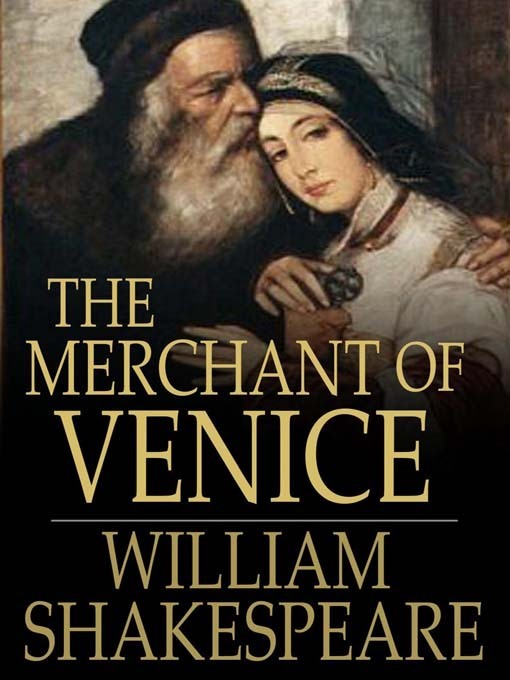
I am a Jew. Hath not a Jew eyes? Hath not a Jew hands, organs, dimensions, senses, affections, passions? Fed with the same food, hurt with the same weapons, subject to the same diseases, healed by the same means, warmed and cooled by the same winter and summer, as a Christian is? If you prick us, do we not bleed? If you tickle us, do we not laugh? If you poison us, do we not die? And if you wrong us, shall we not revenge? 

Shylock (The Merchant of Venice, Act 3, Scene 1)


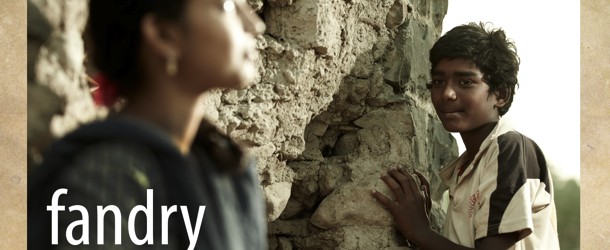
  Where generations of urban and upper-class/caste Indians have been able to appreciate the pain articulated by Shakespeare in the Merchant of Venice, Fandry, the Marathi language film written and directed by Nagraj Manjule locates the sentiments of the grievously wronged Shylock within the setting of the Maharashtrian Deccan through the story of Jabya. Born into an untouchable caste, Jambavant (Jabya), demonstrates the universality of the human experience when he experiences a boyhood crush on his classmate Shalu. The problem, however, lies in the fact that not only does Shalu seem completely oblivious to Jabya’s feelings for her, but that this possibility does not even cross her mind since she belongs to the area’s dominant castes. What is heart-wrenching in this story is that Jabya recognises that the gulf between their social circumstances would play a role in Shalu refusing to consider his love for her, and yet, continues to hope against hope, that she will indeed fall in love with him. Given that there is no harm in seeking the aid of higher powers, Jabya is also engaged in a hunt for a black sparrow, since he has been convinced by his older friend, Chankya, played by Manjule, that sprinkling the ashes of this bird on the object of one’s affection will make ensure that they fall in love with their admirer.

There are a plethora of reasons why Fandry stands out as an exceptional film, the foremost of which is that it manages to turn our gaze on the ruthless operation of the caste system and the associated social structures by seducing us into following this universal story of first love, and empathising with Jabya’s situation. There is no preaching, no moralizing; Jabya’s story unfolds matter-of-factly, humorously even, with all the quotidian humiliation, and challenges that would face a young untouchable in any mofussil town or village. The film locates the school as the space for change, the space that will enable India to realise its republican dream and challenge the oppression of the caste system. It is the school that permits Shalu and Jabya to inhabit the same space and allow Jabya to be enamoured of his girl. It is also the fact of his going to school and being forced to interact with others as an equal that spurs Jabya to refuse to fulfil the traditional obligations of pig-catching that his caste, and his father (nicknamed Kachru, or rubbish, by the dominant castes of the village) in particular are forced to fulfil. Indeed, the film makes it quite obvious that if caste persists in India, it is not because it is a remnant of some ancient system, but because it is physically enforced by dominant castes across the country and acquiesced to by impoverished Dalits with no other option. Into this miserable reality, it is schooling that provides a possible way out.

It is not as if the school is without its problems. Jabya’s best fried Piraji is prevented from sitting next to an ‘upper’ caste boy because this boy pinches him. Jabya is similarly threatened, and humiliated, by an ‘upper’-caste classmate who sees Jabya’s interest in Shalu and makes it clear that this interest will not be tolerated. It is in fact this burden of curbing Jabya’s self-assertions that by this Patel boy that lays the ground for the dramatic conclusion of the film, when Jabya demands a revenge no different from that of Shylock.

This conclusion comes at the end of the capture of the village’s pig (Fandry) scavengers that Jabya’s family are required to engage in. After having captured the audience with the universality of the human experience it is this dramatic hunt that brings into sharp highlight the various institutions that operate against the Dalit. There is the humiliation of not merely individuals, but entire families as they are forced to do work that others consider degrading. Having engaged in such work for over a lifetime, individuals such as Kachru begin to lose their self-respect. It highlights the threat of rape by dominant caste men that continuously hangs over Dalit women. Most importantly, the film mocks the rituals of nationalism that rather than aiding the lives of Dalits, in fact add to their burdens.

Fandry is a marvellously thought-provoking film that must be seen, not merely for the manner in which it awakens the audience to the silent ways in which the caste system operates in this country, but for the manner in which it elegantly highlights the pain that results when we deny that the Jew and Dalit are as human as the European Christian and upper-caste Indian. 

(A version of this post was first published in DNAindia.com on 13 Dec 2013)

Wednesday, March 7, 2012

Rules of Engagement: When People Aren’t Smart Enough for Democracy


Following close on the heels of the close of elections, the link to an article, with a rather disturbing suggestion, found its way into my inbox. “Democratic elections” it suggested, “produce mediocre leadership and policies.” This startling assertion was made a Prof. David Dunning, psychologist at Cornell University, whose research apparently demonstrated that “incompetent people are inherently unable to judge the competence of other people, or the quality of those people's ideas.”  Prof. Dunning is represented as having argued that given that most people do not have the mental tools to make meaningful judgments, “no amount of information or facts about political candidates can override the inherent inability of many voters to accurately evaluate them. His final cut was even worse, where he suggested that "very smart ideas are going to be hard for people to adopt, because most people don’t have the sophistication to recognize how good an idea is".

One could agree with Prof. Dunning to a limited extent. Most people do not in fact possess the mental tools to recognize the sophistication of certain ideas. Thus they simply fail to see these ideas, and address these ideas at the most basic level. But we will come to this point later. The first point we need to deal with is the basic flaw in Prof. Dunning’s work, which is that "The democratic process relies on the assumption that citizens (the majority of them, at least) can recognize the best political candidate, or best policy idea, when they see it.” This may be one of the arguments for direct democracy, but it is not a foundational argument for democracy that rests on the idea that every person must have a say in the way they are to be governed. The work of people like Dunning is part of an elitist and rightist move, prevalent the world over, and also visible in Goa and India, where we would like to restrict the role that ‘the people’ and their legitimately elected representatives play in democracy on the grounds that they are ‘uneducated’ ‘unqualified’ or such like. We would rather have persons who are ‘educated’ and ‘capable’ (this is of course being just another variant of that annoying upper-caste, anti-Mandal argument of ‘merit’).

There is no doubt that most of the people may be making choices that in the long run are deeply detrimental to the status quo; but this is one of the compromises that one makes when one enters into democracy. For the sake of the principle of justice involved in allowing everyone a say in the way they are governed, we acknowledge the possibility that things will not always go our way. In doing so, we also acknowledge the possibility that our way is not necessarily the best way. Indeed, as one scholar pointed out, one the benefits of having a minority is that they often  preserve options that the majority may not be particularly inclined to think about at a particular moment in time.

The beauty with a democratic setup however, is that merely because one has given up one’s right to make the choices all the time, one has not surrendered all of one’s options. Given that democracy is also about the right to argue one’s position and persuade others, democracy is also a profoundly pedagogical system. Indeed, the great Euro-American bourgeois democracies prior to the Great War, and subsequently the welfare democracies after the end of the II World War were substantially based on education. This pedagogical exercise was not limited only to schools however, but extended to creating a public sphere where people outside of privileged backgrounds could imbibe what were essentially aristocratic and bourgeois ideals and sensibilities. Museums, opera houses, public parks, all of these ensured that a certain sensibility was imparted to persons who could not earlier ‘see’. A good amount of this exercise rested on philanthropic work given that these elites recognized that the continuation of the status-quo rested on the creation of a group of people who even if they could not see as clearly as the leading elites, would at least acquiesce to the decisions that were being made.

What Dunning’s work represents is a certain global breakdown of this earlier democratic strategy, in the face of neo-liberalism and the growing trend toward privatization. Part of the new strategy now rests on confirming the absolute, congenital even,  impossibility of certain groups to participate in democracy, laying the foundations for the nakedly oligarchic control of the State that must definitely follow. One could still follow the Greek ideal and call it a democracy, just as we are prone to calling the communidade- gãocaria system democratic, but both these system rested on forced and unfairly unremunerated labour.

In Goa, there was a valiant attempt, in the shape of the Konkani language movement, and led to a large extent by the Konkani Bhasha Mandal to follow this European ideal of forging a public with a common (Konkani) consciousness. The trouble with that effort was its timing. The period of crafting a common language as the basis of a (sub) national democratic public had long past. Furthermore, given the cussed parochial tendencies of the KBM and other Konkani language groups, anything that did not fit into their idea of what Konkani or Indian could be, was cast out. This was especially mistaken because of the sophisticated tastes of the average Goan, open to, as a result of so much migration, influences from all over the subcontinent and the world. Add to this the supercilious caste prejudice that only a certain kind of Konkani could be Konkani and they sealed the fate of their project.

In a Goa where we lament so much about the ‘bad’ choices that the ‘common’ man is making, it behooves those of us who moan and crib to engage in a project of education of these masses. There is no doubt that choices are being made that will lead us down the road to hell. And yet, there does not seem to be a broad enough consistent effort to engage these masses with a larger pedagogic project. A project that while being philanthropic in nature is decidedly not populist. On the contrary when one does have opportunities, like the IFFI for example, one sees the resort to that old Roman strategy of  Panem et circenses, where rather than encouraging the public to engage with nuanced cinema, they are treated to a common carnival.

One particularly noteworthy effort however, that runs contrary to the prevalent strategy, is that of the D.D. Kosambi Festival of Ideas. Despite the debatable caliber of more recent speakers at this festival, it is one of the more interesting attempts at engaging the public, especially given the size of the audience it manages to muster. One wishes however that this festival either traveled across Goa, or that other towns in Goa saw similar festivals of such caliber.

In sum, while it is true that not all start with  the capacity to make reasoned and nuanced decisions when faced with electoral or other political choices, this lack is not a congenital impediment. It is one that can be rectified though a systematic engagement with these groups where we hope to win these groups over to our point of view. When they fail to be won over however, rather than turn around and blame the democratic system, we need to recognize that perhaps there is a reason why our point of view is not being accepted in the first place, and go back to the drawing board. In short, we would need to suck it up for the moment, while continuing with the longer project of public engagement.

(A version of this post was first published in the Gomantak Times dtd 6 March 2012)

Wednesday, June 23, 2010

A Post-Colonial agenda for IFFI 2010: Pointing the significance and relevance of 2010 to a peoples’ history

A couple of days ago, Dr. Nandkumar Kamat, from the Goa University, made a rather interesting suggestion via email to the Chief Minister of Goa. Rather than be an occasion to mindlessly spend huge amounts of state revenue, he has suggested that the International Film Festival of India (IFFI), now held annually in Goa, be themed for the year 2010 to commemorate “Colonialism and peoples’ struggles / movements across the world”. To this already interesting proposition he adds one more laudable suggestion; rather than invite an actor or actress from Bombay, who as he says leave no ideas behind, why not invite Arundhati Roy to inaugurate the festival? Roy, he suggests, could also be asked to speak on “Colonialism down 500 years a topic which would be suitable considering the completion of 500 years of Goa's conquest by Afonso de Albuquerque, on 25th November 2010 and foundation of colonial rule in Asia”.

This is perhaps one of the more incredible suggestions that have been made regarding the IFFI and perhaps in the intellectual and cultural life of the State. Subsequent to his email to the Chief Minister Dr. Kamat has requested public support for this suggestion and it is incumbent on all of us to support this suggestion and ensure that it gets converted from an idea to solid fact. This column today, seeks to be not just a public show of support for Dr. Kamat’s stellar suggestion, but a request to all those who may read this column to send emails of support to the Chief Minister’s email id and ensure that the proposal is converted to reality.

There are a number of reasons why this proposal must be supported wholeheartedly.
The organization of recent IFFI has been disappointing to say the least. Rather than an occasion to reflect on the messages that film can and do generate, the focus seems to be on creating a hedonistic bubble where movie stars can be feted. Where a number of Goans believed that the arrival of IFFI would contribute to the intellectual and cultural life of ordinary Goans, we have been disappointed to see that rather that critical world cinema, it is Hindi potboilers that have been dished out to the Goan public as a part of the festival. To theme the IFFI in the manner Dr. Kamat suggests would perhaps reorient the Entertainment Society of Goa (ESG), the local organizers of the IFFI to ensure it contributes to an enhancing the referents for local cultural articulations.

But Dr. Kamat’s suggestion has value beyond the limited scope of a renewal of the possibilities of the IFFI. Some weeks ago a Coimbra based researcher remarked that there was an almost eerie silence, both in Portugal and in Goa as regards the fact that the year 2010 marks 500 years since the formal establishment of the Portuguese State in Goa. Kamat seems to underscore this fact and points that this event that inaugurated the long durée of colonialism in Asia deserves some reflection. Kamat’s suggestion is wonderfully nuanced in that is skips over the polemics that often govern this field to nudge us in the direction of recognizing that colonialism and the struggles that challenge it did not end with formal decolonization. The colonial relationship has been continued, if not renewed, under the aegis of the national states that were left behind by the colonial regimes. It is because these national states fail to mirror the desires of substantial sections of its people that popular movements of discontent plague these post-colonial states across the world. India is but one of those states.

Dr. Kamat further nuances our appreciation of the moment of 2010 and i
ts possible commemoration by pointing out the double significance of the year, a century since 1910 when formal citizenship rights were definitively extended and claimed by a wide variety of Goans. In doing so, he once more eases us out of nationalist jingoism, to make sure our focus is on the rights of peoples, rather than some nationalist one-upmanship. The point of the commemoration of 2010 is not about Portugal, or India, it is about focusing on the need for the recognition of the rights of people.

Dr. Kamat’s suggestion is rather daring in that it challenges both the Goan and Indian state to display its true commitment to democracy. By inviting Arundhati Roy he argues, ‘the government and state of Goa would be able to demonstrate that the most dissenting voice is given a public platform in this state and we're not a ‘failed democracy’. In so doing, Kamat rightly points out that democracy is sustained not by quinquennial elections, but in fact only by ‘our own willingness to welcome dissent and dissenters’.


As wonderful as his suggestion is however, it is possible that it has come a little too late in the day for the IFFI 2010. This should however not dampen our spirits. By a queer twist of history, the year 2010 melts into the year 2011, the latter marking fifty years of the end of the Portuguese State in India. If 1510 opened a new chapter in global history, and 1910 opened new possibilities for the Goan, then so did 1961. If we cannot get the IFFI to
focus on colonialism and peoples’ struggles in 2010, then 2011 would be just as well. If however the organizers of the IFFI refuse to comply, then there is nothing that should stop the people of Goa from organizing their own festival in which they could commemorate the dates that are significant not just to their own history, but the global history of colonialism and peoples’ rights. There is a precedent here in the actions of the Ganv Ghor Rakhon Manch who in 2008 organized parallel to the IFFI, the Goan Peoples’ Film Festival. Organized in a remarkably short time, the festival managed to attract some attention and international support. There is no reason why this story should not be repeated, with Arundhati in attendance, in 2010. One hopes however that the Goan government will take Dr. Kamat’s suggestion seriously. In doing so it would redress the unjustified silence in marking 2010, it would reorient the IFFI to make it more meaningful than just a bash for national and international film stars. In this latter aspect, this reorientation would only add to the prestige of the IFFI, and simultaneously enrich the cultural lives of the Goan people, which is the primary reason why some of us welcome the IFFI in Goa.

Thank you Dr. Kamat, and all power to your suggestion. As for you dear Reader, remember your emails to the Chief Minister!

(First published in the Gomantak Times, 23 June 2010)