Showing posts with label Deccan. Show all posts

Friday, June 26, 2015

Meeting Fathers in Foreign Lands


I remember the first time I arrived in Lisbon. I had imagined that I would find the city unfamiliar, filled with strangers. This was true to a large extent, and yet, the city endeared itself to me by offering me encounters with persons from my childhood. It was an overwhelming experience to encounter the people like Afonso de Albuquerque, Vasco da Gama, persons whose names I had first encountered as a boy. Of course these men were long dead, but their memorialised presence still lurked in the city, making the city at once familiar.
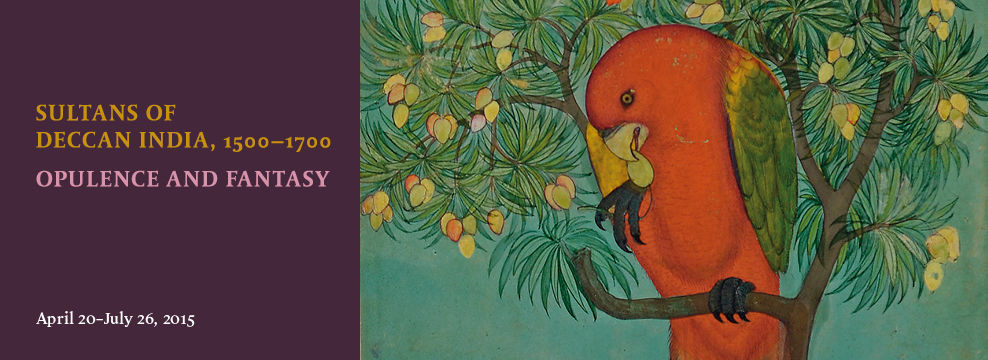


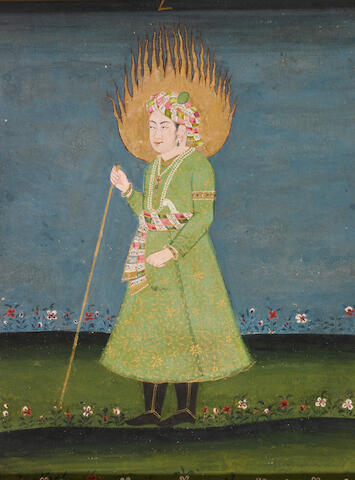
I had a similar experience when visiting the ongoing exhibition titled “Sultans of Deccan India, 1500–1700: Opulence and Fantasy”, at The Metropolitan Museum of Art, in New York. Dedicated to delineating the often ignored history, and material productions of the various sultanates of the Deccan, the exhibition brought me face-to face with persons whose histories are intertwined with those of the early modern Portuguese in South Asia. I jumped with particular delight at the portraits of various members of the Adil Shahi dynasty.

Just as the names of the great heroes of the Portuguese expansion are known to most Goans, so too, even the most cursory reading of Goan history will make one aware of at least one figure of Deccan history, Sultan Yusuf Adil Shah, the founder of the dynasty. Indeed, the old Secretariat of the Government of Goa, was housed in the building that was, and continues to be called the Palácio do Idalcão - the palace of Adil Shah.


Many assume that the significance of the Adil Shahis in Goa's history is concluded once the territory was conquered by the early modern Portuguese. As such, we often do not bother with this Deccan sultanate. Goa’s association with the Adil Shahis of Bijapur was more than a mere footnote, however. The Portuguese Estado da India would have substantial dealings with the Adil Shahi dynasty of Bijapur. It was with this Sultanate that treaties were signed that allowed Ilhas, Bardez and Salcete to form the core of the territory that would in later times become known as Goa. And for the longest time the Estado lived in the shadow of the Bijapuri sultanate. As the historian David Kowal, and the late José Pereira had indicated, so strong was the influence of the Bijapuris, that the architecture of Goa began to mimic aspects of Bijapuri architecture. This influence can especially be seen in the lamp towers of the older temples in Goa, as well as in the faceted bell towers of churches across Goa.

However, it was not just in the architecture of the Old Conquests of Ilhas, Bardez and Salcete that there was a Bijapuri influence. Portions of what would come to be called the New Conquests continued to be a part of the Bijapuri Sultanate until they were integrated into the Estado da Índia. It is to the Indo-Persian administrative organisation followed by the Bijapur sultanate that we owe the identity of such identities as that of Antruz Mahal. Further, the Christian history of the New Conquests owes as much to the Bijapuri Sultanate as it may to the Portuguese state. It was under leave from the Sultan, in about 1639, that Mateus de Castro, the ambitious native cleric who chafed under the Portuguese, received permission to build churches in Bicholim, Banda, and Vengurla.

Unfortunately for us, the exhibit at The Metropolitan museum does not contain an individual and contemporary portrait of the founder of the dynasty Yusuf Adil Shah. We are forced to satisfy ourselves with a reference to this man in a group portrait depicting the entire dynasty. Another portrait that might attract Goan interest was one which depicts two persons in attendance on the Sultan Ali Adil Shah II. The audio guide to the exhibit suggests that these two persons are said to be Shivaji and his father, Shahaji Bhonsle. It should not be forgotten that Shahaji held an official rank in the Adil Shahi army, and it was from the Adil Shahi sultanate that Shivaj forged the nucleus of his kingdom.

The exhibition at the Metropolitan Museum was not limited to just the Bijapuri Sultanate. It focused on the huge amount of cultural production that emerged from the various other Sultanates, including that of Ahmadnagar, Bidar, and Golkonda. In doing so the exhibition suggests at the wide variety of influences that bore upon the medieval and early modern Deccan, and have come to bear on our own contemporary culture. Indeed, while browsing through the exhibit, I wondered if it would not be a good idea were an exhibition curated to look exclusively at the Bijapuri sultanate. The state of Goa is intimately linked to this sultanate and it would do us good to appreciate the intimate links that existed between the Sultanate and the Goa that was being formed. To that extent, Bijapuri history is as much Goan history, as is the history of the Portuguese state whether in South Asia or in Europe. It would also be a particularly moving homecoming were such an exhibition housed in the now vacant Palácio do Idalcão.

The discussion of Goa is often framed between two tropes: that of Goa Dourada, or Goa Indica. The first, seeks to emphasize Goa’s European, or Portuguese-ness. In response to this first form of representation, the second attempts to stress that Goa is, in fact, Indian. While there is no denying that Goa does constitute a certain form of Europe, this second form is also important. The trouble with Goa Indica, however, is that it often stresses a Sanskritic and brahmanical past for Goa. These assertions are then used to justify a return to that imagined state of affairs. The truth, as always, is perhaps somewhere in between. The areas that became Goa had a complex past with multiple influences. If these territories were influenced by the Vijayanagara polity, then the kings of Vijayanagara themselves adopted an Islamicate model of kingship calling themselves Sultans. If Bijapur was a significant centre through which Shia Islam permeated the lore of the indigenous deities of the Deccan like Yellamma and Parashurama, then the Sultans and their courts adopted Indic forms of asserting their kingship. We need more histories that assert to this complexity, and communicate this to a larger, increasingly misled, popular audience. It is towards these histories that exhibitions such as the Sultans of the Deccan could lead us.

(A version of this post was first published in the O Heraldo dated 26 June 2015)

Friday, May 1, 2015

Yellamma and her Muslim family: Rethinking Origin Myths in Goa – II


Last fortnight I recounted a birthing myth about Parashuram that is rather different from the standard story that we in Goa have come to accept as set in stone. This Dhangar myth linked Parashuram to the goddess Yellamma, and suggested that both Parashuram and Yellamma established familial relations with the Shia heroes, the Imams Hassan and Hussein. 


There were a couple of interesting aspects to that myth that bear underlining. The narrative suggested that when Satyava’s sons, Bhram, Apa, Asan, and Usan, returned home with two wild goats, Yellamma called out, to them “Your maternal aunt has come! My boy should sit down with you. Let your sister join your dining row!” What is interesting about this part of the narrative is not that Yellamma referenced herself as maternal aunt or sister to the men, but that she demanded a right for herself, and the child she birthed, i.e. Parashurama, to be seated along with these men.

Those familiar with the dining habits in non-westernised parts of the subcontinent will know that the dining line (pangath or pankti) is a central marker, not merely of precedence, but also of familial and caste belonging. Who you eat with defines who you are, or how important you are. For example, a caste that considers itself superior will not sit next to those it considers inferior in the same pangath. Similarly, those who are more important, eat before those who are less so. Thus, the patriarch and those proximate to him eat before the younger, and men of lesser importance, with the women eating last of all. 

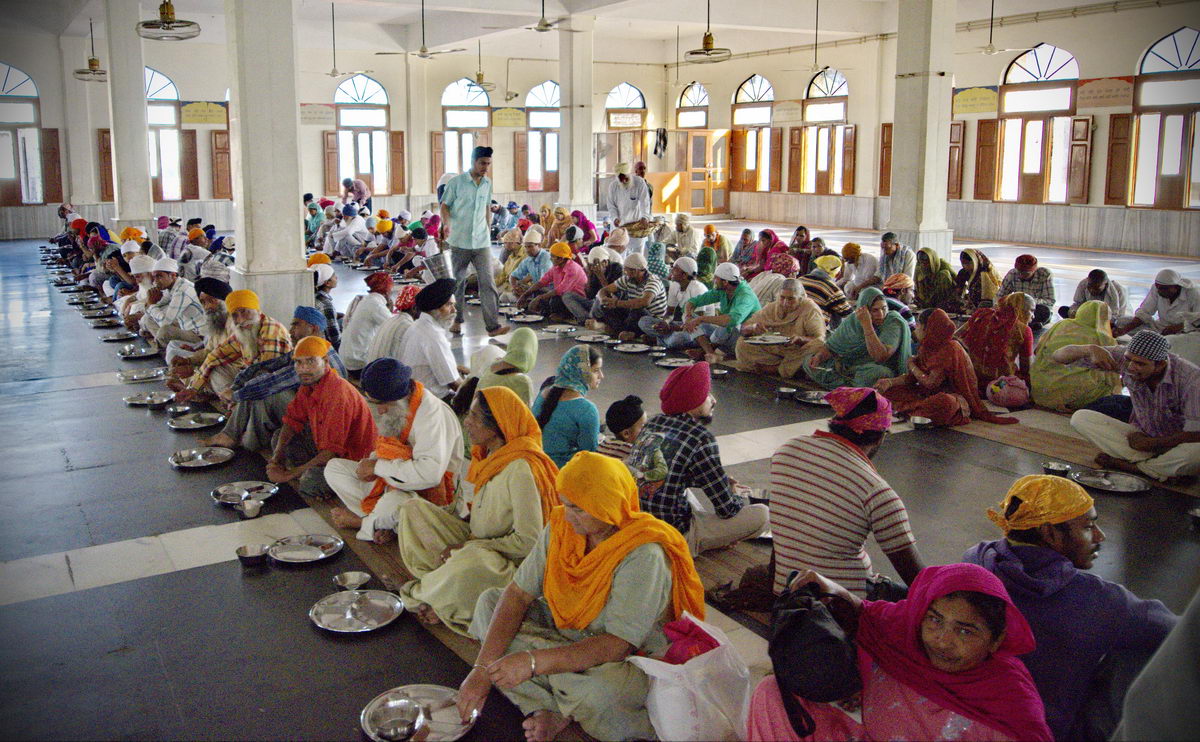
Dining in pre-colonial South Asia, an aspect that continues in some parts even today, was not a simple matter, but one that opened up space for ritual pollution. It was one of those rituals through which untouchability and inequality was, and is, perpetuated. It was for this reason that the Sikh langar (or common kitchen) stresses that everyone, regardless of caste or class, must sit together while eating. There was to be no toleration of caste and social difference within the Sikh community. It was also for this reason that so much of Indian secularism hinges on going to the homes of others and eating their food. Given that in the latter part of the nineteenth century and early part of the twentieth century people DID NOT eat with one another, something we consider so normal today, making people eat together, or eat the food of the other, was critical part of the nationalist agenda. The Indian nationalists could not imagine building a nation where people did not eat alongside with each other.

When Yellamma demands a space for herself, and Parashurama, in the dining line of the Shia heroes, therefore, she makes a number of claims. First, she recognises the validity of the Shia and Muslim men as dining partners. They are not untouchable others and inferiors, but someone she can validly eat with. Indeed, given the situation she found herself in, where she had been abandoned by her sisters, and punished by Mahadev, she was the inferior and was in fact requesting the Shia heroes to take her into their family. This equation underlines the role that the Imams Hassan and Hussein had, and continue to have, in the Deccan, that of the protectors of helpless women and children. This role for the Imams, is of course a natural consequence of their position in Shia Islam, where they are seen as defenders of justice, and partisans of truth.

Also critical to the narrative is that Yellamma and Parashurama sit down to a dinner whose main feature is the flesh of two wild goats. Yellamma, therefore, is not above eating with meat-eaters. She is willing to sit and eat with them, and integrate her child into the circle of these meat-eating men. It is another matter that she subsequently sprinkles the nectar of immortality on all the meat they had there, and gave [the dead animals] their full life-force again. However, rather than being read as evidence of Yellamma being vegetarian, it can be read as stressing her divinity, and her role as life-giving mother of all (in Kannada: Yella- everyone, Amma – mother).

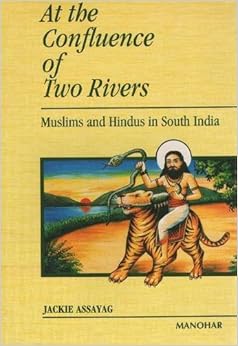
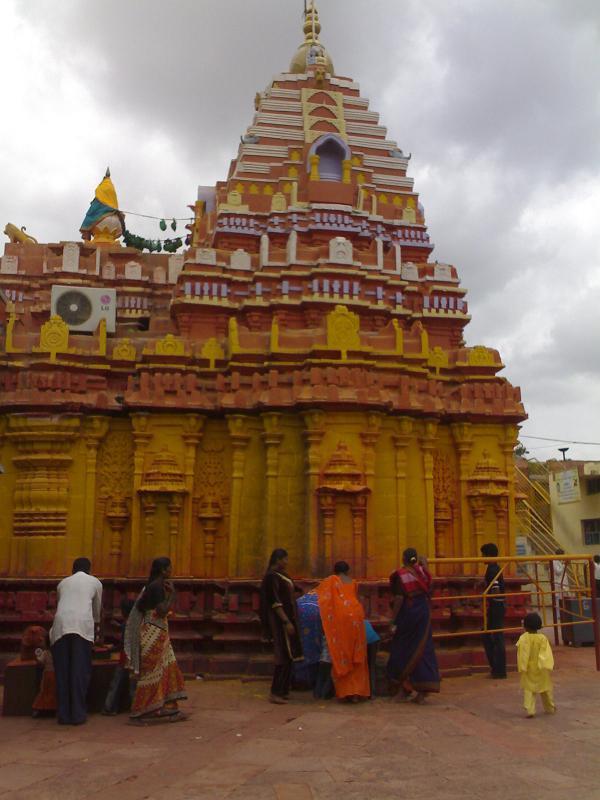
This narrative of Yellamma’s relationship with the Shia Imam’s is not the only reference to her relationship with Muslims. She also has a curious relationship with a Sufi saint by the name of Khwajah Bar Shah Wali, or simply Bar Shah. This relationship has been highlighted through the work of the French anthropologist Jackie Assayag in his work At the Confluence of Two Rivers: Muslims and Hindus in South India (2004). In this book, Assayag recounts two myths about the establishment of the site in Saundatti as sacred. One of these tells of how the goddess, afflicted with leprosy by her vengeful husband, the ascetic Jamadagni, came upon Bar Shah, who took pity on her and cured her leprosy. In gratitude Yellamma served Bar Shah faithfully for twelve years, after which the saint granted her space to settle in Saundatti, where she had remained ever since.  As would be obvious, this myth credits Yellamma’s location in Saundatti not to the Imams but to a Sufi saint. Further, it brings in aspects of the brahmanical absent in the Dhangar myth. I will deal with the brahmanical aspects of the Yellamma myths in a later column.

There is a twist to the tale, however, since when Assayag recounted this narrative to some local devotees of Yellamma, belonging to the Banajiga caste, they denied any knowledge of it. On the contrary, they provided a different story which presented Bar Shah as constantly antagonizing Yellamma though his constant cursing of her. The Banajiga narrative informs that in response to these curses,  the goddess blinded the saint, who thereafter realized his mistake and began to dutifully worship the goddess. Through this constant devotion Bar Shah was able to regain his sight, and remained indebted and devoted to the goddess from then on. It should be noted that Bar Shah’s tomb is located within the space of the various shrines dominated by the temple of Yellamma in Saundatti.

In this latter myth, the equations of power between Islamic personages and Yellamma are reversed, with Yellamma being the more powerful. What is important, however, is that in the end peace is restored and the two figures live in amity. Once again, therefore, we are presented with myths that reference the complexity of religious life in the Deccan, and indicate that Islam, whether Shia or otherwise, was a critical part of this life. 

These myths are important for those of us in Goa who are interested in non-brahmanical myths of origin. They point to us that there is a mythical realm beyond the brahmanical and must necessarily take into consideration that the spaces that are today contained in Goa, were once in the shadow of the Shia Deccan. The influences of the Shia faith still mark aspect of life in Goa, not just what we consider Hindu, but possibly Catholic as well.

Contd...

(A version of this post was first published in the O Heraldo on 1 May 2015)


Friday, December 13, 2013

Fandry: The work of Shakespeare in our times


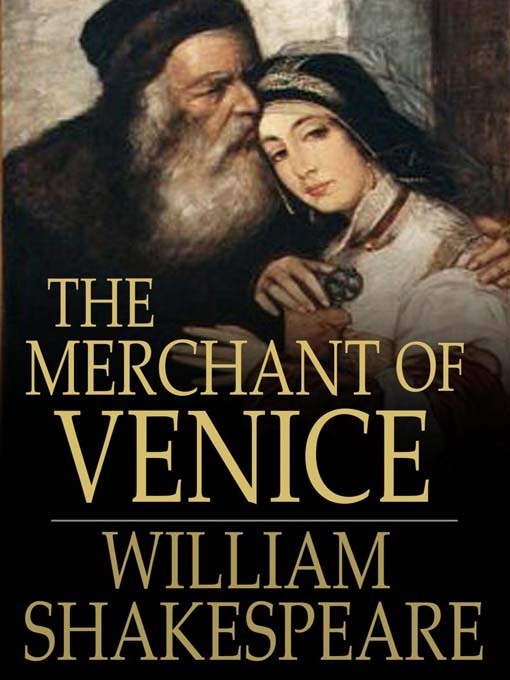
I am a Jew. Hath not a Jew eyes? Hath not a Jew hands, organs, dimensions, senses, affections, passions? Fed with the same food, hurt with the same weapons, subject to the same diseases, healed by the same means, warmed and cooled by the same winter and summer, as a Christian is? If you prick us, do we not bleed? If you tickle us, do we not laugh? If you poison us, do we not die? And if you wrong us, shall we not revenge? 

Shylock (The Merchant of Venice, Act 3, Scene 1)


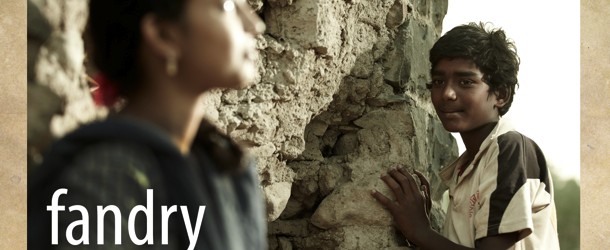
  Where generations of urban and upper-class/caste Indians have been able to appreciate the pain articulated by Shakespeare in the Merchant of Venice, Fandry, the Marathi language film written and directed by Nagraj Manjule locates the sentiments of the grievously wronged Shylock within the setting of the Maharashtrian Deccan through the story of Jabya. Born into an untouchable caste, Jambavant (Jabya), demonstrates the universality of the human experience when he experiences a boyhood crush on his classmate Shalu. The problem, however, lies in the fact that not only does Shalu seem completely oblivious to Jabya’s feelings for her, but that this possibility does not even cross her mind since she belongs to the area’s dominant castes. What is heart-wrenching in this story is that Jabya recognises that the gulf between their social circumstances would play a role in Shalu refusing to consider his love for her, and yet, continues to hope against hope, that she will indeed fall in love with him. Given that there is no harm in seeking the aid of higher powers, Jabya is also engaged in a hunt for a black sparrow, since he has been convinced by his older friend, Chankya, played by Manjule, that sprinkling the ashes of this bird on the object of one’s affection will make ensure that they fall in love with their admirer.

There are a plethora of reasons why Fandry stands out as an exceptional film, the foremost of which is that it manages to turn our gaze on the ruthless operation of the caste system and the associated social structures by seducing us into following this universal story of first love, and empathising with Jabya’s situation. There is no preaching, no moralizing; Jabya’s story unfolds matter-of-factly, humorously even, with all the quotidian humiliation, and challenges that would face a young untouchable in any mofussil town or village. The film locates the school as the space for change, the space that will enable India to realise its republican dream and challenge the oppression of the caste system. It is the school that permits Shalu and Jabya to inhabit the same space and allow Jabya to be enamoured of his girl. It is also the fact of his going to school and being forced to interact with others as an equal that spurs Jabya to refuse to fulfil the traditional obligations of pig-catching that his caste, and his father (nicknamed Kachru, or rubbish, by the dominant castes of the village) in particular are forced to fulfil. Indeed, the film makes it quite obvious that if caste persists in India, it is not because it is a remnant of some ancient system, but because it is physically enforced by dominant castes across the country and acquiesced to by impoverished Dalits with no other option. Into this miserable reality, it is schooling that provides a possible way out.

It is not as if the school is without its problems. Jabya’s best fried Piraji is prevented from sitting next to an ‘upper’ caste boy because this boy pinches him. Jabya is similarly threatened, and humiliated, by an ‘upper’-caste classmate who sees Jabya’s interest in Shalu and makes it clear that this interest will not be tolerated. It is in fact this burden of curbing Jabya’s self-assertions that by this Patel boy that lays the ground for the dramatic conclusion of the film, when Jabya demands a revenge no different from that of Shylock.

This conclusion comes at the end of the capture of the village’s pig (Fandry) scavengers that Jabya’s family are required to engage in. After having captured the audience with the universality of the human experience it is this dramatic hunt that brings into sharp highlight the various institutions that operate against the Dalit. There is the humiliation of not merely individuals, but entire families as they are forced to do work that others consider degrading. Having engaged in such work for over a lifetime, individuals such as Kachru begin to lose their self-respect. It highlights the threat of rape by dominant caste men that continuously hangs over Dalit women. Most importantly, the film mocks the rituals of nationalism that rather than aiding the lives of Dalits, in fact add to their burdens.

Fandry is a marvellously thought-provoking film that must be seen, not merely for the manner in which it awakens the audience to the silent ways in which the caste system operates in this country, but for the manner in which it elegantly highlights the pain that results when we deny that the Jew and Dalit are as human as the European Christian and upper-caste Indian. 

(A version of this post was first published in DNAindia.com on 13 Dec 2013)

Friday, April 5, 2013

The Itinerant: Saint Christopher’s wardrobe


St. Christopher in the Cathedral in Toledo.
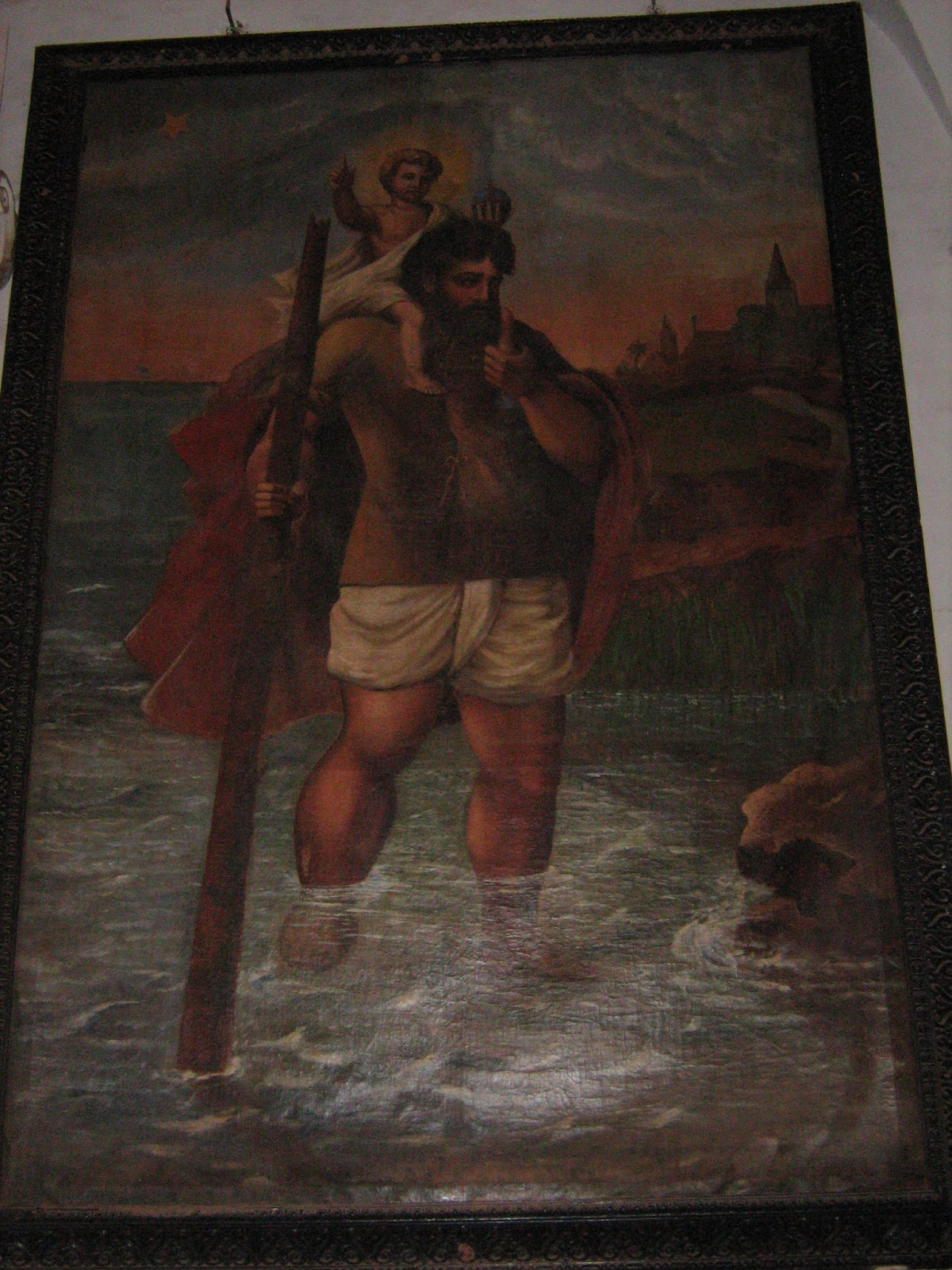
The Cathedral of Toledo, in Spain, hosts on one of its walls a monumental painting of St. Christopher. St. Christopher, legend tells us, started out as Offero, offering his services to people to help ford a river. He remained Offero, until one stormy evening, he forded the river with a child on his shoulders. Particularly insistent on crossing despite the storm, on reaching the other side, the child revealed himself as the infant Jesus and indicated to Offero, that since he had carried Christ that evening, he would hence forth be called Christ-offero.  In offering his shoulders to Christ it turns out, Offero not only gained a name, but provided for the Catholic church, the patron saint of travelers.

The depiction of Christopher in the Cathedral in Toledo wears what medieval depictions of European saints are normally depicted wearing, a long tunic, that is, in the case of Christopher, hitched up at his waist so as to not get too much of the garment wet. The same saint is depicted, on a somewhat smaller scale, but no less dramatically in the Cathedral in Old Goa. This depiction of the saint, at least with respect to his garments differs dramatically from the depiction of Christopher in Toledo.


Detail of the image of St. Christopher in the Se, Old Goa.
This Christopher in Old Goa, hangs immediately to the left of the main entrance of the Cathedral, and has been the subject of some excitement in the field of art history. Amateurs and professionals have pointed out that this St. Christopher wears what some would call a dhoti or a langoti. What is often left out however, is that this is not the only piece of native clothing that the Goan Christopher is wearing. If one looks very closely, one realises that the shirt that Christopher is wearing in this version, has rather peculiar features. It looks akin to the many versions of the Persian jama that filtered into the sub-continent. This shirt, does not boast buttons, but the front of the shirt is held together by knotted strings, just like the many varieties of the jama or angarakha are even today held together.

St. Christopher's wardrobe in Goa

Ibrahim Adil Shah, Sultan of the post Bahmani State of Bijapur
When the art historians realized that St. Christopher in Old Goa was wearing a dhoti, they forwarded the argument that perhaps the artist who painted the image of the saint, was not Catholic, nor European, but a native and a Hindu. In doing so, they seek to stress the Sanskritic nature of pre-Portuguese Goa. If however, we recognize that the garments of the saint are composed of more than just the dhoti, but this jama shirt as well, then our view of the possible identity of the artist must necessarily be complicated. There is no need for us to make the argument that the artist was in fact Muslim. However, we must recognise the fact, that if the artist was in fact native, then the vocabulary of the artist was more than just Sanskritic, but one that was at home with the Persianate and broader Islamicate fashions that had been dominant along the west coast ever since the ascendancy of the Bahmani Sultanates in the Deccan. It points out to us that Goa’s pre-colonial history, and its pre-colonial peoples were a culturally complex lot.

(A version of this post first appeared in The Goan dtd 16 April 2013)