Friday, October 31, 2014

The Moral Politics of Diwali


“ek baras meiN ek baar hee jagti holi kee jwaala
  ek baar hee lagti baaji jalti deepoN kee maala
  duniya waaloN kintu kisi din aa madiraalay meiN dekho
  din meiN holi raat diwaali roz manaati madhushaala”


 But once a year do the flames of Holi rise.
 But once is the dice rolled and the garlands of lamps lit.
 Yet, come to the tavern people of the world and behold,
 Where every day is Holi, a every night Diwali.

The verse above is extracted from the poem Madhushala penned by the celebrated Hindustani poet Harivansh Rai Bachchan. Drawing from the tropes of Islamic mysticism, while using the trope of alcohol, the tavern and worldly excess, the poem was in fact intended to be a mystical allusion to the exercise of finding truth in the world. 

Poor Bachchan, up in heaven, must probably be thanking his stars that he wrote the poem when he did, because he would have probably been at a loss to find the appropriate metaphors in a day and age when every day is treated as Holi and every night Diwali.
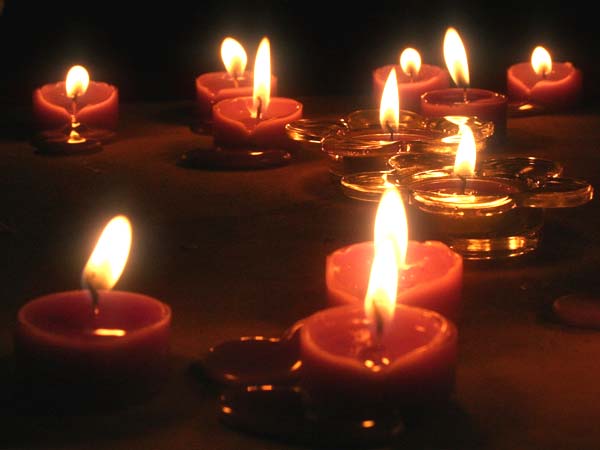
In an age of consumerist excess, especially in the urban world, we seem to have forgotten the meaning and the existence of the darkness of the night. The beauty of Diwali of yore was that the lamps that were lit could be read as an invitation to philosophical contemplation; a testament to the power of nature, the determination of the human being to overcome the challenges of nature, and an invitation to recognize that overwhelming nature made human existence itself bare.

Unfortunately, however, like so much of Hinduism, Diwali too is being held hostage by the forces of the Hindu right. I am referring in particular to a post from Dr.Subramanian Swamy that suggested that the pleas that Diwali be marked by a restrained use of fireworks was one more conspiracy against Hindus. His argument was that given that the larger amount of noxious gases are released by industries and automobiles, one should really not create a problem about the pollution caused by fireworks on a single day’s celebration.

As usual Swamy misses the point, that the point is not about the amount of pollution, but about the concentration of it in a single evening. If only the noise and smoke were restricted to a single evening though! Further, Swamy seems to not see that given the Diwali occurs just once a year, the fact of abjuring noise and smoke pollution would make a powerful symbol that would aid our tackling with other pollutions through the rest of the year.
 
Suggesting to some neighbours that we hold a Diwali celebration without fireworks, a neighbor responded “Diwali without fireworks is like Holi without colour or Christmas without Santa!” I was struck by the comment since, as Bachchan observed in his poem, Diwali was originally about the strings of lights, not of noise. What made her response odd was that Santa Claus can hardly be seen as integral to Christmas. Indeed, some Christians would argue that the problem is that the emphasis in our consumerist times has shifted from the infant Jesus to Santa Claus.

Given that this Christmas-is-about-Christ-not-Santa argument is often articulated by right-wing Christians, I am hesitant to endorse it totally. I endorse it only to the extent that despite the fact that Santa Claus is the tool through which Christmas has become more than just a Christian festival, it has also become the symbol of the consumerist excess that has demolished the potency of Christmas as a festival of hope and sharing.

A better example that one could give when arguing for a softer Diwali is that eschewing crackers would perhaps make it a more moral festival. It would assert celebrations that are based not on selfish pleasure and the assertion of privilege, but the assertion of a politics of justice. After all this is what the politics of Diwali is made out to be isn’t it? The politics of a just Diwali would be a politics that asserts that noisy crackers are a violence on those who are not bursting the crackers, those who are old and infirm. The abjuring of crackers would make a statement in favour of labour and against the perilous conditions, often endured by children, in which most crackers in India are produced.

The search for the morality in our celebrations of Diwali would perhaps also awaken us to the moral economy of the festival. This moral economy suggests that excess is best appreciated when it occurs as an aberration. A festival of lights loses relevance when our every night obliterates all form of natural darkness. A reference to nature would also suggest that it is against the background of nature that excess can be ideally judged. The moonless night (Amavasya) of the month of Kartik is held to be the darkest night of the year, and it against this darkness that the brave lights of Diwali shine forth. This could be argued to be the context of Diwali. Lose this context of darkness and one loses the meaning of the festival itself.

I have often thought that the lamps of Diwali offer a remarkable statement of bravery in the face of vulnerability, possibly from a recognition of the fact that those brave lights last only so long as their oil, and only as long the wind does not snuff them out. A shift of emphasis away from these oil (or wax) lamps, to electricity and noise shifts the emphasis away from resolute vulnerability to rude assertion. It is perhaps for this reason that members of the Hindu right would prefer that Diwali be celebrated with the violent assertions of noise and absolute assertion of masculine power over the softness of the autumn night.

Whichever way you choose to celebrate Diwali, however, Diwali Mubarak.

(A version of this post was first published in the O Heraldo dated 31 October 2014)

Friday, October 3, 2014

Islamicate wonderlands: Amir Hamza and the destruction of the Tilism e Hindutva


Like thousands of middle class and urban persons of my generation who loved to read, my childhood was marked by a devouring of literature in the English language.  Especially through the works of Enid Blyto, I became familiar with the cultural worlds of the English. However, I also had access to the illustrated stories of Amar Chitra Katha. Through the tales of this publishing house I grew up to know the many narratives that populate the Puranas, the Hindu epics, and various episodes from subcontinental history. This reading grew in importance as I began to pick up on the subtle nationalist messages that form part of growing up in India. The message was that it was important to know our fables, stories and histories, not merely those from across the waters.

As I grew older, however, I realised that my knowledge of our narratives was rather curiously limited. While I could easily rattle off the genealogies of the Raghu Vamsha I did not have as deep a knowledge of similar religious traditions within the subcontinent. In time I realised that this was not a coincidence but a part of the way in which Indian nationalism is configured. Religious traditions of brahmanical Hinduism are constructed as national mythology, while other narratives and mythologies are cast as foreign. This is the basis of what one could call banal Hindutva.

For those who fear it, Hindutva is largely associated with the violence, whether it is overt violence, or violent posturing or assertion. This is just one part of Hindutva, however. Violent Hindutva is able to succeed and be condoned largely because it rests on the daily operation of banal Hindutva. This Hindutva ensures that by and large our references are from within the oeuvre of brahmanical tradition, or Indian nationalist interpretations of cultural traditions within the subcontinent. By depriving us of other referents, it is as if this Hindutva casts a spell where we are unable to imagine ways to challenge its operation.

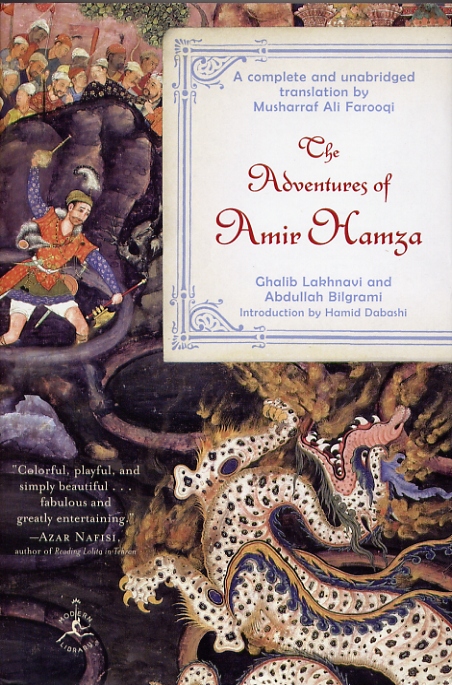
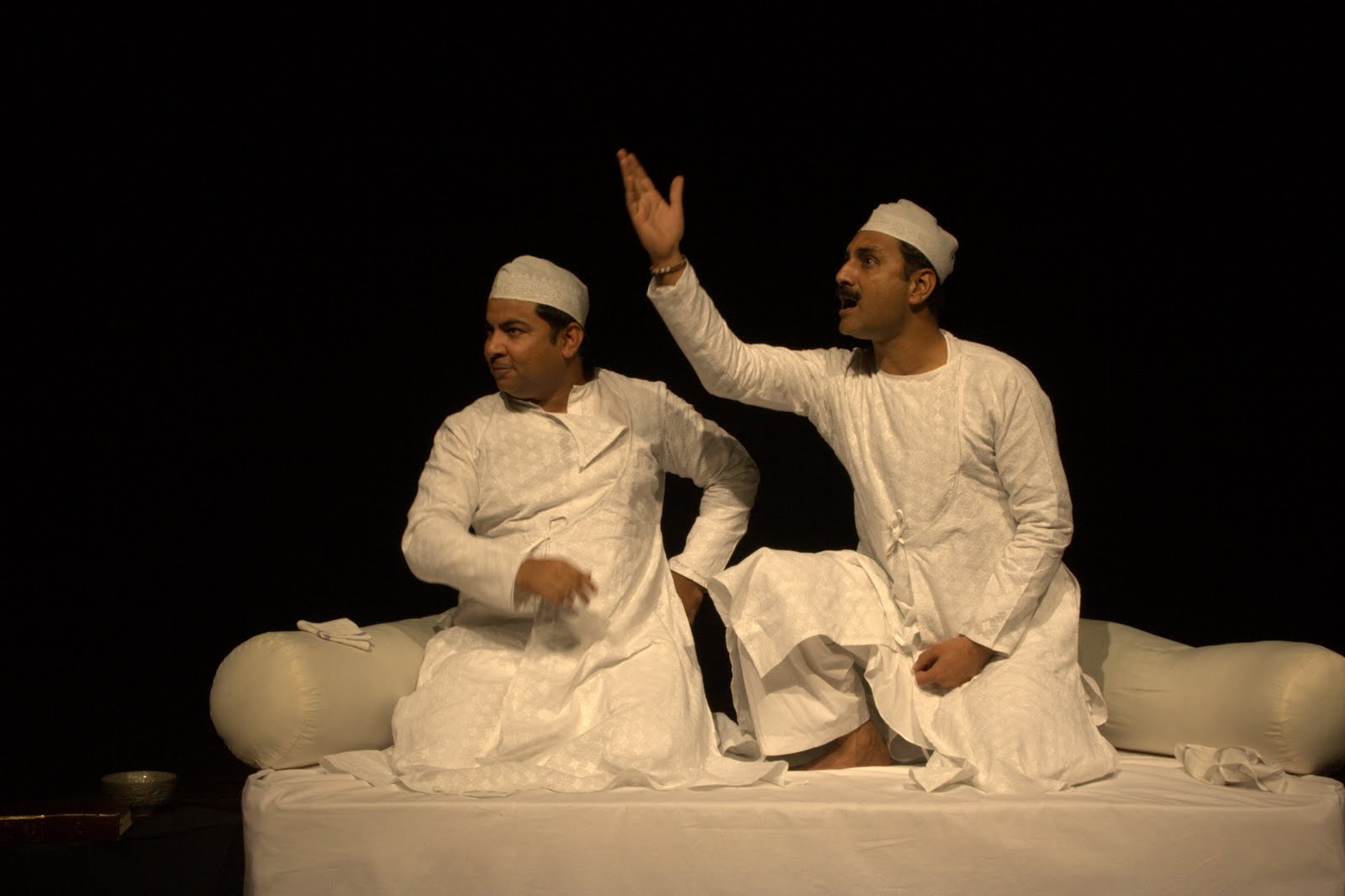
On realising this I figured that one route to challenging the operation of banal Hindutva would rest on uncovering and popularising subcontinental narratives from outside the brahmanical tradition. One obvious place to go searching for these narratives was the subcontinent’s Islamicate tradition. From within this tradition, I ran into the Dastan e Amir Hamza a number of times, the first of which was a short version of the tale published by the Khudha Baksh Oriental Library. More recently, I had the opportunity to go through a more substantial translation of the text by Musharraf Ali Farooqi.

The dastan, or tale, is woven around the fantastic adventures of Hamza, an uncle of the Prophet Muhammad. In the course of his travels across a broad swathe of the globe, as well as other dimensions, Hamza battles kings in their kingdoms, sorcerers and their spells (tilism) and other supernatural creatures. While Hamza often converts noble adversaries to Islam after defeating them, the narrative itself is not a theological or religious discourse. Indeed, decorated with tales of magic, romance and cunning, I am given to believe that more pedantic Muslims would shirk away from the narrative as un-Islamic.

If the intention of exploring Islamicate wonderlands is to expose the Indian reader to a wider cultural landscape, then the dastan is a wonderful choice. I was delighted by the sheer geographic scale of the narrative, that casually incorporates Hind (the subcontinent of south Asia), Ceylon, Persia, Greece, China into the narrative. In many ways the dastan is true to Indian tradition in that it makes unselfconscious references to Alexander exploits.
While Alexander may have reached the limits of his adventures in the Punjab, his exploits fundamentally reordered the cultural universe of the world from that time. While the Persian empire was already a standard that even subcontinental monarchs looked up to, Alexander’s incursions made the cultural references of the subcontinent even more complex. That contemporary Indians are ignorant of these complex cultures is testament to the manner in which banal Hindutva has stripped our world of cultural diversity. A further testament to the Dastan’s richness is the manner in which narratives that one finds in the Ramayana, such as Rama’s breaking of Parashurama’s bow, also seem to emerge, albeit under modified circumstances, in the same text.


As interesting as the Dastan may be, however, and even though in recent times there has been a rediscovery of the subcontinent’s dastan tradition, it is not ready for uncritical embrace. Merely because it is Islamicate is not going to allow the dastan to challenge Hindutva or be an acceptable alternative. The dastan as it now stands is filled with a variety of racist, patriarchal and casteist formulations. Take, for example, the manner in which Hamza’s companion and friend from birth, Amar, is constantly humiliated because of the latter’s low birth. Further, it appears that it is only figures of “low birth” who engage in morally dubious activities, even if it is to further Hamza’s noble pursuits. Or the instances where Hamza is persuaded to enjoy the charms of other women, while his first love, Mehr Nigar, pines chastely for him for decades.


But perhaps it is because there is much that needs to be weeded out of the Dastan that it may present itself as an interesting and exciting task in the battle against banal Hindutva. Hindutva is not the only ideology in the country that rests of a thick melange of racism, patriarchy, casteism and other dehumanising systems. As local readers would know these systems are as present within the institutional Church in Goa, as they are in other religious and secular institutions. All of these institutions work with banal Hindutva on a daily basis, by and large protesting only when violent Hindutva pinches their immediate interests. Reformulating the Dastan, and other narratives, both from within the subcontinent as well as outside, would perhaps present a more dynamic challenge in reinventing the country to make it more inclusive. And who knows, in challenging the sorcerers that would modify the secular democratic republic into the tilism of Hindutva, we may well stand to become the Hamza of our age.

(A version of this post was first published in the O Heraldo on 3 Oct 2014)


Friday, September 19, 2014

Pointing a finger at secularists: A response to Teotonio de Souza


It is always a tragedy when an argument is misunderstood. Something of the sort seems to have happened when Teotonio de Souza, in his op-ed column in this paper (2September, 2014), mounted a critique of my denunciation of the Goa Government’s Sant Sohirobanath project.  The immediate concern was the government’s decision to rename the Government College of Pernem after the Sant. 


According to de Souza, I drew up a comparison between Sant Sohirobanath and St Francis Xavier to argue that Sant Sohirobanath served the saffronisation of Goan culture by the State in violation of constitutionally guaranteed secularism, while suggesting that the state’s administrative assistance in the exposition of the relics of St. Francis Xavier was, “well within the bounds of secular ethics.” In reality, I said no such thing.

My effort was to distinguish between the manner the state has unilaterally taken it on itself to pluck the Sant out of relative obscurity, while in the case of the Exposition, there is a non-statal body that actively organises the event and receives the state’s support in organising it, post factum. As a student of the manner in which states across the world deal with the challenge of secularism, I am well aware of the delicate balance that is involved every time the state steps in to intervene in religious affairs. As such, my argument was much more cautious than de Souza makes it out to be.

de Souza suggests among other things that I was “misusing” the figure of St. Francis Xavier and crafting an imaginary scenario possibly with the intention of stoking communal tensions. The truth, however, is that I did not produce the comparison with St. Xavier out of thin air, but within the very real context of the position of secularism in India and Goa. Hindu nationalists have systematically raised the cry of “minority appeasement” in the context of state support of non-Hindu institutions or events. Their loud clamouring against this support is then used to justify further patronage to Hindu institutions and events. Perhaps de Souza would have preferred had I pointed out that the services that the state of Goa offers to the Exposition is similar to the kind of service that it offers to the zatras, especially the more important ones, across the state. Indeed, in retrospect, I realise that I ought to have included these examples as well.

Nevertheless, the very fact, that I may have needed to also talk about Hindu feasts to justify my argument and thus make it sound secular, is illustrative of the burden under which non-Hindu and non-upper castes persons in this country labour when trying to secure space in the public sphere. Indeed, whenever minoritised groups raise arguments critical to establishing an egalitarian system, they are accused of engaging in identitarian politics, or, as de Souza phrases it, “not more than politics of culture”. It needs to be pointed out that the so-called identity politics is not merely about identities alone but in fact fundamentally about distributive justice.


Even though de Souza would have readers believe that I think the state’s association with the Exposition is “well within the bounds of secular ethics” -- I am not entirely sure that it is. It was because of my doubts about the nature of this association that I was so restrained in presenting the Exposition as an example. In very many ways, the State not only offers assistance to the Catholic ecclesiastical hierarchy in the organisation of the event, but also uses the event in many ways. In addition to the symbology of being one of the more significant patrons, the state government also exploits the Exposition for its value to the tourist industry, just as it has now begun to milk the bigger Goan temples for their interest to tourists. To make this argument is not to necessarily or unilaterally condemn the practice, but to highlight something uncomfortable in this arrangement. As the work of scholars such as Talal Asad demonstrates, such discomfort is an integral part of the problem of secularism. Our job is to see how we can enable the possible resolutions of the dilemmas that inevitably present themselves in the operation of this imperfect system.


In addition to accusing me of attempting “to put a wedge that could promote conflict between the Hindu and the Catholic communities” de Souza also claims that I am trying to “divide the Hindu community by presenting Sant Sohirobanath as a symbol of high Marathi culture, and not representative of the Bahujan Samaj.” Once again, he misunderstands and misrepresents my argument. There are already historical and contemporary divisions among those who call themselves Hindu. Postcolonial Goan history is the history of the assertion of the Bahujan samaj in Goa against the dominance of the Saraswat Brahmins. Further, I was not presenting the Sant as a symbol of high Marathi culture, but rather pointing to the manner in which the Sant is being co-opted to aid Saraswat, and brahmanical, hegemony in Goa. I was trying to draw attention to the point that there is no single strand of Marathi culture in Goa, but multiple strands. To this extent my aim is to make explore the varied dimensions of Marathi culture in Goa. Too often this culture is presented as a monolithic monster that Goans, and especially Catholics in Goa, should be afraid of. To be sure, crafting monolithic identities of Catholic and Hindu (as he does) does more to fuel communal tensions. These monolithic identities occlude the similar interests that bahujan of both faith traditions and impoverish political imagination.

Having addressed most of de Souza’s specific comments, it is now time to reflect on the overall thrust of his article. It is significant that de Souza did not take any position vis-à-vis the project at the heart of my discussion, viz. the renaming of the college after Sant Sohirobanath. His silence seems to imply approval of the project. This position would not be surprising given that de Souza generally speaks in the voice of the upper-caste secular nationalist. This is a voice that would prefer that discussions of caste-based oppression not be spoken about, prefers identities to be national and sees the nation as composed of monolithic religious groups who are ideally represented by upper-caste members of that faith tradition. When voices do speak up against the upper-caste Hindu biases of state governance, Indian secular nationalism dismisses it as identity politics, just as de Souza does my arguments. This dismissal is effected not only by Hindu nationalists, but also the dominant elites within these minoritised groups; the latter fearful that their privileges as representatives of the faith tradition will be challenged.

With this understanding of the operation of Indian secularism, de Souza’s position is not surprising. Learning from the recent past indicates that contemporary Goa needs to negotiate different ways to secure a secular environment, one that is honest about the fractures and systemic injustices in our society. Simply sweeping them under the carpet and celebrating the largely upper-caste bonhomie across religions alone is not going to work.

(A version of this post was first published in the O Heraldo dated 19 Sept 2014
I would like to acknowledge the useful comments of my colleagues in the Al Zulaij Collective. )

Friday, September 5, 2014

Rights trump culture: Lessons in fighting Hindutva


There was a significant amount of virtual rejoicing some weeks ago when the vice-president of the state BJP unit, Wilfred Mesquita, announced that "Prohibition cannot come to Goa... because Goa's culture is to drink." Mesquita’s statement came in the wake of a number of recent controversies involved with moral policing both within the country and also in Goa. Both Chief Minister Parrikar and his colleague Sudhin Dhavalikar had expressed opinions about the need to ban the consumption of alcohol in public. Given that the state government of Kerala had announced a decision to enforced a gradual prohibition of alcohol in that state, and the abandon with which the Hindu right has been going about its agenda of cultural rectification of the country the Dhavalikar-Parrikar comments understandably unnerved many in the state.
We owe a debt of gratitude to Dr. Mesquita for having had the moral courage and the good sense to point out that prohibition is out of the question when alcohol is a part of the social rituals among a good portion of the Goan public. May he live long and prosper.
As relieved as we may be by Misquita's statement, it needs to be pointed out that basing the decision to not ban the consumption of alcohol on the basis of its presence in “culture” is not a reassuring fact. Indeed, such a logic is problematic because it is still very much within the Hindutva realm of reasoning.

Hindu nationalism is a cultural nationalism. This is to say that it is a nationalism that privileges culture (as defined by Hindu nationalists) first. All else, including rights, comes after this definition of culture. The opposition to prohibiting an act on the basis of culture is to give primacy to culture, not to rights. Thus, what would happen if there was no culture of social drinking in Goa? Would it be ok to ban drinking then?

This question is important because it is at the root of determining the extent of the censorship powers of the State. The question is one of the extent of the powers of the state to curtail activities of persons, and of the recognition of right of the individual to choose. If I choose to drink, then regardless of whether it is a part of our culture or not, I should be able to drink, and have the right to purchase alcohol for consumption.

Phrasing the question in terms of alcohol, whose consumption is marred by instances of alcoholism, is not the best way to phrase a question of rights. Indeed, members of the right often use the most extreme example to make their case and carry through decisions. If we replaced alcohol with skirts, for example, we may see the dangers involved in invoking culture as the basis to allow, or prohibit an activity. If the wearing of skirts were not commonplace among women in Goa, would it be legitimate to ban the wearing of skirts? Of course not, because one would then be treading on the rights of women to wear skirts should they choose to do so. The law is known to place reasonable restrictions on the rights that citizens enjoy. Should one gravely inconvenience others provisions already exist to remand persons causing a nuisance through drunken behaviour. In the presence of this reasonable restriction the introduction of prohibition does nothing more than allow for the state to exercise unreasonable authority over the ordinary lives of people.

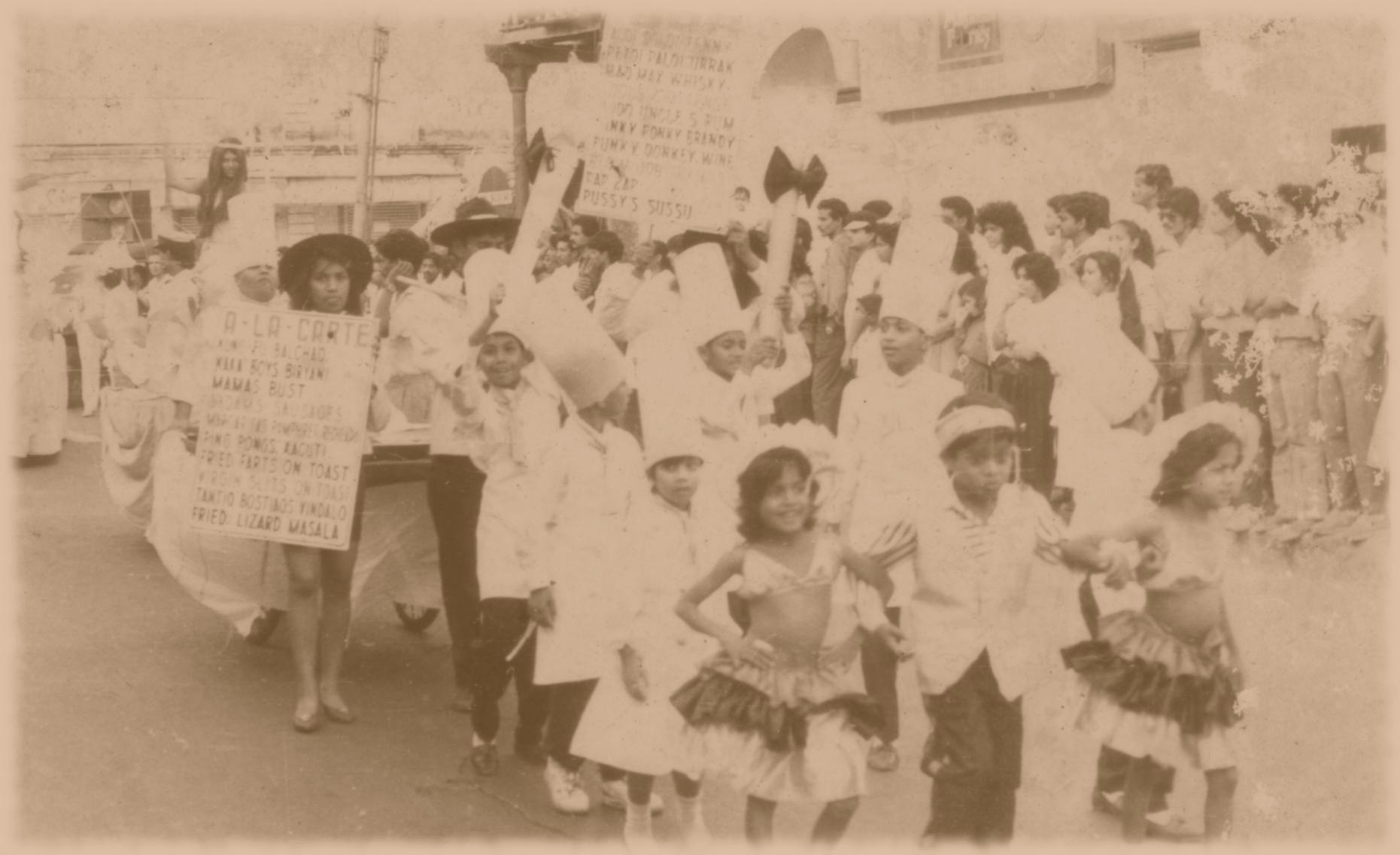
Problematising culture as a way to attack or defend culture also helps to make us aware how institutions that are today crying foul, have been a part of the gradual drift towards the right. Back in the 1980s, the hierarchy of the Catholic Church in Goa came out strongly against the celebration of Carnaval insisting that it was not a Catholic celebration. Indeed, it did so more recently, once again when Parrikar waded into debates on what is or is not appropriate local culture. In doing so the hierarchy sought to delegitimise Carnaval celebrations. In doing so they were committing a number of errors that haunt us today and will no doubt haunt us in the future. The hierarchy was effectively suggesting that only the religious lives of the Catholics in Goa was worthy of respect. The rest could be dismissed and done away with. They were also setting themselves up as the determiners of all cultural activities that persons who confess the Catholic faith engage in. This was, and continue to be a dangerous position. As much as the Catholic Church has a right to advise its members on the manner of their comportment, it cannot determine what is, or is not part, of the activity of Catholics in Goa. While the hierarchy of the Catholic Church in Goa may not be fond of carnival, it ought to have taken a broader perspective and indicated that while Carnaval was not a Catholic religious feast, and the hierarchy had reservations with regard to some of the ways in which it is celebrated, it would not deny that Carnaval is a significant celebration with historical roots in Goa, and especially among Catholics in Goa. We live in a complex world and the only way in which we can prevent institutions, both statal and otherwise, from becoming autocratic monsters is by paying close attention to the rights of individuals.

Despite making culture the basis on which he dismissed the prohibition of alcohol, Mesquita also needs to be congratulated for not making the social consumption of alcohol a feature of Catholics alone. Almost all reports indicate that his statement was “Goans drink at wedding and parties. How can it be banned?” Thus, it was not Catholics drink at social events, but Goans.  This makes sense given that it is not merely Catholicism that determines whether people drink alcohol socially or not, since people were fermenting and producing alcohol long before both Europeans and Christians came to this territory. The European, and possibly Christian, origins of the consumption of alcohol is just one strand in the history of alcohol consumption in the territory.

To return to the thrust of my argument, making culture the basis on which decisions are made will also push us further into the ire of the Hindutva tiger. Given that it is the non-brahmanical culture of Goa that they see as a problem, decisions to protect certain social activities on the basis of culture will work to only strengthen the resolve of these groups to attack the cultural manifestations of Catholics, and other non-brahmanical groups, in Goa. We need to turn the tables on the forces of the right (which includes not merely the forces of Hindutva) and assert that rights are the basis of public policy.

Mesquita's statement may have won us the battle therefore, but will it win us the war?

(A version of this post was first published in the O Heraldo on 5 Sept 2014)