Showing posts with label Empire. Show all posts

Wednesday, September 14, 2022

On the death of a Queen


Queen Elizabeth II (ERII) is dead, and it appears as if the entire world – or at least that portion on social media – has something to say about her, the Crown, and the British monarchy. My own relationship with ERII is, I would like to think, cool and distanced. When I started thinking seriously about my own social location as a Goan in India I realised that the history of British India, and consequently the Indian attachments to Britain, weren’t really as close to me as I had been taught. My history was more properly that of Portuguese India, and my relationship with the British, and British Indians, could also be routed through a Portuguese lens. I have found this way of looking at Britain, and all things British (including British India) hugely useful since it provided an alternate grounding, and a more dispassionate way of relating to the British, British-Indian, and Anglophone world around me. None of this is to contradict the fact that as a privileged Goan growing up in the Indian nation-state, and a British-Indian mother, I was raised up as an Anglophone, and consequently Anglophile. But in this, I realised after living in Portugal for more than a decade, I was not dissimilar to the privileged segments of Portuguese society, many of whom are substantially Anglophile.

It is this curious relationship that all of us, across the world, have with Britain, and British institutions, that has occasioned this outpouring of response to the death of ERII. One aspect of this relationship was very succinctly captured by Frank Cottrell-Boyce when writing for The Guardian:

“One of the reasons the Queen’s death feels so huge is that she was a living connection with that postwar consensus, that attempt to build a better nation and a rules-based world. A vision that is being demolished even as we plan her funeral. Ten years ago, we lived in a world of divided opinion. Now, we live in a world of divided reality.”

Consensus was the word that jumped out at me when I read this passage. ERII was in fact the epitome of a world that revolved around a consensus, at the heart of which, was a socio-cultural one, and perhaps this is what ERII, with her all-important dress-sense and etiquette, represented best – a way of being, and doing things that everyone agreed with.

This is not to say that the consensus was democratically reached, or that everyone who was a part of the consensus agreed with it wholeheartedly. But thanks to Britain’s couple of centuries in the sun – to put it politely – it was central to determining the way in which we all behaved, from the British-Indians who were a subject population of the British Crown, to the Portuguese, who, though not a subject population, nevertheless had a less than equal relationship with the Crown.

The consensus worked because there was something in it for all of us. Above all there was a discourse of fairness that one could appeal to. Even if this fairness was not necessarily realised in the operation of the British Empire, the discourse ensured that one could hold Britain accountable, then, and in the future. There was also, as I suggested earlier, a socio-cultural consensus eventually rooted in western European Christianity, that made us better people. Women were treated as social superiors, there was a way one behaved at the dining table, there was a way one dressed. All these were important, because it enabled us to create a uniformity, a level playing field, that allowed us to understand one another. After post-modernism and post-colonialism, as Cotterll-Boyce rightly points out, that world has disappeared. We don’t live in a world of divided opinion any more; we live in a world of divided reality. As contemporary Indian politics itself demonstrates, we can’t even agree on the reality of the world we live in since our points of departure are so radically different.

ERII’s death represents the disappearance of that world that we were all used to, and we must all be sorry for her death, because the fading away of the world she embodied makes our lives that much poorer and unstable.

As should be obvious from the tangential references above, I am well aware of the critique of the continuing violence of the British Empire. However, I would like to once again stress that the Empire also built into its operation a discourse that has allowed for it to be taken to task. One can think of the way in which this was ensured in the case of the Mau Mau rebellion, or the case of the Gurkhas. I fear the same cannot be said for the dissensus that represents the alternative to ERII’s world.

Take, for example, the horrific responses to ERII’s death. I offer only one, particularly troubling response, that of Uju Anya, a professor at the Carnegie-Mellon University, who reportedly tweeted: “I heard the chief monarch of a thieving raping genocidal empire is finally dying. May her pain be excruciating”. Just so that we don’t forget the context, this vitriol was directed at a ninety-four-year-old woman, who has been a figure-head at best, and for all we know done her best to moderate things she was capable of moderating.

Sadly, Anya’s response is not an aberration, but true of a good number of persons who identify as “woke”. This kind of self-righteous indignation, and the willingness to inflict harm on a representative of an order one is opposed to, is becoming increasingly common, whether by persons on the right, or on the left, or centre. If this horrific incapacity to distinguish between a person and an institution, and to wish ill to a person, particularly one who is not directly responsible for the actions attributed to her, is the world that woke activists wish, then this is not a world, or better still a consensus, I would like to be a part of.

The Catholic Church teaches in its Catechism that one may not engage in armed resistance to oppression by political authority, if one cannot ensure that the resistance will not provoke worse disorders. This teaching offers us a definite lesson in the current and similar cases: if your resistance to colonial, or other, oppression is to justify unequal violence against often-innocent actors, and inaugurate a worse system than that which preceded it, then you are a part of the problem, not a part of the solution. There is no doubt that ERII was a figurehead not only for the genteel consensus I speak about but an Empire that has unleashed much violence that continues to wreak havoc. However, our response to this violence cannot, and must not, be to unleash more violence.  Our response must be to unleash, what the Compendium of the Social Doctrine of the [Catholic] Church, calls “a civilisation of love”.

It bears reminding that none of us is innocent of violence, and that we are all figures trapped within our own contradictions. I believe that ERII attempted to do her best despite the contradictions she was born into. In many ways, her heir, King Charles III represents continued attempts to do good despite the contradictions he has been born into. Let us wish him well.

The Queen is dead. Long live the King.

(A version of this post was first published in the O Heraldo on 14 Sept 2022).

Monday, June 27, 2016

Diana and Actaeon: Brexit and the end of empires


‘Diana and Actaeon’ this was the allusion that struck me when I heard the news of Britain’s vote in the recently conducted EU referendum, popularly known as Brexit.

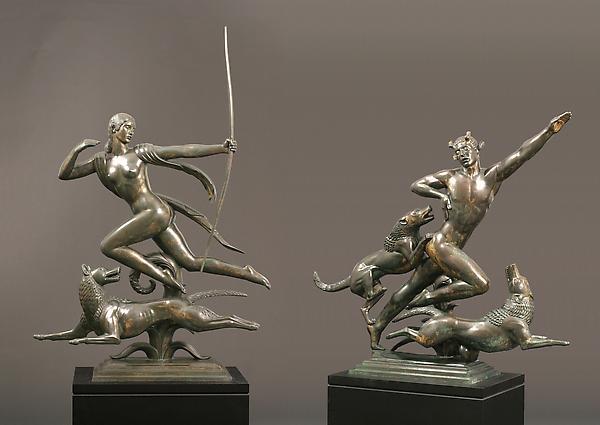
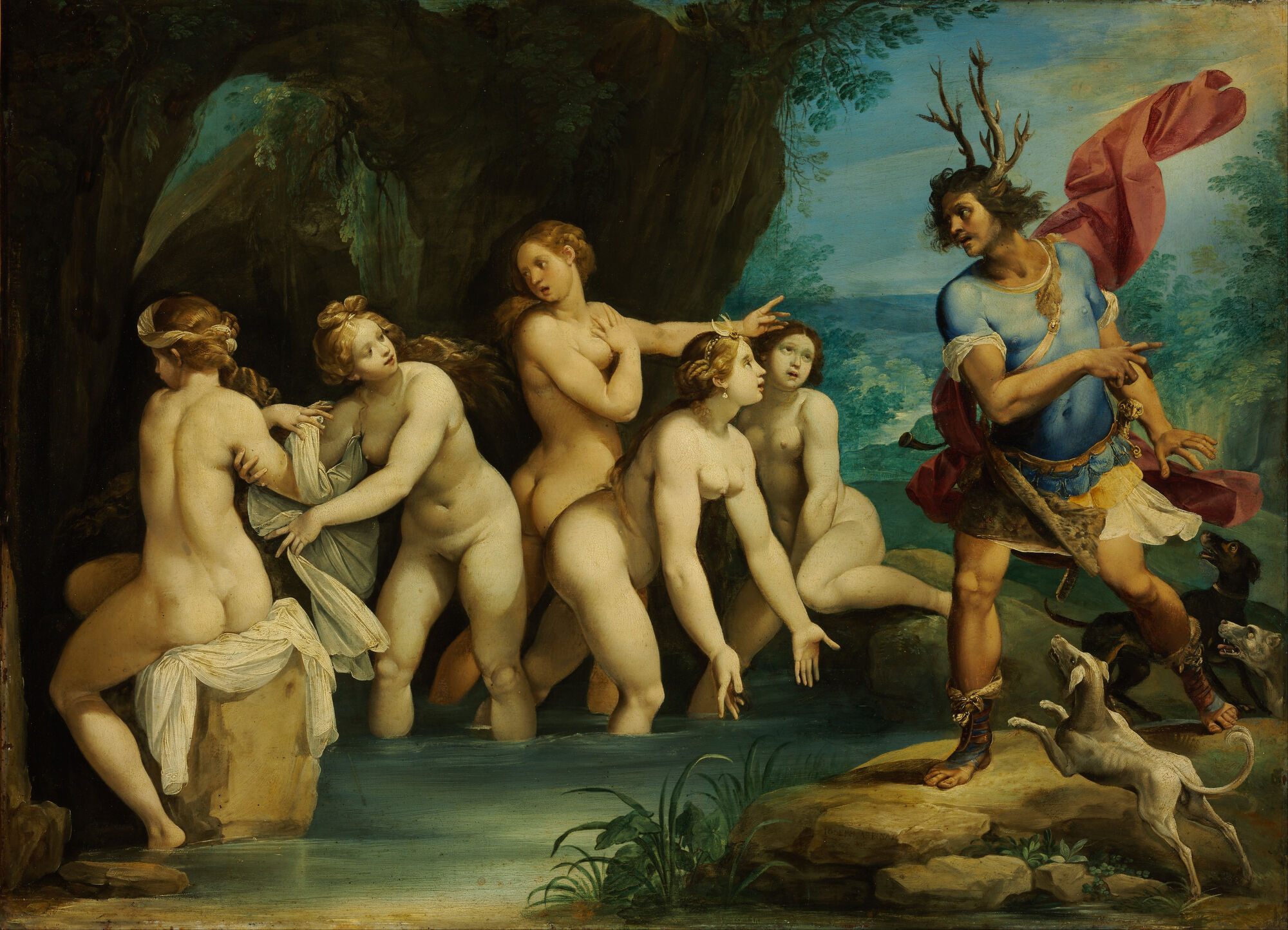
The myth of Diana and Actaeon can be found within the Roman poet Ovid’s epic narrative, Metamorphoses. The tale recounts the fate of a young hunter named Actaeon and his encounter with the chaste Diana, goddess of the hunt. In the myth, Actaeon unwittingly stumbles upon Diana bathing nude in a spring with help from her escort of nymphs. The nymphs scream in surprise and attempt to cover Diana, who, in a fit of embarrassed fury, splashes water upon Actaeon. The hunter is transformed into a deer and, robbed of his ability to speak, promptly flees in fear. It is not long, however, before his own hounds track him down and, failing to recognize their master, tear him apart.

Diana and Actaeon by Paul Manship, 1925.

The myth can be interpreted in multiple ways. In one interpretation, Actaeon could represent David Cameron. Before the 2015 elections in Britain, Mr. Cameron had pledged to hold the referendum on EU membership if his party, the Tories, won a majority. The pledge to hold a referendum was a way of mollifying members of his own party and others, who were unhappy about the UK’s membership in the EU. In making this promise, Cameron disturbed a delicate scene very much like that of the goddess bathing. Given the fact that despite authorizing the referendum Cameron had in fact been campaigning to stay within the EU makes him a figure very much like the unwitting Actaeon, who really had no intention of intruding on Diana’s bath. Regardless of his intentions, however, Cameron has faced an Actaeon-like fate, having now promised to step down from the post of Prime Minister. Only time will tell if this exit marks the end of his political career, but for now, the allusion holds.

Another way to read the myth in the current context is to see Actaeon as the English constituent of Great Britain, who will now be set upon by the hounds that the English have held on an imperial leash for so long. Like so many political entities, Britain is a cobbling together of various entities. Britain was constituted by the imperial ambitions of the English, who first added Wales to their imperium and subsequently Scotland and Ireland. There is a long history of resistance to English imperial rule that has resulted in the assertion of regional identities, as in the case of the Welsh, and wars of independence, as in the case of the Irish. More recently, the Scots made an unsuccessful bid for freedom through a referendum to leave the UK. However, in the wake of Brexit, which shows that the Scots overwhelmingly chose to stay in the European Union, and it was the English who chose to leave it, there is every likelihood that the Scots will demand another referendum. This time round, the English may not be so lucky and find their imperial union being torn apart. England may regret that it trespassed upon a site that it should have left alone in the first place.

Diana and Actaeon by
Giuseppe Cesari, 1603-1606.
A third contemporary reading of the myth could allow Britain to be seen as Diana, who has cursed the Actaeon EU to now potentially be torn apart by the Eurosceptic hounds. No sooner was the Brexit result announced than a host of largely right-wing hyper-nationalist leaders across Europe begin baying for their own version of the referendum. Marie Le Pen, the leader of the National Front in France, made one such demand, as did the Islamophobic, anti-immigration Geert Wilders from the Netherlands. Similar noises also emerged from the Italian Lega Nord or Northern league. In the case of this group, the League would also like to break up the current state of Italy, and there are many in this outfit who would ideally like to get rid of the south of the country, a section that they feel is unduly burdening the more prosperous north of Italy.

While the leadership of the EU suggests that all is under control, one wonders whether this is mere bravado and if Britain has unleashed not merely Actaeon’s hounds but also the dogs of war. Europe was very similarly tied up in a set of international treaties and riven with ethnic tensions on the eve of the Second World War. What was also at stake at the time of this war, and the first, was the future of various empires. In the First World War, it was the future of the Ottoman Empire and the Austro-Hungarian Empire. In the second, it was that of the Japanese and German Empires. There are some who argue that the EU is in fact a non-coercive imperial formation. What is currently at stake, therefore, is the future of another empire. Given the larger state of the world, which exists in a state of armed conflict and the intervention of third-party states, and the fact that a number of treaties that have kept Europe stable during the past fifty years are now coming undone, one wonders if this is what the beginning of the end of the world order as we know it is going to look like.

(A version of this post was first published in The Goan Everyday on 26 June 2016)

Wednesday, May 25, 2011

Feet of Clay: Amitav Ghosh and the Imperial Indian Gaze

A couple of days ago, an interview, of the part-time Goa resident author Amitav Ghosh, with Lila Azam Zanganeh for the magazine Guernica created something of a storm of outrage. Ghosh had suggested in the course of conversation, that ‘one of the wonderfully liberating things about India; [is that] it lets you be exactly who you want to be.’ One can see why this statement would generate a furor; a Dalit activist friend responded to this particular line by saying ‘say this to a Dalit, dear writer’. How can one forget that in various parts of India, on a daily basis, people (and not just Dalits) are not allowed to be who they want to be. They are not allowed to marry who they want, or wear the clothes that they would like, nor live where they want. In very many of these cases, when these people dare to be who they want to be, they are killed.

This sentiment of ‘freedom’ could easily be pulled out as the leitmotif of Ghosh’s responses to Zanganeh. A little later in the conversation, Ghosh suggests that the freedom of constant movement between continents and nation-states is ‘true of almost everyone I know.’ The problem with this assertion, even more laughable than the first, is that the freedom of movement between countries is not as easy as Ghosh presents it to be. Given that international travel is premised on procuring a visa, it is an extremely exclusive process, and even for those who manage to travel, a humiliating process. It is only a select group of people that are allowed the constant back and forth travel that Ghosh asserts for the populations of the world, even as he draws this ‘truth’ from the context of his own circle of the privileged global elite.

I was first introduced to the gossamer prose of Amitav Ghosh via his book In an Antique Land. Having subsequently gifted copies of the book to friends and family, I tracked down his other works, devoured post-colonial theoretical reflections based on his work, and recommended some of these works for courses I have taught. Ghosh’s narrative voice was a critical voice emerging from India. It transcended the national boundaries that seek to confine the Indian’s imagination, and re-introduced us to the multiple strands, ranging from Egypt, Bangladesh, Burma and farther afield to America, Britain and ‘Indo-China’, that comprise our intimate histories. In the Guernica however, Ghosh seemed to demonstrate a more fettered imagination, one chained to the contours of the Indian nationalist project.

Ghosh spoke frequently of a ‘we’ in the course of the interview. This ‘we’ were multiple groups he was speaking for; for those of the colonized, the people from the south, the people now emerging from ‘the long night of colonialism’. As should already be painfully obvious however, while encompassing this multitude, Ghosh is particularly representing, the ambitious, and grasping elites of these formerly colonized spaces, and definitely those from India. Their project, as is Ghosh’s, is ‘to claim the world from a point of view other than that which has been handed down from the West.’ He is, Ghosh informs us, 'looking at the world as an Indian.' His narratives then, as beautiful and complex as they may be, are the narratives of a group that now presumes to speak for the multitude. The stories comprise multiple strands, not only because this is the story of the subcontinent, but because they are part of the project where the Indian will speak for the (formerly colonised) world.

Ghosh suggested his perspective was informed by the fact of being ‘from a … large, increasingly self-confident country.’ Self-confidence however would involve drawing attention to the serious problems that continue to rack India, even as one burnishes the image of India Shining. Ghosh’s singular failure to do so, places him in the same position as the rest of the, in reality, deeply insecure Indian elite.

Deeply insecure of their place in the world, it is a group that revels in its own freedoms and its accomplishments. Thanks to its insecurity, this group is particularly deprecating of others, and almost completely self-involved. Consider Ghosh’s reflection that ‘What we see today in that nation-state is fading to be replaced by these enormous diasporic civilizations. India is one, China is one, England is one, France is one. Today it’s in fact those countries which are more and more tied to the model of the nation-state that seem more and more parochial—like America.’

America is the bad guy primarily because it is the imperial center that India aspires to be, and because the Indian desperately desires American recognition of its place in the world. Indeed, run through the latter part of the interview and one gets the distinct impression that Ghosh is in fact obsessed by a desire for American recognition. Representative of this desire for recognition is the embarrassingly insecure assertion that ‘People always think of Asians as being just involved in addressing science. Actually what you see is that this whole Asian diaspora is very profoundly involved in the production of ideas, in literary production, cultural criticism.’

Britain (and indeed France) may prove to be less of a problem, since these are now largely powers that while significant, maintain their power through association with America. While America may have its problems, and it does, it is hardly more parochial than India and its diasporic populations. Can we forget that a good amount of the funding for the hate campaigns in India come from India’s diasporic communities abroad? India may provide its diaspora with the benefits of Overseas Citizenship and forge this mirage of becoming a ‘diasporic civilisation’. However, let us also not forget that it is partly a diasporic imagination that ensures that the presence of the Indian nation-state is viscerally and violently present in Kashmir. And it is precisely India’s imperial ambitions that ensure similar situations in the North East and in the forests of Central India. For those outside of the charmed circle of international cocktail elites, the nation-state is not going anywhere, and the diaspora is a part of the problem, not the solution.

It is also the Indian elite's imperial aspirations that allow them to use the word Indian when they should in fact, be using the word South Asian. What the continued use of this imperial term for the subcontinent represents is the Indian elite's continued attempts to grasp the umbrella of paramountcy that the British Raj refused to devolve to 'India that is Bharat'. Ghosh is not innocent of this attempt, he has used the word Indian when others have markedly used the word South Asian.

So insecure is this Indian elite, that they need to assert that the origins of global culture in India. Ghosh mercifully restricts his claims for India to being the original font to Aesop’s fables, and the Arabian Nights. The more extreme are known to go to even more ridiculous lengths to establish primacy in intellectual production. How different really is this from the old tired claims of the European colonizers that sought to civilize the coloured person? If one is indeed interested in speaking for the colonized world, would it not have made sense to assert a commonality and shared production of a global culture, rather than asserting this claim of primacy in cultural production?

The point of these reflections is not to discredit Ghosh’s work. His work is important and beautiful. It can be read for meaning beyond the opinions that Ghosh demonstrated in his interview with Guernica. Furthermore, Ghosh is careful to abjure the more problematic tendencies that colonize the minds of the Indian elite. His rejection of the nasty prejudices about Muslims that populate the work of Naipaul, would be one example. Nevertheless, his writings do contain an ambiguous position on the figure of the Muslim. However, the interview demonstrates a couple of critical factors. First, that the writing of these new Indian voices is not innocent. As liberating as they may be, they are nevertheless the softer, liberal voices of an Imperium waiting in the wings. This is not just an Imperium of the Indian, but also of those dominant powers within the former colonized world. We have everything to fear from the elites of these proto-Imperia. Secondly, the interview demonstrates a point made in an earlier edition of this column, that the assumedly secular elites of this country, present their own challenges to the successful achievement of a secular polity. Their secularism, is not necessarily a commitment to a space where difference can thrive. This secularism is one more marker in the long term game being played for dominance both within and outside of the boundaries of the Indian nation-state.

(A version of this post was first published in the Gomantak Times 25 May 2011)