 While a number
of litterateurs across India were making a symbolic protest against the rising
intolerance in India under the Modi regime by returning their awards from the
Sahitya Akademi, a bunch of Sahitya Akademi award winners from Goa, along with
two Padmashri awardees, made a very odd statement. On the fifteenth of October these persons
made a statement indicating that “[s]ome of us wanted to return the awards but
we have withheld the decision in view of Sahitya Akademi’s incoming Executive
Council meeting where the Akademi is hopefully expected to condemn the cultural
talibanism in the country.”
While a number
of litterateurs across India were making a symbolic protest against the rising
intolerance in India under the Modi regime by returning their awards from the
Sahitya Akademi, a bunch of Sahitya Akademi award winners from Goa, along with
two Padmashri awardees, made a very odd statement. On the fifteenth of October these persons
made a statement indicating that “[s]ome of us wanted to return the awards but
we have withheld the decision in view of Sahitya Akademi’s incoming Executive
Council meeting where the Akademi is hopefully expected to condemn the cultural
talibanism in the country.”
This seems like
a bizarre statement. First, rather than mention Hindutva violence, they refer
to the Taliban. Further, as I have discussed elsewhere some of these notables
themselves have been associated with Hindutva violence. But most bizarre of all is their announcement
of an intention to return the awards. After all, if you want to return your
award and make a point about the scuttling of various freedoms in contemporary
India and the threat of a breakdown of law and order, one should do so. To
indicate that we would like to, but will not, because we expect the Executive
Council to issue a statement seems bizarre at best. One gets the sense that
these awardees may have slipped down a rabbit hole to Wonderland.
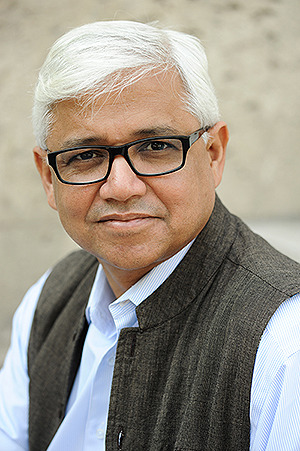 If one looks at
their company, however, one realises that these notables from Goa may have
acquiesced to the logic of Amitva Ghosh, who as a result of his part-time
residence in Goa seems to have integrated into some of the local literary
circuits. In interventions in the Indian
Express and Scroll.in,
Ghosh made it very clear that while he is appreciative of the actions of those
who returned their awards to the Sahitya Akademi, he himself will not follow
suit. Ghosh suggests that outrage “should be directed at the present leadership
of the Sahitya Akademi rather than the institution as such.” Ghosh articulates
that there was a time when the Sahitya Akademi was held in greater esteem, that
there have been presidents and office-bearers of the institution who would have
protested vociferously against the current political climate in the country,
and “that to return the award now would be more than an expression of outrage
at the Sahitya Akademi’s current leadership: it would amount to a repudiation
of the institution’s history.”
If one looks at
their company, however, one realises that these notables from Goa may have
acquiesced to the logic of Amitva Ghosh, who as a result of his part-time
residence in Goa seems to have integrated into some of the local literary
circuits. In interventions in the Indian
Express and Scroll.in,
Ghosh made it very clear that while he is appreciative of the actions of those
who returned their awards to the Sahitya Akademi, he himself will not follow
suit. Ghosh suggests that outrage “should be directed at the present leadership
of the Sahitya Akademi rather than the institution as such.” Ghosh articulates
that there was a time when the Sahitya Akademi was held in greater esteem, that
there have been presidents and office-bearers of the institution who would have
protested vociferously against the current political climate in the country,
and “that to return the award now would be more than an expression of outrage
at the Sahitya Akademi’s current leadership: it would amount to a repudiation
of the institution’s history.”
Does Ghosh have a point? Is the problem merely with the current
leadership of the Akademi, and by extension with Modi, or is it possible that
there are larger problems with the Sahitya Akademi itself and the project of
the Indian nation-state?
The Sahitya Akademi was instituted in 1954, when the Indian nation-state
was still young, and there was a need to assert cultural homogeneity in the
country, and a need to assert uniformity within regional literary cultures.
This agenda may look innocent, and indeed the institution may have awarded and
promoted literature and critical litterateurs, but this is but one side of the
story. Linguistic development in
colonial South Asia was critically tied to orientalist ideologies. This ensured
that it was dominant-caste forms of South Asian language that came to be recognized
as the forms deserving of becoming the standard. Consequently, language forms
of the marginalized caste groups, and their speakers, were actively disparaged
in the process of standardisation. To
this extent, the post-Mandal challenge regarding the meaning of merit, needs to
be levelled against the works that the Akademi awards.
 This modus operandi of the
Akademi is eminently visible in the case of the Konkani language. If one has a
look at the list of those who have been awarded
for production in the Konkani language one is confronted by a long list of almost exclusively Brahmin names.
Further, as many Konkani litterateurs will testify, despite the fact that the
Konkani language is written in five scripts, it is only the Nagari form of the
language that has merited awards, despite extensive or greater production in
the Roman script and the Kannada scripts. These choices have as much to do with
the privileging of upper-caste forms of language that is dominant in India, as
with the casteist politics that has dominated the sphere of the Konkani
language. Since at least 1987, when Konkani in the Nagari script alone was
recognized as the official language of Goa, the language, and its speakers, not just in Goa, but also in the
other states where it is spoken, have been held hostage by the assertions of the Saraswat caste and
allied individuals who seek to convert Konkani into a brahmanical language.
This has meant privileging the Antruzi
form spoken by Saraswats in Goa, linking it with Sanskrit, and Aryan heritage, and
also tying it to the Nagari script. This has meant that the peculiar history of
the language, where it was first produced and popularized through missionary
efforts since the sixteenth century, and subsequently given form through the
lyrics, poems, and plays of laboring caste Catholics have been ignored
entirely. In fact, until the mid-twentieth century, Konkani was seen largely asa language of laboring Catholics, and disparaged both by Hindu brahmins and
upper-caste Catholics in Goa. Despite these facts, the Konkani committee of the
Sahitya Akademi has been party to the attempt to destroy the language form in
the Roman script in Goa.These facts are not extraneous to the question I pose
to Ghosh’s argument, since it is with these persons that, either consciously,
or unconsciously, Ghosh has combined with in Goa.
This modus operandi of the
Akademi is eminently visible in the case of the Konkani language. If one has a
look at the list of those who have been awarded
for production in the Konkani language one is confronted by a long list of almost exclusively Brahmin names.
Further, as many Konkani litterateurs will testify, despite the fact that the
Konkani language is written in five scripts, it is only the Nagari form of the
language that has merited awards, despite extensive or greater production in
the Roman script and the Kannada scripts. These choices have as much to do with
the privileging of upper-caste forms of language that is dominant in India, as
with the casteist politics that has dominated the sphere of the Konkani
language. Since at least 1987, when Konkani in the Nagari script alone was
recognized as the official language of Goa, the language, and its speakers, not just in Goa, but also in the
other states where it is spoken, have been held hostage by the assertions of the Saraswat caste and
allied individuals who seek to convert Konkani into a brahmanical language.
This has meant privileging the Antruzi
form spoken by Saraswats in Goa, linking it with Sanskrit, and Aryan heritage, and
also tying it to the Nagari script. This has meant that the peculiar history of
the language, where it was first produced and popularized through missionary
efforts since the sixteenth century, and subsequently given form through the
lyrics, poems, and plays of laboring caste Catholics have been ignored
entirely. In fact, until the mid-twentieth century, Konkani was seen largely asa language of laboring Catholics, and disparaged both by Hindu brahmins and
upper-caste Catholics in Goa. Despite these facts, the Konkani committee of the
Sahitya Akademi has been party to the attempt to destroy the language form in
the Roman script in Goa.These facts are not extraneous to the question I pose
to Ghosh’s argument, since it is with these persons that, either consciously,
or unconsciously, Ghosh has combined with in Goa.
A view from the perspective of the many marginalized groups within the
country, whether caste, ethnicities, or religions, would suggest a less
tolerant India. For these groups, it appears that the problem may not be the
current political dispensation, as much as the ‘idea of India’ itself, a
country created to satisfy the desires of dominant castes across the
subcontinent, and united through varying degrees of Hindu nationalism.

(A version of this post was first published in Round Table India on 22 October 2015)


