This
letter is pursuant to an email that was dispatched to the Advisory Committee on Medium of Instruction on 12 October, 2013. Before we proceed, however, we would
like to laud the decision of the Committee to open the debate on education in
Goa to public consultation in a systematic manner. We believe that this bodes
well not only for the discussion on the Medium of Instruction (MoI), but as a
precedent for future dialogue on such matters that may occur in our society.
Having said this, however, we would also like to state that this exercise can seem
token if invitations for comment do not provide a longer
period for the public to submit their statements. This would enable members of
the public, and especially academicians and professionals, to place
appropriately researched arguments before the committee. We therefore strongly
recommend reasonable periods of time in future consultative initiatives.
Our
recommendations with regard to the MoI, as made in the email mentioned above,
were as follows: first, that the Advisory Committee
recognise the Constitutional right of those being educated to determine the
medium of instruction that best serves their circumstances; second, that both
English and Konkani in the Roman script be recognised as state-supported MoI;
and third, that rather than seeing the MoI as a resolution of the complex
social problems faced by our society, more sensitive pedagogies that recognise
the reality of language uses be adopted. We explain these in more detail below.
Mother Tongue: A Discredited Concept
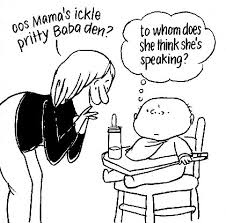 Presently, the entire MoI debate rests on
the uncritical acceptance of the substantially discredited idea of the ‘mother
tongue’. What is misrepresented by the adoption of this concept is the reality
that many societies, South Asian included, are marked by multilingualism where
people generally speak more than one language, the choice of which depends on
the context. The same is true in Goa. Thus, a person may speak Konkani at home,
Marathi at a political meeting or cultural programme, and English in the
office. And this is not all, for within a single language, there are multiple
forms, similarly context-specific and tied to the particular communicative
function. For example, a tiatrist may speak a variant of Konkani particular to
his social (i.e. caste and regional) location at home, but will speak Bardezi
among his peers, and perhaps attempt literary Konkani as promoted by the Nagri
Konkani protagonists when meeting with the same.
Presently, the entire MoI debate rests on
the uncritical acceptance of the substantially discredited idea of the ‘mother
tongue’. What is misrepresented by the adoption of this concept is the reality
that many societies, South Asian included, are marked by multilingualism where
people generally speak more than one language, the choice of which depends on
the context. The same is true in Goa. Thus, a person may speak Konkani at home,
Marathi at a political meeting or cultural programme, and English in the
office. And this is not all, for within a single language, there are multiple
forms, similarly context-specific and tied to the particular communicative
function. For example, a tiatrist may speak a variant of Konkani particular to
his social (i.e. caste and regional) location at home, but will speak Bardezi
among his peers, and perhaps attempt literary Konkani as promoted by the Nagri
Konkani protagonists when meeting with the same.
The
MoI scheme in Goa that attempts to instil one language (either Konkani or
Marathi) and one dialect (Antruzi in
Konkani, along with the Puneri adopted
by the Maharashtra government for Marathi), officially and through the
education system, is problematic. Because, in doing so, it ignores the
multilingualism that is an integral part of our society and homes. Imposing
literary and generally upper caste forms of the language on students at the
start of their curricular formation does more than undermine vernacular forms
of language; it causes intense emotional and socio-cultural dysfunction. The
process of learning when to use a particular language or language-form is a
critical part of the process of self-formation. It is for this reason that educationists
across the world have insisted on the utility of preliminary education being
imparted, not in a ‘mother tongue’ but in a ‘functionally dominant language’.
The latter is the language form that the learner and her or his immediate
milieu is most familiar with. Thereupon, to have a literary form of the
language that is deemed to be a ‘mother tongue’ thrust on the learner as the
standard form can be profoundly destructive of the sense of self of those
learners whose family form finds no resonance in this standard form. Clearly,
therefore, the problem is not merely about MoI, but also about inflexible pedagogies
and a misunderstanding of the reality of language uses and practices. Indeed,
the tragedy is that rather than focus on the critical issue of the pedagogies
that are used in the classroom, the debate in Goa has been diverted to the
highly specious issue of MoI. We recommend that, regardless of the MoI,
classroom practice be marked by multilingualism. Thus, the practices where
English medium schools penalize the usage of vernacular languages is as much a
problem as the imposition of an alien Konkani on students. Such practices
contribute to imperfect learning and, in the case of vernacular languages,
contribute to language loss.
 The People’s Linguistic Survey of India has recently found that India lost 200
languages in the last 50 years.
The most comprehensive survey to have been conducted in the last 80 years, it
suggests that there is a need to “[maintain] organic links between scholarship
and the social context.” The current modus, especially with regard to the
Konkani language, which imposes an alien dialect of the dominant castes on
initial learners, is bound to contribute to the alarming trend of diminishing
language diversity as cited by this survey. As pointed out earlier, this
complicates the voluntary adoption of Konkani. Indeed, a class and caste
sensitive reading of the controversy that is briefly discussed below reveals
that it is precisely the imposition of an alien form of Konkani on the
population (a population that would have normally opted for education in
Konkani) that is partly responsible for the demand for English as a state-supported
MoI.
The People’s Linguistic Survey of India has recently found that India lost 200
languages in the last 50 years.
The most comprehensive survey to have been conducted in the last 80 years, it
suggests that there is a need to “[maintain] organic links between scholarship
and the social context.” The current modus, especially with regard to the
Konkani language, which imposes an alien dialect of the dominant castes on
initial learners, is bound to contribute to the alarming trend of diminishing
language diversity as cited by this survey. As pointed out earlier, this
complicates the voluntary adoption of Konkani. Indeed, a class and caste
sensitive reading of the controversy that is briefly discussed below reveals
that it is precisely the imposition of an alien form of Konkani on the
population (a population that would have normally opted for education in
Konkani) that is partly responsible for the demand for English as a state-supported
MoI.
Rather than sticking to the rigid delineation
of the MoI as the only way to resolve the problem, one way out of this
conundrum would be providing for the use and instruction of diverse languages
and scripts, including Konkani in the Roman script. This option would allow for
the preservation and growth of cultural and linguistic traditions. In turn,
this supports the development of the Arts, which are often underrepresented in
the curriculum. Goa’s literary traditions are rich and diverse, and include the
Tiatr which has been instrumental in keeping Konkani alive and vibrant. Though
we propose that students at primary levels be given instruction in those
language-forms most familiar to them, we additionally recommend that the study
of Konkani literature as it is expressed in Goan literary traditions like the
Tiatr be introduced into the curriculum at the appropriate time. The Tiatr
differs significantly from other literary traditions in Goa by employing
dialects and accents that find common usage, so the study of such cultural
productions actually helps young learners see the connections between language
and the arts. Identifying linkages between culture and language through
education bridges society and academia. In this way, vernacular languages would
not necessarily be under threat from education in English.
The
Insidious Agenda
 While the MoI debate superficially appears
to be a secular one about the support for ‘mother tongues’ and Indian
languages, at the heart of its rhetoric lies the attempt to discipline or even
suppress the aspirations of working class and lower caste Catholics and Hindus,
i.e. the Goan bahujan samaj. Thus, the attempt is being made by the so-called
Konkani protagonists to force Catholics towards an alien form of the Konkani
language, and by the leaders of the Hindu bahujan samaj to restrict lower caste
Hindus to education in Marathi alone. A very plausible suggestion has been made
that the votaries of the Marathi language as a state-supported MoI are
motivated by the fear that allowing for English will spell doom to the Marathi
language schools that they run. The fear of Konkani-Marathi has often been used
to fuel mutual distrust between the Catholic and Hindu bahujan samaj, and
prevent their unity on crucial other issues. Not only are such strategies
morally reprehensible, they are also violations of constitutionally guaranteed
minority rights.
While the MoI debate superficially appears
to be a secular one about the support for ‘mother tongues’ and Indian
languages, at the heart of its rhetoric lies the attempt to discipline or even
suppress the aspirations of working class and lower caste Catholics and Hindus,
i.e. the Goan bahujan samaj. Thus, the attempt is being made by the so-called
Konkani protagonists to force Catholics towards an alien form of the Konkani
language, and by the leaders of the Hindu bahujan samaj to restrict lower caste
Hindus to education in Marathi alone. A very plausible suggestion has been made
that the votaries of the Marathi language as a state-supported MoI are
motivated by the fear that allowing for English will spell doom to the Marathi
language schools that they run. The fear of Konkani-Marathi has often been used
to fuel mutual distrust between the Catholic and Hindu bahujan samaj, and
prevent their unity on crucial other issues. Not only are such strategies
morally reprehensible, they are also violations of constitutionally guaranteed
minority rights.
Furthermore,
the demand for English as a state-supported MoI should not be seen as one made merely
to suit ‘Catholic interests’. It would be grossly erroneous to see the
Catholics in Goa as a monolithic community. Indeed, the multiple opinions
vis-à-vis the issue of the MoI is demonstrative of the substantial class-caste
differences and interests that divide Catholics in the state.
What is also deeply disturbing is the manner
in which the Catholic-led demand for the inclusion of English as a
state-supported MoI has been branded by certain sections as anti-national, thus
prohibiting any attempt to look at the reason for the demand. There is also the
repeated argument that the inclusion of English will destroy both the Marathi
and Konkani languages in Goa. The situation may in fact be much more complex.
For example, education in English in the colonial period did not prevent Goans
from learning Konkani, nor did it prevent them from composing the prose,
poetry, lyrics and music for which the Konkani language is famed not only in
Goa, but around the world. Indeed, we would argue that it is precisely the
imposition of education in a variant of a language that is not part of their
repertoire that is causing the flight away from Konkani language schools in
particular. The future of Marathi is similarly secure given that it is
associated with a vibrant cultural tradition, and even forms part of the
substantial anti-brahmin movement in Goa. This latter movement is far from dead
and thus continues to spur the learning of the Marathi language. In any case,
regardless of the MoI, these languages will be introduced to students at higher
level classes under the three language formula of the education system in Goa.
 Many
people in Goa choose to be educated in English for practical purposes. It
allows them to avail of higher chances for employment, not merely in Goa, but
across the world. A good portion of the Goan population gains employment
through migration. Given that Goa benefits from the foreign exchange remitted
by those that work beyond India’s borders, and also that it is the
Constitutional obligation of the State to support citizens in their endeavours,
the government must support these attempts at ensuring future employability.
Many
people in Goa choose to be educated in English for practical purposes. It
allows them to avail of higher chances for employment, not merely in Goa, but
across the world. A good portion of the Goan population gains employment
through migration. Given that Goa benefits from the foreign exchange remitted
by those that work beyond India’s borders, and also that it is the
Constitutional obligation of the State to support citizens in their endeavours,
the government must support these attempts at ensuring future employability.
Looking at the issue from the level of
politics, any decision of the Government of Goa to restrict the grant of aid to
only schools that provide education in Marathi or Konkani in the Nagri script
would be violative of the fundamental rights of children and their parents.
Recommendations
In light of the discussions above, we
reiterate our recommendations as follows:
(1)
That the Advisory Committee
recognise the Constitutional right of those being educated to determine the
medium of instruction that best serves their circumstances;
(2)
That both English and Konkani in
the Roman script be recognised as state-supported MoI; and
(3) That rather than seeing the MoI as a resolution of the complex social problems faced by our society, more sensitive pedagogies that recognise the reality of language uses be adopted.
(Subsequent to delivery to the presentation of this open letter to the Advisory Committee, this open letter was published in the edition of Goa Today dated November 2013.
This letter was written in association with 9 others who are listed below)
About
the Signatories
Jason Keith Fernandes trained as a lawyer and
anthropologist, and is interested in social policy.
Albertina Almeida is a lawyer and human rights
activist.
Anjali Arondekar is Associate Professor of
Feminist Studies at the University of California, Santa Cruz.
Anibel Ferus-Comelo is a parent, educator and
policy analyst.
Sujata Noronha is an educator with a focus on
Early Literacy and Children's Literature.
Chrissie D’Costa is an English language teacher
and trainer.