Showing posts with label Sahitya Akademi. Show all posts

Friday, October 30, 2015

Writers, Awards and the Insecure Goan


On the fifteenth of this month a number of Goans awarded by the Central Government came out with a statement wherein they indicated their upset at the spurt in violent attacks in the country. Subsequently, some of the individual members of this group, and a few other awardees made independent statements indicating their upset at the intolerance that was being manifested in the country. All of these Goans awarded by the Sahitya Akademi made statements indicating that they while they would have liked to return their awards, they would in fact not do so just yet. Rather, they would wait to see what the executive committee of the Sahitya Akademi had to say.
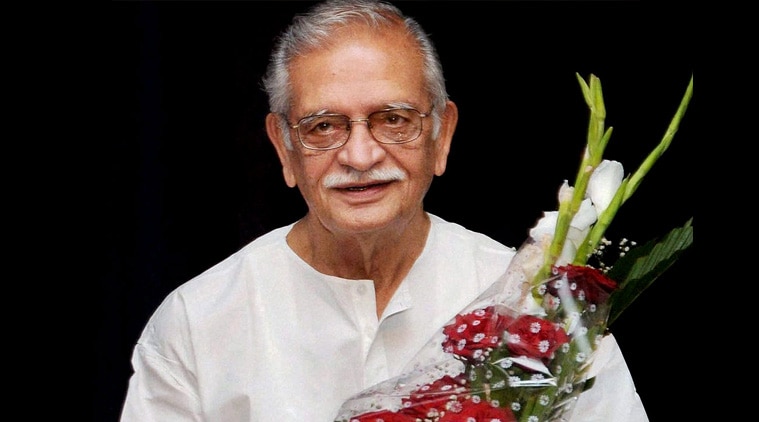
There is something quite odd about these Goans’ statements. To not actually return an award, but merely threaten to do so is frankly quite bizarre. After all, if one wants to return the award, one should do so. If one is not going to return the award as yet, one should keep quiet about it, until one actually does so. Contrary to the opinion of the noted lyricist Gulzar, returning an award is not the only option that litterateurs have to protest. As wielders of the pen, they can essay articles, issue press statements, script plays of protest, before they actually get down to returning the symbolic honour that has been bestowed on them. To threaten to return their awards, therefore, seems not only presumptuous, but in fact craven.

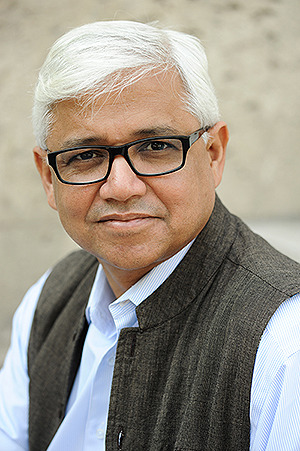
Rather than coming across as an act of moral uprightness, the statements of these Nagari Konkani writers comes across as cowardly. It is as if the Sahitya Akademi award meant too much to them, such that they could not bear to return it. Some would argue that this is not the case; that these writers were influenced by the opinion of Amitav Ghosh who argued that one should not disrespect the institution by returning the award, but take issue with the current leadership of the Akademi. Hence, the route preferred by our Goans, of waiting till the Executive Committee of the Akademi made a statement condemning the murder especially of Prof. Kalbargi.

This is a plausible explanation. However, if one observes the nature of the relationship between the Nagari Konkani writers and the Sahitya Akademi as a representative of the Indian nation, one realises that there was a reason why these writers would have been susceptible to the Ghosh’s advice in the first place. To explain this relationship, one must make reference to a statement made by Pundalik Naik at the Konkani Rastramanyathay Dis 2008 (Konkani National Recognition Day) organised by the Goa Konkani Akademi (GKA) on 20 August, 2008. At this event Naik, who was then President of the GKA indicated that it was only in 1992, when Konkani was included in the Eighth schedule of the Indian Constitution and recognised as a national language, and when subsequently Konkani in the Nagari script found space in the Indian rupee note, that he felt like he had become a full citizen of the Republic.

One could dismiss this statement as mere rhetoric, but looking at Naik at that moment, I was convinced that it was more than rhetoric. Naik was making an honest representation of his sensations at the time. It struck me then that the fact that Naik, possibly representative of many Nagari writers, felt like a full citizen of India only in 1992, when in fact Goa had been integrated into India way back in 1961 was indicative of a profound sense of insecurity about one’s identity of belonging to the Indian nation. Having been thus alerted, I realised that the history of the interventions of this Nagari writers can be read as evidence of their insecurity as to whether they belong or not. This insecurity can explain the vehemence with which many of them have launched themselves against both Konkani in the Roman script, as well as the demands that English be recognised as a state-supported medium of instruction. Given that until 1987 it was Konkani in the Roman script that defined Konkani in Goa, they were keen that a script that is perceived as foreign by some benighted Indians not be the mill-stone that prevents them for participating in Indian nationalism.

This kind of insecurity is evidenced not only by the Nagari writers, but a variety of others as well. Take the full scale destruction of Goan temples that have taken place since Goa’s integration into India. Temples in the peculiar Goan style have made way for structures of dubious aesthetic merit that are seen as more in keeping with styles that are seen as properly Indian.

A similar anxiety is evidenced among (Indian) nationalistically inclined Catholics as well. They go out of their way to provide Sanskritic names for their children, eschew English, or Portuguese, make a fetish about educating them in Konkani, ask their wives to wear saris.

Given that the awardees from Goa were among the only group in the country to threaten to return their awards, one can suggest that there is some unique about the Goan condition that allowed for this situation. I would argue that these writers were loath to return these awards because they are insecure about their Indian identity, and see these awards are assurances that the Indian nation recognises them as one of their own. If this is true, then the situation is highly unfortunate and merely a statement of the impossibility of the Goan ever being fully Indian.

(A version of this post was first published in the O Heraldo on 30 Oct 2015)


Friday, October 23, 2015

The Hypocrisy of Goa’s Protesting Awardees


In the context of a number of Sahitya Akademi awardees across India returning their respective awards in protest against the growing intolerance in India, in Goa around fourteen Sahitya Akademi awardees together with Padmashri awardees Maria Aurora Couto and Amitav Ghosh came together and issued a joint statement on 15 October, 2015. One would be struck by the hypocrisy contained in their press note released were it not for the fact that their politics of intolerance is so blatantly displayed all over the same note.


In their statement these local notables condemn “the rising trend of intolerance in the country which threatens freedom of expression… [and] the age-old liberal and all-encompassing philosophical traditions of this country.” One would take this concern seriously were it not for the fact many of these notables have been complicit not only in acts of intolerance themselves, but also physical violence.

For some years now there have been demands from many quarters that Konkani literature written in the Roman script also be given governmental recognition. But Sahitya Akademi awardees like Pundalik Naik and N. Shivdas, who have presided over the Goa Konkani Academy, have not felt it necessary to take up this cause and ensure that a Konkani tradition with a longer history than that in the Nagari script one is recognised. On the contrary, all of these protesting Sahitya Akademi awardees and Padmashri Couto have watched silently while Roman-script Konkani has been officially ignored and excluded from all kind of state recognition, including awards and grants.

In addition, these persons have maintained a studious silence while their associates, such as Uday Bhembre and Nagesh Karmali, have engaged in the most vicious hate speech against the Catholic community in the course of the Medium of Instruction controversy (that has raged from 2011), when Goan parents demanded the right to determine the manner in which their children are educated. Where was their concern for the alleged liberal traditions, and traditional bonhomie, of Goa then?

To make matters worse, these same notables watched silently when in 2005 Naguesh Karmali, a member of this very group of protestors, led a violent mob in destroying public and private property on the grounds that such property was encouraging Portuguese (read as Catholic) culture in Goa. Given that Goa has had a long and historical relationship with Portugal, doesn’t the violent smashing of manifestations of this relationship amount to an act of the very same rabid communalism that these worthies profess to protest against?

In light of these inconsistencies, and the equally amusing announcement that they will hold on to their awards until the meeting of the executive committee of the Sahitya Akademi, it appears that these awardees seem more interested on jumping onto the bandwagon of political trendiness, than for any desire to stand against the growing intolerance in the country, and indeed, Goa itself.

We would like to stress that while it is true that the government of Mr. Modi has definitely presided over a rise in intolerance in the country, the roots of this intolerance lie deeper in the country’s history. As we have already pointed out, a number, if not all, of these Goan awardees are complicit in this intolerance. Their complicity is further evident in the manner in which they phrase their protest within the language of Hindutva. Why, for example, are the recent acts compared to ‘talibanism’, instead of calling them Hindutva, or Hindu nationalism? Talibanism is a phenomenon situated outside the country, when Hindutva is the problem actually at hand, given that Kalbargi, Pansare and Dabholkar lost their lives as a result of their opposition to this ideology. Indeed, Hindu nationalism has been a problem since before Indian independence. In referencing the Taliban, these awardees continue the refusal to recognize Hindu nationalism as the single greatest cause of concern in this country since 1947.

In conclusion, we would be more convinced of the genuine concerns of these state awardees from Goa if we heard them also protest the exclusion of Konkani in the Roman script from legislative recognition, also the violent condemnation of the Goans who are simply asking for English as a state-supported medium of instruction for their children, and also the lack of implementation of constitutional guarantees for education and jobs to historically discriminated-against Goan communities. Such protests would go further in establishing norms for the respect of fundamental rights, and the establishment of law and order in our state and country.

This statement was first published in the DNA web edition of 23 Oct 2015 and was penned along with  Amita Kanekar, Dale Luis Menezes, Kaustubh Naik, and Vishvesh Kandolkar.)

What Amitav Ghosh can teach us


While a number of litterateurs across India were making a symbolic protest against the rising intolerance in India under the Modi regime by returning their awards from the Sahitya Akademi, a bunch of Sahitya Akademi award winners from Goa, along with two Padmashri awardees, made a very odd statement.  On the fifteenth of October these persons made a statement indicating that “[s]ome of us wanted to return the awards but we have withheld the decision in view of Sahitya Akademi’s incoming Executive Council meeting where the Akademi is hopefully expected to condemn the cultural talibanism in the country.”

This seems like a bizarre statement. First, rather than mention Hindutva violence, they refer to the Taliban. Further, as I have discussed elsewhere some of these notables themselves have been associated with Hindutva violence.  But most bizarre of all is their announcement of an intention to return the awards. After all, if you want to return your award and make a point about the scuttling of various freedoms in contemporary India and the threat of a breakdown of law and order, one should do so. To indicate that we would like to, but will not, because we expect the Executive Council to issue a statement seems bizarre at best. One gets the sense that these awardees may have slipped down a rabbit hole to Wonderland.

If one looks at their company, however, one realises that these notables from Goa may have acquiesced to the logic of Amitva Ghosh, who as a result of his part-time residence in Goa seems to have integrated into some of the local literary circuits. In interventions in the Indian Express and Scroll.in, Ghosh made it very clear that while he is appreciative of the actions of those who returned their awards to the Sahitya Akademi, he himself will not follow suit. Ghosh suggests that outrage “should be directed at the present leadership of the Sahitya Akademi rather than the institution as such.” Ghosh articulates that there was a time when the Sahitya Akademi was held in greater esteem, that there have been presidents and office-bearers of the institution who would have protested vociferously against the current political climate in the country, and “that to return the award now would be more than an expression of outrage at the Sahitya Akademi’s current leadership: it would amount to a repudiation of the institution’s history.”

Does Ghosh have a point? Is the problem merely with the current leadership of the Akademi, and by extension with Modi, or is it possible that there are larger problems with the Sahitya Akademi itself and the project of the Indian nation-state?

The Sahitya Akademi was instituted in 1954, when the Indian nation-state was still young, and there was a need to assert cultural homogeneity in the country, and a need to assert uniformity within regional literary cultures. This agenda may look innocent, and indeed the institution may have awarded and promoted literature and critical litterateurs, but this is but one side of the story.  Linguistic development in colonial South Asia was critically tied to orientalist ideologies. This ensured that it was dominant-caste forms of South Asian language that came to be recognized as the forms deserving of becoming the standard. Consequently, language forms of the marginalized caste groups, and their speakers, were actively disparaged in the process of standardisation.  To this extent, the post-Mandal challenge regarding the meaning of merit, needs to be levelled against the works that the Akademi awards.

This modus operandi of the Akademi is eminently visible in the case of the Konkani language. If one has a look at the list of those who have been awarded for production in the Konkani language one is confronted by a long list of almost exclusively Brahmin names. Further, as many Konkani litterateurs will testify, despite the fact that the Konkani language is written in five scripts, it is only the Nagari form of the language that has merited awards, despite extensive or greater production in the Roman script and the Kannada scripts. These choices have as much to do with the privileging of upper-caste forms of language that is dominant in India, as with the casteist politics that has dominated the sphere of the Konkani language. Since at least 1987, when Konkani in the Nagari script alone was recognized as the official language of Goa, the language, and its speakers, not just in Goa, but also in the other states where it is spoken, have been held hostage by the assertions of the Saraswat caste and allied individuals who seek to convert Konkani into a brahmanical language. This has meant privileging the Antruzi form spoken by Saraswats in Goa, linking it with Sanskrit, and Aryan heritage, and also tying it to the Nagari script. This has meant that the peculiar history of the language, where it was first produced and popularized through missionary efforts since the sixteenth century, and subsequently given form through the lyrics, poems, and plays of laboring caste Catholics have been ignored entirely. In fact, until the mid-twentieth century, Konkani was seen largely asa language of laboring Catholics, and disparaged both by Hindu brahmins and upper-caste Catholics in Goa. Despite these facts, the Konkani committee of the Sahitya Akademi has been party to the attempt to destroy the language form in the Roman script in Goa.These facts are not extraneous to the question I pose to Ghosh’s argument, since it is with these persons that, either consciously, or unconsciously, Ghosh has combined with in Goa.

The point is that these politics are not an aberration from the Indian norm. Ghosh may think otherwise, and indeed, many of those returning their awards, like Ashok Vajpeyi, also seem to think that India stands for a liberal tradition of tolerance and acceptance. If anything, however, this image of India is a myth created in a large part by upper castes groups, and especially Hindu upper-caste groups who dominated Nehruvian India.

A view from the perspective of the many marginalized groups within the country, whether caste, ethnicities, or religions, would suggest a less tolerant India. For these groups, it appears that the problem may not be the current political dispensation, as much as the ‘idea of India’ itself, a country created to satisfy the desires of dominant castes across the subcontinent, and united through varying degrees of Hindu nationalism.

When Ghosh suggests, therefore, that it is merely the current dispensation of the Sahitya Akademi that is the problem he is merely speaking from the position of the Indian nationalist, refusing to see, and in the process preventing an exposure of, the deeper rot. Merely blaming the Modi government is simply not going to resolve the tensions that we are witness to today. These tensions have been building up since the start of Indian independence. In other words, the problems lies with the project of the Indian nation-state itself. This is, of course, not surprising, given that, as I have pointed out in an earlier observation on Ghosh's statements, that Ghosh speaks, and indeed writes, from a position of the imperial Indian. An India that would like to speak for the rest of the global south, even as more fundamental issues, like that of internal equity, are left unattended. Take, for example, his interview with the magazine Guernica, where he suggested "one of the wonderfully liberating things about India; it lets you be exactly who you want to be." This would be more than a bad joke for the many marginalized groups in India for whom their very non-Hindu and/ or non-upper caste identity is the reason for quotidian violence.

(A version of this post was first published in Round Table India on 22 October 2015)