Showing posts with label Fundação Oriente. Show all posts

Friday, May 13, 2016

Lux in tenebris: Paulo Varela Gomes


Paulo Varela Gomes succumbed to cancer on Saturday, the 30th of April 2016. He was familiar to many Goans both because he headed the Delegation of the Fundação Oriente in Goa for two terms, 1996-1998 and 2007-2009, and for his book on Goan churches.

It was in the first capacity that I met with Gomes. Prior to this meeting I had been warned against him. He was racist and offensive, I had been told. Also that he was just another one of these supercilious Portuguese, mocking Goa and Goans from their metropolitan position. I have no idea what pushed me to meet with the man despite these warnings, but I did, and I have not once regretted that decision.

Gomes was in fact - to be fair to the person who warned me against him - pessimistic, foul mouthed, dismissive, and from time to time a tad racist. But there was a logic to his madness. The prickly exterior was armor, but breach that spiky defence and one realized that Gomes’ barbs were the provocations of a profoundly sensitive and giving man with a wicked sense of humour. A man who relentlessly asked questions, and never accepted the given until it bore up to the critique he subjected it to. When caught, he would laughingly confess to his prejudices, and it was this intellectual honesty and the ability to confront oneself that has left a lasting impact on me.

As our association matured Gomes grew to become an intellectual father. Lucky enough to live in the same neighbourhood as he did in Goa, I found myself able to go over to his home, engage in conversations that went on for hours, and borrow books from his library. Gomes’ library was an intellectual wonderland because he was a widely read man. Despite his learning and the difference in our ages, ours was not an unequal relationship. Gomes suffered my irreverence, and indeed encouraged it with his own. It was thanks to these conversations that I was able to sharpen my perspectives, not just on Goa, but also on Portugal, a country that has come to be my second home. Gomes was among the first to point me towards developing a deeper understanding of the Bijapuri Sultanate and make sense of Goan history in that context. As luck will have it, the idea of an Islamicate Goa has now gained more appreciation, and for this alone, Gomes has left a lasting legacy on the way Goa can and should be studied. Gomes was also the one who pointed to the complex history of the Padroado and the manner in which by the time it was wound up it was Goan priests who were the stoutest defenders of this right of the Portuguese state. It was also Gomes who problematised, to my delight, the term Indo-Portuguese. Asking several piercing questions of this category that is so taken for granted he revealed so many problems with the term, not least being the fact that it can be crafted only in the context of the peculiar racist politics of the British Empire.

Perhaps the greatest testament to Gomes’s wide reading, his ability to go against the grain, ask unorthodox questions, and come up with a new, more meaningful vision, is what was possibly his last academic publication; Whitewash, Red Stone: A History of Church Architecture in Goa (2011). In this book Gomes broke with the hitherto established ways of looking at ecclesiastical architecture in Goa. His argument was bold, and there can never really be any going back to earlier ways of looking at architecture in Goa. His study demonstrated how the position that Goan elites chose in the conflict between of Padroado and Propoganda Fide had a distinct influence on the architecture of our churches. It is the conflict between these that led to the emergence of specifically Goan architecture. Gomes’s argument was that churches in Goa were not Portuguese buildings, nor were they mere copies of European buildings. They were in fact entirely Goan. These buildings participated in a European vocabulary of building construction, but the way these various elements and plans were assembled was entirely Goan. Churches in Goa were Goan buildings, constructions of a native elite who were making a statement about the uniqueness of their culture and their place in the world. It was for this reason that the Goan builders of these churches continued to hold on to a Baroque architectural style even in nineteenth century when the days of Baroque were long over and other styles were appearing in British India. Whitewash, Red Stone is a critical work that would allow Goan ecclesiastical architecture to be appreciated more profoundly and deserves a wider audience than the one it currently enjoys.

In making this argument, Gomes went beyond, and challenged, two orthodoxies. The first was the one that seeks to delegitimize the uniqueness of Goan Catholicism, and the second that sees Goans merely as blind copy-cats of the Portuguese. In a nuanced argument, Gomes acknowledged that Goans were South Asian alright, but pointed out that they were South Asians who participated and innovated within European frames and hence they were also European. It takes not only a profound understanding of the field to make such an argument, it also requires that one have a profound respect for the people one is studying. As an architectural historian, and as one with deep friendships with Goans, Gomes had both in abundance. In his passing, therefore, there are many in Goa who will feel as devastated as they did at the death of the late Pedro Adão, Portuguese Consul in Goa between 2005 and 2006. There are few like them, persons who are willing to step out of their comfort zones, make themselves vulnerable, and engage meaningfully with the local. For this reason their memories will indubitably be long cherished.

When I moved to Portugal I imagined that Gomes and I would be able to pick up where he had left off, the same rambling, but always stimulating conversations. Unfortunately, however, the distance between our residences, and the distractions of my frequent travel between Lisbon and Goa ensured that this was not to be.  Our meetings were too few and far between, and our interactions limited mostly to virtual correspondence. Further, the possibilities for physical encounters became impossible after his tumour made conversation difficult. And yet, it is a testament to the loyalty, and the grace, of the man that he was known to respond to every communication that one sent to him, almost until the very end. My own experience was that our correspondences became more intense and poignant and will remain a cherished part of my virtual archive.
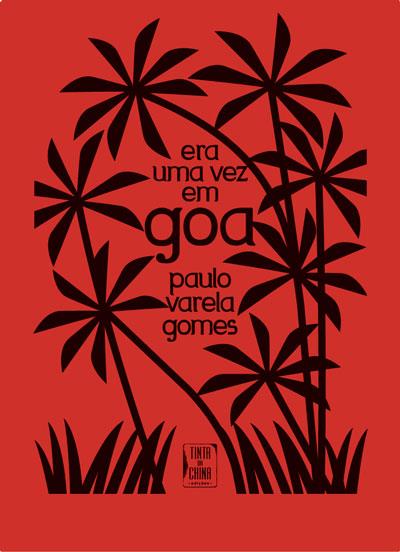
As much as one mourns the passing of Paulo Varela Gomes the fact is that there can be no crushing sorrow simply because every cherished memory brings to mind not just his courage, but also his irreverence, and this brings a smile even amongst the tears. Gomes’s life was a lesson in picking up challenges and besting them. How else does one explain the élan with which he took up writing fiction in the last phase of his life? Of course, to those who knew him there was little surprise. For someone who was a natural teacher, and taught through lively debate, there was absolutely no doubt that the man was a natural raconteur.

Paulo Varela Gomes, my friend, father, philosopher, and guide. Our world is diminished by your absence, but it would have been so much lesser without you.

(A version of this post was first published in the O Heraldo on 13 May 2016)

Wednesday, June 29, 2011

Identity Mishaps: How the Portuguese Never Get it Right

As the debate around the innocent request for English to also be granted State support when used as a medium of instruction (MoI) rages in Goa, and the issue converted into a case against Goa’s Catholics, who are just one segment of the population making this demand, on other fronts, life goes on as usual.

Take the example of the rather interesting initiative of the Fundação Oriente to organise the ‘Goan Short Stories 2011’ competition, with an aim to contribute towards Indo-Portuguese cultural exchange and the promotion of Goan identity. This initiative by the Fundação Oriente is clearly marked by an attempt at fostering the pluralism that constitutes the Goan identity, given that it has indicated that stories written in Portuguese, Konkani, in the Roman as well as Nagari script, and English will be accepted. In accepting stories in these languages, what the much maligned, and often unwarrantedly so, Fundação Oriente seems to be indicating, is that the evolving Indo-Portuguese cultural complex, as far as Goa is concerned, is composed not just of Portuguese, but these other languages as well that are a part of the Goan cultural fabric. This is a broad and welcome statement, and is a credit to the Fundação.

And yet, it appears, the Portuguese can never get it right. In crafting a statement of commitment to Goa’s pluralism, and indeed that of our Indo-Portuguese heritage, the Fundação Oriente has left out another significant Goan language, Marathi.

This exclusion is unfortunate given Goa’s and indeed the Estado da India Portuguesa’s historical relationship with the Marathi language. Marathi was effectively a State language in the days of the Portuguese State, a status that was never enjoyed by Konkani. As Rochelle Pinto’s research on the print politics of nineteenth century Goa demonstrates, Marathi was inserted into the official lexicon of the Portuguese State in India thanks to the efforts of the Catholic elite of the time, who saw the demand of the Brahmin elite (the ‘big families’) of the time, as a legitimate demand. Marathi has been the language of social emancipation for not just the Hindu bahujan samaj, but also of the impoverished segments of the Hindu dominant castes in Goa. The poor, rural segments of the ‘small families’ of the Hindu dominant castes used education in Marathi as a tool through which they could migrate to the Bombay Presidency and gain employment there. Pinto is quick to point out that very often the writing in Marathi did not reflect the specificities of Goa, and was often used as a vehicle to criticize the operation of the Portuguese State in India. Regardless of this argument however, Marathi was (and continues to be) a part of the cultural heritage of Goa and its Indo-Portuguese cultural basket, given the fact that so much of its social reform, a good amount of it supported by the Portuguese State, happened in the Marathi language. Even if not used actively in Goa today (a fact that will doubtlessly be contested) Goan segments of Indo-Portuguese history is written in Marathi, as much as it is written in Portuguese.

While unaware of what exactly has led to the Fundação to this forgetting of an important part of Goan, and Indo-Portuguese history, one wonders if the presence of the Konkani Bhasha Mandal, one of the organisers of this competition had something to do with this exclusion. The Konkani Bhasha Mandal, as we know, are rather zealous Konknni-mogis (Lovers of Konknni). Their love is a jealous love. No other language may share space with their beloved Konknni. As the current controversy over the MoI will indicate, they are a skillful lot these Konknni-mogis. When English seeks to assert its place in the Goan sun, they will gang up against it along with Marathi. When Marathi seeks to assert itself, they will gang up against it with those who produce in the Roman script. The winner at the end of the game will always be Konknni, this peculiar version of the Concanim language.

The Fundação Oriente should not feel terrible however. It is not the only institution to get the complex configuration of Goan politics wrong. A much more venerable institution, like the Catholic Church in Goa, has also, and often, got the equation quite completely wrong. In an earlier time, responding to the call of the Universal Catholic Church via the II Vatican Council, the Catholic Church in Goa acknowledged various errors of the past and made amends by adopting wholeheartedly the Konkani language. Indeed, it went a couple of steps further than what was required under the changes suggested by the II Vatican Council. Rejecting a Concanim by the priests and understood by the Catholic laity, it converted Concanim into Konknni, sanskritising the language with the vigor of the Brahmanical partisans that destroyed the Buddhist hegemony in South Asia. Aligning itself with the sub-nationalist cause of an earlier generation of Konkani Bhasha Mandal leaders, it stood by while the Catholic masses were rallied in its name to the cause of Konkani, converted the Diocesan schools to teaching in Konknni, and reveled in the warm glow when it was praised by these leaders. The mat was subsequently pulled from under the Catholic hierarchy’s feet when they responded to the demand of parents for English as MoI in diocese run schools, the good Church, had become in a twinkling of the eye, the bad Church.

A close reading of post-colonial Goan history should teach a few lessons to the leadership of the Fundação Oriente. One does not become the good guy by blindly dancing to the Konknni fiddle. Like the Catholic Church is learning today, they were but a tool in the establishment of an intolerant hegemony in Goa. The moment one steps out of the line dictated by the Konknni hegemony, one transforms in an instant, from the good guy to the bad guy. You cannot dance the tango with a Konknni-mogi.

And so, my dear Fundação Oriente, after this little letter to your good sense, will you dance the Fandango with me? Why not contemplate the inclusion of Marathi in the list of acceptable languages for the competition?

(A version of this post was first published in the Gomantak Times 29 June 2011)

Wednesday, February 9, 2011

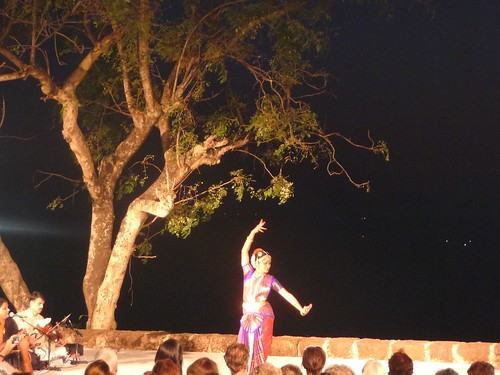
The Monte Festival and how the Portuguese got it right

‘To many people in the official circles in Portugal,’ the informant whispered, ‘Goa is a bad word. They believe,’ he continued, ‘that they have burned their hands once too often.’ The reference was to the histrionics of this column’s favourites, the ‘freedom fighters’ and Hindu right-wing elements in Goa. But surely it takes two hands to clap? My own response was to fiercely (and somewhat triumphantly?) whisper back that ‘If they have burned their hands, it is because large sections of Portuguese officialdom have almost never gotten it right when dealing with Goa!’

This column has pointed out in earlier installations that the Portuguese nationalist element in fact supplements the Hindutva element in Goa as they work together (and always unwittingly) to screw things up in Goa.

To portray the ‘freedom fighters’ and the right wing elements as determined to protest every Portuguese event in Goa is not helpful. It is not helpful because by uniformly vilifying this group it shuts the space for dialogue. More importantly it prevents learning as to where we are making mistakes in the forging of a new post-colonial relationship between the two spaces. There have been some Portuguese sponsored events in Goa that have almost never been at the receiving end of negative attention from the champions of Hindutva. One such event is the annual Monte Music Festival conceptualized initially by Sergio Mascarenhas, then Delegate of the Fundação Oriente and supported by a host of local institutions.

This column has from time to time been charged with the mistake of over-reading issues, and this particular column may well possibly join that list of mistakes, but perhaps the risk is worth it. While the Hindutva gangs are a visceral threat to the people and peace of Goa, it is necessary to also see where they exercise restraint, so as to open up portals of understanding and dialogue.

When contacted personally after his participation in the episode where the visit of the Sagres was denounced in Vasco, one of the participants elaborated on the reason for his opposition. He pointed out that his opposition to the Sagres’ visit was motivated by the fact that the event of 1510 was sought to be commemorated by a unilateral celebration. There was no though given to a combined program that could revisit, or move on from 1510. The event required us only as audience, he suggested, not as equal participants. If the nature of his protest was entirely unacceptable, his observation was perhaps bang on target.

On this front the Monte Music Festival is a perfect example of what the Portuguese establishment could do to create a space for equal interaction. It does not unilaterally push ‘Portuguese culture’ but creates a platform where both ‘Indian’ and ‘European’ are put on proud display. Audiences for one genre, usually stay on for the performances of the other. The audience it creates then is the subject that Goan history has produced, an individual capable of transitioning between the worlds of the ‘East’ and the ‘West’.

The conceptualization of the Monte Music Festival used existing cliches of Goa as the ‘meeting space between the East and the West’ ‘Europe and India’. There is, it should be said, nothing wrong with clichés. As long as they do not suffocate other ways of thinking, they can be useful places to begin thinking from. The Monte festival is a wonderful example of how a cliché can be used to produce a valuable, and valued, cultural production. The problem however is when the cliché begins to limit rather than allow for elaboration. Thus for example, when we think of the ‘Indian’ segment of the Music festival, does it limit itself merely to India or to a wider ‘Indian’ sub-continental culture? The suggestion is that the Monte festival should actively think of including artistes and musicians from Pakistan and Bangladesh at the very least, if not from Nepal, and Afghanistan further afield. These spaces are not outside of the ‘Indian’ space. Not only do they share aspects of the same tradition, but continue to inflect the space of ‘Indian’ classical traditions. Consider for a moment, the fact that while actors from ‘Hindi’ films are wildly popular in Pakistan, a good number of Pakistani musicians and rock bands are wildly popular in India Republic. One particularly interesting example would be the productions from the Coke Studio in Pakistan. This project melds the ‘traditional’ classical traditions of Pakistan, with a range of contemporary and ‘western’ musical instruments and arrangements.

To make this suggestion of border-crossing to the Monte festival should not be seen as radical. The Western music presentations at the festival have often crossed political borders within Europe, and also presented, from time to time, American artistes specializing in ‘European’ classical music. To extend such political blindness to the Indian subcontinent would only go to enrich the offerings and value of the Monte festival.

Dialogue, it will be agreed, is much preferable to the option of standing on our little soap boxes and carving out audiences with defined boundaries. We are too small a people to be carved out into fields desired by the Hindutvawadis, and Catholic bigots. To recognize a point our ideological opponent is making could help toward emasculating the brigands on both sides and create more space for dialogue. After all, as the Monte festival annually indicates, dialogue creates such wonderful mo(ve)ments.

(This post was first published in the Gomantak Times 9 Feb 2011)