Showing posts with label Hindu Right. Show all posts

Friday, February 6, 2015

Solidarity in Times of Vandalism: Why the Minorities need to work together


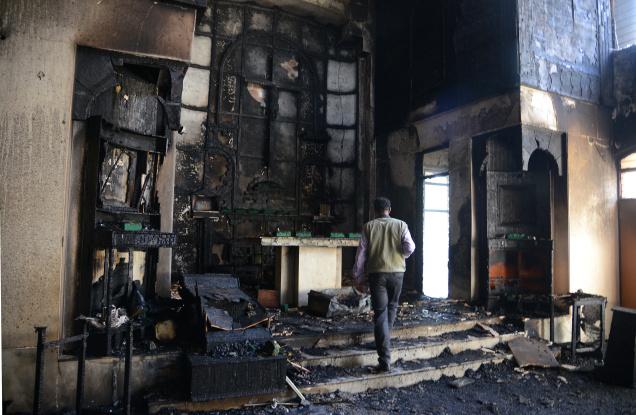
There has recently been a lot of anxiety amongst the Christian communities in India owing to the desecrations and violence targeting Christian churches especially in the city of Delhi. There have been five attacks on churches in the capital of India since December 2014, the latest being the vandalization of the Church, and desecration of the Blessed Sacrament in the church of St. Alphonsa in Vasant Kunj earlier this week.

In the face of earlier attacks on churches the focus of Christian leaders turned towards the Prime Minister. These leaders report that the Prime Minister did not say anything that would reassure them. What makes it worse is that Prime Minister Modi has chosen to keep absolutely mum over these incidents. Public silence in this case can only be interpreted as his unwillingness to restrain the Hindu Right and make sure that law and order is maintained. This silence is not surprising however. We need only think back to his role in the pogrom in Gujarat in 2002. It took days for the State machinery to get things under control, and significantly Modi has been held responsible for allowing the violence to continue. Old habits, it appears, die hard.

I doubt that this tendency towards silence played on the mind of a member of a prominent Catholic business family when he suggested in conversation with me that Modi was a good administrator and “should be given a chance.” It is the limited perspectives of the elites of the community that one should also mourn. That this individual did not see managing genocidal violence as part of good administration says a lot about the milieu in which he moves.


What is worse is the fact of complicity of the state in fueling the acts of violence. A number of the victims in Gujarat indicated that the police refused to help them, claiming that they did not have orders to do so. Further, the police failed to place leaders of the violence under preventive detention. In the case of the violence against Christians, this chilling pattern is re-emerging. There has been news of visas being deliberately withheld from Catholic Bishops who were to visit from the Vatican to attend a liturgical conference organized by the CCBI (Conference of Catholic Bishops of India). More recently, persons peacefully protesting the violence against Christians and the lack of state action were set upon by the police, beaten and dragged into police custody.

These events are in fact very much in keeping, not only with the history of Modi, the BJP, but also the supposedly secular Indian nation-state. The hostility of the Indian state to the minorities of India, is a matter of record. In fact, in a scenario resembling the recent denial of visas to visiting Bishops,  soon after India achieved Independence the Indian state took an aggressive stand against Christian missionaries of foreign nationality in India. That issues did not escalate, as seems to be the case now, is largely because the Indian and Hindu nationalism of the time was more focused on destruction of the Muslim communities in India. Christians were, at the time, seen as “harmless”.

While the Muslims in India were being harassed and butchered across the country the Christian communities in India were by and large silent. On the contrary, these Christian groups in India played along with the logic that it was “the Muslims” who were to blame, rather than Hindu nationalists. Indeed, even in the face of these attacks, some Christian leaders are still shortsighted enough to suggest ‘“We are peace-loving people. If it had been another community, Muslims, khoon kharaba ho jaata” (Blood would have been shed)’
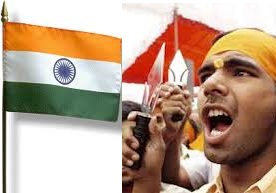

These Christians failed to see that the problem is not Muslims, but in fact Indian nationalism itself. They fail to see that playing the ‘good’ minority, as opposed to the allegedly troublesome Muslim minority, is not going to help. Rather, it plays straight into the hands of the cussed nationalisms in India. In fact, one could argue that playing into the hands of Indian/ Hindu nationalism has been a part of the agenda of the Catholic Church in India. Whether it was the foreign missionaries at the time immediately prior to Indian independence, or the largely upper-caste hierarchy of the Catholic Church subsequently, working towards creating good Indians has been a part of the Indian Catholic programme. This has been done in a variety of ways, either through the misguided policy of inculturation, which sought to make Catholicism in India more 'Indian', i.e. upper-caste Hindu-like, or by urging a strong sense of patriotism, which normally translates to an unblinking acceptance of nationalist rhetoric. This irrationality has ensured that we swallowed the Indian nationalist narrative, saw the Indian Muslim as the trouble-maker and tried to place as much distance between them and ourselves.

There is little distinction between Indian nationalism and Hindu nationalism. The difference is largely a matter of degree, since both are built on the idea of the upper-caste Hindu as the de facto Indian. Contrary to the spiel that we have been fed since the beginning of the Indian nation-state, these nationalisms do not tolerate difference. The tolerance is merely cosmetic. When push comes to shove, as has happened in so many cases, the minority group is made to feel the pinch.

It was in light of this reality that for some decades now the Christians in India were asked to mobilize along with Muslims in India, and see the latter groups as allies rather than enemies.  There was, unfortunately, no real interest demonstrated by Christian groups. I can recall efforts in Goa that attempted to involve the hierarchy and the laity of the Catholic Church. Where the hierarchy was interested, the laity were not. The hierarchy too, had its own reservations as to how far they would, or could, go. All too often, and not just in Goa, the interest lies in engaging in superficial ‘inter-religious dialogue’, rather than lending shoulders to political battles. A significant political battle that we in Goa could lend support to is the need that the Sunni Muslim communities in Margão have for a burial ground. The existing burial ground is too small for the existing population and all efforts to secure a larger ground have met with resistance, largely from Hindu nationalist groups, but often supported by Catholic bigots.

Too often, Christians in Goa are so in the thrall of racist stereotypes about Islam and Muslims that we fail to see the diversity that exists within these groups. Despite the complex history of Islam within coastal south India, of which Goa is part, Islam itself is written off as a violent religion. Additionally, we are blinded by the nativist logics that see Goans as either Hindu or Catholic. Muslims have no space in this vision of Goa even though Islam has had a long presence in the territories that are today Goa, and many Catholics in Goa would have had Muslim ancestors. The reason we are blinded to these histories and realities is that Goan histories have been written almost exclusively by persons from upper caste backgrounds who want to privilege their putative Hindu pasts. They wish to embellish their pasts as Hindu, largely because they have long seen the writing on the wall, India works best if you are upper-caste Hindu. Indeed, as I illustrated elsewhere, it is the caste bias among Catholics in India that has ensured that the superficial inter-religious dialogues that take place are often biased in favour of Hinduism, rather than Islam.

Making alliances with Muslims does not necessarily mean working with all kinds of Muslim organizations. It would first require us to first embrace Muslims and their worlds, get to know them and understand them better. It is only after having effected this embrace that we can become alive to the diversities and differences among them. It would mean learning to identify those Muslim organizations that are no different from the RSS and working with those organizations that are open to democratic ways of social organization.

In the final analysis it may perhaps be the lack of internal democracy within the Catholic Church in Goa that stands in the way of effecting solidarity with Muslims groups. There is no doubt that the Catholic Church in Goa is appallingly lethargic and I would like to suggest that the reason lies in the manner in which it is organized and the manner in which internal dissent is dealt with. A group that is itself compromised, and comes out against Hindutva only when its direct interests are pinched is hardly going to be able to provide leadership to other beleaguered communities, or even associate meaningfully with them. It appears that our many years of lethargy is beginning to show and our pigeons are now coming home to roost. May God protect us.

(A version of this post was first published in the O Heraldo on 6  Feb 2015)

Friday, September 5, 2014

Rights trump culture: Lessons in fighting Hindutva


There was a significant amount of virtual rejoicing some weeks ago when the vice-president of the state BJP unit, Wilfred Mesquita, announced that "Prohibition cannot come to Goa... because Goa's culture is to drink." Mesquita’s statement came in the wake of a number of recent controversies involved with moral policing both within the country and also in Goa. Both Chief Minister Parrikar and his colleague Sudhin Dhavalikar had expressed opinions about the need to ban the consumption of alcohol in public. Given that the state government of Kerala had announced a decision to enforced a gradual prohibition of alcohol in that state, and the abandon with which the Hindu right has been going about its agenda of cultural rectification of the country the Dhavalikar-Parrikar comments understandably unnerved many in the state.
We owe a debt of gratitude to Dr. Mesquita for having had the moral courage and the good sense to point out that prohibition is out of the question when alcohol is a part of the social rituals among a good portion of the Goan public. May he live long and prosper.
As relieved as we may be by Misquita's statement, it needs to be pointed out that basing the decision to not ban the consumption of alcohol on the basis of its presence in “culture” is not a reassuring fact. Indeed, such a logic is problematic because it is still very much within the Hindutva realm of reasoning.

Hindu nationalism is a cultural nationalism. This is to say that it is a nationalism that privileges culture (as defined by Hindu nationalists) first. All else, including rights, comes after this definition of culture. The opposition to prohibiting an act on the basis of culture is to give primacy to culture, not to rights. Thus, what would happen if there was no culture of social drinking in Goa? Would it be ok to ban drinking then?

This question is important because it is at the root of determining the extent of the censorship powers of the State. The question is one of the extent of the powers of the state to curtail activities of persons, and of the recognition of right of the individual to choose. If I choose to drink, then regardless of whether it is a part of our culture or not, I should be able to drink, and have the right to purchase alcohol for consumption.

Phrasing the question in terms of alcohol, whose consumption is marred by instances of alcoholism, is not the best way to phrase a question of rights. Indeed, members of the right often use the most extreme example to make their case and carry through decisions. If we replaced alcohol with skirts, for example, we may see the dangers involved in invoking culture as the basis to allow, or prohibit an activity. If the wearing of skirts were not commonplace among women in Goa, would it be legitimate to ban the wearing of skirts? Of course not, because one would then be treading on the rights of women to wear skirts should they choose to do so. The law is known to place reasonable restrictions on the rights that citizens enjoy. Should one gravely inconvenience others provisions already exist to remand persons causing a nuisance through drunken behaviour. In the presence of this reasonable restriction the introduction of prohibition does nothing more than allow for the state to exercise unreasonable authority over the ordinary lives of people.

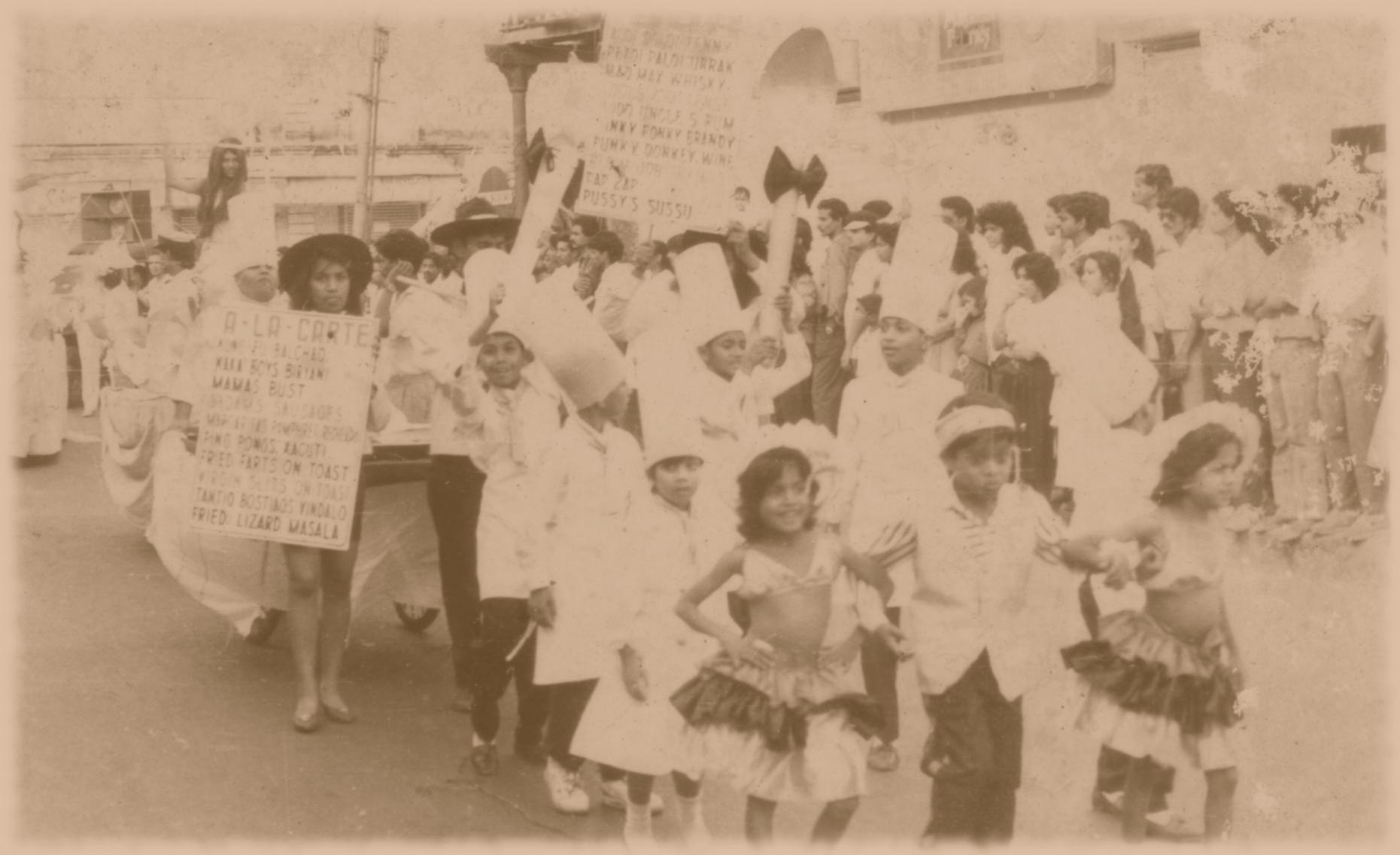
Problematising culture as a way to attack or defend culture also helps to make us aware how institutions that are today crying foul, have been a part of the gradual drift towards the right. Back in the 1980s, the hierarchy of the Catholic Church in Goa came out strongly against the celebration of Carnaval insisting that it was not a Catholic celebration. Indeed, it did so more recently, once again when Parrikar waded into debates on what is or is not appropriate local culture. In doing so the hierarchy sought to delegitimise Carnaval celebrations. In doing so they were committing a number of errors that haunt us today and will no doubt haunt us in the future. The hierarchy was effectively suggesting that only the religious lives of the Catholics in Goa was worthy of respect. The rest could be dismissed and done away with. They were also setting themselves up as the determiners of all cultural activities that persons who confess the Catholic faith engage in. This was, and continue to be a dangerous position. As much as the Catholic Church has a right to advise its members on the manner of their comportment, it cannot determine what is, or is not part, of the activity of Catholics in Goa. While the hierarchy of the Catholic Church in Goa may not be fond of carnival, it ought to have taken a broader perspective and indicated that while Carnaval was not a Catholic religious feast, and the hierarchy had reservations with regard to some of the ways in which it is celebrated, it would not deny that Carnaval is a significant celebration with historical roots in Goa, and especially among Catholics in Goa. We live in a complex world and the only way in which we can prevent institutions, both statal and otherwise, from becoming autocratic monsters is by paying close attention to the rights of individuals.

Despite making culture the basis on which he dismissed the prohibition of alcohol, Mesquita also needs to be congratulated for not making the social consumption of alcohol a feature of Catholics alone. Almost all reports indicate that his statement was “Goans drink at wedding and parties. How can it be banned?” Thus, it was not Catholics drink at social events, but Goans.  This makes sense given that it is not merely Catholicism that determines whether people drink alcohol socially or not, since people were fermenting and producing alcohol long before both Europeans and Christians came to this territory. The European, and possibly Christian, origins of the consumption of alcohol is just one strand in the history of alcohol consumption in the territory.

To return to the thrust of my argument, making culture the basis on which decisions are made will also push us further into the ire of the Hindutva tiger. Given that it is the non-brahmanical culture of Goa that they see as a problem, decisions to protect certain social activities on the basis of culture will work to only strengthen the resolve of these groups to attack the cultural manifestations of Catholics, and other non-brahmanical groups, in Goa. We need to turn the tables on the forces of the right (which includes not merely the forces of Hindutva) and assert that rights are the basis of public policy.

Mesquita's statement may have won us the battle therefore, but will it win us the war?

(A version of this post was first published in the O Heraldo on 5 Sept 2014)

Wednesday, November 21, 2012

The Secular Riddle: Why Nandakumar Kamat Loved Bal Thackeray


For those who heaved a sigh of relief at the news of the death of Bal Thackeray, the response to his death was deeply agitating. Not merely politicians, but it appears the big names of Bollywood and sundry journalists seemed to be bend over backwards to pay compliments to a man who while doubtlessly a significant leader to members and partisans of the Shiv Sena, was responsible for much death and violence (not merely physical and material but discursive violence as well) in Bombay city and across those spaces in the country where his rhetoric had appeal. Of this violence, there has been not so much as a whisper in these accolades. It was pretty much in this vein that Nandakumar Kamat’s response in the Navhind Times to Thackeray’s death was crafted.

To a large extent, the writings of Nandakumar Kamat represent the perspective of the educated middle class segments of our society that imagine themselves to be secular. There are a number of interesting blindspots to their secularism however, that indicate the troubled nature of their commitment to, or understanding of, this virtue of contemporary democracy. It is for this reason that Kamat’s scripting of “Why Maharashtra Loved Bal Thackeray” needs to be reviewed.

Kamat’s eulogy to Thackeray, and let us make no mistake that his article is a eulogy, begins with an interesting insight into Kamat’s understanding of democracy. While a large number of Bomaicars were quite agitated by the decision to hold Thackeray’s cremation in Shivaji Park, Kamat justifies this decision by suggestion that the Chief Minister of Maharashtra, Prithviraj Chavan “was just bowing to the wishes of the people.” Kamat is clearly indicating here, his understanding of democracy, not as the rule of law over all people, or of democracy as the system that ensures the protection of the minority, but of democracy as majoritarian rule. This fascistic edge to Kamat’s eulogy unfortunately only deepens when he then goes on to evaluate Thackeray’s success in terms of his apparent appeal to the “grass-roots.” Masses and majority, these are two critical elements of fascism and there is not so much as a whimper of disagreement in Kamat’s essay.

In his eulogy, Kamat makes but a coy reference to Thackeray’s politics of intimidation and violence. He suggests that these politics were “basically the fear of demographic and cultural dilution followed by economic and political marginalization which creates a regional backlash in any state.” Thus Kamat is suggesting that the violent actions of the Shiv Sena were the result of the Maharashtrian inhabitants, who have first dibs on the city, feeling marginalized. Indeed this sugar-coating of a deeply problematic man’s poisonous, and avoidable legacy is carried further when Kamat suggests that Thackeray was a hero because he was able to, speaking “from his heart” give space for the Marathi middle class “looking for some respect, identity and recognition” a sense of “Maharashtrian cultural pride”.

Kamat has gotten his facts grievously mixed up however. He forgets that the borders of contemporary Maharashtra were forged recently, in 1960, as a result of the reorganization of the Bombay state into the states of Maharashtra and Gujarat. Prior to this there were cultural boundaries to Marathi territory, and unlike other parts of contemporary Maharashtra that could possibly claim a unchallenged identification with just one language, the city of Bombay was never a part of this wholly Maharashtrian cultural community. The city of Bombay forged its own cultural space, being the home of the East Indians, Parsis, Gujaratis (who in 1960 even claimed Bombay for their own state), Goans, Italians, Arabs, Persians, Britishers and of course the Portuguese, to name just a few. If today Bombay can be unproblematicaly be seen as Maharashtrian territory, it is because Thackeray was able to, subsequent to the 1960 inclusion of Bombay city as a part of the State of Maharashtra, craft Bombay as an exclusively Maharashtrian city through his politics of violence. Indeed, the Maratha and Marathi, were and are, as much migrants to the city of Bombay as any of the other groups that Kamat so condescendingly dismisses as “non Marathi migrants in Mumbai who have made the megapolis their permanent home.”

I would argue that Kamat gets his facts mixed up because he looks at the issue from another fascistic perspective, which is to see the world as naturally composed of monolithic cultural communities born when language and territory overlap. In the present case it could be Maharashtra and Marathi, but it could just as well be Goa and Konkani. It is because Kamat is sympathetic to this parochial (mildly racist even) view of the world, that he is able to make sense of, and justify, Thackeray’s politics. It is for this reason that Kamat does not see the complex history of Bombay, and restricts himself only to Maharashtrian history from “original Marathi sources” when attempting to understand and put forth the case of Balasaheb Thackeray.

There is no doubt that Balasaheb Thackeray was able to capitalize on the angst of the Marathi Hindu middle-class and dominant caste groups. However we have to be able to see that these groups do not, nor did they necessarily ever, have any primary right to the city of Bombay, nor indeed in the rest of Maharashtra (in the latter case they would have to necessarily share space with non-dominant caste groups). In the case of Bombay city, the Marathi migrants were merely one more set of migrants that through a stroke of fate gained dubious claim to first dibs on the city in the state carved out on racist lines. Further, we have to recognize that Thackeray’s politics of violence, is not the only way to deal with the “fear of demographic and cultural dilution” and “economic and political marginalization” that Kamat refers to. Indeed, Kamat himself points to the fact that Thackeray was vociferously against the democratic strategies that seek to negotiate economic and cultural marginalization outlined in the Mandal Commission Report.

The last issue that needs to be addressed in Kamat’s eulogy is his muffling of the strident Hindu nationalism that lay at the core of Thackeray’s rhetoric.  It is perhaps in this realm that the problematic nature of Kamat’s secularism comes across. Rather than acknowledge that there is a profound problem with Hindu nationalism, he seems to join those “secular” nationalist who seek to justify all but the most violent of Hindutva’s manifestations. Thus, Veer Savarkar, the possible mastermind of the Gandhi assassination, and leader of the Hindu Right, is presented merely as a “great Hindu nationalist and reformer”. There is also something of a dismissal of those who aware of Thackeray and the Shiv Sena’s Hindu nationalist history saw in the huge turnout at the funeral a “Hindu backlash”. More sophisticated social science research points out that conscious action is not everything. Groups very often unconsciously follow patterns that have been established. Thus there need not have to be a conscious effort to demonstrate Hindu power, Thackeray and the Shiv Sena spent decades making sure their every action was justified in terms of the rightful assertion of Hindu power. Furthermore, the stories of the forcible shutting down of shops, of extra-legal curfews policed by youth carrying saffron flags speak volumes about the death of Thackeray being used as one more example of the assertion of Hindu power.  Kamat’s silence on this front and his muffling of the strident Hindu nationalist positions of the Shiv Sena are deeply disturbing. They are disturbing because of one, or a combination of three possible reasons; he does not see Hindu nationalism as problematic, he is unaware of that Hindu nationalist violence is possible because of the silence which routinely greets it, or because it is assumed to be the work of lumpen lower class Hindu elements that can easily be held in check by upper-caste leaders. All three are profoundly erroneous.

Kamat’s eulogy to Bal Thackeray is deeply troubling because it indicated an acceptance of political violence directed by authoritarian leaders directing mobs, where rights seem to belong first to the people of the land, and then to those persons labeled as migrants. These migrants could be randomly defined on the basis of religion, language, caste or territory. These are signs of merely a superficial commitment to democracy and secularism. Bal Thackeray may have passed on, but his legacy it appears, may still linger on.

Goans should read essays such as "Why Maharashtra Loved Bal Thackeray" only with the greatest of circumspection. This is because, in the light of the demands for 'Special Status' such essays are softening up the public opinion for the kind of horrendous changes that Bal Thackeray wrought on Bombay. A good many Goans may believe that they are being marginalized in their own land, but the Thackeray route is not solution, since it will not address the needs of the truly marginalized within Goa, and it will be built on a Hindu majoritarianism, cleverly disguised as was the result of the Konkani language movement. No, Bal Thackeray, and Special Status, despite what many fondly believe, are not the response to Goa's challenges.

Wednesday, May 9, 2012

Contra factum: The Hindu reformer Ambedkar…


Reading the headline “Ambedkar was a true Hindu reformist: Arlekar” in the Herald a couple of days ago, literally pushed me off the chair I was having my breakfast in. Published on 30 April, the article was a report of the Speaker of the Assembly Mr. Rajendra Arlekar speaking at an event held by the Dalit Seva Sanghatana in Margao, to felicitate the former Fatorda MLA Mr. Damu Naik with the Dalit Sakha Puraskar.

It was a strange way to frame Babasaheb Ambedkar, given that it was the same man who, at a Dalit conference in Yeola (Nasik district), in 1935 declaimed that “I was born a Hindu. I couldn’t help it, but I solemnly assure you that I will not die a Hindu.” And this was not the first time that Dr. Ambedkar made explicit his intentions to not allow the Dalits to be identified with Hindu society. Indeed, in the course of the Round Table Conferences that were held between 1930 -32, as part of the British attempts to lay the ground for democratic transition in colonial India, Dr. Ambedkar presented a demand for separate electorate for what were then known as the ‘untouchables’. This demand, which came along with a similar demand by the Muslim leadership for the Muslims in the subcontinent, was however vehemently protested by Gandhi. While Mr. Jinnah’s, and Mr. Ambedkar’s fears were those of Hindu upper-caste majoritarianism that could threaten the interests of the groups they were representing, Mohandas K.  (also known as Mahatma) Gandhi’s reasons for his opposition were contrary. Gandhi was afraid that recognizing the right of the Dalits to a separate electorate would effectively disintegrate what he thought of as Hindu society. To obviate this possibility, Gandhi resorted to a fast-unto-death at the Yervada Jail where he was being held at the time. The inordinate amount of pressure that this created, resulted in Dr. Ambedkar being forced to concede his demand, and settle for assurances from Gandhi and the upper-caste nationalist leaders that gained the form of the Poona Pact in 1932.

Dr. Amberkar finally succeeded in effecting the Dalit split from Hindu society by converting, along with half a million of his supporters, to Buddhism in October 14, 1956 at Nagpur. Dr. Ambedkar died some three months later in December that year and remained true to his words in 1935, he did not die a Hindu. And yet, as Mr. Arlekar’s words demonstrate, the attempt by Hindu leaders to appropriate Dr. Ambedkar and the Dalits to their cause continues unabated. One of the common strategies through which this appropriation is effected is by casting Buddhism as a reform branch of Hinduism. Another strategy is to point out how rather than converting to Islam or Christianity, both religions that have traditionally been routes for lower-caste and untouchable converts seeking liberation from caste strictures, Dr. Ambedkar chose Buddhism instead. The logic attributed to Dr. Ambedkar is that he did not want to lead his folllowers into the arms of foreign religions, but rather into a tradition that had grown in the soil of India, an ‘Indian’ religion. Indeed, this rhetorical strategy is similar to the one employed by Mr. Arlekar when he reportedly said “that representatives of other religions had approached Dr. Ambedkar to bring the Dalits into their fold, but he had declined.”

There are a number of possible reasons for Dr. Ambedkar’s choice of Buddhism and rejection of the Christian-Islamic option. The first that we ought to consider is that conversion to Christianity or Islam, while it may have minimized, through its ideological acknowledgments of the equalty of persons, the whip of caste oppression has not ended caste-based prejudice against the Dalits. The second is that Buddhism was preferred for the rationalism that accompanied the version privileged by Dr. Ambedkar. This was not a version that stressed ritual, but like Protestant Christianity, underlined the central location of the individual. To stress the individual and his/her role in contemplation as a route toward salvation, Dr. Ambedkar was making a historical choice for those who have traditionally not been recognized as individuals. It is possible that the foreign origins of Christianity and Islam may have also prevailed on Dr. Ambedkar, and this would not be surprising given the nature of scholarship and thought at the time. However, to suggest that he chose Buddhism because he was a Hindu reformer is to not only pervert but to insult his memory and the radical choice he made. There is a strong trend of scholarship that has suggested that Buddhism is merely reform Hinduism. This impression however is largely the product of orientalist historians who operated under the fundamental assumption that India was primarily Hindu.  Buddhism that emerged as a response to Brahmanical and Vedic religious practices, did take on brahmanical rituals in the course of its twining with Empire, but nevertheless maintained a tense and often hostile relationship with Hinduism. Indeed, it has been argued by some historians that the destruction of the ancient university of Nalanda was not entirely the work of the Turko-Afghan forces under Bhaktiyar Khilji. Another lesser known  and somewhat controversial argument suggests that once the Turko-Afghans had left, it was the local brahmanical groups, natural enemies of the Buddhist establishment, that got together, and set upon the struggling remains of the university ending the saga of the ancient university.

Mr. Arlekar is not out of place though in suggesting that Dr. Ambedkar was a Hindu reformer. It is in keeping with the Hindu right-wing’s view of the world that all religions that originated within India are in fact parts of Hinduism. Furthermore, as the Hindu right wing, seeks to consolidate its power within the Indian nation-state, it has attempted to woo the Dalits into its fold. To achieve this aim, it has sought to appropriate to its agenda the venerable figure of Dr. Ambedkar, no matter that his agenda was substantially different from that of the Hindu right-wing. 

This attempt to appropriate the figure of Dr. Ambedkar may have nevertheless had some tempering effects upon the Hindu right-wing. An example of the strange situation that the saffron groups have found themselves in as a result of an attempt at this appropriation has been commented upon in a recent editorial in the Economic and Political Weekly. Reflecting on the inarticulate response by the Hindu right-wing to the contentious “beef festival” held at the Osmania University by some dalit and left student groups in Osmania University of Hyderabad, the editorial commented that this was perhaps explained by the fact of the location of the groups that have backed this food festival. While the cow-related politics of Hindutva has been largely aimed at striking at Muslims and Christians in the country, these groups are clueless as to how to respond when nominal Hindus such as the Dalits claim the beef is a part of their traditional diet and forms part of their right to nutrition. An aggressive response such as the Hindu right normally uses would be to hit out at the Dalit icon Dr. Ambedkar, which in this case is not quite the best option, given the attempts at wooing the dalits.

Calling upon Dr. Ambedkar as a Hindu reformer it thus appears, is not quite historically correct, nor would it be seen as a serious claim from within the frame of Ambedkarite politics. And yet, when doing so, the Hindu right wing may perhaps be inviting a change in its operation that it might not entirely be comfortable with. C’est la vie…?

(A version of this post first appeared in the Gomantak Times dtd 9 May 2012)