Showing posts with label Narendra Modi. Show all posts

Tuesday, December 14, 2021

Modi meeting Francis: On the possibilities for Catholic politics in India

 On the night of the twenty-third of October I was woken up by a rather agitated message which read: “I hear that Modi is meeting the Pope…It legitimises what is being done to minorities – Muslims, Christians, and Sikhs, and Dalits and women.” “The Holy Father should not meet him” a second message continued. These messages were referring to Prime Minister Modi’s now confirmed meeting with the Pope in Rome on the thirtieth of October, prior to the former’s participation at the G-20 meet in the same city.

My agitated friend was not the only Christian in India to so respond. However, there is no reason to react in such a manner. Contrary to the suggestion from the Indian media, the meeting is a routine encounter between heads of state. Pope Francis will also be meeting with President Biden of the USA as well as the Canadian Prime Minister.

Nonetheless, contemplating the unease for a while longer, I realised that there is an opportunity for Catholics in India to show Christian witness. Thus, not only must Pope Francis meet with Prime Minister Modi, but in doing so the Pope might possibly lead the direction for a wholesome Catholic (and Christian) contribution to politics in an increasingly troubled India.

We need to go back in time to three incidents to appreciate my logic. The first incident is the letter written by Thomas Macwan, the Archbishop of Gandhinagar, in November 2017, the second, the letter by Anil Couto, the Archbishop of Delhi, in May 2018, and the third, a letter by the Archbishop of Goa, in June of the same year. All the prelates urged Catholics to pray that the elections – the elections to the State Assembly of Gujarat in 2017, and the elections to Parliament in 2019 respectively – result in the selection of persons true to the values of the Constitution and the dignity of the human person.

A furore was, surprisingly, raised in all three cases, largely by supporters of the BJP, based on the assumption that the prelates were instigating a political action against the BJP. In doing so, they made a fundamental error in appreciating the nature of Christian prayer. Directed by no less than Christ himself, the Christian does not, indeed cannot, pray against persons, even if they may be enemies. The Christian is obliged to pray for persons. To quote Christ from the Gospel of Mathew when he preached the beatitudes, “I say to you, love your enemies and pray for those who persecute you,” for, he reasoned “if you love those who love you, what reward do you have? Do not even the tax collectors do the same?” What no one seems to have told the BJP at the time, was that Christian prayer was most certainly not directed against them, rather if the BJP was in fact guilty of acting against the values of the Constitution and the dignity of persons, then the prayers were probably for their benefit.

This insight into Christian prayer must then determine how Pope Francis might respond to a desire of the Indian Prime Minister to meet with the Pope. Carrying over prayerful love into action would first require showing courtesy; for did not Christ promise “knock and the door will be opened to you”? Indeed, a perusal of the Gospels demonstrates that Christ was attentive to courtesy – considerate to the cries of those who called out to him, and even chastising those who sought to shoo away those who, like the repentant woman who anointed him with nard, sought to do him honour. Christ’s chastisement focussed precisely on the fact that these hosts did not show him the courtesy due to a guest, which this woman was now showing him. And it is not just Christ who stressed courtesy. The Bible is peppered with instances of courtesy as a mark of grace, and indeed, as in the case of the people of Sodom and Gomorrah, they were violently punished for violating the code of courtesy to a guest. Courtesy, as a gospel and biblical value, demands, therefore, that the Pope meet with Prime Minister Modi.

But practicing Christianity is not simply about being polite and civil. It is also about being honest to the truth, even if it requires plain speaking. Christian love is not so much an emotion, as it is a process. In December 2015 Pope Francis inaugurated the Extraordinary Jubilee Year of Mercy; and significantly, one of the spiritual acts of mercy is correcting the sinner. Receiving someone with courtesy does not mean one simply papers over the problems with one’s brother. On the contrary, it obliges us to demonstrate how our fraters have violated the higher laws of God. Pope Francis will have much to communicate in this context to Prime Minister Modi, and we know that he will seize this opportunity.

He will perhaps communicate his concern that the Union Government presided over by Prime Minister Modi has not been doing enough to secure the bodily integrity of the various minoritized groups in India. He will also express the anxieties of multiple religious orders and congregations whose representatives are often denied visas to enter the country, especially if these representatives or their orders or congregations are seen as being too vocal in their critique of the state-of-affairs in the locations they visit, or work in. The Pope would also have to express his concern of how the rights of Overseas Citizens of India are being constrained, by requiring that they do not engage in any missionary work. Then there is the question of how conversion to Christianity, especially by those marginalised by state and society, is being effectively criminalised in India. The impending survey of churches and conversions in Karnataka is another crucial issue to address. And then there is the entire matter of detention camps being constructed in India.

Pope Francis would also, no doubt, like to discuss how his Jesuit confrere, the late Fr. Stan Swamy, was callously treated by the judicial system. In discussing this matter, the Pope will be aware, no doubt, that while Fr. Swamy died under the BJP’s control, the UAPA (Unlawful Activities (Prevention) Act) that was eventually responsible for Fr. Swamy’s death was articulated by the Congress government in 2008 – pointing to the deeper lack of justice in the Indian state. None of these difficult, but necessary, conversations would be possible without the extension of the basic courtesy and hospitality.

No, Prime Minister Modi must have audience with the Pope, for refusing him this dignity would be tantamount to not showing the love that Christ demands of us even in the face of those who wish us dead. In acting with the law of Christ, Pope Francis could offer a useful measure for the politics of Christians in India: pray for those who persecute you, love those who hate you, refuse to dismiss them as incorrigible enemies, but create the situations so that we can fearlessly correct them in charity; a situation that, as we have already seen, the Catholic prelates in India have systematically been attempting to articulate. All of this requires that we shift our understanding of the ‘political’.

The values of “woke politics” which harshly condemns those who have made mistakes, or even committed crimes, has taken too strong a hold on contemporary politics. In the clamour of vengeance, and the ardour of self-righteousness, there seems little space to extend common and basic courtesies, or indeed the desire to correct the individual fraternally. Christian teaching is based, however, on the idea that vengeance is the Lord’s, not ours, and that violence to our bodies is not as harmful as is the violence to our souls. What Christian teaching brings to politics, therefore, is the suggestion that there is something more important than payback in the immediate, since everyone will be judged fairly at the end of times, and what we ought to focus on is the love of our neighbour, even if the neighbour prove oneself an enemy.

Writing in 2012, and studying the Catholic Church and political practice in Tamil Nadu, the social scientist Aparna Sundar observed on the various factors that that “lead it [the Catholic Church] to articulate a secular, even radical politics as its primary mode of religious engagement.” This tendency needs to be recognised as a problem, because it often, if subconsciously, denies the fundamentals of the Catholic creed, and we need to return to understanding Catholic politics as one that works between the realms of the natural, and the supernatural. It is only with a firm belief in the supernatural, and the promises of Christ, that we would be able to articulate a genuinely Catholic politics in India. This we need to do, because at this troubled moment, this is precisely what India needs.

(A version of this post was first published on the ezine Raiot on 28 Oct 2021)

Friday, April 29, 2016

AAP: A Clear and Present Danger?


With the elections to the state legislature in the not so distant future the Aam Aadmi Party (AAP) in Goa has begun its campaigning in earnest. As is well known, AAP has been projecting itself as a credible choice on the basis of its promise to deliver good, i.e. corruption free, governance. The question, however, is whether the AAP should be judged merely by its rhetoric, or should it be examined against a broader canvas?

Recent history demonstrates that electoral decisions determined solely by the theme of corruption have ensured that we have moved from the frying pan into the fire largely because we have failed to examine the politics that these electoral options practice. Take the example of the Modi government now wreaking havoc across India. Modi was elected into power because so many people, rightly fed up with the Congress, decided that the man was a good administrator and deserved a right to govern the country. Closer home in Goa, fatigue of the never-ending corruption scandals presided over by the Congress enabled the BJP to come to power.

We now realize that in addition to merely continuing the corrupt practices of the Congress, the BJP is also committed to a kind of fascist agenda that is difficult to undo even after they have been removed from power. This is a kind of moral corruption that is difficult to undo largely because, as I will go on to show, Hindu nationalism itself is never challenged. As such, when evaluating AAP in Goa it is imperative that their proximity to the agents and logics of Hindu nationalism must be strictly evaluated.

An evaluation of the AAP along this axis must begin with a statement by Dr. Dattaram Desai, the AAP candidate for North Goa in the previous Lok Sabha elections in 2014. At that time, Desai indicated in a local newspaper along the lines that he saw no problem with the RSS and that it was just another nationalist organization. When Desai was confronted on this matter at a public meeting conducted by the AAP he denied that he was a part of the RSS, and denounced the RSS as a communal organization. However, it seemed that he did so largely because he had been hounded into that position after being asked a series of leading questions. Desai had been asked at that meeting to issue a public statement to the effect that he did not approve of the RSS, something he agreed to, but one that, to the best of my knowledge, was not issued. Desai continues to be a leading member of AAP in Goa, and in light of his past comments, this fact should be a cause for concern.

At the above mentioned meeting Dr. Oscar Rebello, also a prominent member of the AAP in Goa, sought to clarify issues regarding the links between the RSS and AAP. Using characteristically simplistic logic, Rebello pointed out that he had friends in the RSS, but that did not necessarily make him a member of the RSS. Rebello’s logic may be simplistic, but it is often winning in its presentation. Of course one cannot, especially in a small place like Goa, deny people entry into a party because they were once members of the BJP. Perhaps they may have, as is suggested in the case of Desai, realized that the BJP will not deliver.  But the problem with the RSS, and more importantly Hindu nationalism, lies in the logics that we internalize owing to a lifetime of being immersed in it. If these logics are not actively challenged we too become part of the Hindutva machine.

In this context, the decision of the AAP in Goa to name its outreach program the Goa Jodo campaign is quite disturbing. Why privilege Hindi in a state with no lack of local languages? Because a non-Hindi Goan-ness is suspect? How is this position different from that of most Hindu nationalists and the implicit understanding that it is primarily Hindi and Hindu culture that defines Indian nationalism? One should bear in mind that Hindi nationalism, as one can surmise from the old slogan “Hindi-Hindu-Hindustan” has never been far away from Hindu nationalism. This desire to run with the Hindi-wallas can also be seen  in the video of Desai’s response discussed earlier, where it appears that Rebello refers to Desai as Dr. Desaiji. Now one is entirely at liberty to add honorifics to people’s name. The problem emerges when one realizes that the ji has become popular in Goa with the rise of Hindu nationalism in the past couple of years. The question emerges therefore, can we rely on such a group to assert the rights of Goans which necessarily runs against Hindi and Hindu nationalism, such as the demand of Special Status, and assert our right to be different within India?

But it is not merely the local AAP that has disturbing connections with the RSS or is blasé about Hindu nationalism. Pamela D’Mello writing for an on-line magazine pointed to the disturbing relationship of Dinesh Waghela to Hindu rightist outfits. Waghela was charged with setting up AAP in Goa, and at that point just like Desai went on record, to suggest that he did not see what was wrong with people from the RSS joining the party.

What also needs to be pointed out is that AAP’s insistence on its promised good-governance as a central reason for being a choice in the upcoming elections partakes in the Hindu Right’s pushing of strong administrators, whether Modi or our very own Parrikar. This is not to suggest that good governance is not an important issue. It is. However, we need to recognize that a limited understanding of corruption, and governance emerges from the very upper-caste and middle-class reasonings that have generated the Hindutva upsurge in the country. It is this kind of unthinking of, and challenge to Hindutva logics that is critical and necessary if AAP in Goa should emerge as a safer option than it currently seems to be.


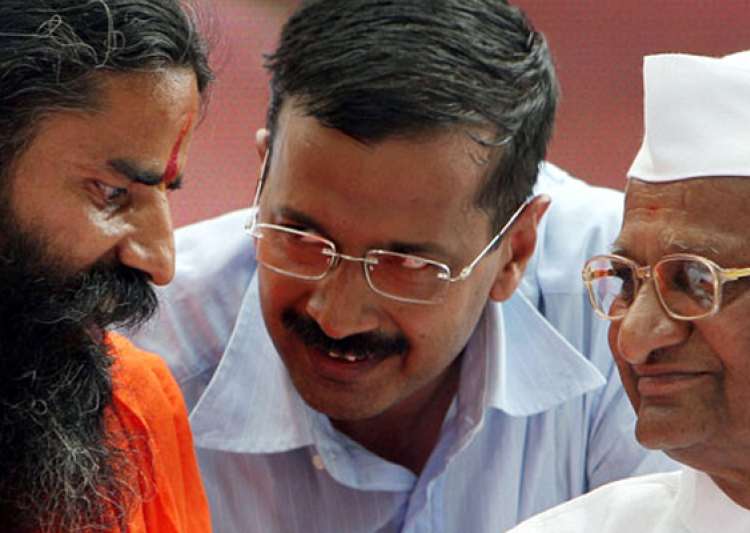
Most disturbing of all, however, are the actions of the party supremo, Arvind Kejriwal. Kejriwal has had no problem in the past drawing such Hindu spiritual leaders like Sri Sri Ravi Shankar and Baba Ramdev into his movement. Right from the get go therefore, Kejriwal has violated secularism by mingling the Hindu religion with his politics. More recently, despite the livelihood and environmental violations involved in setting up the venue for the World Culture Festival on the banks of the river Yamuna, and in contravention of his own position on corruption, Kejriwal saw it fit to attend the event, and kowtow before Ravi Shankar.  As distasteful as this may be to some, it is not necessarily out of character for unprincipled political leaders who need to engage in populist measures if they are to stay in power. It is, therefore, precisely because AAP Goa will have to play by established rules of the game once it is in power, that we need to evaluate them stringently before they get into power. In light of this, AAP Goa’s connections to soft Hindu nationalism present a clear and present danger.

(A version of this text was first published in the O Heraldo dated 29 April 2016)

Friday, October 2, 2015

Between the nation and state


Githa Hariharan is a fairly well-known novelist who has won acclaim through her works and was the recipient of the Commonwealth Writers Prize for Best First Book in 1993. Hariharan was in Goa because she is currently the Visiting Research Professor at the Goa University’s rather interesting Visiting Research Professor Programme (VRPP). The VRPP seeks to bring eminent figures in the fields of the liberal arts, social and natural sciences, and other studies to the Goa University. Even while this augments the exposure that students at the University enjoy, this programme also takes the University itself outside of the confines of the campus to various parts of Goa. Such has been the case of the course in creating a graphic novel, held in the Government College of Arts in Sanquelim, and the very many lectures that Gita Hariharan delivered in various parts of our state. One of these, on 4th September 2015, was a lecture titled “Reading the Nation through Short Fiction" at the International Centre Goa.

I was somewhat stunned by the choice of the topic; ‘the nation’. Haven’t sixty-seven odd years of Indian independence indicated that the project at forging the nation has been an utter failure? Yes, there are people who would argue that the nation is doing well. However, it is likely that these are not the people who have had to pay for the fiction of the Indian nation, more often than not with their lives, their broken and tortured bodies, and with experiences of exclusion and grinding poverty. These six decades have been built over the protests of groups all across the sub-continent, ranging from nationalists in Kashmir, Nagaland and other locations, tribals in Central India, Sikhs in the Punjab. All of these groups have been met with bloody violence and an Indian state machinery that has often violated the law and notions of human rights to maintain the figment of the nation. Then there are the daily violences suffered by persons who are Dalit, Muslim, or more recently, but just as violently, Christian. Sixty seven years of exclusion is what marks the history of the attempt to create an Indian nation.

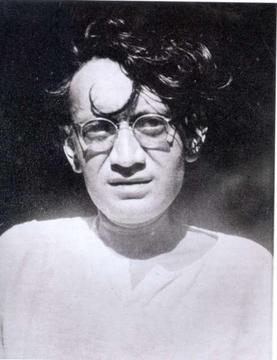
Hariharan’s choice made sense when it turned out that the fiction she chose for this particular lecture was that written by Saadat Hassan Manto. It made even more sense, when it became obvious that from among Manto’s many works, Hariharan chose those that dealt with the issue of partition of North India in 1947. It made sense because Hariharan’s choice indicated that North India is the locus of the imagination of the Indian nation. Any school student forced to read history will know that the Indian national imagination has a North Indian focus. The histories of peninsular India are awkwardly fitted into national narratives, very often almost as an afterthought. Similarly, the histories of locations beyond Bengal do not find space in these national histories. This focus and these exclusions make it quite clear that the Indian national project is a North Indian one. The nation is defined along North Indian lines, and the rest of us who have been tagged into this nation, are expected to meekly follow their leadership.

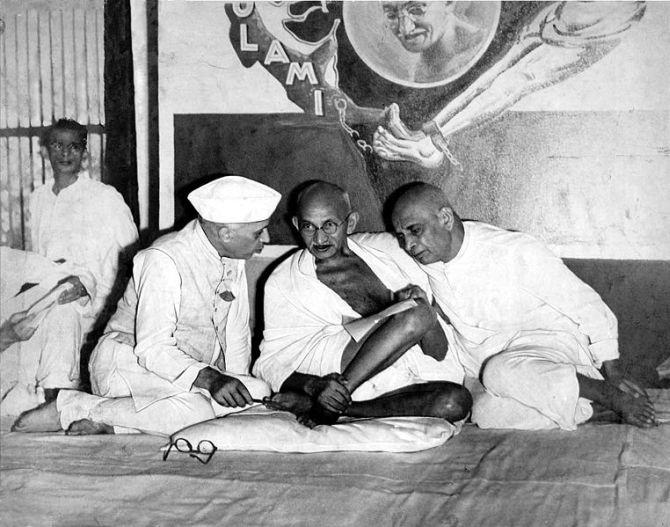
Hariharan’s choice of the violence of Partition clarified another fact about the Indian nation. The national project is not only about North India, it is also about the fratricidal politics of the North Indian elite. Independent India was imagined as a subcontinental empire ruled by brown sahibs. It was the fears of the upper-caste Muslim elites of North India that they would be excluded in this post-British India that gave rise to Pakistan. With the creation of Pakistan, the already incipient project of creating a Hindu India began, even under Nehruvian secularism, with renewed energy. The Indian national project has always been a Hindu project, and it creates space for those non Hindu upper castes who can snugly create Hindu histories for themselves.

While the choice of the nation was sufficiently strange, what was even more perplexing was that Hariharan chose to speak of the nation at exactly the time when the attempt to craft the Indian nation is being given particularly vicious attention under the premiership of Narendra Modi. To talk about the possibility of the Indian nation, especially at this point in time, is to in fact to mock the many minoritised groups within India. Rather than honestly recognise the exclusionary violence central to the project of the Indian national project, such discussions suggest that all that this project requires is a little tinkering to make it more palatable. Such suggestions ignore the fact that the problem lies not merely with the Modi government, but rather with the entire trajectory of Indian nationalism that has gotten us to these dangerous times.

It would have been more appropriate if, rather than speaking about the nation, Hariharan had chosen to speak about the construction of the Indian state. While these two terms are often clubbed together, there is a world of a difference between them. Nations do not naturally exist, they are imagined, often based on the imaginations of a dominant group, and then enforced on the rest of the population. Seeking to create a fraternal community national narratives almost never have space for the realities of exclusion. The state, on the other hand, is about power. There is no denial about this fact when talking about the construction of a state. However, the statal project is also is about the binding of that power by law, and recognising that there can be no ideal greater than the law when forging the state. The nation does not admit to this restraint. It is above law, and this fact can explain why with the horrifying growth of a shrill nationalism, the past few years has also seen the casual violations of legislations as well as natural law.

We would do well to recognise that the attempt to craft an Indian nation has failed and is an impossible project. Rather, we should turn our attentions towards seeing if from this mess of a nation, we can focus on crafting a just Indian state.


(A version of this post was first published on the O Heraldo on 2 Oct 2015)