I write this letter to you to thank you for your front page editorial on the issue of this newspaper dated seventeenth December 2009. In placing the editorial on the front page you have in many eyes; not just mine alone, reprieved the local media from a morass that many of us fear that it is headed into. News is not about the ‘neutral’ reporting of random (and increasingly irrelevant) facts alone, but as you have so strikingly indicated, about creating issues for the larger public and fostering positive politics. But your editorial did more than just set standards for media, it also helped refocus the priorities of the people of Goa, who, it appears, seem to by and large operate in blissful ignorance of the scheduled caste and scheduled tribe members of our society.
In the opening of your editorial, you quoted Bayard Rustin, an American civil rights activist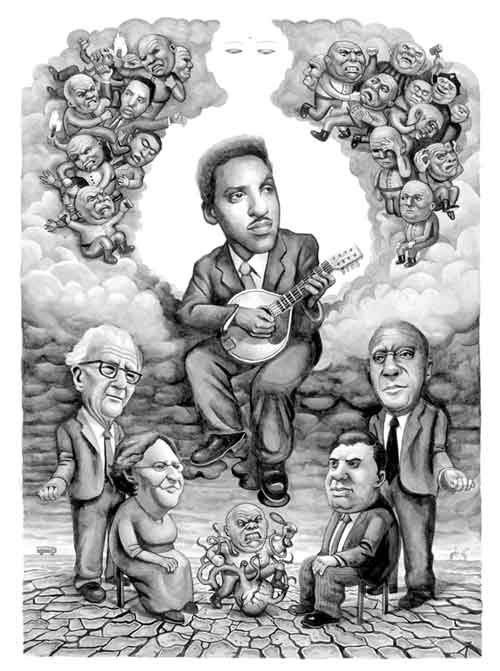 who argued that “When an individual is protesting society’s refusal to acknowledge his dignity as a human being, his very act of protest confers dignity on him.” In so quoting, you brought the debate to the heart of the matter, allowing us to counter all of the irrelevant criticisms that have subsequently been leveled against the protest that occurred on the sixteenth of December.
Acknowledging the dignity of a human being requires also that we acknowledge the existence of an individual. As already argued, we in Goa do not even acknowledge the existence of the scheduled groups and their needs. You pointed out that the protestors brought the ‘upper-caste Digambar Kamat-led government to its needs’, but the fault is not just this particular government, but the manner in which the entire society conspires in constructing Goa as an upper-caste almost paradise. All of the issues that we have been arguing for the past few months, those of the destruction being done to Goa etc, while critical and relevant, have failed to take into consideration this segment of the population, and argue the issues with their perspective in mind. Had they done so, our strategies and indeed, our achievements would today perhaps have been radically different.
It is for this reason then, because the protestors addressed the basic issue of recognition, in not one, but two different and associated forms, that they have cut for us, in their action on the sixteenth, a path that should have been trudged ages ago.
Associated with one of the groups fighting the big-capital take over of Goa via the Regional Plan, I was witness to the farce of representations to the Chief Minister and his government.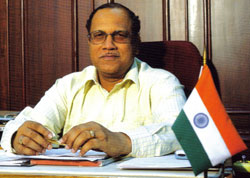 No matter how logically argued or passionately represented, these written statements received no response from a silent and non-committal state. We were constantly asked to rely on the word of the Chief Minister, who would assure us that he would ‘try his best’. Our representations were like the flailings of an attention-deprived child, before an emotionally unmoved, and punishingly silent parent. We were faced with the toughest and most insurmountable barrier of all; Silence.
In the face of this silence, I had on numerous occasions, argued with a number of groups that it is this silence that we need to break. In the face of this silence, we need to up the level of civil disobedience, lay siege to the State secretariat, until our rightful demands are met. The silence of the Government rests on the sure knowledge that we will not challenge the daily rhythm of life, and until we hamper this carefree rhythm, until we get the silent to recognize us, we will, unfortunately not be listened to. The United Tribal Association Alliance (UTAA), on the sixteenth broke that compact, and they managed to draw the Chief Minister into dialogue. Viva!
They did more than draw him into dialogue however. This Chief Minister, like others, has often engaged in the farce of dialogue. Words, are cheap, it is actions that count. And on this latter front, despite its verbal assurances, this government has failed to act. UTAA to its credit broke through this sham and demanded a ‘written assurance’. We must remember that the modern State and its bureaucracy operate through the action of writing. When we represent in writing therefore, we deserve a response in writing. Else once more we flail pointlessly before a false Baal. Two successes therefore, and two lessons for the Goan activist to learn from. First, this government will not listen until you lay siege to it, prevent ‘business as usual’, and to paraphrase you, ‘drag it to its knees’. Second, no success until and unless you get a response (i.e. recognition) from the State, in writing.
I have not seen the written assurance of the Chief Minister and so do not know the form and content of its assurance. However I do know that a mere line indicating “I will get so-and-so done, by such-and-such date” is pointless. Our demands are valid because of a sound reasoning that lies behind it. A written response from the government must necessarily respond to these demands, point by point, acknowledging in writing the validity of our claims, and acknowledging in print its failure to do so. Only then do we move governance, from the scam it currently is, towards a democratic respect for justice and due process.
What was critical in the protest by UTAA was the fact that it operated in the best traditions of civil disobedience. No property was harmed, but what was placed in harms way was the body of the protestor. It also demanded that imperial forms of governance, that place a veil between the governor and the governed are cast aside, to allow for direct contact. We would carry this tradition further if we linked it to this recognition of responsible writing.
Very often we resort to the cliché that when the interests of the most marginalized are addressed the whole system sets itself in order. UTAA’s actions on the sixteenth, that have addressed two lacunae in the operation of our democracy, seem to have pointed to the validity of the cliché. I will end this letter, reinforced once more with thanks, with the knowledge that perhaps while all is not well with the state of Goa, there is as yet, still hope!
In the opening of your editorial, you quoted Bayard Rustin, an American civil rights activist
who argued that “When an individual is protesting society’s refusal to acknowledge his dignity as a human being, his very act of protest confers dignity on him.” In so quoting, you brought the debate to the heart of the matter, allowing us to counter all of the irrelevant criticisms that have subsequently been leveled against the protest that occurred on the sixteenth of December.Acknowledging the dignity of a human being requires also that we acknowledge the existence of an individual. As already argued, we in Goa do not even acknowledge the existence of the scheduled groups and their needs. You pointed out that the protestors brought the ‘upper-caste Digambar Kamat-led government to its needs’, but the fault is not just this particular government, but the manner in which the entire society conspires in constructing Goa as an upper-caste almost paradise. All of the issues that we have been arguing for the past few months, those of the destruction being done to Goa etc, while critical and relevant, have failed to take into consideration this segment of the population, and argue the issues with their perspective in mind. Had they done so, our strategies and indeed, our achievements would today perhaps have been radically different.
It is for this reason then, because the protestors addressed the basic issue of recognition, in not one, but two different and associated forms, that they have cut for us, in their action on the sixteenth, a path that should have been trudged ages ago.
Associated with one of the groups fighting the big-capital take over of Goa via the Regional Plan, I was witness to the farce of representations to the Chief Minister and his government.
No matter how logically argued or passionately represented, these written statements received no response from a silent and non-committal state. We were constantly asked to rely on the word of the Chief Minister, who would assure us that he would ‘try his best’. Our representations were like the flailings of an attention-deprived child, before an emotionally unmoved, and punishingly silent parent. We were faced with the toughest and most insurmountable barrier of all; Silence.In the face of this silence, I had on numerous occasions, argued with a number of groups that it is this silence that we need to break. In the face of this silence, we need to up the level of civil disobedience, lay siege to the State secretariat, until our rightful demands are met. The silence of the Government rests on the sure knowledge that we will not challenge the daily rhythm of life, and until we hamper this carefree rhythm, until we get the silent to recognize us, we will, unfortunately not be listened to. The United Tribal Association Alliance (UTAA), on the sixteenth broke that compact, and they managed to draw the Chief Minister into dialogue. Viva!
They did more than draw him into dialogue however. This Chief Minister, like others, has often engaged in the farce of dialogue. Words, are cheap, it is actions that count. And on this latter front, despite its verbal assurances, this government has failed to act. UTAA to its credit broke through this sham and demanded a ‘written assurance’. We must remember that the modern State and its bureaucracy operate through the action of writing. When we represent in writing therefore, we deserve a response in writing. Else once more we flail pointlessly before a false Baal. Two successes therefore, and two lessons for the Goan activist to learn from. First, this government will not listen until you lay siege to it, prevent ‘business as usual’, and to paraphrase you, ‘drag it to its knees’. Second, no success until and unless you get a response (i.e. recognition) from the State, in writing.
I have not seen the written assurance of the Chief Minister and so do not know the form and content of its assurance. However I do know that a mere line indicating “I will get so-and-so done, by such-and-such date” is pointless. Our demands are valid because of a sound reasoning that lies behind it. A written response from the government must necessarily respond to these demands, point by point, acknowledging in writing the validity of our claims, and acknowledging in print its failure to do so. Only then do we move governance, from the scam it currently is, towards a democratic respect for justice and due process.
What was critical in the protest by UTAA was the fact that it operated in the best traditions of civil disobedience. No property was harmed, but what was placed in harms way was the body of the protestor. It also demanded that imperial forms of governance, that place a veil between the governor and the governed are cast aside, to allow for direct contact. We would carry this tradition further if we linked it to this recognition of responsible writing.
Very often we resort to the cliché that when the interests of the most marginalized are addressed the whole system sets itself in order. UTAA’s actions on the sixteenth, that have addressed two lacunae in the operation of our democracy, seem to have pointed to the validity of the cliché. I will end this letter, reinforced once more with thanks, with the knowledge that perhaps while all is not well with the state of Goa, there is as yet, still hope!
(Published in the Gomantak Times 23 Dec 2009)


