Showing posts with label goddess. Show all posts

Friday, May 1, 2015

Yellamma and her Muslim family: Rethinking Origin Myths in Goa – II


Last fortnight I recounted a birthing myth about Parashuram that is rather different from the standard story that we in Goa have come to accept as set in stone. This Dhangar myth linked Parashuram to the goddess Yellamma, and suggested that both Parashuram and Yellamma established familial relations with the Shia heroes, the Imams Hassan and Hussein. 


There were a couple of interesting aspects to that myth that bear underlining. The narrative suggested that when Satyava’s sons, Bhram, Apa, Asan, and Usan, returned home with two wild goats, Yellamma called out, to them “Your maternal aunt has come! My boy should sit down with you. Let your sister join your dining row!” What is interesting about this part of the narrative is not that Yellamma referenced herself as maternal aunt or sister to the men, but that she demanded a right for herself, and the child she birthed, i.e. Parashurama, to be seated along with these men.

Those familiar with the dining habits in non-westernised parts of the subcontinent will know that the dining line (pangath or pankti) is a central marker, not merely of precedence, but also of familial and caste belonging. Who you eat with defines who you are, or how important you are. For example, a caste that considers itself superior will not sit next to those it considers inferior in the same pangath. Similarly, those who are more important, eat before those who are less so. Thus, the patriarch and those proximate to him eat before the younger, and men of lesser importance, with the women eating last of all. 
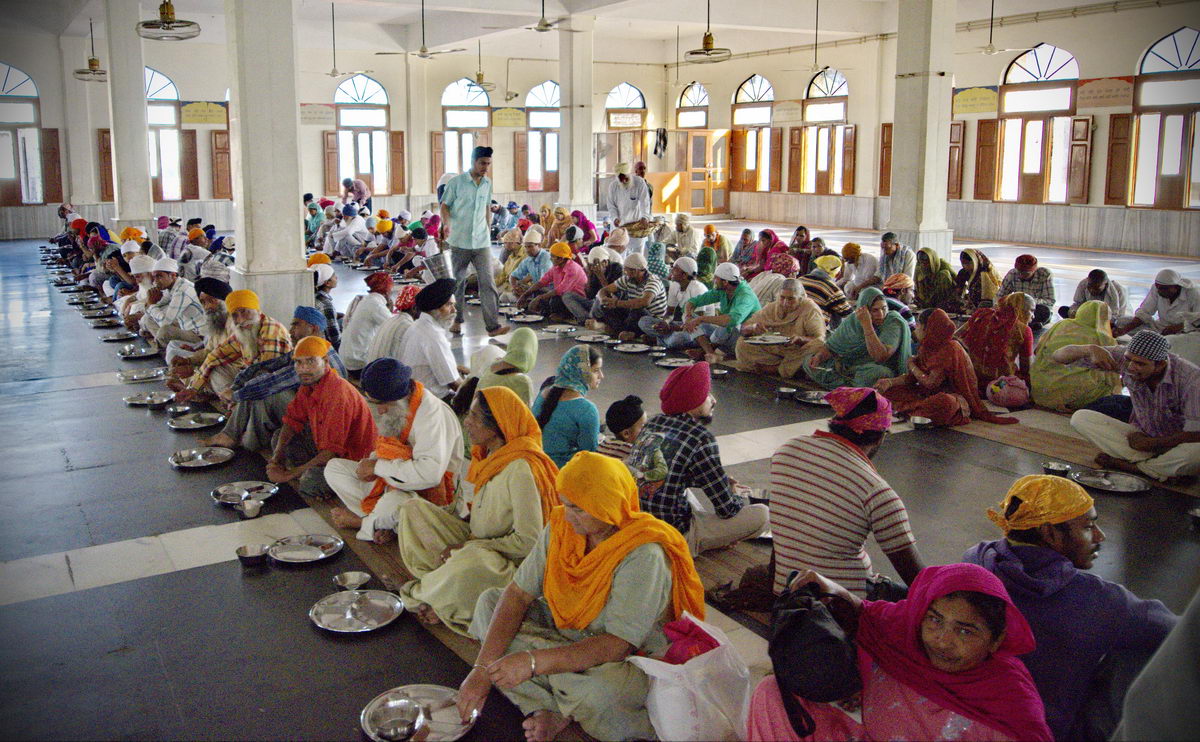
Dining in pre-colonial South Asia, an aspect that continues in some parts even today, was not a simple matter, but one that opened up space for ritual pollution. It was one of those rituals through which untouchability and inequality was, and is, perpetuated. It was for this reason that the Sikh langar (or common kitchen) stresses that everyone, regardless of caste or class, must sit together while eating. There was to be no toleration of caste and social difference within the Sikh community. It was also for this reason that so much of Indian secularism hinges on going to the homes of others and eating their food. Given that in the latter part of the nineteenth century and early part of the twentieth century people DID NOT eat with one another, something we consider so normal today, making people eat together, or eat the food of the other, was critical part of the nationalist agenda. The Indian nationalists could not imagine building a nation where people did not eat alongside with each other.

When Yellamma demands a space for herself, and Parashurama, in the dining line of the Shia heroes, therefore, she makes a number of claims. First, she recognises the validity of the Shia and Muslim men as dining partners. They are not untouchable others and inferiors, but someone she can validly eat with. Indeed, given the situation she found herself in, where she had been abandoned by her sisters, and punished by Mahadev, she was the inferior and was in fact requesting the Shia heroes to take her into their family. This equation underlines the role that the Imams Hassan and Hussein had, and continue to have, in the Deccan, that of the protectors of helpless women and children. This role for the Imams, is of course a natural consequence of their position in Shia Islam, where they are seen as defenders of justice, and partisans of truth.

Also critical to the narrative is that Yellamma and Parashurama sit down to a dinner whose main feature is the flesh of two wild goats. Yellamma, therefore, is not above eating with meat-eaters. She is willing to sit and eat with them, and integrate her child into the circle of these meat-eating men. It is another matter that she subsequently sprinkles the nectar of immortality on all the meat they had there, and gave [the dead animals] their full life-force again. However, rather than being read as evidence of Yellamma being vegetarian, it can be read as stressing her divinity, and her role as life-giving mother of all (in Kannada: Yella- everyone, Amma – mother).
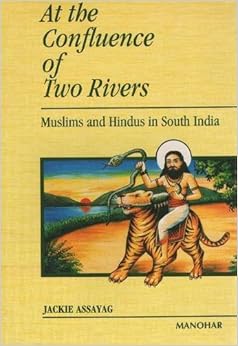
This narrative of Yellamma’s relationship with the Shia Imam’s is not the only reference to her relationship with Muslims. She also has a curious relationship with a Sufi saint by the name of Khwajah Bar Shah Wali, or simply Bar Shah. This relationship has been highlighted through the work of the French anthropologist Jackie Assayag in his work At the Confluence of Two Rivers: Muslims and Hindus in South India (2004). In this book, Assayag recounts two myths about the establishment of the site in Saundatti as sacred. One of these tells of how the goddess, afflicted with leprosy by her vengeful husband, the ascetic Jamadagni, came upon Bar Shah, who took pity on her and cured her leprosy. In gratitude Yellamma served Bar Shah faithfully for twelve years, after which the saint granted her space to settle in Saundatti, where she had remained ever since.  As would be obvious, this myth credits Yellamma’s location in Saundatti not to the Imams but to a Sufi saint. Further, it brings in aspects of the brahmanical absent in the Dhangar myth. I will deal with the brahmanical aspects of the Yellamma myths in a later column.
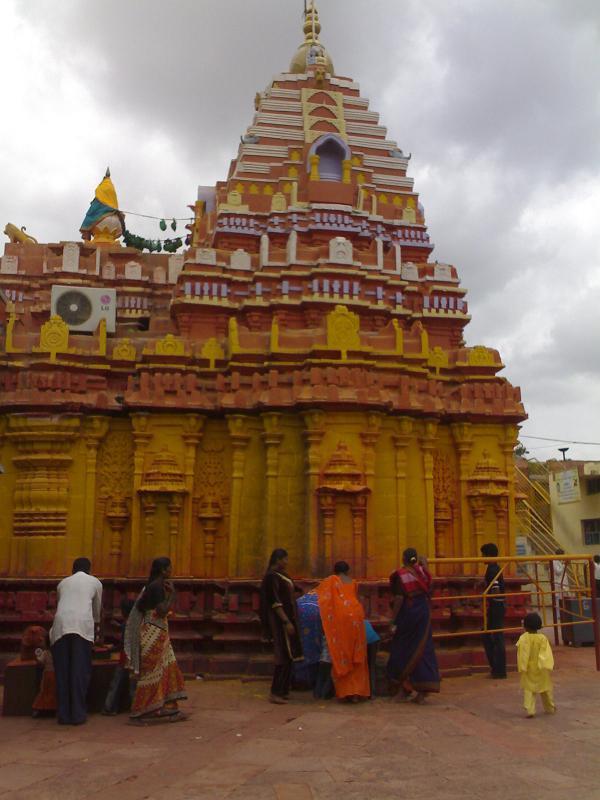
There is a twist to the tale, however, since when Assayag recounted this narrative to some local devotees of Yellamma, belonging to the Banajiga caste, they denied any knowledge of it. On the contrary, they provided a different story which presented Bar Shah as constantly antagonizing Yellamma though his constant cursing of her. The Banajiga narrative informs that in response to these curses,  the goddess blinded the saint, who thereafter realized his mistake and began to dutifully worship the goddess. Through this constant devotion Bar Shah was able to regain his sight, and remained indebted and devoted to the goddess from then on. It should be noted that Bar Shah’s tomb is located within the space of the various shrines dominated by the temple of Yellamma in Saundatti.
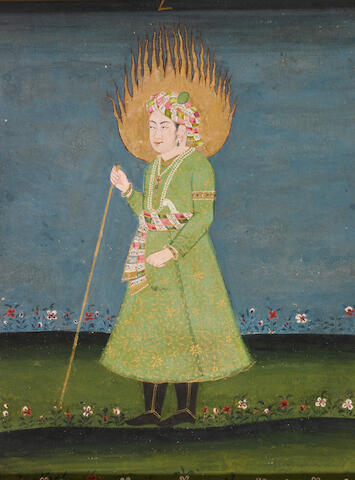
In this latter myth, the equations of power between Islamic personages and Yellamma are reversed, with Yellamma being the more powerful. What is important, however, is that in the end peace is restored and the two figures live in amity. Once again, therefore, we are presented with myths that reference the complexity of religious life in the Deccan, and indicate that Islam, whether Shia or otherwise, was a critical part of this life. 

These myths are important for those of us in Goa who are interested in non-brahmanical myths of origin. They point to us that there is a mythical realm beyond the brahmanical and must necessarily take into consideration that the spaces that are today contained in Goa, were once in the shadow of the Shia Deccan. The influences of the Shia faith still mark aspect of life in Goa, not just what we consider Hindu, but possibly Catholic as well.

Contd...

(A version of this post was first published in the O Heraldo on 1 May 2015)


Wednesday, January 13, 2010

Faith, Hindus, Christians and Cynics: A Letter to Sudin

Dear Sudin,

A couple of weeks ago, I read a letter to the editor in one of our local newspapers. Written by a Hindu gentleman who had visited a temple dedicated to Shantadurga, the letter does not indicate to us why he went there. One presumes however, that he was there to perform a ritual. While at the temple, he came across a farmer who was there to beg the intercession of the Goddess. He had suffered rodent damage to his crop, and was convinced, or so the narrator of this letter tells us, that sprinkling the teertha (holy water) in the fields would save him and his crop. This simple (and perhaps naïve) faith of the farmer proved too much for our gentleman narrator, and in his letter to the editor, exhorts that we must cease such practices of blind superstition and adopt scientific principles and rationality.

I have to confess on reading this letter I was most upset. While I might join the narrator in thinking the farmer’s practices naïve, surely they are just as naïve as the reasons that the narrator was in the temple in the first place? For what was our narrator doing in the temple? Was it not to honour a deity of graven stone?

You will realize that I am not rubbishing the practice of the worship of the Goddess. I am merely challenging the supercilious attitude of our narrator, asking him to indicate where blind superstitious faith ends, and rational belief begins! While the formulation above was clear to my mind, I nevertheless felt that I was missing something in my analysis of the issue.

A few days ago, in the course of a virtual chat, I was eager to impress you that I speak about the importance of faith in public life, not in religion. You retorted, indicating that perhaps this ‘faith’ was something you (Christians) have, whereas we (Hindus) don’t need it, it is enough that ‘we’ perform the ritual. No sooner had you made this suggestion, did I realize what was bothering me about this letter I have just elaborated on above. My response will deal with two issues; the first the whole idea that the Hindu/ Indian is alien to faith (this being a Christian/ Western innovation) and second the implications of this faithless religion.

In its attempt to dominate the world, colonialism set up certain binaries of virtues. Thus if the colonizer was material, the colonized was spiritual. If the colonizer intelligent, the colonized innocent. In these binaries, the colonized always landed up with the least flattering, as the colonizer was cast as the mature and pragmatic sibling in the relationship. These binaries were wildly popular during the halcyon days of nationalism. In the attempt to give the colonized a voice, rather than challenge these binaries, these binaries were valorized and made the basis of the colonized’s challenge. While we don’t engage in such childishly embarrassing binaries today, the tendency remains. There is an attempt at shallow sophistication. Thus colonialism is now tied to Christianity, and this faith-tradition is counterposed to the native traditions, and differences trotted out. Christianity has a text, Hinduism does not. Christianity has faith, Hinduism does not, and so forth. The idea is to cast colonialism as bringing modernity, and in face of the problems and violences of modernity, to suggest that the non, and pre-modern can provide a useful platform for a challenge to our modern mess. This is the intellectual origin of the suggestion that the Hindu has no need for faith.

Surely the encounter in the temple narrated above should convince you that the ‘pagan’ native is capable of and not innocent to faith. Empirically therefore, your argument should fall flat on its face. It is possible that you would choose to argue that this native has learned faith from the Christian. I trust you will not go down this embarrassing path and deny the bliss of faith to the native. Should you choose to do so however, what you are effectively doing is to suggest that Christianity is forever alien to native soil (a preposterous position for reasons beyond my being a South-Asian Christian). Secondly, you would be suggesting that the native faith traditions have somehow emerged fully formed, without any evolution, or that any evolution has been entirely indigenous.

In response to your argument however, I will not deny that there are Hindus who operate without faith. This is not however, exclusively a Hindu domain, since this dubious facility is shared by Christians, Muslims and Jews as well. These people fulfill their religious obligations, but do so recognizing that these are religious rituals that must be performed for the social sanction they obtain. Thus John Fernandes will take his children to mass, and introduce them to First Holy Communion, even though he thinks the Virgin Birth and the Resurrection to be ‘scientifically impossible’ and thus akin to our farmer’s use of teertha.

In these days of religious revivalism, fundamentalism et al, it is not the faithful that I fear. It is the religious. That is, those who operate in the field of religion without faith. It is true that the fields of faith and religion intersect so often that it is often difficult to distinguish one from the other. The faithful can be gullible, but it is the cynical, those who perform religious ritual, without a belief in its spiritual merit, that are perhaps more to be feared.

In the course of my itinerations round Goa, I have seen the cynics that populate the temples, obsessed more with using the Goddess as a tool to power, rather than falling prostrate at Her feet. The narrator of the letter, I would wager is one of them. The product of his cynicism, is that not only is there a failure to grow in the virtues of trust and mutual dependence that faith brings, but it brings also, as was so obvious from the letter to the editor, a certain disdain for those of the lower order. These ‘superstitious’ are seen as in- need-of-education, and at the end of the day, merely tools for us to reach the paradise that we have deemed fit for creation. Indeed, as the good Pope Benedict XVI repeats constantly, contemporary man, having displaced God, arrogates unto himself the power of God, but in the process renders fellow humans less than human. Setting out to create paradise, he invariably produces the hell of contemporary existence.

To these ramblings, I would welcome your comments.

(Sudin, is the pseudonym for a Goan (Hindu) currently engaged in a PhD in the UK. While Sudin is a pseudonym, all other references are entirely factual.)

(First published in the Gomantak Times, 13 Jan 2010)

Wednesday, July 1, 2009

A Kunbi Devi and a Secular Republic: Learnings from the Peoples’ Tribunal – III


At the concluding ceremony of the Peoples’ Tribunal, like all grateful organizers, GAKUVED presented the members of the jury and the expert panel with mementos. In this case, a classically-styled image of the Goddess Bhagvati Chimbelkarin as Mahishasura Mardini. That single moment threw into sharp focus the possible options that GAKUVED – the organizers of the Tribunal- have before them in their continuing quest for justice for Goa’s tribal people.

The presentation of the image of the Goddess was hugely problematic not only because it was the image of a Hindu goddess being presented to people who don’t necessarily share that faith. The first problem with the image of the goddess was her representation as Durga Mahishasura Mardini. As Durga, the demon slayer, what GAKUVED presented us was the image of a brahmanical goddess, killing the demon in the shape of buffalo. A number of Dalit activists, and other scholars have often pointed out that brahmanical myths operate to justify the subjugation of non-brahmanical groups, represented in these stories as asuras and demons. This story should be familiar to the organizers of GAKUVED who see the brahmanical myth of the advent of Parashuram as the story of their enslavement by brahmanical groups; an enslavement that eventually left them without control over land or their temples. It is for this reason that the presentation of a Brahmanical image of the Goddess was surprising and even troubling.

The brahmanical representation of the Goddess, as fair-skinned, tall and supple, with sharp northern (Aryan!) features is just one of many ways to represent the Goddess. A scholar friend who was researching the temples in the New Conquests, once recounted the visit of the Goddess to her in a dream. Not one to dismiss such visitations as nonsense, I asked her what the Goddess looked like, having in my own mind, the image of a fair, light-eyed woman, decked in gold and green. Imagine my surprise when with the deepest of conviction this researcher should indicate that the Goddess had appeared as a Kunbi woman!

This appearance of the Goddess in this form should not startle us, since it was the Kunbis who first discovered and recognized the presence of the Goddess in our lands. The original rocks and ant-hills, that were the primal mark of her presence, were worshipped for long without the brahmanical imagery that we today associate with her. In fact, this brahmanical imagery exists in a very interesting manner to the actual object that is held to be the deity. The images of the deities that we see today, are only coverings (masks) placed over the objects held to be the deity. These objects are either rough, misshapen rocks or ant-hills. The brahmanical decorations therefore, reject this original appearance, mask it, and present their own image as the acceptable image of the Goddess. At multiple levels therefore, the brahmanical image is a rejection of the tribal element of Goan culture and the tribal roots of our Goan-Hindu deities.

GAKUVED would do well to recognize this fact, and realize that the liberation of the servitude that Goan tribals find themselves hinges also on the creation of a counter-culture and an aesthetic that shuns the brahmanical and privileges the non-brahmanical. On receiving the image of the Goddess I inquired from a friend, why they would think that the image of Durga was appropriate as a memento. He explained to me that Chimbel was an area that was reputed to have the largest number of tribals and hence they were presenting an image of Bhagwati Chimbelkarin. Even more so therefore, the need for an image of the Goddess as a kunbi woman. To fashion the Goddess in this manner, would unleash a huge amount of self-respect within the community.

GAKUVED would also do well to take a leaf out of the history of the Bahujan samaj both in Goa and Maharashtra. By not challenging Brahmanism itself, but only fighting the Brahmins, they continue to be caught in the brahmanical trap, unable to get the respect they originally started out for, on the contrary, getting trapped as the foot-soldiers of Hindutva’s attack against the minorities of this country.

On this note, we can see how the presentation of the image of the Goddess (and use of other paraphernalia such as the ‘traditional lamp’ at the inauguration) stands to divide the tribal population of Goa, rather than unite them. Goa’s tribal population includes Catholics, and both groups would do well to combine to fight for their rights together rather than separately. The use of religious symbols however definitely acts as a deterrent to this unity.

Brahmanical seduction is however not the only barrier to tribal unity in Goa; the law does it fair share too, pointing to the brahmanical bias of the Indian state. GAKUVED is the association of Gawdas (GA), Kunbis (Ku), Velips (VE) and Dhangars (D). These groups stand to benefit from their mobilization, primarily because they are recognized by the State as Scheduled Tribes. This privilege is available only to Hindus, the non-Hindus among the tribals unable to benefit from State recognition. Until such time as this State-incentive to not renounce Hinduism is removed, it is difficult to see a collaborative demand for the correction of the systemic injustices that the tribal segments of our population encounter. Given that we work in a system where numbers count, it stands to reason that until such a time as tribals from all faiths come together, their demand will be that much easier to dismiss.

This legal obstacle toward the unity of the tribal demand, is one more evidence of the manner in which both State and society in India conspire to consolidate the existence of a Hindu community in brahmanical mould. Starting the Tribunal with the lighting of the lamp, and ending it with the presentation of an image of the Goddess, created the tribunal of a Hindu movement. Unless GAKUVED reflects carefully on the manner in which it mobilizes, it risks becoming the unwitting foot-soldier for the Hindutva movement. The challenging of Hindutva does not necessarily mean a conversion to Islam, Catholicism, or Buddhism. Neither should it be assumed to be a call to secular atheism. On the contrary, all that it calls for is a conscious articulation of a tribal identity that throws off the Brahmanical mask that stifles it. Recast the image of the Goddess as a Kunbi woman. Discard the brahmanical rituals that are seen as the only possible ritual. Rediscover, reinvent even, rituals and a religiosity that comes directly from the tribal experience. Babasaheb Ambedkar pointed out that “For a successful revolution it is not enough that there is discontent. What is required is a profound and thorough conviction of the justice, necessity and importance of political and social rights”. Such a thorough conviction of justice and the necessity and importance of political and social rights, would ensure that GAKUVED fights for the rights not only of those who have been recognized as Scheduled Tribes by the State, but also for the recognition of those who the State unjustifiably prevents from obtaining rights that they ought to have.

I wish you luck and strength my friends.

(Published in the Gomantak Times 1t July 2009)