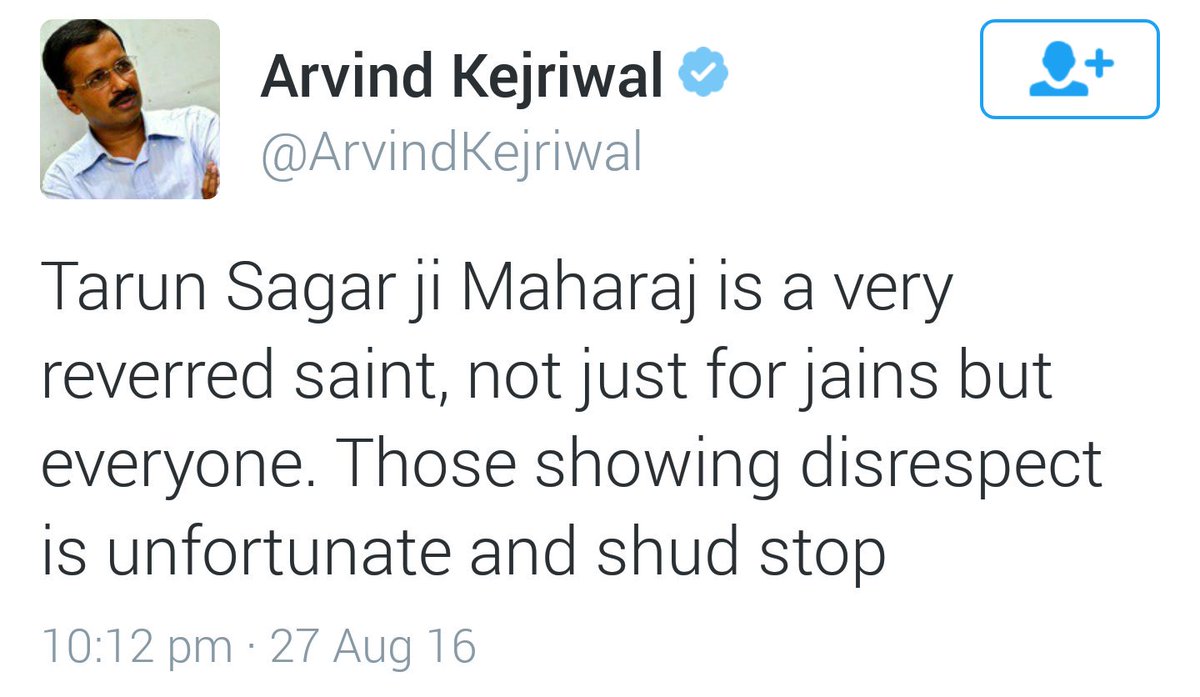
“Tarun Sagarji Maharaj is a very revered saint, not just for
Jains but everyone. Those showing disrespect is unfortunate and should stop.” Aam
Aadmi Party’s chief Arvind Kejriwal recently
tweeted allegedly in response to music composer Vishal Dadlani’s suggestion
that the Jain monk’s address to the Haryana Legislative Assembly was “monkery”.
There is one matter that needs to be addressed before moving
on to the problem with Kejriwal’s tweet; the manner in which Tarun Sagar’s
nudity has been the object of much ridicule, horror and debate. For those who
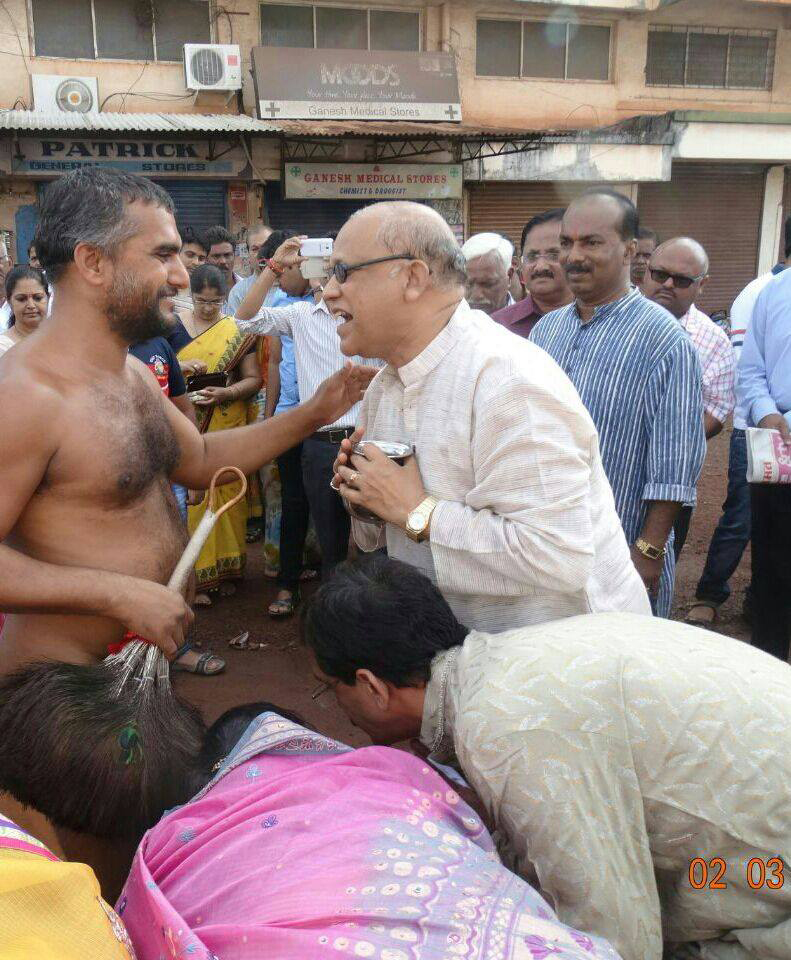
remember, Goans had their own opportunity to deride the Digambara Jain monastic
practice where monks do not wear clothing. This was in April 2015 when Digambar
Kamat participated in a procession led by another Digambara Jain monk, Pranam Sagar
Maharaj, through the city of Margao. Not only was Pranam Sagar the object of
much hilarity, but this derision was extended to Digambar Kamat, even as there
were attempts to initiate legal proceedings against the monk for obscenity.
As was rightly pointed out by the spokespersons for the Jain community at the time, it was the unfamiliarity with Jain practices that led to the complete disbelief among large segments of the Goan population. However, despite learning that some Jain monks do give up clothing in their practice of austerity, there were still a number of Goans who were not mollified. Their reaction was similar to that of some in Goa who felt that Tarun Sagar too was engaging in an obscenity and ought to be prosecuted for such act.
Both Tarun Sagar and Pranam Sagar are engaged in a practice that, in the final analysis, is not in fact hurting anyone. Just as in the case of the outrage people feel when women or men are dressed in a manner that they feel is inappropriate, if one is offended by their nudity, one need simply turn away. Of course, that both the monks were in public spaces raises the issue of how we, in a country with such a diversity of social practices, are to share public space. However, this is a matter that needs to be addressed through nuanced debate, rather than resolved through police action. At the end, this use of state violence is a fascist resolution to complex social challenges.
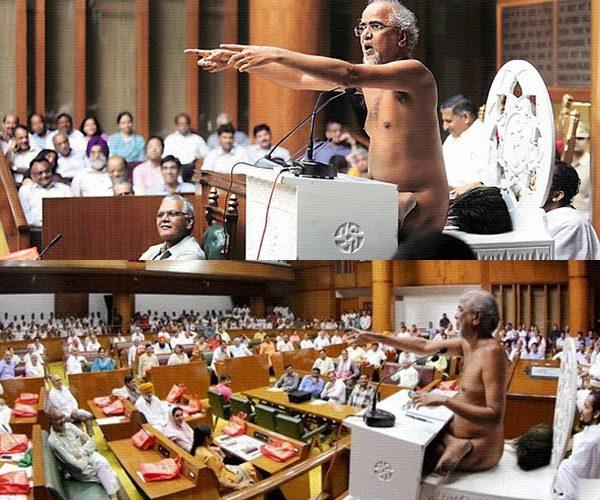 I was, therefore, mystified when people raised Tarun Sagar’s
nudity when they responded to his sermon in the Haryana legislative assembly.
If reports
are true, his being dressed would not have made his address any less
problematic. Sagar suggested the need for state legislations to be subservient
to dharma (i.e. brahmanical morality), just as he suggested that wives ought to
be disciplined by their husbands. While actively promoting hatred for Pakistan,
Sagar also continued the tradition of making brahmanical sensibilities with
regard to the river Ganges a guide for state policy. Kejriwal’s tweet could have addressed
Dadlani’s tweet by making the case for a respect for social practices – such a
monastic austerity – while also problematizing the content of Tarun Sagar’s
address. It should be mentioned that not everything Sagar expounded on was
problematic. For example, he did condemn the practice of female foeticide, and
the presence of criminals in politics. There was every opportunity for Kejriwal
to show that he was serious about creating a political environment where we can
have nuanced debate. He opted to sidestep the problematic content, however, and
only express his devotion to the monk.
I was, therefore, mystified when people raised Tarun Sagar’s
nudity when they responded to his sermon in the Haryana legislative assembly.
If reports
are true, his being dressed would not have made his address any less
problematic. Sagar suggested the need for state legislations to be subservient
to dharma (i.e. brahmanical morality), just as he suggested that wives ought to
be disciplined by their husbands. While actively promoting hatred for Pakistan,
Sagar also continued the tradition of making brahmanical sensibilities with
regard to the river Ganges a guide for state policy. Kejriwal’s tweet could have addressed
Dadlani’s tweet by making the case for a respect for social practices – such a
monastic austerity – while also problematizing the content of Tarun Sagar’s
address. It should be mentioned that not everything Sagar expounded on was
problematic. For example, he did condemn the practice of female foeticide, and
the presence of criminals in politics. There was every opportunity for Kejriwal
to show that he was serious about creating a political environment where we can
have nuanced debate. He opted to sidestep the problematic content, however, and
only express his devotion to the monk.It is this aspect of Kejriwal’s politics that is deeply disturbing and suggests that he may not be the resolution of our political problems that he presents himself as. Indeed, through many of his actions, including his response to Dadlani, he demonstrates that he is part of the Hindutva continuum.

Kejriwal’s affinity with Hindutva was first on display when
the anti-corruption rallies he organized along with Anna Hazare and Baba
Ramdev, both proponents of Hindutva, featured Hindu nationalist images
of Bharat Mata. Subsequently,
there was Kejriwal’s decision to attend the World Culture
Festival organized by Sri Sri Ravi Shankar’s Art of Living movement earlier
this year despite the fact that the festival was being organized in
contravention of existing guidelines. Not only did Kejriwal attend this event
but, while appearing in his capacity as Chief Minister of Delhi, also played
the role of a devotee of the god man just as he did in the case of his tweets
in defence of Tarun Sagar. In the case of the latter not only did he indicate
that Sagar was revered by many, but demonstrated his personal devotion to the
man by adding in a subsequent tweet that “I met Shri Tarun Sagarji Maharaj
last year. Our family regularly listens to his discourses on TV. We deeply
respect him and his thoughts.”
As I argued in an earlier column, Kejriwal violates principles of secularism by actively bringing in Hindu imagery into politics (I recognize that Tarun Sagar is a Jain, but there is not the space here to elaborate how some aspects of contemporary Jainism work with Hindutva). In this latest action, Kejriwal demonstrates that he is no different from other politicians to the extent that he is willing to be populist to remain in power. He consistently participates in Hindutva politics by portraying himself as a devotee of godmen in the Hindu spectrum, and clearly sees no problem with the same. There was not a whisper about Tarun Sagar’s problematic comments, including the suggestion that dharma must guide secular legislation.
 In such a case, it turns out the Kejriwal may
be no different from other politicians that we are subject to. In the previous assembly
elections, many Goans voted for the BJP because they thought they were voting
against corruption. In the upcoming elections, AAP is asking Goans to vote for
them for a similar reason. Goans should avoid falling for a limited agenda that
focused on corruption and a narrowly constructed idea of good governance and
realize that what is at stake in Goa is not some narrowly constructed economic
corruption, but in fact a commitment to secular values. One should beware the
Greeks (in this case, the Delhi-based leadership of AAP) who come bearing
gifts. If we don’t, our Troy will surely fall.
In such a case, it turns out the Kejriwal may
be no different from other politicians that we are subject to. In the previous assembly
elections, many Goans voted for the BJP because they thought they were voting
against corruption. In the upcoming elections, AAP is asking Goans to vote for
them for a similar reason. Goans should avoid falling for a limited agenda that
focused on corruption and a narrowly constructed idea of good governance and
realize that what is at stake in Goa is not some narrowly constructed economic
corruption, but in fact a commitment to secular values. One should beware the
Greeks (in this case, the Delhi-based leadership of AAP) who come bearing
gifts. If we don’t, our Troy will surely fall.
(First published in the O Heraldo dated 6 Sept 2016)


