Showing posts with label public participation. Show all posts

Wednesday, August 15, 2012

Lessons for the Ugly Goan: Ugly Indians and their experiments in public hygiene


In a discussion located somewhere in cyberspace, collective attention was directed toward the efforts and website of a collective of citizens in Bangalore who have grouped themselves under the name of The Ugly Indian. Fed up with the filth and litter on the streets of Bangalore, this group took it upon itself to bring a halt to the spitting (of pan), the careless littering and dumping of garbage, public (male) urination, and a variety of other factors that make life in urban India an unnecessarily unpleasant experience.

At first glance, the website starts on a disturbing note. It is marked by a high level of the self-flagellation that marks so many Indians, from various socio-economic groups. It accepts that there is such a universal category as ‘Indian’ and then moves on to suggest that we Indians are incredibly accepting of filth, and that we can take any system and mess it up, whether in India, or outside India. As examples they suggest we take a look at “Streets in Indian-dominated suburbs overseas … Southall (London), Edison (New Jersey) and Little India (Singapore)” that “are good indicators of this lack of civic sense.” As a result therefore, this group suggests that we acknowledge to ourselves that we are all of us, “Ugly Indians”.
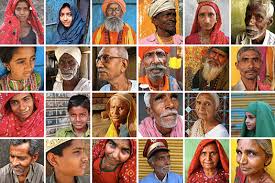
The 'Indian'?
Even though it turns out that this initial self-flagellation may in fact be a clever technique to draw the reader into the website and spur one to action, there is something terribly uncomfortable about what this framing reveals of the mind of the members of the group. Despite this discomfort however, what is truly interesting is that the members of this group are able to leave behind the useless, almost masturbatory, complaining that marks the Indian middle class when speaking of social ills, and make very interesting forays into the area that they identify as being a problem.

What is interesting about the initiatives of this group is that they do not suggest the usual routes of fines, nor ‘sensitization’ that are so often touted as solutions to the problem. Both these solutions, it should be pointed out, are particularly top-down methods, that share with the Gandhian method, a presumption that the some of us know the rules, but it is the others, necessarily lower down in the social scale, who need to be educated and if that doesn’t work, punished. Behold then, the methods of the Ugly Indians.

What they suggest is a communal approach, where we see ourselves as a group of people that must necessarily work together. Thus, rather than adopt the somewhat Gandhian martyr for the masses route, they agree that the action needs to start with one Ugly Indian, but that this action must necessarily involve the rest of the Ugly Indians on an equal footing. They point out, “this is about persuasion and smart design. It involves understanding why people were like that only, and not lecturing. It required building trust with the garbage collectors. With the shop-owners. With cleaning staff. With the recyclers.”

Their initiative worked they report, and like other successful experiments in waste management that have worked in India, it appears to have succeeded, not only because of the good will of elite citizens, but because it involved not just working with the normally ignored and neglected Municipality sanitation workers, but also the third wheel of the system, the recyclers of the informal sector.
 
Thus what seems to work is a method where we abandon the kind of command operations normally resorted to, where we direct others to do their job. Instead we need to engage with those whose job it is, without placing ourselves on the Gandhian high moral pedestal, where we make these public employees feel obliged for our engagement, and where the project is more about our sense of being wonderful, rather than in fact resolving the problem.

What also needs to be highlighted is the suggestion of this group; that the reason a number of initiatives do not work, is because these initiatives are informed by bad design. They stress that “Filth on footpaths is not random. It is part of a predictable daily cycle.” Figure out the way this cycle operates therefore, and you can design a solution that will break the rhythm of the cycle and resolve the problem. Thus in the case of a street filled with paan stains, they painted the wall white with a border of red at the bottom, placed pots with palm leaves and it seems as if their logic worked. The freshly painted white wall seemed to prevent people from spitting on something that looked like property that was cared for. Further, when the first paan-stain appeared, these Ugly Indians went and painted over it again. Continued interest in the project clearly then, is another element to a successful initiative. They also pointed out that one needs to recognize that pots could get stolen, so one places pots that no one would want to steal. The palms they suggest, was because the fronds ensured the spitter might get some of the spit on himself! Clearly then, meticulous attention to detail is another clever part of the initiative.

But it is not just culturally specific issues that the Ugly Indians deal with. They acknowledge that some kind of litter, like cigarette butts has absolutely no solution across the world, and that “No garbage clearing system is designed to handle this kind of litter.” Undeterred by this fact however, and convinced that every cigarette smoker is in fact a decent person, they set about designing a public receptacle for cigarette related waste, guided by the following rules “It should not catch fire. It should be at a convenient height and place. It should look like a bin. It should not get stolen. It should be easy to clean. It should work!” The result; a bin constructed from waste pipes, and more importantly, adopted by a local cafĂ©. So effective was their design it turns out, that people would also use the bin as a spittoon, spitting directly into the bin, and not soiling the base! What most people who castigate spitters forget, is that paan chewing is integral to some parts of Indian society. Rather than get them to give it up therefore, it seem to make more sense to install more intelligently designed public spittoons all over the place.

The Ugly Indians set us on an interesting path for addressing problems in our urban spaces. Rather than the traditional Gandhian method, they suggest we work with the lower order public employees, who in many cases are delighted to be given importance and happy to help. Second, it requires a sustained level of public involvement, without expecting applause, recognizing we are merely acting in our best interest. Finally, the issue is about better design. As any designer would tell you, design begins with understanding the patterns of the intended user or client. Understand the pattern and you are able to fix the design challenge!

The stage, it appears, is now set for the Ugly Goans to come forward and take charge.

(A version of this post was first published in the Gomantak Times dtd 15 Aug 2012)

Wednesday, July 11, 2012

Catching the social: And not missing the bus


As the Non-Motorized Zone (NoMoZo) initiative progresses toward its third installment, there are two broad cautions that is appears we need to keep in mind. The first is that without the leaders of this initiative indicating quite clearly the direction they intend to take, and the larger principles that animate the initiative, NoMoZo could well turn into just another feel-good event organized at regular intervals. There is no doubt a larger intellectual framework for the project and it would be worthwhile to share this with the larger public, both those who turn up with such enthusiasm for NoMoZo, as well as those who do not. This act of sharing would impart to NoMoZo, which already brims over with popular energy, a democratic element, in so far as democracy ideally involves an element of information and consciousness. Without these two elements, an initiative, no matter how popular, would remain merely populist.

The second caution that we would need to address, and one that this column will spend some time on, is that of the response that a good amount of persons involved in the exercise seem to toward the perceived goals of the project. Where the goals are being demonstrated to be to reduce the amount of traffic on the roads of Panjim, the solutions being offered by these enthused members of the citizenry are largely technological fixes. Thus, the solution to the  swarm of traffic that currently clog Panjim’s roads are held to be the banning of vehicles into the centre of Panjim, the introduction of trams and bus routes, the adoption of cycles; and to resolve the parking crisis, the creation of multistoried parking  facilities.

This column will suggest that while technological fixes are necessary, they can only be a part of the solution, and perhaps in the final analysis a rather small part of the solution. Any comprehensive solution, we would argue, must necessarily take the social into consideration. We mean a number of things when we say ‘the social’. First, that there is not only the need for a change in social attitudes, but we need to ground our efforts and suggestions in the NoMoZo in an empathetic view of the society we live in.

An empathetic view of our society would commence with the idea that recognizes that our society is extremely status conscious, and that vehicles, both two-wheelers and four, are marks of having arrived socially. They are indicators of our social and consumptive power. Having recognized this, we could make a distinction between people who have held power for a substantial amount of time, and now spend money in purchasing either one (or more) vehicles (for each member of their family), and those that have spent blood and tears and have put together enough money to purchase their first motorcycle or first car. It would be quite alright for us to suggest to the first category, that enough is enough, they might as well start using cycles and public transport; while on the other hand, to tell (either directly or indirectly) those who have only just got their first vehicle, that their desire is bad and that they need to move to cycles and public transport, especially given the state of public transport in Goa today, would be positively cruel. As was argued in an earlier column, even while we attempt to reduce the number of vehicles on our streets, NoMoZo, would have to effectively recognize that the purchase of vehicles is fueling a social need of the claiming of respect, and this is something that we will have to live with.

A second way in which we have to ground our dreams for NoMoZo, is to recognize that Panjim enjoys a certain relationship with the peri-urban spaces around it. A vast majority of the people that use Panjim as an urban centre do not in fact live in Panjim, or even around Panjim, but often at great distances away from Panjim. It is going to be practically impossible to tell them to use cycles in Panjim, even if one makes provisions for the public transport system leading into Panjim to be fitted with cycle carriers. There is simply no way in which we can enable so many people to use public transport to transport their cycles into Panjim. In such a case, we need to recognize that alongside the creation of reliable public transport within the city of Panjim, we need to also create a system of reliable state-wide public transport that allows people to travel between Panjim and their homes and back with the greatest of ease possible.

The Chief Minister Manohar Parrikar seems to have got this little detail right. In a recent interview he indicated that unless the manner in which the bus-system operated was changed, how could he expect people to give up their air-conditioned vehicles and travel by public transport? Mr. Parrikar, may also have been the force behind the brilliant innovations of the Kadamba Transport Corporation (KTC) some years ago; in particular the shuttle services between the main cities in Goa. For those who wanted to abandon their vehicles at home and travel by public transport (even if not air-conditioned) this was a dream come true. As with all things however, the system slipped after its initial enthusiasm, becoming extremely unreliable. The questions that NoMoZo should ideally start encouraging the public to pose is this, can this system be pulled back to its former ‘glory’? Can this system be replicated by creating hubs in larger villages from where one can catch similar shuttles into the major cities in Goa? Thus, for example, could we take a shuttle from Aldona to Panjim or Mapusa, instead of having to travel to Mapusa and then taking the shuttle to Panjim? More importantly, does this system necessarily have to be led by the KTC, or can we ensure that the private bus operators are able to fulfill this function effectively? Mr. Parrikar may in fact be the right person to set this process in order, given not only his much-lauded desire for instituting discipline, as well as his sympathy for some form of privatization. It is when we take an empathetic view of our society, that we would believe that it is possible, under the right combination of incentive and punishment, to get the existing entrepreneurs to work in the larger public interest. Our general attitude would invariably be to dismiss these entrepreneurs as irresponsible and uninterested in the public good. If NoMoZo is about giving our cities another chance, it should also encompass giving our people a second chance.

An empathetic view of society would understand that making NoMoZo a reality is not simply about asking people to take pledges to give up something, nor about offering technological fixes for our problems. It is about recognizing that NoMoZo is really a popularly led policy initiative, and like all policy initiatives, needs to be based on a comprehensive understanding of the society it is seeking to benefit. Understand the needs of the society, the constraints that force people to act in particular manners, and one will not need people to see the changes as sacrifices. On the contrary, they will automatically embrace the proposed changes.

With luck to NoMoZo’s third installment, scheduled for Sunday, the fifteenth of July on 18 June Road.

(A version of this post first appeared in print in the Gomantak Times dtd 11 July 2012)