 Responding to earlier columns, a friend recently asked for a definition of the word ‘brahmanical’. While perhaps a definition of the term will not be forthcoming, at least not in this column, perhaps examples of brahmanical thought, in this case history-writing, could be provided. A rather interesting example of the same was provided in the course of the first sessions of the Global Goans’ Convention held in London over July 22- 24.
The most striking example of brahmanical history-writing was provided by Dr. Damodar R. SarDesai, who is Professor Emeritus at the University of California in Los Angeles. That he is a historian is a somewhat tragic indicator of the manner in which brahmanical polemics, such as displayed in his presentation, are so often accepted as the acceptable basis of social science. Conversely however it is precisely because he is a historian, that we can see the manner in which polemics is converted to history.
 For Dr. SarDessai, reflecting on 50 years of ‘Liberation’, the period of Portuguese sovereignty in Goa was one long and dark period of trial, tribulation and lack of development. He was able to say this however because he was speaking from the position of the brahmanised dominant castes of Goa. He did not recognize the fact that the initial period of Portuguese sovereignty allowed to the oppressed castes in the region, the possibility of conversion to Catholicism and thus social mobility. In later periods of Portuguese sovereignty, it allowed non-dominant Hindu caste groups similar options of social mobility, especially after the Novas Conquistas were added to the Catholic territories of the Velhas Conquistas. This acquisition, allowed for these caste groups, to not only change residence, and hence escape persecution of their ‘upper’ caste feudal overlords, but it also allowed them to represent themselves in the process of the shift, as a different caste group entirely, increasing in this process their social standing. Much later, the Portuguese State offered any options, especially to the Gomantak Maratha Samaj, for education and social mobility.
These facts are inconvenient to a brahmanical history, that because they see the pre-colonial period from the point of view of the dominant castes, see this period as a happy conflict-free time. The other side of this happy story however is that this pre-colonial time was an unhappy time for suppressed groups and for all its faults, colonialism also provided space for the partial liberation of these non-dominant groups. Brahmanical polemics do not necessarily see the post-colonial period as a necessarily happy one either. Until the post colonial order works to the benefit of the dominant castes, the brahmanical will not be appeased. Thus in Dr. SarDessai's polemic, it was not sufficient that the Portuguese were ejected from Goa, the first, and confirmedly anti-brahmanical Chief Minister of Goa, was mentioned but once, and in so flippant a manner, it left the audience wondering as to the man's ultimate worth.
A column of this length cannot do justice to the absolute horror that was the presentation of Dr. SarDessai. What should for the moment suffice to demonstrate its horror was the response of Dr. Teotónio R. De Souza. Dr. De Souza is recognized within the field of Goan and ‘Indo-Portuguese’ history as an authority. What is often not openly stated, by whispered and smiled at is the fact that Dr. De Souza does not normally spare a kind word for the period of Portuguese sovereignty. Dr. De Souza was forced however, by Dr. SarDessai’s polemic, to abandon his (no-doubt carefully crafted) text, and ad-lib a response to Dr. SarDessai. In a muted manner, perhaps owing to the presence of Indian government officials and non-academics in the room, Dr. De Souza sought to tone down Dr. SarDessai’s assertions.
 Perhaps the rebuttal comes to late however, because Dr. De Souza has himself many occasions built his version of Indian nationalist history of Goa on brahmanical lines. An example of this foundational presence of brahmanical thinking was obvious when he argued that the specificity of Goa (as with any other place) was contributed to through the presence of the minorities in Goa. This assertion is brahmanical because it accepts the brahmanical assertion that Hindus across the subcontinent are the same, they are one single and indivisible community. Such assertions while patently untrue, are necessary to ensure the domination of the brahmanised groups (and the supremacy of brahmanical thought) that control the destinies of post colonial India. We should at the same time recognize however, that Dr. De Souza seems to have been forced into this position of speaking of the Catholic, because it was obvious in the course of Dr. SarDessai’s presentation, that his intense disparaging (bordering on hatred even) of the Portuguese formed an ideal basis on which to denigrate the cultural condition of the Goan Catholic. It should be pointed out simultaneously, that more recently, especially when he argues of the presence of 'many liberations', Dr. De Souza seems to be moving toward a more complex understanding of the moment of the integration of Goa into the Union of India. In doing so he seems to be recognizing the limiting frames that nationalism and especially brahmanical nationalism present to the study of Goa, colonialism, and the post-colonial. One suspects that it is the rise of right-wing Hindu nationalismto this rethinking, that spurs Dr. De Souza since Dr. De Souza persists in (rightly) calling out instances of Portuguese superciliousness in the academy. Dr. De Souza further betrayed the brahmanical influences on his thought when he responded to Dr. SarDessai, that the success of the Portuguese lay in the fact that they also managed to convert one-third of the population to Catholicism. Dr. De Souza made another error here, where he clearly (if unconsciously) buys into the generally accepted idea that it is only the Catholics that were ‘tainted’ by the Portuguese, while the ‘Hindus’ retain their cultural purity and authenticity. Once more, nothing could be further away from the truth. In the course of their working with the Portuguese State, as well as in the course of everyday market relations, the brahmanised groups in Goa were, and are, also children of the Portuguese (and other Catholic and European) cultural influences. This impress exists on their food, their language, their dress and every other cultural institution they may seek to present as authentic and untouched. Why then, assume that the Goan Catholics alone are the mark of Portuguese success? One does so, because of the brahmanical assertion that it not only in upper caste practice, but more specifically in Hindu practice that authentic ‘Indian-ness’ is captured
What was perhaps most striking about Dr. SarDessai’s address however was the fact that he found it necessary to humiliate and insult the Portuguese (and their lack of effective colonization) in order to retrieve the honour and prestige of the brahmanised groups he spoke for. Those who have reflected on the workings of caste will know that humiliation – whether verbal, when we point to someone’s birth in a ‘lower’ caste, invariably to ‘put them in their place’, or physical, through the practices of untouchability – is the most significant strategy of casteist and hence the brahmanical order. Interestingly however, when one humiliates the Portuguese for ineffective colonization (or development), one is praising the British style of colonization and development. This move then, demonstrates that close ties that the brahmanical makes with the colonial. In this move we realize that brahmanical thinking, is not necessarily an ancient framework that necessarily returns us to a moment of pre-colonial innocence, but in fact a contemporary development that gains its power from colonial (and especially British) intellectual frameworks. Through this lineage, the brahmanical is connected to the racist and other exploitative frameworks that held sway in the nineteenth century.
What should be mentioned in conclusion, is that it isn’t poor Dr. SarDessai alone who should be blamed. That he is the carrier of an infectious brahmanical thought process is true. However, his pronouncements were by and large accepted silently by the audience, because Dr. SarDessai was able to quote from a stock of knowledge that has gained credibility over time. Merely because it has gained credibility over time however does not make it right, it only makes the task of dealing with it, and the sneaky manner in which it secretes itself into our work, that much more difficult.
Jai Bhim!
(Comments are welcome at www.dervishnotes.blogspot.com)
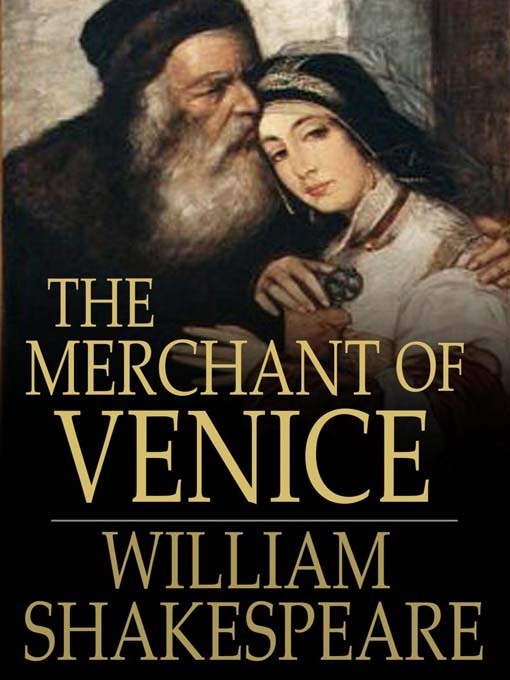 I am a Jew.
Hath not a Jew eyes? Hath not a Jew
hands, organs, dimensions, senses,
affections, passions? Fed with the same
food, hurt with the same weapons, subject to the same diseases, healed by the same means, warmed and cooled by the same winter and summer, as a Christian is? If you prick us, do we not bleed? If you tickle us, do we not laugh? If you poison us, do we not die? And if you wrong us, shall we not revenge?
 Where
generations of urban and upper-class/caste Indians have been able to appreciate
the pain articulated by Shakespeare in the Merchant
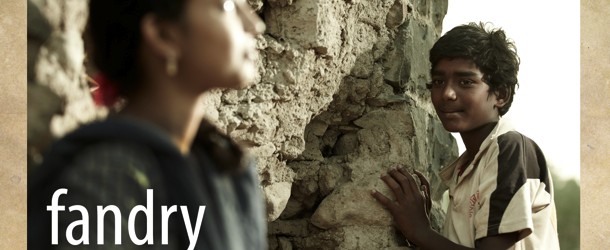
of Venice, Fandry, the Marathi
language film written and directed by Nagraj Manjule locates the sentiments of
the grievously wronged Shylock within the setting of the Maharashtrian Deccan
through the story of Jabya. Born into an untouchable caste, Jambavant (Jabya),
demonstrates the universality of the human experience when he experiences a
boyhood crush on his classmate Shalu. The problem, however, lies in the fact
that not only does Shalu seem completely oblivious to Jabya’s feelings for her,
but that this possibility does not even cross her mind since she belongs to the
area’s dominant castes. What is heart-wrenching in this story is that Jabya
recognises that the gulf between their social circumstances would play a role
in Shalu refusing to consider his love for her, and yet, continues to hope
against hope, that she will indeed fall in love with him. Given that there is
no harm in seeking the aid of higher powers, Jabya is also engaged in a hunt
for a black sparrow, since he has been convinced by his older friend, Chankya,
played by Manjule, that sprinkling the ashes of this bird on the object of
one’s affection will make ensure that they fall in love with their admirer.
 There are a
plethora of reasons why Fandry stands
out as an exceptional film, the foremost of which is that it manages to turn
our gaze on the ruthless operation of the caste system and the associated
social structures by seducing us into following this universal story of first
love, and empathising with Jabya’s situation. There is no preaching, no moralizing;
Jabya’s story unfolds matter-of-factly, humorously even, with all the quotidian
humiliation, and challenges that would face a young untouchable in any mofussil
town or village. The film locates the school as the space for change, the space
that will enable India to realise its republican dream and challenge the oppression
of the caste system. It is the school that permits Shalu and Jabya to inhabit
the same space and allow Jabya to be enamoured of his girl. It is also the fact
of his going to school and being forced to interact with others as an equal
that spurs Jabya to refuse to fulfil the traditional obligations of pig-catching
that his caste, and his father (nicknamed Kachru, or rubbish, by the dominant
castes of the village) in particular are forced to fulfil. Indeed, the film
makes it quite obvious that if caste persists in India, it is not because it is
a remnant of some ancient system, but because it is physically enforced by
dominant castes across the country and acquiesced to by impoverished Dalits
with no other option. Into this miserable reality, it is schooling that
provides a possible way out.


