 I am a Jew.
Hath not a Jew eyes? Hath not a Jew
hands, organs, dimensions, senses,
affections, passions? Fed with the same
food, hurt with the same weapons, subject to the same diseases, healed by the same means, warmed and cooled by the same winter and summer, as a Christian is? If you prick us, do we not bleed? If you tickle us, do we not laugh? If you poison us, do we not die? And if you wrong us, shall we not revenge?
I am a Jew.
Hath not a Jew eyes? Hath not a Jew
hands, organs, dimensions, senses,
affections, passions? Fed with the same
food, hurt with the same weapons, subject to the same diseases, healed by the same means, warmed and cooled by the same winter and summer, as a Christian is? If you prick us, do we not bleed? If you tickle us, do we not laugh? If you poison us, do we not die? And if you wrong us, shall we not revenge? 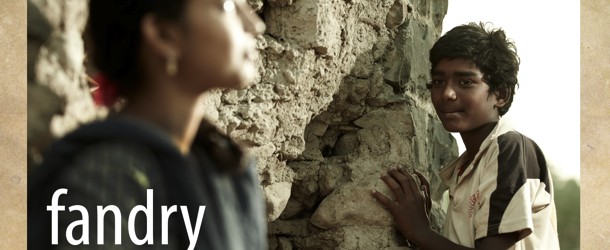 Where
generations of urban and upper-class/caste Indians have been able to appreciate
the pain articulated by Shakespeare in the Merchant
of Venice, Fandry, the Marathi
language film written and directed by Nagraj Manjule locates the sentiments of
the grievously wronged Shylock within the setting of the Maharashtrian Deccan
through the story of Jabya. Born into an untouchable caste, Jambavant (Jabya),
demonstrates the universality of the human experience when he experiences a
boyhood crush on his classmate Shalu. The problem, however, lies in the fact
that not only does Shalu seem completely oblivious to Jabya’s feelings for her,
but that this possibility does not even cross her mind since she belongs to the
area’s dominant castes. What is heart-wrenching in this story is that Jabya
recognises that the gulf between their social circumstances would play a role
in Shalu refusing to consider his love for her, and yet, continues to hope
against hope, that she will indeed fall in love with him. Given that there is
no harm in seeking the aid of higher powers, Jabya is also engaged in a hunt
for a black sparrow, since he has been convinced by his older friend, Chankya,
played by Manjule, that sprinkling the ashes of this bird on the object of
one’s affection will make ensure that they fall in love with their admirer.
Where
generations of urban and upper-class/caste Indians have been able to appreciate
the pain articulated by Shakespeare in the Merchant
of Venice, Fandry, the Marathi
language film written and directed by Nagraj Manjule locates the sentiments of
the grievously wronged Shylock within the setting of the Maharashtrian Deccan
through the story of Jabya. Born into an untouchable caste, Jambavant (Jabya),
demonstrates the universality of the human experience when he experiences a
boyhood crush on his classmate Shalu. The problem, however, lies in the fact
that not only does Shalu seem completely oblivious to Jabya’s feelings for her,
but that this possibility does not even cross her mind since she belongs to the
area’s dominant castes. What is heart-wrenching in this story is that Jabya
recognises that the gulf between their social circumstances would play a role
in Shalu refusing to consider his love for her, and yet, continues to hope
against hope, that she will indeed fall in love with him. Given that there is
no harm in seeking the aid of higher powers, Jabya is also engaged in a hunt
for a black sparrow, since he has been convinced by his older friend, Chankya,
played by Manjule, that sprinkling the ashes of this bird on the object of
one’s affection will make ensure that they fall in love with their admirer. There are a
plethora of reasons why Fandry stands
out as an exceptional film, the foremost of which is that it manages to turn
our gaze on the ruthless operation of the caste system and the associated
social structures by seducing us into following this universal story of first
love, and empathising with Jabya’s situation. There is no preaching, no moralizing;
Jabya’s story unfolds matter-of-factly, humorously even, with all the quotidian
humiliation, and challenges that would face a young untouchable in any mofussil
town or village. The film locates the school as the space for change, the space
that will enable India to realise its republican dream and challenge the oppression
of the caste system. It is the school that permits Shalu and Jabya to inhabit
the same space and allow Jabya to be enamoured of his girl. It is also the fact
of his going to school and being forced to interact with others as an equal
that spurs Jabya to refuse to fulfil the traditional obligations of pig-catching
that his caste, and his father (nicknamed Kachru, or rubbish, by the dominant
castes of the village) in particular are forced to fulfil. Indeed, the film
makes it quite obvious that if caste persists in India, it is not because it is
a remnant of some ancient system, but because it is physically enforced by
dominant castes across the country and acquiesced to by impoverished Dalits
with no other option. Into this miserable reality, it is schooling that
provides a possible way out.
There are a
plethora of reasons why Fandry stands
out as an exceptional film, the foremost of which is that it manages to turn
our gaze on the ruthless operation of the caste system and the associated
social structures by seducing us into following this universal story of first
love, and empathising with Jabya’s situation. There is no preaching, no moralizing;
Jabya’s story unfolds matter-of-factly, humorously even, with all the quotidian
humiliation, and challenges that would face a young untouchable in any mofussil
town or village. The film locates the school as the space for change, the space
that will enable India to realise its republican dream and challenge the oppression
of the caste system. It is the school that permits Shalu and Jabya to inhabit
the same space and allow Jabya to be enamoured of his girl. It is also the fact
of his going to school and being forced to interact with others as an equal
that spurs Jabya to refuse to fulfil the traditional obligations of pig-catching
that his caste, and his father (nicknamed Kachru, or rubbish, by the dominant
castes of the village) in particular are forced to fulfil. Indeed, the film
makes it quite obvious that if caste persists in India, it is not because it is
a remnant of some ancient system, but because it is physically enforced by
dominant castes across the country and acquiesced to by impoverished Dalits
with no other option. Into this miserable reality, it is schooling that
provides a possible way out.
This conclusion
comes at the end of the capture of the village’s pig (Fandry) scavengers that
Jabya’s family are required to engage in. After having captured the audience
with the universality of the human experience it is this dramatic hunt that
brings into sharp highlight the various institutions that operate against the
Dalit. There is the humiliation of not merely individuals, but entire families
as they are forced to do work that others consider degrading. Having engaged in
such work for over a lifetime, individuals such as Kachru begin to lose their
self-respect. It highlights the threat of rape by dominant caste men that
continuously hangs over Dalit women. Most importantly, the film mocks the
rituals of nationalism that rather than aiding the lives of Dalits, in fact add
to their burdens.

(A version of this post was first published in DNAindia.com on 13 Dec 2013)


