Showing posts with label Arvind Bhatikar. Show all posts

Friday, September 18, 2015

Shades of casteism


It is often the case that when speaking about caste-related problems one is accused of being casteist.  This is also true in Goa, where any discussion about the realities of caste power evokes accusations of being motivated by a personal dislike for brahmin groups, or of constantly “targetting” brahmins, especially—so the argument goes—given that the Saraswats are but a minority community; so any polemical attack on them amounts to casteism or communalism.

 But it is not casteism to speak about the violence of unequal power relations engendered by the presence of the caste system and the identities of caste. Rather, the conspiracy of silence around unequal power relations and the dominance of a single group, or a couple of groups, through caste privilege is what constitutes casteism. There is generally a deep silence about the violence of caste, and casteism operates when those who seek to speak about this violence, and challenge it, are accused of being casteist.
Let us be clear that in Goa, the Saraswats may be a small community, but they are a powerful community who hold much social, cultural and economic capital, and whether consciously or unconsciously, they wield power to ensure their continued hegemony. They fulfill the sociological category of “the dominant caste” constructed by the famous sociologist M. N. Srinivas. To expose the manner in which this power is wielded is not, to my eyes casteism. 

There are often suggestions, that “to be proud of one’s origins is not casteism”. Rather, casteism is when one “belittle[s] the origins of others”. This is an ingenious strategy beloved of many supporters of the caste system.  These proponents of the caste system fail to recognise that any identity of the self is invariably linked to identities of others. Thus, one can be brahmin only because others are not. Further, as a result of the operation of history, the brahmin identity is not an innocent identity. It is invariably the identity of oppressors. This is more so the case in Goa, where groups that claim a Saraswat identity, whether Catholic or Hindu, have controlled property, people tied to those properties, and attempted to control the rest of society too. There is not the space here to demonstrate fully how the assertion of a brahmin identity in Goa is invariably at the cost of demeaning a non-brahmin one, but any honest look at our society and history will bear this out.

It needs to be stated clearly, however, that the problem in Goa is not just with brahmins alone. There are other upper-caste groups, like the Chardos and the Desais, who despite their limited size similarly exert power owing to the manner in which they not just control landed property, but enjoy social privilege. Indeed, as the case of the Konkani Bhasha Mandal (KBM) will demonstrate, it is possible for Chardos to operate with the brahmanical matrix that the KBM embodies. As friend once commented, “for the Chardos, to be anti-brahmin is to be anti-caste”. What they all too often ignore is that they are a part of the problem, along with the brahmins.

It is this limited anti-brahmin agenda, instead of an agenda of anti-brahmanism that has ensured that the bahujan movement in Goa has missed a historical opportunity to forge a democratic polity. Instead, they have slipped into Hindu nationalism, precisely because the brahmanical logic of Indian nationalism have not been challenged. Take the constitution of the Bharatiya Bhasha Surkasha Manch (BBSM), which includes not just brahmins like Bhembre, but leaders of the bahujan castes, like Shashikala Kakodkar and Vishnu Wagh. Once again though, it is impossible to have Brahmanism, without the body of the brahmin, and it is precisely through the presence of brahmins in the BBSM that it gathers its symbolic strength. This is so because historically, it has been dominant caste groups, and especially brahmins that have set themselves up as arbiters of style and standard.

The power that Bhembre, Bhatikar, and other brahmins, Hindu or otherwise, claim to determine “standard”, whether of Konkani or otherwise, flow from the way in which upper caste individuals asserted their claim over languages in the late nineteenth century. In this context I would like to refer attention to the work of Veena Naregal in Language, Politics, Elites and the Public Sphere (2001) where she points out  that
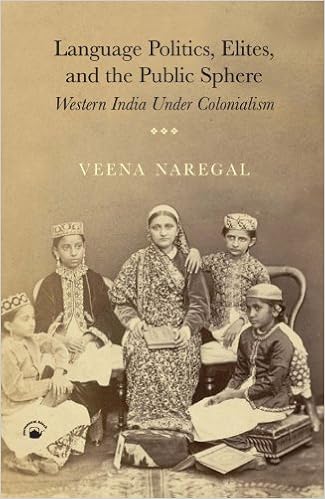
“By the later decades of the nineteenth century, drawing on philological beliefs about the essentially interrelated genealogy of the Indian vernaculars and their common descent from the immaculate purity of the great and ancient Sanskrit language, English-educated individuals in different parts of the subcontinent could claim to constitute a transregional kinship with an immaculate high' cultural pedigree. An important part of this elite self-image was their shared status as custodians of 'correct' cultural practices. Thus, when giving the Wilson philological lectures in 1877, claiming descent from the noble brahmins of the 'ancient aryavarta' was, for the well-known orientalist scholar Bhandarkar, clearly, a way of enlarging through their dominance over the regional vernacular spheres”(p. 48).

It has been suggested that Uday Bhembre and Arvind Bhatikar are ‘good’ persons who have “the highest respect” for the Christian community in Goa. If they do, they have a very strange way of showing it, given that they have been suggesting Goan Catholics are anti-national merely for asserting their right to educate their children in the same English language that Bhembre and Bhatikar’s families are being educated. One wonders if these good persons have directed similarly vituperative language at the members of their own families. In any case, the assertion of the patriarchal right to dictate to other local communities is very much a part of brahmanical arrogance. An ideal way to show respect for the Christians in Goa would be for Bhatikar and Bhembre to cease their frightening hate-speech and support the right of these communities to determine the path of their own future.

(A version of this post was first published in the O Heraldo on 18 Sept 2015)

Friday, August 21, 2015

Bhembre, Nagri Konkani and the project of Brahmin supremacy


Some time ago, speaking on the BBSM’s platform against the assertions of FORCE Uday Bhembre, is reported to have represented “the FORCE action as not a mere step for English medium but a revival of the Portuguese agenda to denationalise Goans from its language and culture.” In addition, Bhembre suggested that, “‘English medium is a step of deculturisation, leading to the ultimate agenda of denationalisation. These are the same people who line up in front of the Portuguese Consulate for Portuguese passports. Tomorrow, these people would not hesitate to chant a slogan – Viva Portugal’”. Bhembre is not the only person to have made these suggestions.  Arvind Bhatikar is reported to have made similar statements. 
 
Persons familiar with recent history will not be surprised that Uday Bhembre is associating with the Hindu nationalist RSS and engaging in hate speech against the Catholics in Goa. However, at least the 80s this is the man who was hailed by the hierarchy of the Catholic Church as one of the most secular leaders of Goan society. How then, did this switch take place?

This confusion will be allayed, and Bhembre’s recent statements make sense, if we place him within a tradition that seeks brahmanical hegemony over both Konkani and Goa.


For this it is necessary that we go back into the past, to The Triumph of Konkani penned by Vaman Varde Valaulikar (translated by Sebastian Borges, 2003), fondly known to his spiritual children as Shenoi Goembab. The first chapter of Valaulikar’s polemic seeks to establish that Konkani is the mother-tongue of Goa. This task was important for Valaulikar, because he was in fact trying to persuade members of his caste group to accept Konkani as their mother-tongue. This was not an easy task, because many of them, like a certain Raghunath Ganesh Shenoy Talwadkar, identified Konkani with the Catholics of Goa. Valaulikar spends some time in this chapter responding to Talwadkar’s arguments.

What is very clear from reading the polemic is that Talwadkar had a horrific distaste for Christians. Valaulikar indicates that Talwadkar had disparaged Dr. José Gerson da Cunha as a “defiled Christian”, “bigot”, and “goanese”; and had indicated his argument against adopting Konkani as a mother tongue because it was a Catholic tongue derived from the language of “the very low classes viz. fisherfolk and farmers (p.16).”


Valaulikar’s response to Talwadkar is very interesting. To the suggestion that Konkani is a language of lower caste Catholics, Valaulikar’s suggests that while Konkani may have been developed by the missionaries, these “priests in Goa learnt their Konkani from the Brahmins alone (p.21).” In other words, he dismisses the possibility that humble folk may have been at the root of developing the language. With regard to da Cunha, Valaulikar’s response is even more revealing. Rather than tick Talwadkar off for his prejudices, Valaulikar’s responds, “Dr. Gersonbab is certainly not a religious fanatic; he is a large-hearted, virtuous scholarly Brahmin who, having been born in Goa, endeavoured to spread worldwide the glory of his motherland (p.32).” In short, what Valaulikar stresses as redeeming about the language and da Cunha is the fact that they are both brahmin.

This reference to history is to highlight that, while Valaulikar’s project may have been about Konkani, it was also about establishing Brahmin hegemony over the Konkani language. The period in which Valaulikar lived and worked was the period when dominant castes across India, and especially southern India, were preparing to create linguistic homelands where they could rule the roost.  If the Saraswat caste was to compete with others, it was necessary that they have both a territory and a language. To fulfil this task, it was important to convince people like Talwadkar that Konkani was indeed their language. To do this, it was necessary to take Konkani away from the labouring castes, in particular the Catholic bahujan, both in Goa and especially in Bombay, and convert it into the property of the Brahmins. This was done by constructing a history that suggested Konkani was developed by brahmins and creating a hitherto unknown language, Konkani in the Nagri script. This also required that the development of Konkani during the colonial period be erased. The tragedy is that this period of the early to mid-twentieth century was exactly the period when the Catholic bahujan, drawing on Christian and European sources, were crafting a golden period for Konkani by reading, writing, composing music, and crafting theatre in the language. To make Valualikar’s fiction into fact required that history itself be denied, and this is why Bhembre wilfully ignores a complex Goan history to make the hateful suggestions about denationalisation.

This is the common link that joins the appeal of Marathi to the bahujan of Goa from the ‘60s to the ‘80s, the fight for the official recognition of Konkani in the Roman script, and the demand that the Government support English language as a medium of primary education. All of these are directed against Brahmin and brahmanical oppression, and it for this reason that brahmin supremacists like Bhembre have been opposed to all three of these liberation projects. It is possible that Bhembre is not in essence a Hindu nationalist, but has a more limited agenda of Saraswat hegemony in Goa. However, given that Hindu nationalism is a project that seeks, and sees, brahmins as the natural rulers of the land, it is little wonder that Bhembre makes common cause with the RSS and the BBSM.

(A version of this post was first published  in the O Heraldo on 21 Aug 2015)


Wednesday, July 13, 2011

On Secularism: Moving beyond Goa’s politics of personality

The opportunity popped up, some days ago, to read the reflections of Dr. Oscar Rebello on the Medium of Instruction (MoI) ‘controversy’. The discussion in this column will focus not on the issue of the inclusion of English as a State-supported MoI, but on Dr. Rebello’s observations that have some implication for the manner in which we in Goa understand secularism.

In his column, Dr. Rebello argued that ‘Uday Bhembre; Arvind Bhatikar; Prashant; Pundalik & Hema Naik; N. Shivdas and many other stalwarts in the BBSM movement specially the youth brigade I know well, are the finest, secular and principled individuals in Goan society. Just because they take a position on a cultural issue does not make them communal. Indeed, if the crazy bats from the Sangh were to run riot terrorizing minorities in Goa, some day, these individuals would be in the front line of fire defending secularism.’

This is an interesting formulation of secularism that Dr. Rebello proposes; it suggests that one is secular not because of what one does, but because of who one is. Or rather, one is secular because of one’s history, and based on the understanding of that history of one’s actions in the future. The actions in the present, both seen and unseen, can be safely ignored when determining a person’s secular credentials.

Dr. Rebello’s is not a unique position, but shared especially among some members of the diocesan hierarchy in Goa. A suggestion that the actions of one of these gentlemen, but especially Dr. Bhembre, verged on the communal, one is greeted with a stunned silence, followed by ‘But he is one of Goa’s most secular individuals!’

There is no need to debate Dr. Bhembre’s secular credentials. Indeed, perhaps there is a need for us in Goa to move away from the politics of personalities and of the personal. This column would like to however, challenge these understandings of secularism that are based on this cult of the personality.

To counter this focus on the personality, perhaps we should recognize that secularism is not an inherent quality in any of us. It is a process that we engage in, where we continuously try to rise above the politics and interests of our personal locations, and work to make the public space more accommodating of the choices of others. We do not impose our own social, familial and other prejudices onto the public space. It must be emphatically stressed, that to be able to do so is not an easy task; which is what makes a secular society so difficult to reach. Secularism, is the rough and narrow path of the pilgrim. It is not a pedestal we can climb on it (though, it has to be recognized, one can also so easily fall off pedestals!)

To recognize secularism as a process, rather than as a state-of-being, would allow us to recognize the fallacy of Dr. Rebello, and segments of the Goan Church hierarchy’s, understanding of secularism. One could very well be un-secular, or communal, despite one’s previous contributions to the fabric of the Goan public sphere. Indeed, when one challenges the idea that a person is inherently secular, then one is able to evaluate, based on the actions in the present, if this individual’s actions in the past, were an attempt to be secular, or were in fact even then mixed up in a more restricted social agenda. The problem with many a secular society, not just in Goa or in India, is that all too often, in the attempt to forge a secular society, the preferences of a segment of people gets foisted, often unconsciously, as the secular ideal. The sad truth is that when these groups are faced with the realization that their idea of the secular is not shared by others, they are too entrenched in their positions to now make way for dialogue. The case of the MoI ‘controversy’ in Goa, is perhaps a case in point.

Much energy has been invested by the people mentioned by Dr. Rebello in the paragraph extracted from his essay, to set up Konkani as the basis of a secular society in Goa. What they have, perhaps unwittingly, not realized however, is that Konkani does not capture the extent of the desires of much of the populace, and neither have the contours of official Konkani managed to encompass the various Konkanis that exist in Goa. Thus, as harsh as it may be, despite the value of their past commitments, and their antipathy to the extremism of the Sangh, their ‘a position on a cultural issue’ could in fact make their position contrary to the realization of a secular public environment. Indeed, it is precisely our positions on cultural issues, not our family or personal history that makes or breaks our commitment to the realization of a secular society.

Dr. Rebello makes another interesting observation in his essay. He argues that ‘In India it is simple. The majority Hindu can choose to be communal or secular. The minorities have no option but to be secular. We are blessed that a large percentage of Hindus in our society choose to remain inherently secular.’

Dr. Rebello’s observation can be phrased another way. Issues are secular when a majority of the majority Hindus deem an issue secular, and communal when the same majority deems it communal. The option for the rest then is to dance to this tune, or opt out.

Within this frame, we could possibly read Dr. Rebello's exculpation of the individuals he describes as secular, as the position that an individual caught between the personality politics of Goa's small society, and the larger politics of Indian secularism, is forced to take. Indeed, Dr. Rebello starts off by exculpating these individuals, and then breaking ranks with the position they take in no uncertain terms. We would do well to not ignore the manner in which Dr. Rebello deals with this dilemma, and not dismiss Dr. Rebello as either hypocritical, or the puppet of powerful groups in Goa, as indeed, some have more recently been wont to do. One could in fact read Dr. Rebello's reflections as the strategy of a peace-maker. Rather than standing up and reveling in polemics and denunciations, Dr. Rebello, has kowtowed at the altar of personality, thus ensuring that his position is not a personal attack, and simultaneously taken the position that he feels is the proper position to take. This is not an easy task, and is wonderfully demonstrative of the kinds of compromises that we sometimes need to take to bring warring groups to the table to talk. As the biblical praise goes, 'Blessed are the peace makers, for they call be called children of God.' There is a need to move out of the overwhelming reliance that Goan politics places on personalities, and Dr. Rebello's move, while not entirely satisfactory, may perhaps be one way out.

Having said this however, it should also be pointed out, that there is a danger in assuming, as Dr. Rebello does, the natural secular position of the minority. Too often, it is assumed that if one toes the line of the self-proclaimed leaders of minority groups, one is secular. Thus, if the self-proclaimed Catholic leadership (whether this leadership be of the laity, clergy or of the diocesan hierarchy) determines that a position is in the Catholic interest, then any Hindu who supports this position, is deemed to be secular. This however may in fact not be the case. Once more the history of Konkani provides us an example. For a variety of reasons too complex to get into in this column, the Catholic leadership determined in the 1960’s and subsequently, that Konkani represented the Catholic interest. Thus any person who sang a similar tune, was deemed secular. What was not inquired into at that point of time however, was why were these 'Hindus' (in fact only a segment of the Goan Hindu population, almost clearly defined by caste) in fact supporting the demand for Konkani? Herein lies the problem.

Just because this minority leadership phrases the issue in a particular manner, it does become secular. As should be obvious from a study of the history of the demands of segments of the North Indian Muslim leadership, merely supporting a minority leadership interest, does not necessarily contribute to a secular society. On the contrary, it confounds the situation, since interests are now assumed to be necessarily based on religion alone, and the interests of the religion are the interests of a usually small group of elites within this religious grouping.

The secular society is like the messianic kingdom; not something that already exists in fact. It is something that will come. For this coming, we need to need to walk a pilgrim path continuously examining our actions, for the slightest move may upset earlier actions. Also, we may often mistake the straight and easy path for the secular, when in fact it is the tortuous that leads us to this secular kingdom.

(A version of this blogpost was first published in the Gomantak Times 13 July 2011)