Wednesday, February 24, 2010

No Carnaval in Paradise: The impossibilities of Carnaval in a post-Christian world

There is a certain familiarity that Lisbon brings to the Goan visitor. The place is full of familiar names, figures and remembrances. In this context, a friend suggested that rather than think that it was Portuguese names that Goans bore, it was in fact Goan names that the Portuguese carried with them. Goa, in other words, is where Portugal originated.


Now this suggestion seems facile, ridiculous even. We would do well to remember though, that history is always an artifice, a construction of ideas, emphasizing some aspects rather than others, the direction of some flows, rather than others. Much writing and thinking, especially within Portugal, begins from the assertion of Portugal’s gift of culture to the world. Where there is talk of counterflows, the influence of the colonized is seen as only ornamental, superficial. The colonized has not really impacted on the famed continental Portuguese soul.


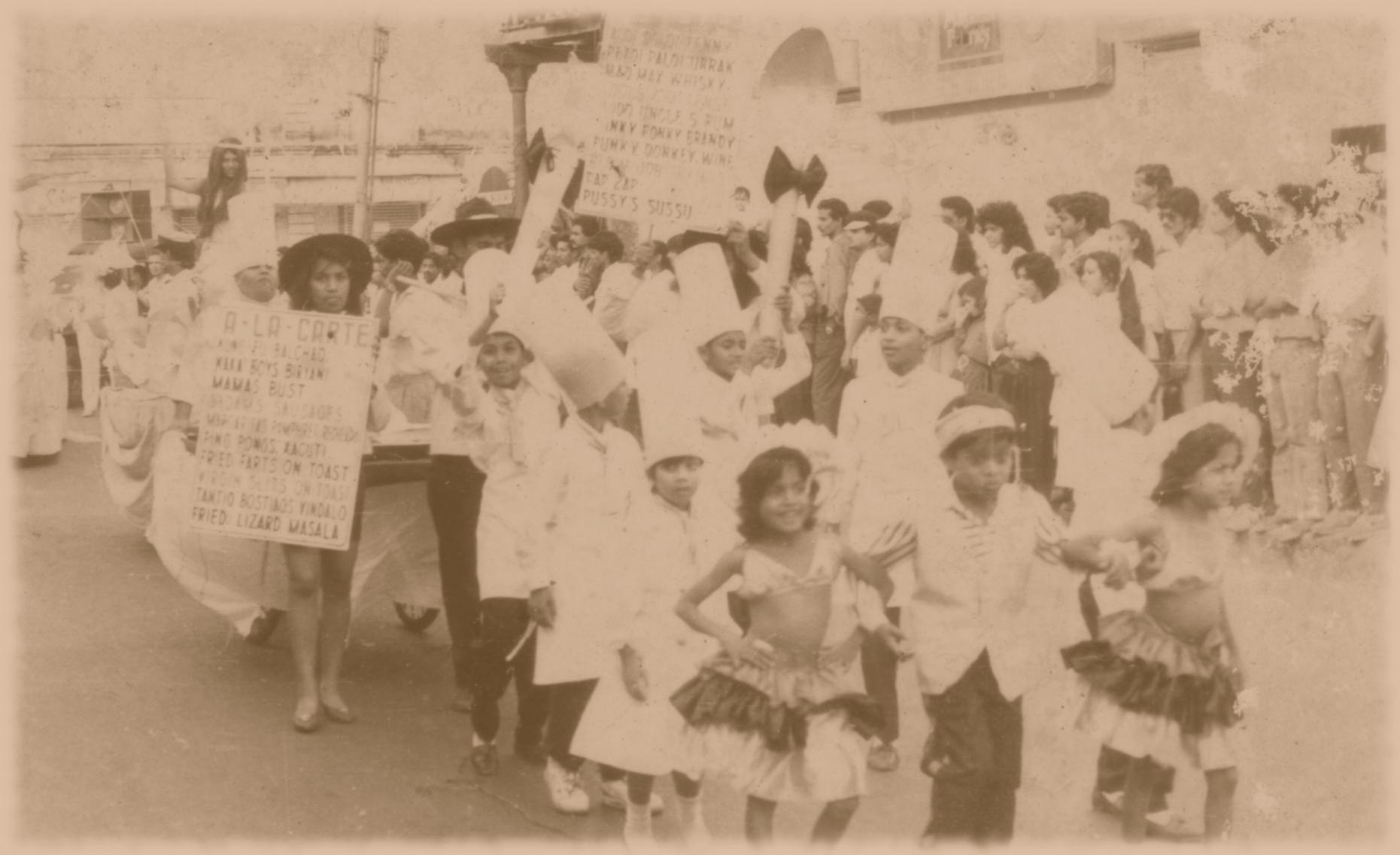
I am led to these ruminations by my thoughts this last Carnaval. Through the entire festival, I was possessed by a strange irritation; an irritation I just could not figure out. I was sure it had to do with my conviction that Carnaval is a tropical feast, and my being out of Goa and missing the passion with which Carnaval is celebrated in Goa. I argued in my last column that the Goan Carnval is now a brief and gaudy lament for a lost citizenship which is why we Goans are still so passionately celebrate it. It was after seeing my thoughts on paper, that it all came together, and I could place a finger on an alternate source of my irritation.


‘These silly Portuguese are not doing it right’ I kept thinking, holding Goan practice to be the model-type. And indeed why not, since as I will go on to argue, the Goan Carnaval continues to approximate the ideal of what Carnaval is supposed to be. The Portuguese Carnaval simply has ‘to suck’ as a Lisboeta friend put it, because it has largely lost any context that a Carnaval ought to have.


The hierarchy of the Goan Catholic Church may disapprove of it; and our last gasp of fun, before Lent may not quite be the spirit in which we ought to approach Lent. However, we must recognize that the fact that Lent is still taken fairly seriously provides a significant context for the Goan Carnaval. Even if we do not abstain during Lent, the Goan Catholic enters into a social context, not different from that experienced by the errant Muslim during Ramzaan. In not abstaining we recognize deep down, that it is we, the non-abstainers, who are the aberration. In the post-Christian society that Portugal has become, the absence of the tension of restraint that Lent provides to the periods of moral laxity and consumptive excess through the rest of the year, results in a Carnaval without an edge.


The Catholic faith in Portugal has been largely replaced by a more secular faith, that of the ceaseless worship of Mammon, through constant consumption and sensorial gratification. Ghalib perhaps captured it best in his couplet; ‘Hazaron qwahishein aisi ki har qwahish pe dum niklen; bahuth nikle merey armaan, phir bhi kum niklen’ (Thousands of desires, each worth dying for...many of them I have realized...yet I yearn for more...). My perspective is to be sure partial and biased. I am but a few months a Lisboeta, and live in close proximity to Bairro Alto, the veritable temple courtyard of Mammon in Lisbon. In this location, and to quote the Hindi poet Harivansh Rai Bachchan in his poem Madhushala, ‘Every day is Holi, and every night Diwali’.


Carnaval is necessarily a period of abandon, when we create a fleeting material paradise of plenty, to contrast with the daily deprivations we may suffer. As such, it is also a festival with stresses our relationship to the corporeal. When in this consumeristic world, every day is a Carnaval, and want is almost unknown, what sense in having a half week of Carnaval just once a year?


Portugal may be poor, its standards of living lower than in the rest of Europe, and yet, this is not the poverty of its not-so-distant past. It has, despite its grumbling, and it has to be said that the Portuguese lo-ove to grumble, settled comfortably into the Pax Europeana. This Pax is what Foucault has would have called governmentality. A situation where by and large our every material need is taken care off, or at least entertainment and distractions provided if it is not. Portugal’s needs may not be taken care of, but it definitely lives within a bureaucratic and consumeristic net where the edge of frustrated desires are blunted. The Goan Carnaval, as I laboured to indicate last week, is powered by the desire to incarnate a radically different citizenship from the one we currently inhere in. At Carnaval, we dance on the edge of that desire.


Goa, and indeed much of the world, lives outside of such a Pax. We may all be made of the same flesh and blood, but thanks to this Pax, this net of distraction, we realize our bodies (our corpus) in radically different ways from those in the European continent. It is perhaps a realization of this radical difference in corporeality, and the ensuing impossibility of Carnaval in Lisbon, that was at the basis of my irritation through Carnaval this year.

The time of Carnaval, and its relationship to the world, is an ideal. Once we are admitted into this reality, there is no new or old, authentic or pretender. When Portugal (or the colonizer) falls away from this ideal, it is indeed, Goa (or the colony) that becomes the model. The colony then, is where the metropole, can now originate from.

(A version of this column was first published in the Gomantak Times, 24 Feb 2010)

Credits

Image No.1 - Campo das Cebolas - Lisbon
http://www.trekearth.com/gallery/photo1087357.htm

Image No. 2 - Carnaval in Lisbon - 1907
http://xafarica.weblog.com.pt/arquivo/158121.html

Image No. 3 - The Fight Between Carnival and Lent - artwork by Pieter Bruegel
http://apor.wordpress.com/2009/02/20/%C2%ABdominica-ad-carne-levandas%C2%BB/

Image No.4 - Roman Triumph
http://eureferendum.blogspot.com/2008/02/new-roman-empire.html

Thursday, February 18, 2010

Carnaval and Citizenship: Capturing the streets without barricades

Year after year, since I began this column, I would, around this time of the year, dutifully trot out a column dedicated to Carnaval. The column would try to contemplate the political significance of Carnaval, gesturing toward its radical potential in overturning norms that normally mark the status quo. Even today, as I think about it, in a severely hierarchical society like India, including Goa, the spring festivals of Holi and Carnaval provide a welcome release for those who have to through the year suffer the insufferable.

This year brings different emotions however, born no doubt from my presence in a different context. This year, I find myself in a city where a number of us would believe that our Carnaval practices were born. As yet, this has to be the most lackluster Carnaval I have had in years. Perhaps we can put it down to the fact of rain that seems to pour down interminably. Carnaval to my mind is necessarily a tropical feast. The cold, frigid rains of northern climes do not sit well with my imagination of the feast. Or it could be the fact that there has not as yet been a public parade like I am used to in the land of my birth. Be that as it may, so far this year, at the time of the writing of this column, Carnaval sucks.

But this is a good emotion; this disenchantment. The disenchantment is

a good emotion because it provides another position from which to think this entire festival through. For a number of us Goans, Carnaval is a time not only of wild celebration, but a time of lament as well. We gather to celebrate and lament the better times that were had before. As I lament this year, for entirely different reasons than the passing of good times, I ask myself if Carnaval has not gained the significance that it does because it is a primarily a time when we mourn something besides the past.

As I have mentioned before, the point of Carnaval is to invert dominant morality for ever so short a period. The Goan Carnaval, however much we may lament the passing of its great age, does invert a morality. It inverts the sanctimonious morality that comes along with the Indian State. Whether this is done to boost the inflow of the tourist rupee or not, the call to inversion allows Goans to flood the streets, drink and dance. In doing so, with the Carnaval parades, with the dances, the drinking, the intruz, they do something that would ordinarily be quite unthinkable. In doing this however, they also celebrate the possibility of a Republic that might have been.

But this articulation of a desired citizenship is no simple articulation of a Goan consciousness. It is part nostalgia; partly fed by the nervousness of a insecure Catholic minority; and partly conceived through the Goan State’s own construction of the Goan identity. Whether we like it or not, the construction of the idea of Goa has critically impacted on Goans, regardless of whether they are Catholic, or Hindu.

There is no other reason that I can think of to explain the gusto with which most Goans I know reach out to use the Carnaval to wear saris and dance in the street, to get on to ridiculous floats, to shave their legs, to capture the street in a couple of brief gaudy hours. What is going on is nothing less than at attempt to assert the possibility for another kind of citizenship that the kind that is currently on offer.

I understand citizenship as the complex of relationships between citizen and State. This bond encompasses a number of relationships that include the political, moral and cultural. It is embodied in the manner in which certain things are allowed, and certain things disallowed. The manner in which you may behave in public, and ways in which you may not. Ways in which political leaders may behave and ways in which they may not.

Take a closer look at the occurrences in Goan public life, and you will realize that since the start of our post-colonial existence, we have constantly been attempting to define the nature of citizenship in this tiny space. The dynamics of this relationship are to be sure over-determined by the inertia of the Indian political system within in which we operate, but between the spaces of the framework there are multiple attempts to configure the dynamics of citizenship in Goa.

The Bahujan Samaj’s bid for Marathi and merger, the ramponcars movement in the 80s, the definition of Goan identity primarily around Konkani, the demand for the recognition of the Roman script for Konkani. In more recent times we have sought to define Goan identity to include a definite spatial aesthetic. Urban design, as I have argued in earlier columns, encompasses definite social relations. We now demand a ‘Special Status’ for Goa. Look closely and away from the immediate issue and you will see that what underlies all these issues is a desire to cast Goan citizenship in very definite ways. There are social movements in many other states in this country. Yet I wonder if they blossom with such frequency in other places, as they do in Goa.

Carnaval is one such time when this desire to recast citizenship is expressed. Not necessarily by all, but definitely some definite segments of our population. This column will be published only after the fires of our desires have been put to ashes. And yet, who knows, some day those fires will burn long enough to brand the world around us? One only hopes that it will reforge the bonds of citizenship with a tendency towards greater equality, rather than the tendency toward autochthony that we so increasingly see.

Viva Carnaval!


(A version of this blog was first published in the Gomantak Times, 17 Feb 2010)


Credits

Holi image from http://www.flickr.com/photos/88411058@N00/3367900205/

Wednesday, February 10, 2010

Taking the Republic Seriously: Why the Centenary of the Portuguese Republic is a Goan event

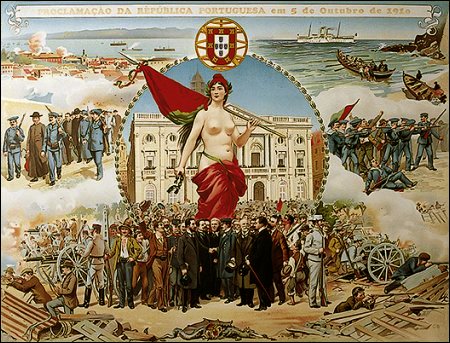
The year 2010 is a year of great significance for in this year we commemorate a number of hugely momentous political events. We mark the fifth centennial anniversary of the conquest of the city of Goa by Afonso de Albuquerque in 1510, the centenary of the declaration of the Portuguese Republic in 1910, and six decades since the enforcement of the Constitution of India. Subsequently, this year shall give way to another, when we in Goa will mark our integration into the Indian Union in 1961.

Let us leave aside the event of 1510 for the moment. We shall have much to discuss about this event in the months to come; and I dare say that the nationalists will have even more! Let us concern ourselves however with these two Republics, both of which are appropriately ours as Goans; the Portuguese and the Indian.

There are moments in time, when one is confronted with events of such profundity, that one can understand them only as moments of rebirth. The old self passes away, and in light of the revelation before us, is reborn, rather like a Phoenix from the ashes of the old. One such personal moment of rebirth, was the realization that the Portuguese Republic of 1910 was my own. This was a fundamental moment of rupture. Happily for me, the initiation into this truth occurred at the hands of not some nostalgic ‘Portuguese Left Over’ (PLO) – as they are so unkindly called – but via an activist of the Goan Bahujan Samaj. Standing up at an event this man proclaimed to all the Goan world, that he was first liberated when recognized as equal in 1910, under the effects of the Portuguese Republic that recognized all Goans as citizens. His reference was to his formal liberation from the caste oppression that, he will argue, continues to dog the lives of numerous ‘lower’ caste Goan Hindus, as well as to the formal recognition of equality that was given effect to via the hard work and perseverance of Dr. B. R. Ambedkar, the Father of our Constitution.

For too many of us however, Republic Day is just one more day for nationalist ‘India Shining’ chest thumping, the offensive displays of the might of the Indian armed forces, and the cloying sweetness of ‘cultural diversity’ parades. I was the horrified witness to a entirely serious discussion on Facebook, where a number of young Indians maintained a steady discussion on how awful it was that we had a frumpy looking woman taking the military salute at this years Republic Day parade in Delhi. Why couldn’t we have a more stylish, smarter woman as President? Why can’t she just do something for her hair!!!

Can Republic Day mean more to us? Our Bahujan Samaj activist gives us an insight into taking the Republic seriously. The declaration of republics in various parts of Europe meant the abandoning of social and legal orders that were based on feudal privileges and hierarchies. It presented the idea of a political order where all were to be equal. To be sure we realized in the course of time that these republics replaced one inequality with another. The idea of equality which was to apply to all men, was taken literally, in that women were excluded for a long time from political representation. All men however did not apply to men of colour and to colonial contexts. And yet, the mere idea of these rights were important because it allowed us to imagine different ways of relating to other human beings and assured us we did not have to always be cowed down. The promise of equality and rights was the gift of the Republican ideal. In many parts of the world, not just in Europe, the idea of the Republic is taken very seriously. It is something to continuously fight for, to ensure that these values of equality are in fact realized on a daily basis.

In India too, the constitution of the Republic is significant for the fact that it announced to a country filled with hierarchies of different sorts that these were to now be a thing of the past. The Indian Constitution announced formal equality to people who until that moment lacked it. This Constitution was not won easily. The Indian Constitution was defended vigorously by Dr. Ambedkar and others from ideas that could possibly reaffirm the old hierarchies. This is a project that is not as yet complete, for not only are the egalitarian ideals of the Constitution not realized in effect, but there are constant attempts to undermine these ideals. The military drills, ‘India Shining’ and the standard celebrations of Republic Day are in fact parts of this process of distracting us from the more profound significance of the constitution of the Republic.

The Goan Hindu, more specifically the elite Goan Hindu, is perhaps best placed to be able to appreciate the significance of the declaration of the Republic. With the Declaration of the Portuguese Republic, all Goans were now full citizens of the Republic. There was to be no more of the second class treatment of old. The Goan Hindu was able to now burst forth legitimately into the public arena, and burst out they did. While the Goan Hindu elite were always a significant force behind the Estado da India, the Republic allowed them to now take a more significant part in this process of governance. In allowing for the land reform legislations, and liberating subaltern Goans from the material conditions that sustained oppressive social regimes, the Constitution of the Indian Republic continued for the Goan, the promise of the republican ideals that were cut short by the interlude of the Estado Novo.

Commemorating the year of the Declaration of the Portuguese Republic is crucially important because it marks our long and continuing journey towards equality. Erasing such an early leg of our history would serve only to obscure the length of our struggle and more easily distract us toward nationalist celebrations. Indeed perhaps this is why our Bahujan Samaj activist declared his debt to the declaration of the Portuguese Republic. In recognizing this longer history he refused the many lies that are peddled to us under the garb of nationalism. In recognizing the contribution of the Portuguese Republic he tells the story like it is. The enemy is not some possibly-foreign colonial. On the contrary, the enemy lies within. Not necessarily a person, or a group, it is a tendency to underplay the importance of this egalitarian goal and push us in other (nationalist) directions. These directions while stressing boundaries and differences detract us from the republican ideal; that is equality for all.

For this reason, therefore; Viva a República! Viva Portugal, Viva India; Viva Goa!

(A version of this post was first published in the Gomantak Times, 10 Feb 2010)

Wednesday, January 27, 2010

Racist? In Australia? Of Indian Racism and International Ambitions

The Indian electronic media it appears, is doing its best to convince its audiences that ‘Indians’ in Australia are becoming the target of ‘racist attacks’. In this attempt, it has been highlighting episodes, a number from the city of Melbourne to justify this argument. While there can be no doubt that a number of persons of Indian nationality have been the target of physical assault, especially in the tragic case of Nitin Garg, these incidents do not necessarily add up to a case of ‘racist attacks on Indians’. On the contrary, if we read closely, what we see is evidence of an Indian racism, and its desire to be a globally recognized super power.


Go beyond the hype that prevents a rational analysis of the events and one realizes that the ‘racist attacks’ in Australia are a result of dishonest and partial representation of facts by the Indian media. Indian audiences have not been presented details of the larger crime levels and patterns involved in the cases where Indians have been attacked. If one reads the attacks on Indians within this larger framework, one realizes that the Indians are merely a part of a much larger collection of crime statistics. Further, in many of these cases, the attackers have invariably not been identified, especially in the case of Nitin Garg who died after being stabbed repeatedly. Read closely, and from within Indian reporting itself, and one sees that the possible explanations for his death include revenge killing, either for loans not repaid, or for not supporting this crazy campaign of racist attacks.


When one does not know the identity (racial or otherwise) or motivations of these attackers, or the larger context within which these attacks occur, it seems a little premature to brand these attacks racist. However, if one knows the psyche of Indian nationalists, one begins to gain a glimmer into what exactly is going on.


Let us preface this attempt to figure out what is going on by referring to an observation of the rather noted postcolonial theorist Dipesh Chakrabarthy. Chakarbarthy observes that, “Within India, …racism is thought of as something that the white people do to us”. With this observation before us we begin to see the various components of the equation. There are two actors in this equation, the white person, and the Indian. Read history into this equation and more is revealed. The Indian obsession with the white person and their racist behaviour towards ‘us’ stems from the colonial experience when the British-Indian elite desperately desired (as they were entitled to) Imperial citizen status. Unfortunately for them, this status was denied them, reducing them to equality with other Imperial subjects like the black African. Realizing at some point that they would never achieve this coveted status, they began the demand for independence. As should be clear for any keen observer of international affairs however, this desire for recognition by the ‘white’ person did not go away with Independence, it persists. The Indian elite are persistent with their demand for equal status with the ‘white man’. It is not a mere coincidence that the country we today call India bears this name. India was the creation of the British Raj, and each segment that resulted from its liberation gained different names, Pakistan, Bangladesh and Bharat (that is India). The name India was retained for Bharat (a distasteful Hindu rightwing name in any case) so as to appear to the world as the successor state to the British Raj. The imperial and global desires of India’s elite should be clear from this choice.


Even in the reporting on the Australian incidents, what is interesting to note is that all of the episodes involve Indian nationals or those with Indian origin. What of the others with South Asian origins in Australia? Are they being attacked too? If not, then the implication is that there is a hunt-down-and-destroy Indians operation on in Australia. Since this is clearly too bizarre a possibility to be believed, we would have to fall back to the proposition being suggested here, that the incidents are the product of Indian racism and the international ambitions of its elite.


To cast the Australian episodes as racist attacks on Indians reduces Australia to a country with two racial players, the ‘Indian’ and the ‘white’. This equation erases the various other actors from multiple ‘racial’ types that could attack ‘Indians’. The equation also constructs Indian nationals as being of the Indian race, and it erases other South Asians in Australia, who if the reporting is true, are also being attacked but are not being given any coverage. This erasure is typical of the elite Indian world-view, obsessed with gaining the respect of the white man. However there is another angle to this, which is the continuation of imperial ambitions by the elite Indian.


By casting the Australian episodes as ‘racist attacks’ on Indians, and through their shrill reporting and demands, the electronic media is forcing the Indian government to react and respond. While it is only natural that a Government should be concerned if its nationals are the butt of attacks in a foreign country, the media seems to be demanding more than this. They are demanding action. This form of action is one that has been made familiar by superpowers, notably America, and popularized by Hollywood. These are the marks of a globally recognized superpower, an international player, and this is exactly what the Indian state is being maneuvered to doing.


One could perhaps justify action and response by a State if its nationals are being attacked, but what the media is demanding and laying the groundwork for goes beyond this. With this creation of the Indian ‘race’, and some sort of legal framework for this, though the constitution of the Person of Indian Origin (PIO) status, and Overseas Citizenship of India (OCI), what is being prepared is for an Indian state response whenever the interests from this racial category are threatened or challenged. This kind of global leadership based on championing an essentially racially based, and exclusive cause, seems terribly regressive, if not downright scary!


The ‘Indian’ seems congenitally blinded to its own racism and the Australian episodes are a perfect example of this racism. This is not to suggest that Australia is not a highly racialized society. It is, but that should not blind us from seeing the racism that continually operates within Indian minds, and that seems to be at the basis, or is a tool at any rate, for its elites’ international ambitions.


(Scheduled for publication in the Gomantak Times, 27 Jan 2010)

Wednesday, January 13, 2010

Faith, Hindus, Christians and Cynics: A Letter to Sudin

Dear Sudin,

A couple of weeks ago, I read a letter to the editor in one of our local newspapers. Written by a Hindu gentleman who had visited a temple dedicated to Shantadurga, the letter does not indicate to us why he went there. One presumes however, that he was there to perform a ritual. While at the temple, he came across a farmer who was there to beg the intercession of the Goddess. He had suffered rodent damage to his crop, and was convinced, or so the narrator of this letter tells us, that sprinkling the teertha (holy water) in the fields would save him and his crop. This simple (and perhaps naïve) faith of the farmer proved too much for our gentleman narrator, and in his letter to the editor, exhorts that we must cease such practices of blind superstition and adopt scientific principles and rationality.

I have to confess on reading this letter I was most upset. While I might join the narrator in thinking the farmer’s practices naïve, surely they are just as naïve as the reasons that the narrator was in the temple in the first place? For what was our narrator doing in the temple? Was it not to honour a deity of graven stone?

You will realize that I am not rubbishing the practice of the worship of the Goddess. I am merely challenging the supercilious attitude of our narrator, asking him to indicate where blind superstitious faith ends, and rational belief begins! While the formulation above was clear to my mind, I nevertheless felt that I was missing something in my analysis of the issue.

A few days ago, in the course of a virtual chat, I was eager to impress you that I speak about the importance of faith in public life, not in religion. You retorted, indicating that perhaps this ‘faith’ was something you (Christians) have, whereas we (Hindus) don’t need it, it is enough that ‘we’ perform the ritual. No sooner had you made this suggestion, did I realize what was bothering me about this letter I have just elaborated on above. My response will deal with two issues; the first the whole idea that the Hindu/ Indian is alien to faith (this being a Christian/ Western innovation) and second the implications of this faithless religion.

In its attempt to dominate the world, colonialism set up certain binaries of virtues. Thus if the colonizer was material, the colonized was spiritual. If the colonizer intelligent, the colonized innocent. In these binaries, the colonized always landed up with the least flattering, as the colonizer was cast as the mature and pragmatic sibling in the relationship. These binaries were wildly popular during the halcyon days of nationalism. In the attempt to give the colonized a voice, rather than challenge these binaries, these binaries were valorized and made the basis of the colonized’s challenge. While we don’t engage in such childishly embarrassing binaries today, the tendency remains. There is an attempt at shallow sophistication. Thus colonialism is now tied to Christianity, and this faith-tradition is counterposed to the native traditions, and differences trotted out. Christianity has a text, Hinduism does not. Christianity has faith, Hinduism does not, and so forth. The idea is to cast colonialism as bringing modernity, and in face of the problems and violences of modernity, to suggest that the non, and pre-modern can provide a useful platform for a challenge to our modern mess. This is the intellectual origin of the suggestion that the Hindu has no need for faith.

Surely the encounter in the temple narrated above should convince you that the ‘pagan’ native is capable of and not innocent to faith. Empirically therefore, your argument should fall flat on its face. It is possible that you would choose to argue that this native has learned faith from the Christian. I trust you will not go down this embarrassing path and deny the bliss of faith to the native. Should you choose to do so however, what you are effectively doing is to suggest that Christianity is forever alien to native soil (a preposterous position for reasons beyond my being a South-Asian Christian). Secondly, you would be suggesting that the native faith traditions have somehow emerged fully formed, without any evolution, or that any evolution has been entirely indigenous.

In response to your argument however, I will not deny that there are Hindus who operate without faith. This is not however, exclusively a Hindu domain, since this dubious facility is shared by Christians, Muslims and Jews as well. These people fulfill their religious obligations, but do so recognizing that these are religious rituals that must be performed for the social sanction they obtain. Thus John Fernandes will take his children to mass, and introduce them to First Holy Communion, even though he thinks the Virgin Birth and the Resurrection to be ‘scientifically impossible’ and thus akin to our farmer’s use of teertha.

In these days of religious revivalism, fundamentalism et al, it is not the faithful that I fear. It is the religious. That is, those who operate in the field of religion without faith. It is true that the fields of faith and religion intersect so often that it is often difficult to distinguish one from the other. The faithful can be gullible, but it is the cynical, those who perform religious ritual, without a belief in its spiritual merit, that are perhaps more to be feared.

In the course of my itinerations round Goa, I have seen the cynics that populate the temples, obsessed more with using the Goddess as a tool to power, rather than falling prostrate at Her feet. The narrator of the letter, I would wager is one of them. The product of his cynicism, is that not only is there a failure to grow in the virtues of trust and mutual dependence that faith brings, but it brings also, as was so obvious from the letter to the editor, a certain disdain for those of the lower order. These ‘superstitious’ are seen as in- need-of-education, and at the end of the day, merely tools for us to reach the paradise that we have deemed fit for creation. Indeed, as the good Pope Benedict XVI repeats constantly, contemporary man, having displaced God, arrogates unto himself the power of God, but in the process renders fellow humans less than human. Setting out to create paradise, he invariably produces the hell of contemporary existence.

To these ramblings, I would welcome your comments.

(Sudin, is the pseudonym for a Goan (Hindu) currently engaged in a PhD in the UK. While Sudin is a pseudonym, all other references are entirely factual.)

(First published in the Gomantak Times, 13 Jan 2010)

Thursday, January 7, 2010

The Gift of the Magi: The Goan Catholic, Romi Konkani and the Edge of Faith

On the second of January, Literati a rather charming bookstore in Candolim hosted the release of ‘Edge of Faith’. A collection of photographic images by the eminent fashion photographer Prabuddha Dasgupta, ‘Edge of Faith’ captures images from the lives of Goan Catholics. He photographs them in their drawing rooms, their inner chambers, at church, their homes and their shrines. While some of the photographs in the compilation speak to the continuing vitality of the Goan Catholic, the work and the artist are both troubled by the specter of the impending, and slowly unfolding, disappearance into history of the Goan Catholic.


If the overwhelming sense at the release of ‘Edge of Faith’ was that the requiem was being sung for the Goan Catholic, there was another event where the sense could not have been more different. Earlier that same evening, the Black Box in the Kala Academy hosted the commemoration of the birth of Lucasinho Ribeiro. It was the result of Lucasinho’s innovations in Bombay in 1892, that resulted in the Tiatr, a dramatic art form that would (and continues to, if we look at the Dogui Bodmas Colva episode!) shake the Goan cultural world.


Organized by the newly formed Tiatr Academy of Goa, this event was perhaps the first official commemoration of Lucasinho’s birthday by a government-sponsored body. This commemoration should be seen as a part of a series of events that have been organized by a group of activists, led by the redoubtable Tomazinho Cardozo, to gain official recognition and respect for what is called Romi-Konkani and the literary and cultural forms it has produced.


Since at least the year 2005, this group of cultural activists has been demanding that the official recognition of Konkani be extended to that written in the Roman script, and not restricted Konkani written in the Nagari script alone. It has been their argument that with the official recognition of the Devanagari script alone, the cultural productions that stem from those who write Konkani in the Roman script; Cantar, Tiatr, the novels written in Roman script, have been actively spurned by the State. Since 2005 this movement has gone from strength to strength. It has managed to rally a constituency for this variant of Konkani and secured official recognition for its art forms.


Despite the charge of deliberate erasure that this linguistic group asserts, almost every event they organize is marked by a huge amount of vitality and determination. They recognise that they are being kicked while they are down, and yet convinced of the vibrancy of their cultural productions, are willing to fight it out, and garner the recognition they believe they deserve. The commemoration of the birth anniversary of Lucasinho Ribeiro was no different. It was filled with the piquancy of political satire, of the joy that comes from cultural creativity, and the recognition of the continuing relevance of cultural traditions.


If both these events stem from the cultural experience of the Goan Catholic, and both recognize a threat to cultural existence, how do we make sense of the radical difference in the emotional states of the two gatherings?

Perhaps the key to unlocking this mystery lies in the explorations of connections. In the first case, it appears as if the people that Prabuddha photographed saw themselves as objects produced solely by colonialism, unconnected to the land, and with colonialism’s demise, dying a slow death. In the face of the suffocating embrace of Indian nationalism, and bereft of a vibrant argument, they must necessarily wait for their time in the sun to pass. This seems absolutely not the case with the Romi activists. While largely Catholic, these activists, refuse to have their movement labeled as that of Goan Catholics alone, their alliance composed of Hindus and Muslims. Their argument is that what they have to offer is a popular culture that can, and is in fact embraced by all Goans.


Rather than stress separateness, the Romi activist stresses connection. In the course of their activism the Romi activists are forging a new public culture. It is contemporary, it is political, and it exudes the aroma of a living Goa. It is not one that excludes all of the established practices of new-Goan culture established by the post-integration State. It adopts these and adds to it; continuing practices, manners and language that may have been abolished by State practices, but otherwise resonates with the people. There is the recognition of threat here, but no fear of death, there is hope and there is faith.


Interestingly enough, it was faith that was on

display at both the events that evening. At the chronologically prior Tiatr Academy event, faith (as opposed to religion) was unselfconsciously introduced to popular culture in the manner in which God was invoked to shower blessings on the audience that had gathered as one family. This faith was made manifest in the example of conduct of right action that the Cantarists sang about as they critiqued contemporary society and politics. In the images that Prabuddha displayed later that evening, once more it was faith that came shining through. And this was not because a number of his images are located within the precincts of churches. The subjects of the images exuded a quiet determination that Prabuddha remarked on. There was a sense that ‘this too shall pass’.


The image that closed the display of Prabuddha’s photographs that evening was of a freshly white-washed cross, somewhere in the Goan country, emerging, from a pile of roughly hewn stones, almost swayambhu from the ground. The image is polyphonic. One can read it as a symbol of the foreign, or one can see it as a faith, rooted solidly in home-soil. There are those among the Goan Catholics, who see Christianity, not primarily as faith, but as religion. With this materialist understanding, they see a foreign history, unconnected to the soil and are unable to reconcile that with the present. For these people, it is true, the final pages of the Goan Catholic are being written. For others however, this faith, is an unselfconscious part of their being. It is not merely an identity. For these people, rooted solidly to the ground, the past is a rock on which they stand in the present, and from which they look toward their future. For these people, the story of their evolution is only now being written, and there is a lot more to look forward to!


(First published in the Gomantak Times, 6 Jan 2009)

Wednesday, December 23, 2009

Of Recognition, Facts and Strategies: A Letter to the Editor after UTAA’s demonstration

Dear Editor,

I write this letter to you to thank you for your front page editorial on the issue of this newspaper dated seventeenth December 2009. In placing the editorial on the front page you have in many eyes; not just mine alone, reprieved the local media from a morass that many of us fear that it is headed into. News is not about the ‘neutral’ reporting of random (and increasingly irrelevant) facts alone, but as you have so strikingly indicated, about creating issues for the larger public and fostering positive politics. But your editorial did more than just set standards for media, it also helped refocus the priorities of the people of Goa, who, it appears, seem to by and large operate in blissful ignorance of the scheduled caste and scheduled tribe members of our society.

In the opening of your editorial, you quoted Bayard Rustin, an American civil rights activist who argued that “When an individual is protesting society’s refusal to acknowledge his dignity as a human being, his very act of protest confers dignity on him.” In so quoting, you brought the debate to the heart of the matter, allowing us to counter all of the irrelevant criticisms that have subsequently been leveled against the protest that occurred on the sixteenth of December.

Acknowledging the dignity of a human being requires also that we acknowledge the existence of an individual. As already argued, we in Goa do not even acknowledge the existence of the scheduled groups and their needs. You pointed out that the protestors brought the ‘upper-caste Digambar Kamat-led government to its needs’, but the fault is not just this particular government, but the manner in which the entire society conspires in constructing Goa as an upper-caste almost paradise. All of the issues that we have been arguing for the past few months, those of the destruction being done to Goa etc, while critical and relevant, have failed to take into consideration this segment of the population, and argue the issues with their perspective in mind. Had they done so, our strategies and indeed, our achievements would today perhaps have been radically different.

It is for this reason then, because the protestors addressed the basic issue of recognition, in not one, but two different and associated forms, that they have cut for us, in their action on the sixteenth, a path that should have been trudged ages ago.

Associated with one of the groups fighting the big-capital take over of Goa via the Regional Plan, I was witness to the farce of representations to the Chief Minister and his government. No matter how logically argued or passionately represented, these written statements received no response from a silent and non-committal state. We were constantly asked to rely on the word of the Chief Minister, who would assure us that he would ‘try his best’. Our representations were like the flailings of an attention-deprived child, before an emotionally unmoved, and punishingly silent parent. We were faced with the toughest and most insurmountable barrier of all; Silence.

In the face of this silence, I had on numerous occasions, argued with a number of groups that it is this silence that we need to break. In the face of this silence, we need to up the level of civil disobedience, lay siege to the State secretariat, until our rightful demands are met. The silence of the Government rests on the sure knowledge that we will not challenge the daily rhythm of life, and until we hamper this carefree rhythm, until we get the silent to recognize us, we will, unfortunately not be listened to. The United Tribal Association Alliance (UTAA), on the sixteenth broke that compact, and they managed to draw the Chief Minister into dialogue. Viva!

They did more than draw him into dialogue however. This Chief Minister, like others, has often engaged in the farce of dialogue. Words, are cheap, it is actions that count. And on this latter front, despite its verbal assurances, this government has failed to act. UTAA to its credit broke through this sham and demanded a ‘written assurance’. We must remember that the modern State and its bureaucracy operate through the action of writing. When we represent in writing therefore, we deserve a response in writing. Else once more we flail pointlessly before a false Baal. Two successes therefore, and two lessons for the Goan activist to learn from. First, this government will not listen until you lay siege to it, prevent ‘business as usual’, and to paraphrase you, ‘drag it to its knees’. Second, no success until and unless you get a response (i.e. recognition) from the State, in writing.

I have not seen the written assurance of the Chief Minister and so do not know the form and content of its assurance. However I do know that a mere line indicating “I will get so-and-so done, by such-and-such date” is pointless. Our demands are valid because of a sound reasoning that lies behind it. A written response from the government must necessarily respond to these demands, point by point, acknowledging in writing the validity of our claims, and acknowledging in print its failure to do so. Only then do we move governance, from the scam it currently is, towards a democratic respect for justice and due process.

What was critical in the protest by UTAA was the fact that it operated in the best traditions of civil disobedience. No property was harmed, but what was placed in harms way was the body of the protestor. It also demanded that imperial forms of governance, that place a veil between the governor and the governed are cast aside, to allow for direct contact. We would carry this tradition further if we linked it to this recognition of responsible writing.

Very often we resort to the cliché that when the interests of the most marginalized are addressed the whole system sets itself in order. UTAA’s actions on the sixteenth, that have addressed two lacunae in the operation of our democracy, seem to have pointed to the validity of the cliché. I will end this letter, reinforced once more with thanks, with the knowledge that perhaps while all is not well with the state of Goa, there is as yet, still hope!

(Published in the Gomantak Times 23 Dec 2009)