Saturday, August 9, 2014

The Itinerant: Claiming the Indo-Portuguese for Goan museums


Every year the Portuguese Association of Antiquarians (APA) holds the Feira de Arte e Antiguidades de Lisboa, a fair that unites antiquarians from across Portugal for a week-long sale of antiques and other slightly aged objects d’art. 

It was at one such exhibition that I became overwhelmed with emotion on seeing an exhibit. The object of this emotional excess was a chest of drawers that formerly stood in the sacristy of the church of Nossa Senhora da Graça adjoining the Augustinian monastery in Old Goa. This chest screams out its Indo-Portuguese heritage, marked as it is by inlay work, elaborate handles and the Augustinian symbol of the double-headed eagle. A year later, at the subsequent Feira this chest was once again on sale. It had clearly not found a buyer the year before.

Caressing the chest on the second year a thought that first struck me the year before recurred, why should the state of Goa, through its State Museum, or Department of Archaeology, or indeed the Directorate of Art and Culture not purchase such a fine, and restored, work of art? The object started its life in Goa, and was clearly worked on by local artisans. In itself a fine piece, its provenance would add value not merely to the holdings of the State Museum but perhaps spur us on to rethink our own international location vis-à-vis the art form that is called “Indo-Portuguese”.

In the year 2013 a rather unique object was up for sale at an auction conducted by Sotheby’s. Titled Caquesseitao or 'ancestors of the devil', this object, said to have probably been modelled on a fruit bat, was a container made entirely of silver with bird-like feet, scale-chased body, dragon head, prominent tongue and hinged wings. While apparently a popular ornament in Indo-Portuguese art in the late 17th-early 18th century, there seem to be very few exemplars remaining. Because the Portuguese state did not have a representative of the ornament, Portugal’s National Museum of Antique Art (MNAA) was authorised to purchase the object in auction. The tale ended sadly, however, since the institution was authorised to procure it for a sum less than the 181,500 Euros for which it was eventually auctioned.

There are two points that I seek to make here. The first is that despite its bungling of the purchase, the Portuguese state was actively interested in acquiring the object, since it sees the Indo-Portuguese as a part of its own oeuvre. This is to say, we have the example of a state actively committed to spending large amounts of money to assemble a cache of wealth in the public interest. 
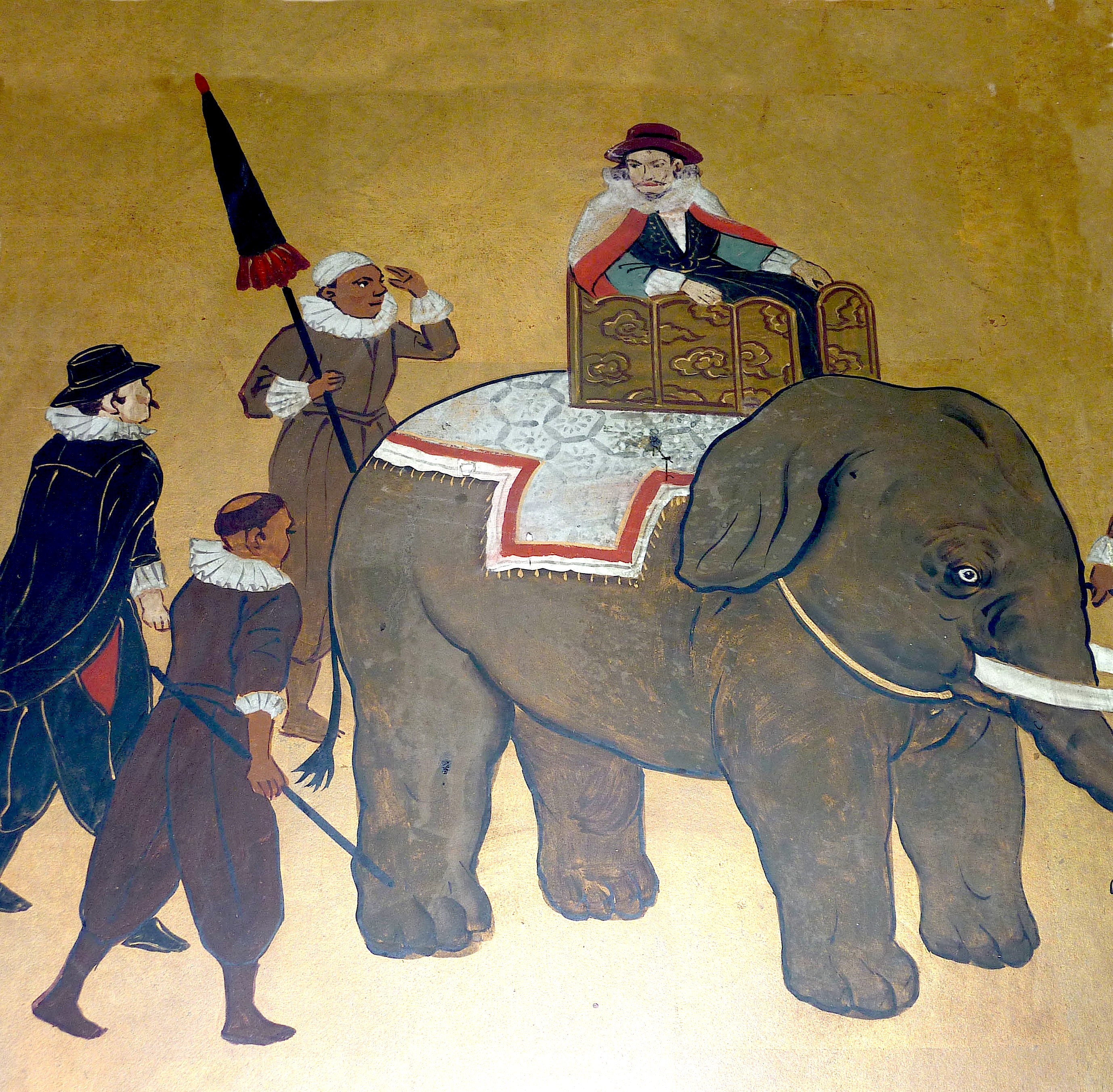
The second point that I seek to make is about ownership. Merely because the Portuguese claim this history as a part of their own does not mean that the contemporary state of Goa, once seat of the Indo-Portuguese world should wash its hand off of this heritage. On the contrary, the state of Goa, as a location that continues to enjoy international attention ought to make its own efforts to appropriate this history for itself. The history of Indo-Portuguese Empire is both Portuguese and Indo (i.e. South Asian). It was crafted by not only by different kinds of Portuguese, Europeans, and also by different kinds of Asians, South Asians and natives of Goa, all of who operated within a system that had its nerve centre in the city of Goa.

Born in the subcontinent, and with a specific location in Goa, both of the objects discussed in this column should rightly be the kinds of objects on the state government’s list of ideal acquisitions for the Goa State Museum. Despite the fact that the State Government seems to be contemplating putting its existing antiques away in storage, the fact is that the State government has, through the Directorate of Art and Culture, been spending a good amount of money in acquiring art works from Goan artists.

Extending its operation to acquiring, and displaying, these kinds of older art works would allow the state of Goa to achieve a number of goals. To begin with, it would allow us to claim ownership of art forms that emerged from the genius of artisans of the past, and would allow contemporary artists the stimulus for a more exuberant dialogue with the past. Secondly, the acquisition of history and artifacts is not merely the preoccupation of bored rich people. On the contrary, it is the basis for the generation of further and future wealth. For example, at an entirely superficial level, the aggressive acquisition of such artifacts makes eminent sense for a state that makes money off tourists as it would offer tourists to our state more options than the rather limited sun, surf, sand and gambling that is currently on offer. If we are keen on developing cultural tourism in Goa, then a museum with, a substantial permanent collection and a dynamic series of temporary exhibitions, is an absolute must. Indeed, one could make a substantial argument that Goa's failure to attract the "well-heeled" tourists that so many seem to crave rests squarely on the refusal to embrace the cultures that existed in Goa between 1510 and 1961, and a failure to integrate them into a sophisticated cultural programme.

In sum, rather than ignoring Goa’s antique heritage, the State government should actively be pursuing a policy that would highlight this past, and a critical part of this policy rests on re-reading the Indo-Portuguese to stress the fact that the South Asian element was critical to this art style.

(A version of this post was first published in The Goan on 9 Aug 2014)

Friday, August 8, 2014

Rethinking Special Status - I


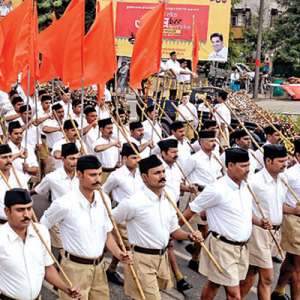
I laughed, long and hard, and then laughed out loud some more on reading the aghast responses to the denial of Goa’s request for Special Status. The laughter was not because the demand for Special Status is unjustified, but because the response was so obvious! Our hopes were pegged on the assurances of Chief Minister Parrikar, and the electoral promises of Prime Minister Modi. It should have been obvious at that time that the Goans interested in Special Status were being taken for a ride. There is no way that a government composed of the BJP, a party committed to the RSS vision of an undivided India, and the creation of the history of a Hindu(only) India, will ever concede to the recognition of special-ness for any part of India that does not rest on Hindu-ness.

The impossibility of a BJP government ever conceding to Special Status is not, however, what I would like to focus on in this column. Rather, I would like to suggest that the denial of Special Status by the Modi government should be looked upon as a blessing in disguise. This denial opens up for us the opportunity to rethink what it is that we are demanding under Special Status, and how we are making this demand. In other words, what exactly are the principles that underlie the demand for Special Status, and what are the implications of each principle; that is to say, who benefits from the choices made?

Thus far most demands for Special Status seem to revolve around the issue of special economic status, and constitutional clauses to ensure that only locals can own land in Goa. In other words, the demand has been restricted within the bounds of Article 371 of the Constitution. I have argued in earlier columns that such a phrasing of the demand for Special Status ensures that it is really the landed and business elites in Goa who stand to benefit from Special Status. The vast segment of former tenants really do not benefit from this form of Special Status given that local landlords can still get into partnerships with external capitalists to allow for highrise apartments and other developments to allow for more of the wild speculative ‘development’ that has characterised Goa in the recent past. Similarly, grants from the Centre would appeal to the business and industrial elites and wold not reach the common person except through possible increase in employment.

If they are intent on ensuring that they do not get cheated in the process of being mobilised to demand for Special Status then it is critical that Goans put aside an obsession with form and identify the problems they seek to address by gaining Special Status. Thus far the debate has been about saving land, identifying land sold to non-Goans as the reason for cultural peril. This argument also blames Goans for selling land in the first place.  This is a particularly unhappy argument since it ignores the fact that the non-landed Goans who are selling land are doing so because this is by and large the only way through which they can make money. The argument does not recognise that these Goans operate in a context where a system of power is in fact loaded against them.

Put simply, the system of power that I am referring to is one where Goa, its homes and its landscape are fetishized by a Indian elite. Armed with greater economic and political power thanks to the fact of a different political history under the British Raj, supported by a representational system that privileges Goan property but disregards the Goans, these elite consumers from India are able to skew the market such that it often makes more sense to sell a property, than to sustain the property. Add to this the almost non-existent support provided by the state government to maintain homes, or even diverse employment possibilities within the state, as well as a solid public infrastructure. All too often then, the Goan who sells one’s property is in fact operating against a system that is solidly weighed against them.

The Special Status we demand, therefore, must be about meaningful political equality within the country and the right to reforge the political relationship with the Indian state. Further, unless we recognise the powers that operate to cause the insecurity within Goa, any demand for Special Status result in the repetition of the history of the past fifty odd years of Goa’s presence within the Indian Union.

While making this argument I would like to especially underline the fact that almost every postcolonial popular movement to save Goan identity ranging from  the Opinion Poll, Language Issue, Statehood, to the Regional Plan, has rested on the shoulders of the bahujan Catholic men and women of Salcete. Each and every one of these movements has appealed to their insecurity and each time their aspirations have been frustrated, largely because the demand for protecting Goan identity has been couched within the language of Indian (i.e. Hindu) nationalism. These demands have failed to assert that cultural demands, where Catholics are cast as not-quite-Indian are only a part of the problem. The other problem rests in the fact that there has been no systematic development that can empower the Goan population to gather both economic as well as cultural capital.

The result has been that the Catholic bahujan of Salcete in particular have been converted into the oxen pulling the cart that fulfils the interests of Goa’s landed and business elites. These groups have always managed to use these movements to increase the scope for their autonomy. Any demand for Special Status therefore, must be one that recognises that there is a great socio-economic diversity among Goans. This demand must recognise that different kinds of Goans require different kinds of support under Special Status, and that local elites need to be restrained from exploiting the situation.

One could also make the argument, that the failure to effectively articulate issues of social and economic equality both within and outside of Goa has in fact resulted in the kind of communalisation of Goan society that we are witness to today. The interests that were served were invariably of the upper caste and business elites, but the movements were always misrepresented as Catholic. This has pitted the vast bahujan majority against the Catholic bahujan minority.

If the movement for Special Status is to provide genuine benefit to the people of Goa then it must necessarily assert that the basis for this demand lies in recognising the insecurity and marginalisation that the non-Hindu, and bahujan minorities in Goa have faced since 1961, as well as commit itself towards a vision for economic justice. Such a twining of agendas would allow for us to also address the increasing communalisation of the Goan polity. The Special Status movement would need to make alliances with the Hindu bahujan samaj, who at this moment, have been largely seduced by Hindu nationalism. Indeed, there is good reason for them to be seduced, given that it was Indian liberation that ensured that they could escape the clutches of their landlords. Additionally, this Indian liberation has also involved providing space for the Hindu bahujan through the marginalisation of the Catholic bahujan rather than opening up new avenues for all Goans. The Special Status movement needs to necessarily reach out to the Hindu segments of the bahujan samaj to ensure that Special Status will meet the aspirations of both the Catholic and Hindu segments, and that development in Goa will be egalitarian. Such a reaching out would only be possible once we start asking deeper questions about Special Status, not limit it to the issue of ownership of land, or grants and tax breaks from the Centre, and recognise that the negotations for Special Status need to be directed both towards the outside, i.e towards Indian state; as well as inside, within Goan society.

(A version of this post was first published in the O Heraldo on 8 Aug 2014)

Friday, July 25, 2014

Boycotting Israel: Fighting its propaganda machine


It is with a sense of mounting rage and upset that people from across the world have been witnessing the latest round in Israel’s persecution of the Palestinians. There have been a number of horrific reports, indicating the manner in which civilian innocents have been slaughtered, the manner in which new and unethical weapons have been used against these civilians, as Israel has bombarded Gaza day, after day, after day.
 

Even prior to this round of attacks, however, there has been a mounting call to impose broad boycotts and implement divestment initiatives against Israel similar to those applied to South Africa in the apartheid era. This call first emerged in 2005 in the face of the realisation that the state of Israel was carrying on with the project of building a wall around the West Bank despite the fact that the International Court of Justice found the Israeli project illegal. Since then the call to boycotts, divestment and sanctions (BDS) has been taken up and has been gradually increasing in strength as various groups have been to accede to this call. This call has not as yet, unfortunately, been carried over into the actions of members of the international order in a manner similar to the embargo enforced against apartheid South Africa.


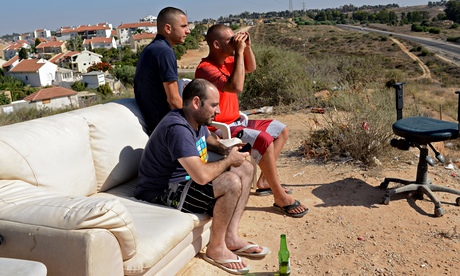
Even as efforts are on to push for statal responses to the call for BDS, the question still lingers as regards what we as individuals can do to address the daily, and historic, violence against the people of Palestine. One possible route presented itself when reading a particular disturbing news item that has emerged in the course of the current Israeli offensive on Gaza. This news item presented by The Guardian informs us that, “As the sun begins to sink over the Mediterranean, groups of Israelis gather each evening on hilltops close to the Gaza border to cheer, whoop and whistle as bombs rain down on people in a hellish warzone a few miles away.” The war on innocents, then, has been converted into a spectacle for entertainment for these settlers who have used “Old sofas, garden chairs, battered car seats and upturned crates” to convert the hillsides into an auditorium. Perversely, “On one hilltop, a swing has been attached to the branches of a pine tree, allowing its occupant to sway gently in the breeze”.


A friend who lives in Israel suggested that the news report was lacking in context. The report, she indicated, failed to mention that the assault on Gaza was a spectacle in the settlement of Sderot, a place where children typically play in bunkers.  Regardless of this fact, however, it was the realisation that a war has now become spectacle to some that forced a recognition of the fact that one of the fundamental ways in which the State of Israel is able to gain legitimacy for its existence as a Jewish state is through the scores of American and European films that have made a continuing spectacle of the Holocaust. Through these cinematic retellings, the Holocaust was the most recent genocide against the Jews and it is to ensure that such a horror never happens again that the State of Israel was set up. The complex histories that surround the Holocaust, which  indicate that the Holocaust was in fact directed against a variety of groups including Gypsies, Catholics, Communists, homosexuals and other groups that the Nazis saw as ‘freaks’ are  never elaborated to largely ignorant audiences across the world. Similarly the fact that these persecutions were largely a story of Jews in Europe is also never elaborated.  On the contrary, the establishment of Israel and its various acts of terror are celebrated as acts of heroism of a people who, once they had their own state, were determined to bring their violators to justice. In addition to the recent attacks against the people in Gaza, two other examples of this terrorism that come to mind are the hunting down of Adolf Eichmann, or the murder of those alleged to be responsible for the murder of the Israeli athletes at the 1972 Munich Olympics. Indeed, the Jewish dead of the Holocaust are converted into telegenic bodies to buttress the Israeli cause.

The simplified histories that these films tell prevents us from entering into the more complex world of the politics of Europe and Anglo-America that made it possible for Jews to be persecuted, and the essentially racist logic that allowed for the state of Israel to even be contemplated as a solution for what was essentially the problem of the (for lack of a better word) White world. In sum these movies encourage us to believe that there is such a thing as “the Jewish people” and that they suffered so much that they were justified in setting up a state in a place already inhabited by people for generations.

It is because these retellings of the Holocaust are critical to buttressing the terrorist activities of the state of Israel that I decided then to absolutely quite watching any films about the Holocaust. Further, I would also not watch any films that presented simplistic stories of European Jewry and caused the audience to feel sorry for them.

This decision was not without discomfort. Such a decision could be interpreted as the actions of a Holocaust denier. However, one can argue that rather than deny the Holocaust, such a boycott of films on the Holocaust is in fact a commitment to respect the facts of the Holocaust and bring to it the historicity that it deserves. The death of so many thousands of people deserves a better memoralization than the cheap sympathy that such films generate for a state that in fact operates no differently from pre-war Europe and the Nazi state.

At a personal level the boycott would give me the satisfaction that I am not participating in the justification of the Israeli state and its propaganda machine. If joined by others there is the hope that this otherwise individual action could have larger consequences, that we would encourage more honest tellings of this phase of European history.

In any case, any boycott against Israel must also necessarily include a boycott of those activities that operate as propaganda for what is currently a racist oppressor state.

(A version of this blog was first published in the O Heraldo dated 25 July 2014)

Monday, July 14, 2014

Culture in the U.S.A.


The lives of a number of English, and to an extent American, nobles and gentlemen from the 18th to the early 20th century was marked by a peculiar ritual called the Grand Tour. As a part of their education and exposure to the wider world, these men of wealth would leave their home shores for a tour of Europe, especially southern Europe, and in particular Italy. There they would immerse themselves in the artistic wealth generated by the Renaissance and after the passage of time, sometimes years, would come back home laden not only with experience but oftentimes books, statuary and works of art. On their return these men would go on to embellish their homes, society and the public spheres they occupied, converting a private learning into public wealth.

No Anglo-Saxon noble myself, but definitely with aspirations of being a cultivated gentleman, I recently ensured that I could turn the invitation to a university on the east coast of the USA into a Grand Tour of sorts. Over the period of a month I did what the White Anglo-Saxon Protestants of yore did, I went around main cities, accepted invitations to dinner, went to see collections of art, and drank in as much ‘culture’ as one could.
Somewhere along this voyage I met up with a friend from another continent, exchanging ideas, impressions as we strolled through the streets of New York. As is common among expats we soon got around to comparing notes about the local species. It was at this point that this friend suggested: “Oh these Americans. They have no culture. They are not like us with so many centuries of culture behind us.”

I was glad for that comment because it articulated an idea that I had been struggling with for the weeks while I was in the USA. Growing up Indian and fed on the cultural superciliousness that marks Indian nationalism this was exactly the idea that one had of Americans (from the US). They may have technological superiority and wealth, but we had a wealth of culture. My time on the East coast was disproving all of these early learnings and providing me a different way of viewing the United States.

True, this country is young, but then, so is India. Indeed, India as a state is younger than the USA. It is in fact the drawing of these random lines across history that obfuscates the way in which we perceive culture, history and the lack of it.

While the US is built largely on the memory of the white settlers of the continent, and not of the Native Americans, the cultural history of these white settlers includes the histories of the communities in Europe from which these settlers emerged. Indeed, if young American men (and some women) embarked on Grand Tours it was because of the recognition of this link, and because they were engaged in a cultural enterprise similar to that of their cousins across the pond in England. On this count, then, the United States has a long cultural history, one that gets richer and more diverse as more peoples come to its shores and assert themselves.

While much derisive attention is directed to the manner in which American history is fabricated, through the careful highlighting of any object of any significance there may be another way of looking at this cataloguing. While this emphasizing of importance may have to do with crafting a national history, it also has to do with building a public culture and a public sphere. There is the public esteeming of individuals who contribute, or have contributed to society. Museums set up by bourgeois families eventually worked to embourgeois others and create a standard public culture through non-formal education and committed both state and elites to a level of public engagement with culture that can only be emulated, not dismissed.

 (A version of this post was first published in The Goan on 12 July 2014)

Sunday, July 13, 2014

Secularism and its political culture


Writing in this newspaper a couple of days ago in the context of Pramod Muthalik’s threats to set up base in Goa, and Sudhin Dhavalikar’s opinions on pubs, drinking, and short skirts not being compatible with Indian culture, Dale Meneses sought to define to amplify what secularism ought to mean. In his op-ed, Menezes suggested that “If we are really serious about maintaining peace [ i.e. being secular] in Goan society, power needs to be shared with minority groups, and greater representation needs to be granted to marginalized groups across religion, caste, and class in Goan society and politics (and not just confined to electoral representation).”
While the argument that couldn’t have been made better, I would like to elaborate on an argument that both Menezes, and Rochelle Pinto who wrote elsewhere have mentioned but not elaborated sufficiently on. This argument pertains to the ‘minorities’ in Goa, in this context, the Catholic Church and other minority groups, to which one could add Catholics as individuals. This distinction is important to make because the Catholic Church as an institution very often has interests and agendas different from those who confess Catholicism, either as devout, or as a cultural identity.

In his discussion Menezes rightly points out that “For many secular Hindus (as well as Christians) the ideal of ‘secularism’ is only threatened when right-wing groups create a ruckus.” Leaving the secular Hindus out, let us focus on the manner in which other groups in Goa seem to have rather limited notions of what secularism is, or what it should contain. Take, for example, the manner the Catholic Church in Goa found itself on the same side of the fence as Hindu rightist groups when it opposed the knowledge session on the tourist industry catering to gay tourists. In an op-ed at the time I forwarded the argument that even while the Catholic Church may be opposed to ‘gay culture’ there were still a range of very Catholic positions that they could choose from which to deal with the fact of the proposed knowledge session. In this particular case, given by the way the official statement from the Council for Social Justice and Peace (CSJP) was phrased, what they were forwarding was not so much an opposition to the exploitation of the exploitation of the sexuality of individuals for mercenary profit, but pushing a patriarchal agenda that dovetails neatly with that of the Hindu right.

There are two points that I seek to make here with regard to the establishment of a secular atmosphere in Goa; the first is that this atmosphere depends critically on the development of nuanced political discourse, and even more importantly developing an environment where respect of difference, whether that of opinion or life choices is an absolute value. A more nuanced political discourse would have allowed the CSJP to make its stand clear, and yet not necessarily fall into de-facto alliance with the very groups that would otherwise have sought to throttle the church.

However, it is neither respect for difference, nor nuanced political discourse that animates the example that demonstrates the manner in which Goan civil society is actively encouraging blind and cussed intolerance in its midst. A report in the Gulf Times drew attention to the fact that the Fatima High School in Rivona was temporarily shut down as a result of a deadlock between the institution’s management and the Parent Teacher’s Association (PTA). The PTA was apparently irked by the fact that 13 HIV positive children had been enrolled in that school and enforced their threatened boycott of the school.

The simple fact is that HIV is transmitted only through the exchange of sexual fluids, or blood, or via a mother to child during pregnancy, labour, delivery or breastfeeding. The actions of the PTA, therefore, can either be the result of appalling ignorance, or cussed desire to discriminate. Regardless of the reason the fact is that the future of a secular Goa lies not merely in whether we “throw out Muthalik and his ilk” but rests critically on whether we are able to develop a greater acceptance for difference of any sort. On whether our responses can be tempered by information, by compassion, regardless of the circumstance. At the end of the day it is this largely public culture that will forge the basis of secularism, not merely crying foul when right-wingers engage in hate-speech, or incite or engage in violence. And though clichéd, it seems a worthy time to remember the words of pastor Martin Niemöller in the context of the rise of the Nazi’s in antebellum Germany.

   First they came for the Socialists, and I did not speak out—
    Because I was not a Socialist.
    Then they came for the Trade Unionists, and I did not speak out—
    Because I was not a Trade Unionist.
    Then they came for the Jews, and I did not speak out—
    Because I was not a Jew.
   Then they came for me—and there was no one left to speak for me.”


A version of this post was first published in the O Heraldo on 11 July 2014