Friday, February 6, 2015

Solidarity in Times of Vandalism: Why the Minorities need to work together


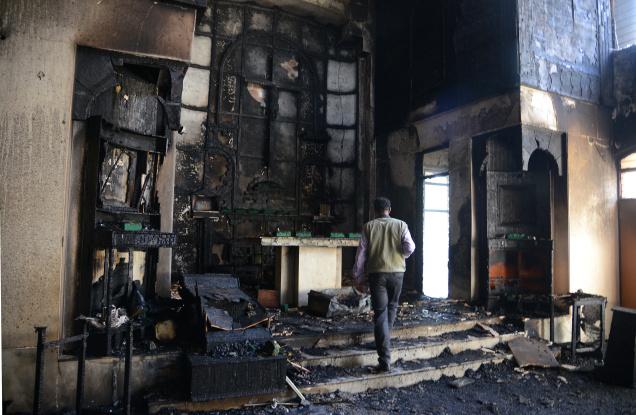
There has recently been a lot of anxiety amongst the Christian communities in India owing to the desecrations and violence targeting Christian churches especially in the city of Delhi. There have been five attacks on churches in the capital of India since December 2014, the latest being the vandalization of the Church, and desecration of the Blessed Sacrament in the church of St. Alphonsa in Vasant Kunj earlier this week.

In the face of earlier attacks on churches the focus of Christian leaders turned towards the Prime Minister. These leaders report that the Prime Minister did not say anything that would reassure them. What makes it worse is that Prime Minister Modi has chosen to keep absolutely mum over these incidents. Public silence in this case can only be interpreted as his unwillingness to restrain the Hindu Right and make sure that law and order is maintained. This silence is not surprising however. We need only think back to his role in the pogrom in Gujarat in 2002. It took days for the State machinery to get things under control, and significantly Modi has been held responsible for allowing the violence to continue. Old habits, it appears, die hard.

I doubt that this tendency towards silence played on the mind of a member of a prominent Catholic business family when he suggested in conversation with me that Modi was a good administrator and “should be given a chance.” It is the limited perspectives of the elites of the community that one should also mourn. That this individual did not see managing genocidal violence as part of good administration says a lot about the milieu in which he moves.


What is worse is the fact of complicity of the state in fueling the acts of violence. A number of the victims in Gujarat indicated that the police refused to help them, claiming that they did not have orders to do so. Further, the police failed to place leaders of the violence under preventive detention. In the case of the violence against Christians, this chilling pattern is re-emerging. There has been news of visas being deliberately withheld from Catholic Bishops who were to visit from the Vatican to attend a liturgical conference organized by the CCBI (Conference of Catholic Bishops of India). More recently, persons peacefully protesting the violence against Christians and the lack of state action were set upon by the police, beaten and dragged into police custody.

These events are in fact very much in keeping, not only with the history of Modi, the BJP, but also the supposedly secular Indian nation-state. The hostility of the Indian state to the minorities of India, is a matter of record. In fact, in a scenario resembling the recent denial of visas to visiting Bishops,  soon after India achieved Independence the Indian state took an aggressive stand against Christian missionaries of foreign nationality in India. That issues did not escalate, as seems to be the case now, is largely because the Indian and Hindu nationalism of the time was more focused on destruction of the Muslim communities in India. Christians were, at the time, seen as “harmless”.

While the Muslims in India were being harassed and butchered across the country the Christian communities in India were by and large silent. On the contrary, these Christian groups in India played along with the logic that it was “the Muslims” who were to blame, rather than Hindu nationalists. Indeed, even in the face of these attacks, some Christian leaders are still shortsighted enough to suggest ‘“We are peace-loving people. If it had been another community, Muslims, khoon kharaba ho jaata” (Blood would have been shed)’
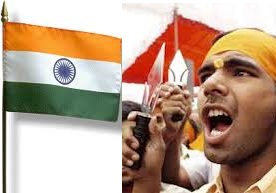

These Christians failed to see that the problem is not Muslims, but in fact Indian nationalism itself. They fail to see that playing the ‘good’ minority, as opposed to the allegedly troublesome Muslim minority, is not going to help. Rather, it plays straight into the hands of the cussed nationalisms in India. In fact, one could argue that playing into the hands of Indian/ Hindu nationalism has been a part of the agenda of the Catholic Church in India. Whether it was the foreign missionaries at the time immediately prior to Indian independence, or the largely upper-caste hierarchy of the Catholic Church subsequently, working towards creating good Indians has been a part of the Indian Catholic programme. This has been done in a variety of ways, either through the misguided policy of inculturation, which sought to make Catholicism in India more 'Indian', i.e. upper-caste Hindu-like, or by urging a strong sense of patriotism, which normally translates to an unblinking acceptance of nationalist rhetoric. This irrationality has ensured that we swallowed the Indian nationalist narrative, saw the Indian Muslim as the trouble-maker and tried to place as much distance between them and ourselves.

There is little distinction between Indian nationalism and Hindu nationalism. The difference is largely a matter of degree, since both are built on the idea of the upper-caste Hindu as the de facto Indian. Contrary to the spiel that we have been fed since the beginning of the Indian nation-state, these nationalisms do not tolerate difference. The tolerance is merely cosmetic. When push comes to shove, as has happened in so many cases, the minority group is made to feel the pinch.

It was in light of this reality that for some decades now the Christians in India were asked to mobilize along with Muslims in India, and see the latter groups as allies rather than enemies.  There was, unfortunately, no real interest demonstrated by Christian groups. I can recall efforts in Goa that attempted to involve the hierarchy and the laity of the Catholic Church. Where the hierarchy was interested, the laity were not. The hierarchy too, had its own reservations as to how far they would, or could, go. All too often, and not just in Goa, the interest lies in engaging in superficial ‘inter-religious dialogue’, rather than lending shoulders to political battles. A significant political battle that we in Goa could lend support to is the need that the Sunni Muslim communities in Margão have for a burial ground. The existing burial ground is too small for the existing population and all efforts to secure a larger ground have met with resistance, largely from Hindu nationalist groups, but often supported by Catholic bigots.

Too often, Christians in Goa are so in the thrall of racist stereotypes about Islam and Muslims that we fail to see the diversity that exists within these groups. Despite the complex history of Islam within coastal south India, of which Goa is part, Islam itself is written off as a violent religion. Additionally, we are blinded by the nativist logics that see Goans as either Hindu or Catholic. Muslims have no space in this vision of Goa even though Islam has had a long presence in the territories that are today Goa, and many Catholics in Goa would have had Muslim ancestors. The reason we are blinded to these histories and realities is that Goan histories have been written almost exclusively by persons from upper caste backgrounds who want to privilege their putative Hindu pasts. They wish to embellish their pasts as Hindu, largely because they have long seen the writing on the wall, India works best if you are upper-caste Hindu. Indeed, as I illustrated elsewhere, it is the caste bias among Catholics in India that has ensured that the superficial inter-religious dialogues that take place are often biased in favour of Hinduism, rather than Islam.

Making alliances with Muslims does not necessarily mean working with all kinds of Muslim organizations. It would first require us to first embrace Muslims and their worlds, get to know them and understand them better. It is only after having effected this embrace that we can become alive to the diversities and differences among them. It would mean learning to identify those Muslim organizations that are no different from the RSS and working with those organizations that are open to democratic ways of social organization.

In the final analysis it may perhaps be the lack of internal democracy within the Catholic Church in Goa that stands in the way of effecting solidarity with Muslims groups. There is no doubt that the Catholic Church in Goa is appallingly lethargic and I would like to suggest that the reason lies in the manner in which it is organized and the manner in which internal dissent is dealt with. A group that is itself compromised, and comes out against Hindutva only when its direct interests are pinched is hardly going to be able to provide leadership to other beleaguered communities, or even associate meaningfully with them. It appears that our many years of lethargy is beginning to show and our pigeons are now coming home to roost. May God protect us.

(A version of this post was first published in the O Heraldo on 6  Feb 2015)

Thursday, February 5, 2015

Goans, Films, and their worlds – Putting Nachom-ia Kumpasar in context


I am always afraid when I go to watch a film that features Goa or Goans, because of the host of problems that plague their representation. These problems were more than painfully obvious in the recent films Finding Fanny (2014) and The Coffin Maker (2011). As in these films Goa is invariably depicted as a land of natural beauty, a veritable paradise. This representation hides not only the challenges being posed to its environment, but also the profound cultural conflicts that are ripping resident communities apart. For their part, Goans are depicted as fun and pleasure-loving folk, non-achievers given to drink, of easy virtue, and marked by childlike simplicity. Such a representation effaces the fact that far from being easy, Goan communities, Catholic and others, are in fact marked by strong moral codes that regulate sexual behaviour.

It was thus with relief that I concluded my viewing of Nachom-ia Kumpasar (Let’s Dance to the Rhythm), the latest Konkani language film directed by Bardroy Barretto. A musical, the film is bereft of the problematic and insulting clichés that guide so many Indian language films about Goa and Goans, and is a must see since it is a fabulous contribution to Goan, and Konkani language, culture.

There are two tensions that guide the narrative of the film. The first is the love affair between the crooner Donna and the musician and composer Lawry Vaz. This love affair provides the meat for the entire film, regaling the audience through the 164 odd minutes of the film. The other tension, however, and in my opinion the more interesting, is that of the complicated relationship between the Goan, and in particular the Goan Catholic, and the Indian state. Indeed, I would argue that the love story is merely a foil for the more assertive political complaint.

The film begins with a grouse; that Goan musicians who contributed substantially to the unforgettable melodies of the Hindi film industry were, and still have, not been given their due. Despite Goans contributing to writing, composing, and arranging the music, the credits invariably went to the established names within the film industry. But this is not all; at the conclusion, the film informs us that the brilliant music that poured out of the Goans in Bombay since the 1930s was forced to suffer a sudden and abrupt death thanks to the Prohibition that was imposed in Bombay by the chief minister Morarji Desai in 1950. Prohibition ensured that the night clubs in the city had to shut down, forcing the destruction of the cultural life of the city that these Goan musicians had contributed vibrantly to. This cultural life has been lavishly documented by
Naresh Fernandes in Taj mahal Foxtrot: The story of Bombay’s Jazz Age (2011). With no avenues for live performances, these musicians took up employment in the film industry. Once again, despite their role in producing the cult hits that went on to define the soundscape of Hindi film music, these musicians remained unacknowledged. The final words are particularly poignant: “After a final flourish in the 70s, the curtains slowly came down.There was no finale. No calls for an encore. And no applause.”

In presenting this complaint to the larger public, the film makes a more profound contribution than it may have realised. It is articulating a long held, but rarely voiced, opinion that the contributions of Goan Catholics to India are often ignored, and their cultural life not considered valid, or even legitimate. What the film does is to make obvious that the ignoring was not unconscious but in fact a systemic activity. To this extent it draws attention to the injustices that have governed the operation of the Indian state, where some communities are marginalised and erased, even as their works and efforts are appropriated by the North Indian upper-caste groups who seem to have emerged as the ultimate beneficiaries from the creation of post-colonial India.

A common response to political complaints that are articulated by marginalised groups, and especially in the case of Goans who voice protest about the way in which they are represented, is to
dismiss the complaints. What Nachom-ia Kumpasar also does, though perhaps unconsciously, is to mount a rejoinder to the filmic representations of Goans. If the film Bobby (1973) set up a standard for how Goan, and Catholic, women in India were understood, then Nachom-ia offers an alternative way in which to deal with extra-marital sexual relations. As indicated earlier, the film revolves around the love story of Donna and Lawry. However, unbeknownst, to most characters in the film, until it is far too late, Lawry is in fact a married man. This crushes Donna, even more so when she realises that Lawry has not only been hiding the fact of his marriage, but persists in the affair while also hiding the fact that his wife is pregnant. It is only when Lawry is congratulated by members of the band that he and Donna belong too that Donna realises that she has once again been duped by the man she loves. The tears that Donna sheds, the portrayal of the conflicts that Lawry encounters, and the statements of a variety of characters in the film, clearly indicate that love leading to marriage is the ideal within the community that Donna and Lawry inhabit. Rather than offer up a caricature of a community, the film engages with the conflicts that often crop up in communities, whether Goan or otherwise.

The other element of the caricature of Goans and Indian Christians that the film engages with is the relationship of Goans to alcohol. Just as in the lives of most Goan Catholics, alcohol is present throughout the film, be it when persons are drinking at home, at feasts, or in the public space of the tavern. The naturalness of alcohol in social life, as well as the virtues of drink in moderation, are in fact actively highlighted by the presence of the lone alcoholic in the film. The fact that he is the sole alcoholic makes the eloquent point that while drink is ubiquitous in the Goan lifestyle, not everyone is an alcoholic. The advice that this alcoholic gives Donna when she begins her own disastrous descent into alcoholism makes the relationship between the Goans and alcohol very clear. In the words of the character played by the tiatrist Prince Jacob, one drinks for one of two reasons, either out of happiness, or due to sadness and the desire to forget. Forgetting, he advises, is not possible through alcohol. This moment, that draws its gravitas from the Latin maxim in vino veritas, ensures that alcohol and alcoholism in the film are not merely tropes employed to titillate, but are evidence of community wisdom and advice. It is also worth noting that the alcoholic is humanised. He is not a drunk just for the sake of being drunk. That he is able to offer Donna such sage advice means that he has turned to alcohol for particular reasons. This is in sharp contrast to Bollywood representations of Goan alcoholics where one only understands them as being buffoons who drink for no apparent reason.


The manner in which this advice was communicated to Donna via the otherwise comic figure made one more feature of the film strikingly obvious: the power and strength of the tiatr. Those familiar with this Konkani language drama tradition will recognise the extent to which the film is provided substance by the formulae of tiatr. The tiatrist and comedian John D’Silva plays the role of Logic, Lawry’s aptly-named manager and sidekick, through the whole film, while Prince Jacob, a well-known practitioner in the genre, does a brilliant job of playing the alcoholic. While both tiatrist play supporting roles, it is in fact their performances that guide the film and gives it depth and solidity. D’Silva demonstrates his versatility and the capacity of tiatr by operating as more than just the comedian. He also effects a smooth transition to the manipulative manager who gets Donna to sign an unfair contract that will prevent her from singing with anyone besides Lawry. Speaking with those involved in the production of the film I was given to understand that D’Silva was also responsible for shaping the screen play to ensure that it spoke to diverse Goan audiences and did not remain entirely an “intellectual” exercise.  This engagement with the film and indeed the success of the film points to the vitality of tiatr.

It is through these tiatrist and the multiple Konkani speaking actors in the film that one is also witness to the breadth of Goan Catholic Konkani language forms. The Konkani is peppered with words that have Portuguese origin, but have over time been hammered into shape to become uniquely Konkani. Sadly, in recent times this diversity has come under threat through the acts of the state of Goa. Since the recognition of only Nagri-scripted Konkani as the official language of the State of Goa, in 1987, the state has supported only the Nagri script and Sanskritic version of the Sarasawat Brahmins in the territory, and suppressed all other forms of the language. Introducing the audiences to the diversity within the Konkani language spoken among Goans is a highly laudable feature of this film.  A
particular target of ire was the language form that gave birth to the tiatr and cantaram, which used words of Portuguese origin, and was written in the Roman script. More recently, voices have been growing in protest against this suppression. In referencing these language forms the film has become one more tool for those struggling to gain recognition for Konkani in the Roman script.

If there is one short coming of the film it is the fact that the lead actors are not Konkani speakers. Their discomfort with the language is obvious and jars against the fluidity with which the other actors speak the language in all its nuances and inflections. A case in point is the stellar performance of Meenacshi Martins, who plays Donna’s mother. In addition, one suspects that it was this unfamiliarity with the language that ensured that the emotional range of these actors and their engagements with each other was not elaborated but restricted to monosyllables and facial gestures. This shortcoming could have been overcome by casting experienced tiatrist in these lead roles.

The location of this film’s storyline in both Goa and Bombay is another issue linked with the recognition of tiatr and other cultural forms of the Catholic labouring castes and classes from Goa. For a long time tiatr artists in Goa were not recognised by the government of Goa given that most of these artistes were based almost entirely in Bombay. As Nachom-ia so clearly shows, Bombay was the space where the labouring Goan Catholics seemed to have been able to assert themselves outside of the suffocating shadow of the landlord, and the social positions that caste and the comunidade system meted out to labouring groups. Celebrated by dominant-caste Goans as the embodiment of village democracy, the comunidade system ensured the communal management of village lands by an oligopoly of dominant caste families to the exclusion of everyone else. While claiming descent from the founders of the village, these oligarchs saw other villagers as merely living in the village, rather than constituting the village.  The position of marginalised castes was ritually inscribed and marked at every event of village life. It was to also escape this ritual and quotidian humiliation that so many Goans migrated to Bombay and further afield.


What is interesting is that it was exactly at the time that the labouring Goan Catholic in Bombay was churning out music, film, literature, and a range of novel cultural forms that pro-Indian Goan nationalists like Tristão de Bragança Cunha (1891 – 1958) and Luis de Menezes Bragança (1878- 1938) were haranguing Goans for their inability to engage in vibrant cultural production. The former of these two nationalists has today been integrated into the pantheon of Indian heroes as ‘The Father of Goan Nationalism’. In fact Bragança Cunha’s analysis of the problem in his famous tract The Denationalisation of Goans (1944) has become
the bedrock of the delegitimisation of the cultural practices of Goan Catholics.  Bragança Cunha argued that Goans, and especially the Goan Catholic had become denationalised as a result of adopting a culture that was imitative of the West. In the face of the kind of cultural production that marked the life of the labouring Goan Catholic in the city of Bombay these assertions are bizarre! If taken seriously they can only mean one of two things. First, as was the case with the rest of their upper-caste and landed elite brethren, these two nationalists ignored and disparaged the cultural innovations of the labouring Goan. The other possibility is that the intended audience, and the subject, of their nationalist rhetoric were the Goan Catholic elite alone. In either case what is revealed are the limitations of the current deities of the pro-Indian Goan nationalist pantheon, and their irrelevance in the face of the vibrant cultural life of the labouring or bahujan Catholic.

The tragedy is that this space was destroyed even as the labouring Catholic began to gain in confidence and recognition First, as the film argues, by the Prohibition that marked the beginning of the end of Bombay’s cosmopolitanism, and secondly through the manipulations in Goa that ensured that the language and culture of these labouring Catholic was excised from the realm of state recognition precisely through reliance on the skewed analysis of the type offered by Bragança Cunha. What Bragança Cunha and his ilk had done was to adopt a racist understanding of what culture and Indian-ness meant and scripted anything seemingly connected with Europe outside of this definition. This scripting did not bother them unduely because these nationalists were able to assert their Indian-ness by falling back on their upper-caste identity.
That it was a nationalist Gandhian ideology at work in the Bombay of the 50s and Gandhians in Goa who masterminded the displacement of Konkani in the Roman script from official recognition should give us ample proof of the upper caste Hindu hegemony that Gandhian ideology underscores. In addition it should warn us that the contemporary problems that minority groups in India face have roots that lie deeper than the current obsession with finger pointing at the BJP alone.

The final accolade that the film deserves is for casting the spotlight on Lorna, that icon of Goan culture. It is widely suggested that the love story of Donna and Lawry is based on her relationship with Chris Perry. The final segments of the film, which suggest scenes from Lorna’s rapturous return to the Goan stage, indicate just what a phenomena she was and continues to be. Lorna is an icon of Goan culture not merely for the songs she gave, and continues to give, life to, but for the kind of sexuality that she embodies. Her voice does not contain the sickly saccharine and shrill sweetness that marks so much of Hindi film music and embodies virginal, self-effacing purity. Her voice is an earthy one that can roar if there be need for it. The woman that her voice gives life to is conscious of her sexuality and vocal about her desires. It is this kind of mature sexuality that Palomi Ghosh, the lead actress who plays Donna, fails to capture. Rather than the strong woman of Lorna’s life story, for the most part one sees the depiction of a slightly nervous, giggly girl. This is such a shame. One wishes that the lady is memorialised through the naming of a public institution or space after her. Failing that, this film will be one that will memorialise those artists who despite their substantial productions and innovations seem doomed to be kept out of the Indian and statal imagination.

Nachom-ia Kumpasar
is a great film devoid of the humiliating clichés that are the stock of Indian filmic depictions of Goan Catholics. The film achieves this feat not because it emerges from within the community, but because it engages politically with the history and the ethos of the community and unapologetically airs a long-held grievance.

(I would like to thank the members of the Al-Zulaij Collective, especially R. Benedito Ferrão and Dale Luis Menezes for their comments on earlier versions of this text. I claim ownership of all errors in the text.

A version of this post was first published in Round Table India. My thanks to them for the opportunity.
The text was subsequently translated into Konkani by Dale Luis Menezes and published in the March 2015 edition of the magazine Gulab.)

Friday, January 23, 2015

Unapologetic Christians: Slaves and the Freedom Project


In the context of this business of Ghar wapsi, and the recent release of the novel Swapna Saraswat, it appears that tales about the terrible destruction wrought by the Portuguese have received a renewed lease of life. We in Goa need to be concerned about the myths these kinds of fictional accounts spread largely because, as Victor Ferrao has pointed out in his book Being a Goan Christian: The Politics of Identity, Rift and Synthesis (2011), the contemporary Christian in Goa is seen as a clone of the Portuguese and made responsible for the deeds of the early modern Portuguese in Asia, as well as the Christian missionaries of the time.

But what is it exactly that the contemporary Christian needs to feel regret for? The popular answer is forced conversions and the fires of the Inquisition. While I will not engage in the issue of the Inquisition in this column, I will address the issue of forced conversions that is raised with annoying frequency.

The core question that needs to be asked when dealing with the issue of forced conversions was very neatly raised by Uma Chakravarti in her celebrated essay “Whatever Happened to the Vedic Dasi?Orientalism, Nationalism, and a Script for the Past” (1990). In this article Chakravati points out that the myth of a golden age of Indian womanhood as located in the Vedic period was constructed only in the nineteenth century. Furthermore, this myth was articulated by foregrounding the Aryan woman "as the only object of historical concern" (p. 28). Completely left out of the picture was the Vedic dasi, women who had been captured, subjugated and enslaved by the conquering Aryans. It is for this reason that she posed the question of her title “Whatever Happened to the Vedic Dasi?”

Chakravarti’s question makes us realise that pre-modern India was not a land of free people. On the contrary it was a land divided into masters, and slaves, with a large part of the population being held in servitude by a small segment of population that was free and slave-holding. The caste-system was an integral part of this system of slavery. When the Portuguese arrived in the city of Goa, Ilhas and subsequently in Salcette and Bardez, they would have found free castes like the Saraswat, Dessai, Chatim, ashraf Muslim and a few others. The rest of the population, the ancestors of today’s Bahujan and Dalit communities would have existed in varying degrees of serfdom; tied to the land, and to their masters.

Pre-modern Goa would not have been a pleasant place. It was a society marked by human sacrifice, both voluntary, as well as involuntary. Look closely at many of the rituals followed by contemporary Hindus, and one will see the past of human sacrifice. For example, the ugly dolls often strung on contemporary constructions are substitutes for the bodies of slaves who would have been sacrificed to protect the emerging building.

When the Christian missionaries came into the city of Goa and its surroundings, it was this blood thirsty culture that their Christian morality caused them to attack. Remember that Sati was one of the first abhorrent practices that Albuquerque banned on taking power. Should one be apologetic for this destruction of the local culture or celebrate this destruction?

Similarly the conversion of local populations was not effected entirely through force and cunning. Rather, as Angela Barreto Xavier points out in “Disquiet on the island:Conversion, conflicts and conformity in sixteenth-century Goa” (2007) marginalised caste groups were more amenable to conversion than the free, land-owning and dominant castes. This is not surprising given that Christian missionaries extended themselves to ensure material support to those that converted. In the case of the village of Chorão that Xavier studies this material support was a palm-grove to offer accommodation to the marginalized segments of the village. In Xavier’s words, “They [members of this marginalized caste] had good reason to expect a better living in a Christian order—and they actually had the best reasons to dissent against the old order (p. 281)”. That their conversion was in fact dissent is made powerfully clear by Xavier when she points out that after their baptism these local persons “dressed and ate forbidden food, and behaved differently. That is to say, they openly transgressed their old rules (p. 282).” In the sway of the propaganda by Hindu nationalist groups and Indian nationalism, we have come to believe that caste is merely about the community one is born into. The fact is that until the advent of Christianity and until freedom provided by the Dalit framer of the Constitution of India, caste, especially for the lower castes, meant the inability to wear certain clothes, eat certain foods, and behave in particular manners. The conversion to Christianity, therefore, was definitely a challenge to the power of upper caste groups.

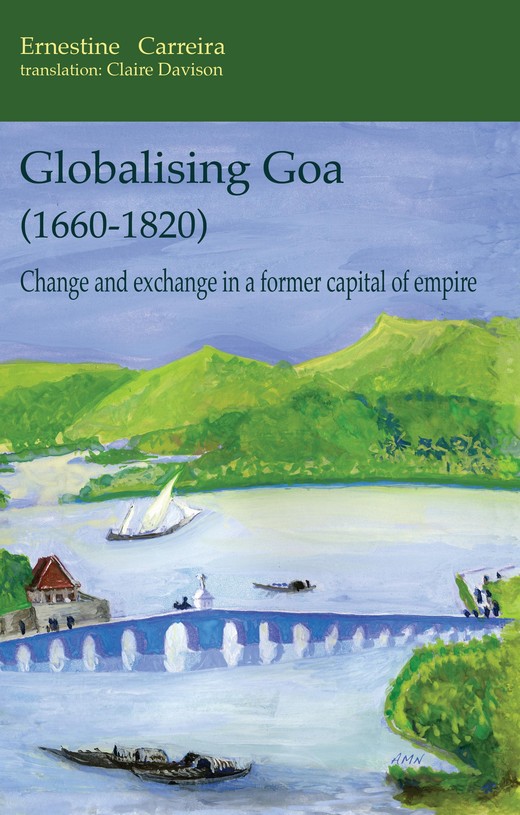
In her book Globalising Goa (1660-1820) (2014) Ernestine Carriera points out that the Christian missionaries also ensured laws that would make it impossible for Christians to be slaves (pp. 392-393) and that this new scenario was opposed by local Muslim and caste Hindu slave owners. While most persons focus on episodes such as these to stress the strategies that were used by Christian missionaries, what often escapes attention is the fact that we are dealing with slavery here. If we place our sympathy with the slaves then we are able to read the story of Christianisation from quite a different light. From this perspective, the story of the Christianisation is a story of the liberation of depressed castes from the cruelty of their upper-caste owners. If these upper-caste tyrants were forced to flee because they refused to brook this new situation of freedom then we need have no sympathy for them at all.

If at all we have been thus far sympathetic to the fictional accounts like Swapna Saraswat, then it is because we have thus far been listening to the myths of local savarnas peddled largely through coffee-table books supported and authored by dominant castes (both Catholic and Hindu) rather than the histories of Bahujan and Dalit castes. If these latter castes, most of who are quite contently Catholic, have no memory of conversion trauma then it is because conversion would have provided a welcome release from the more horrific aspects of caste life.

The majoritarian Catholic presence in the Old Conquests also brought relief to the non-Catholic Bahujan populations once the New Conquests were integrated into the Estado. Once the dominant castes converted to Christianity, the social mobility available to middle-rung and marginalised castes decreased and caste reasserted itself once again. Nevertheless, the horrors of the pre-modern system were muted. As the centuries progressed the Old Conquests began to get depopulated due to service castes withdrawing their services from the Christian upper-castes and migrating to obtain labour that would not be couched in daily and ritual humiliation. In his essay titled “Humiliation in a Crematorium” Peter R. de Sousa points out that the vacated space came to be occupied by Dalit-Bahujan groups who migrated from the New Conquests fleeing from the “the pernicious laws of Manu...which operated in the Konkan socio-cultural landscape”. De Sousa might as well have included cruel landlords to the list of horrors that the Dalit-Bahujans were fleeing from. The religious freedom that the leaders of the New Conquests negotiated for themselves when these territories were added to the Estado merely meant continuing impunity to treat lower castes like chattel. De Sousa argues that this migration from New to Old Conquests gave the Dalit-Bahujan a chance to “reinvent themselves”. This reinvention he refers to is perhaps the manner in which depressed castes were able to represent themselves as members of the Bhandari caste, which would explain the preponderance of this caste in in contemporary Goa.

The rhetoric of the Hindu Right, and that of their Ghar Wapsi project, rests on the suggestion that pre-modern South Asia was a society of free individuals. The fact is that it was not, it was a land of widespread servitude and slavery. Colonial rule and Christianity came as a welcome relief to many of the people who converted. This is not to say that slavery disappeared altogether. It definitely did not. However, the presence of Christianity allowed for a variety of previously unavailable challenges to the caste order. Those who converted made as much use of Christianity and the missionaries as the Hindu Right imagines the missionaries made use of the marginalised castes.

The vision of the Hindu Right is the vision of a caste ordered past. The question we need to pose when faced with novels like Swapna Saraswat is whose stories are they telling, and whose stories are they actively erasing. In other words, what ever happened to the pre-modern das and dasi?


(A version of this post was first published in the O Heraldo on 23 Jan 2015)