Tuesday, November 16, 2010

Drama around the NRP Sagres: Why Karmali cannot critique offensive Portuguese imagery

Whatever opinion one may hold about the ‘Hindu’ nationalists and the ‘freedom fighters’ in Goa, one has to give them credit for their predictability and constancy. You could be blissfully unaware of a cultural or other event in Goa, and thus loose out on an interesting experience were it not for the hullabaloo that our rightist friends faithfully create, and the media just as faithfully gives attention to.

The drama this time round is the docking of the Portuguese Naval ship NRP Sagres in Mormugão. Added to this, these Johnnies have decided to protest a film festival being conducted by the Instituto Camões, as well as demanded the renaming of streets that bear ‘Portuguese names’. Don’t forget opposing the name of Garcia da Orta for the Panjim Jardim Municipal.

There’s a funny thing about nationalism and nationalists; they need a sharply defined object around which they can mobilize, and in this case demonstrate. If they don’t find it, they will create it. In this sense, both Portuguese nationalism and the ‘Hindu’ nationalism in Goa work hand in hand and reinforce each other.

The ‘freedom fighters’ who constantly demonstrate the presence of Portuguese culture in Goa, should ideally think twice before they protest and look deep within themselves for the results of Portuguese colonialism. The food that even the most pious Goan Hindu eats is a result of the transcontinental mixing that occurred thanks to Portuguese supremacy in the waters of the Indian Ocean. Tomatoes, onions, maize, red chilies, potatoes, American spices. All of these were not part of the South Asian diet until enabled through the presence of Portuguese adventurers in South Asia. If we are to protest the presence of Portuguese culture, why not protest this in your very own kitchen?

Having pointed out this home-truth, I would like to rush to suggest that we should not now celebrate South-Asian cuisine as ‘a gift of the Portuguese’ as I sometimes polemically state. For this would play directly into the hands of Portuguese nationalism. We do not particularly want to encourage this nationalism either. Portuguese nationalism would like to have the Portuguese people believe that Portugal gifted culture to the parts of the world that encountered Portuguese sovereignty. This is an ancient trope, that even currently, some Portuguese have no problem renewing as they attempt to resolve their own identity issues. Take for example the advertisements that appeared in the city of Lisbon in connection with a promotion associated with the same NRP Sagres that is now in Goan waters. A lottery competition offered a trip on the Sagres as one of the prizes of the lottery. Among other images advertising this offer were those on three different posters. All three of these posters featured a black man, dressed in ‘tribal’ outfits – with grass skirt, feathers in the hair, war paint, and holding distinctive markers of Portugalia. These were a disco of fados, a Gallo de Barcelos, and scarves celebrating the Portuguese football team. Read within the context of Portuguese nationalist rhetoric, the message was clear. The ancestors of the western civilized Portuguese, gave culture to these savages. Buy the lottery ticket and gain a trip in the foot-steps of our noble ancestors round the world.

No one could deny that this suggestion is offensive. And there appears to have been a murmur of protest against these images within Portugal. But such disagreements could do with external support. These images continue to deny the possibility that the ‘transfer of culture’ was a two way street. That even the most ‘savage’ Africa contributed fundamentally to the making of Portuguese (both contemporary and colonial) culture; that the largest part of the culture transfer happened via unwitting colonial adventurers. Portuguese nationalism thus, suggests that there was a concrete, deliberate civilizing of the world that is largely a figment of a Portuguese nationalist imagination.

There is much that needs to be critiqued in Portuguese colonial and post-colonial imagery. But this will not happen via the histrionics of these ‘freedom fighters’. On the contrary, their violence threatens those groups in Goa that visibly bear the mark of the former Portuguese presence in Goa. Portuguese colonialism and its lingering impacts, like other impacts of other colonialisms, are best seen as a virus, inserting itself into ‘foreign’ bodies and then facilitating the creation of a new culture. Think of it in terms of the lacto-bacilli that enter milk to create yoghurt. The bacilli are so small as to not register their presence, and yet they work to catalyze a process, quite happy to remain unnamed. In keeping with the virus imagery for Portuguese colonialism, we must remember that the so-called Portuguese names, are in fact now the names of Goan persons. The ‘Portuguese’ names of these streets do not anymore honour forgotten metropolitan Portuguese persons. They affirm the domestic cultures of a part of Goan society.

The ‘nationalists’ who claim to protest colonial Portuguese violence also forget a crucial fact about Garcia da Orta. The name of Garcia da Orta, that they refuse for the Muncipal Garden in Panjim was in fact the name of one whose eternal rest was disturbed by the Inquisition. This man, who converted from Judaism to Catholicism to avoid persecution, had his bones exhumed and burned by the Inquisition. One would imagine that these protesters would show greater solidarity with the memory of this man.

The ‘nationalist’ threats of violence forces a good percentage of Goans to close ranks and deny the possibility of careful and thoughtful critique. It traps our relation with postcolonial Portugal into a tiresomely repetitive cycle. Thus what these ‘freedom fighters’ do, is to create, not only an exclusionary Indian nationalism, but also prop up an offensive Portuguese nationalism. As is evidenced by their refusal to honour the memory of Garcia da Orta, and their selective protesting of ‘Portuguese culture’, these Johnnies prefer ignorance to debate and discussion. There is a world awaiting critique and transformation, but this can happen only if we generate the internal environment to calmly reason things out. But then this does not seem to be what these ‘freedom fighters’ are fighting for.

(A version of this post was first published in the Gomantak Times dated 17 Nov 2010)

Wednesday, November 10, 2010

Between Lisbon and Panjim: Developments for a healthy city

Lisboacho ganv, khoxen anv poitelem

Poitoch Lisboa, viva re Goa, ghara yetelim

A week or so ago, Goan newspapers informed us of the visit of a high-level Portuguese delegation led by the ambassador of Portugal to India, Dr Luis Filipe de Castro Mendes to the Corporation of the City of Panjim. This delegation included the Consul General of Portugal to Goa, and the Director of international relations at the Camara Municipal de Lisboa and proposed signing of a tripartite memorandum of understanding between the Portuguese government, the Goa government and Fundação Oriente for the development of Panjim in vaious areas.

This occurrence is largely representative of good news. The news report suggested that Panjim’s Mayor, Ms. Po has asked for assistance of the Lisbon Municipal Council in areas like city’s internal public transportation and preservation of some heritage buildings in the city. All very good news, there is a need for us to deal with the mounting pressure of traffic in our little town, and nothing would be more sensible than introducing a decent public transportation system within the city; one that would link up efficiently with the public transport that connects other parts of the state to the town. Indeed, perhaps as in Lisbon, we could also work out a system where we have cycle lanes and pedestrian paths that would bring some measure of civility back to the streets of Panjim. Ms. Po suggested as much, when she specifically referred to trying to do something about Panjim’s footpaths. Given that Panjim’s topography is not uniformly level, it might not be a bad idea to introduce buses that allow cycles to be carried, either inside the bus, or outside of it.

Mr. Po seems to have other wonderful ideas as well, and this includes garbage management. For those who are as yet unaware, a good amount of Panjim’s garbage now finds its way to an abandoned quarry site on Taleigão plateau. The quarry is now almost full up to the brim, if not nearing its capacity. Getting an efficient waste management system would not be a bad idea. Except that we know that Goa’s waste management crisis is not the result of a lack of technology. It is the lack of political will; both at the level of the common person, as well as that of the administrative bodies. Nevertheless let us give credit where it is due and note that the initial efforts of such persons as Clinton Vaz, who initiated the system and idea of the segregation of waste is slowly gaining ground. When the Mayor of a city indicates the need for it, you know that we are headed somewhere. For this initiative, thank you Ms. Po, Clinton and the many other activists who were responsible for initiating the idea of waste separation as a solution to Goa’s garbage crisis.

There was a point though when the meeting between this ‘High level delegation’ and the City Corporation seemed to carry in it the seeds for urban disaster. The director of international relations at the Camara Municipal de Lisboa is reported to have indicated that “… we have even offered to extend help in building technical bridges like flyovers in Panaji.” Perhaps this is where we need to smile and get a grip on reality. Panjim is not Lisbon, and perhaps it will never be. Lisbon is the capital city of a country and hosts a population of about 564,402 people. Goa while a capital, caters to a much smaller region and a smaller population. There is no reason for us to assume a need for flyovers when we have not begun to contemplate effective mass transit options.

There was another issue that suggested a need for horrified reaction in the news report, and that was where Ms. Po observed that “the new generation families in the Portuguese capital are asked to construct their houses outside Lisbon, and as an incentive offered free transport to the city, besides their house tax and school fees of the children being borne by the municipality.”

Lisbon is a wonderful and charming city, and surely we should associate with it. However, not all is well with Lisbon. In fact one could go to the extent of suggesting that Lisbon and Goa suffer from similar ills. One significant problem that Lisbon suffers from is that the centre of the city is largely empty of residences and hence shut up. There is a flight from the charming centre of town, and a number of buildings are run down. One of the reasons for this flight and abandoning of buildings are the rental regulations that somehow stand in the way of urban renewal. The problem however is that when these buildings are renewed, they are priced out of the range of the lower to middle class populations. Richer Portuguese and foreigners on the other hand purchase these buildings as investments and holiday homes. (Does this story sound familiar yet?) There is a distinct process of gentrification on in Lisbon’s centre and this is not necessarily a good thing to happen. What is worse, is that the real estate lobby in Lisbon is no worse from that in Goa. There are hundreds of newly built residential buildings in greater Lisbon that are going empty. Some of them have been empty for years now. Thus one has a push out of the historic urban centre, but a greater destruction of the environment in the outlying areas, than there is demand for homes.

There is already a similar process of sorts at work in Goa. A greedy real estate lobby encouraging urban sprawl, and the conversion of Goan homes where real people live, into showcases for the lifestyles of the (largely non-Goan) rich and famous. City improvement does not mean getting people out of the city; it involves getting people to have a better experience in the heart of the city. Ms. Po has already got a part of the equation right, investment in heritage buildings, in public infrastructure like public transport and walkable footpaths. Having people within the city allows for us to have a public and civic life. Shunt people out to suburbs and the civic and public life manages to die.

While conversations and exchanges between Goa and Portugal are something that we should encourage, we should remember that we are not in the game of blindly copying. We need to take from Portugal what we need. Thanks to Portugal’s participation in the EU process, there are a number of participatory governance mechanisms that we could learn. Not least of which is the notion of a service state, where the State serves, if not services it citizens.

Let us a raise a cup to the possibility of a new venture then, and keep our fingers crossed for healthy developments! Or as the lyrics of Lorna’s Lisboa go…

Chintlelem chintop purem zalear puro re Deva


(Subsequent to the publication of this column, it was brought to my attention by a member of the Portuguese delegation that visited the Panjim City Corportation, that Ms. Judice, Director of international relations at the Camara Municipal de Lisboa had been misquoted in the article by the Navhind Times. She did not make any reference to the issue of 'flyovers', and secondly, given that there was no representative from construction and infrastructures integrated into that delegation, a proposal would make not have made any sense at that moment.)

(A version of this column was first published in the Gomantak Times dated 10 Nov 2010)

Wednesday, November 3, 2010

Resisting nationalism’s seduction: When a Goan boy in Australia is attacked

Last week this column discussed the manner in which nationalism highjacks humanist causes that rise above the petty and parochial politics of nationalism. Sometime between that column and this one, there was another incident that seemed custom-made for highjack by nationalism. Some of the many responses to the incident demonstrate however the manner in which we can respond to the human element by building larger solidarities and side-stepping the seduction of nationalism.

On October 18, two boys attacked a 12 year old school boy of Goan origin at their school in Melbourne, Australia. This boy was so brutally beaten up that he has reportedly had to have a titanium plate inserted under his eye, and may possibly loose sight in that eye. Some of the reporting on the incident sought to colour the incident as yet another racial attack on ‘Indians’ in the continent. However rather than go down that road, some of the responses to the incident have had a warm, familial, concerned response that seem better suited to the trauma that the family has been expressing.

Responding to the incident, a Goan resident in Goa felt that there was a need to reach out to the family, writing, ‘when a father feels that there is no future in remaining in Australia anymore (due to this incident), it becomes a defeat of the dreams one nursed for the future of his children having giving up everything one had in one's own land for a future for one's off-springs.’ This letter placed concern very appropriately in the interests of a family that had already possibly sacrificed much to get to Australia. To go down the ‘Indians being attacked’ road would have possibly gotten international and governmental attention, but would such concern for the individual family necessarily have received attention? More importantly, would it have received such fraternal solidarity from individuals, unrelated by blood?

At a more systemic level, where one needs to make sure that such incidents do not get repeated, other Goans pointed out that there are high levels of violence in some schools, and that these need to be tackled at the level of the school. These observations did not rule out that there is a possible racial element to the attack, but seemed to refuse to get trapped in the ‘racist attacks on Indians’ formula. It seems to have helped that this particular Goan was particularly critical of the failings within India. To raise slogans against Australia, he felt, would only be a case of the pot calling the kettle black. Touché!

Yet another Goan pointed out that while he was raising the issue and not denying the possibility of a racist element to the attack, he also agreed that there needed to be a larger response to the incident. The Indian Government uses these incidents to boost its own international visibility, attempting to act like its role model, the U.S. State that reassures its citizens even when they are abroad. Rather than pull in the Indian state, perhaps one could reach out to existing organizations in Melbourne that seek to work against racial stereotyping and addressing the social problems that emerge in multi-racial and immigrant neighbourhoods like Noble Park where the school is located.

Speaking at the much maligned conference on Azaadi at the Jawaharlal Nehru University in New Delhi a couple of days ago, Arundhati Roy made a powerful observation that we would do well to apply here. Kashmiri’s who want Azaadi for Kashmir, she said, would do well to forge solidarity with other movements for justice within India. Similarly, if we as Goans are concerned for the fate of this boy and his family’s continued residence in Australia, we would do well to work towards fostering bonds with groups that work on social harmony. The answer to the Indo-Pakistan conflict, some believe lies in person-to-person contact. There is no reason why we cannot manage such a contact, rather than engage in nationalist sloganeering.

Seeking alternatives to nationalism is imperative if we are to resolve a number of the problems we face. Very often nationalist thinking is so ingrained in our thoughts that we fail to see alternative ways of thinking. The responses to this Goan boy’s sad plight however shows the multiple levels at which we can respond to the issue.

(A version of this post was first published in the Gomantak Times 3 Nov 2010)

Wednesday, October 27, 2010

The Problem with Nationalism: And how it limits our imagination…

A number of readers of this column must wonder about the column’s obsession with nationalism. What is so wrong with some patriotism and love for one’s country they may ask? For these good souls, the following anecdote would provide one more illustration of the manner in which nationalism distracts attention from the real issues, and perverts good intentions for banal and pointless ends.

A couple of days ago I received an email in my inbox asking me if I had heard the name of Narayanan Krishnan. If I had not, this message informed me, it was a result of ‘a collective failure’ his being ‘one of the most incredible stories of personal commitment.’ Narayanan Krishnan, this email informed, was currently 29 years old, doing ‘what he was professionally trained to do as a chef. Feed people.’ Unlike others however, ‘Krishnan does not do this in the swanky confines of a 5-star hotel. Every day, he wakes up at 4 am, cooks a simple hot meal and then, along with his team, loads it in a van and travels about 200 km feeding the homeless in Madurai, Tamil Nadu.’ The message continued to indicate that Krishnan often feeds upto 400 destitute a day, often throwing in a haircut for those who need one. The inspiration for this endeavour the message contined dates back “eight years ago,(when) this award-winning chef with a five-star hotel chain was all set to go to Switzerland for a high-profile posting. On a visit to a Madurai temple, he came across a homeless, old man eating his own human waste. That stark sight changed Krishnan's life.”

There should be no problem thus far. In fact what Krishnan has done is laudatory. But this is where the email started to go horribly, horribly wrong. ‘Krishnan is the only Indian in a list of 10 heroes that CNN has picked worldwide to honor. One of them will be chosen CNN Hero of the Year, selected by the public through an online poll. If many Indians get together to vote for this inspiring man, he can win by a long mile. If Krishnan wins he will get $100,000 in addition to the $ 25,000 that he gets for being shortlisted for the Top 10. Akshaya Trust needs all the monetary support it can get to build on Krishnan’s dream. Let’s help him get there.’

It was at this point that I saw red, and with alarm bells going off by the dozen in my head, I flipped. I simply lost it.

The first problem that I had was with the opening line of the offensive paragraph, “Krishnan is the only Indian…” How, is his nationality even relevant? Is there a suggestion implicit in that identification of nationality that that if there had been no Indians there would have been no reason to reach out to the other causes that CNN is highlighting? That these other causes are somehow less relevant or worse still capable of being ignored? What this appeal has done, in identifying Krishnan’s nationality and appealing to our patriotism is to distract us from the humanitarian cause that Krishnan is serving. It distracts us from the emotions of compassion and solidarity and asserts that it is in fact nationality that is is worth supporting. Forget the efforts in Haiti, in Mexico, in Nepal. They are irrelevant, focus on ‘our’ India. The petition suggests that Krishnan being Indian is sufficient reason for us to suspend our independent thinking and blindly vote for him. But this is what nationalism and patriotism does, it forces us to suspend independent thinking and be another robot.This petition then does great injustice both to Krishnan and other humanitarian causes.


Secondly, ‘if many Indians get together...he can win by a long mile’. This is the most perverse use I have seen of India's so-called population problem. Since we cannot compete in terms of quality, let us use collective weight to bludgeon our way to the top. Indeed it is demonstrative of the larger way in which we see our population. Normally seen as the dead-weight burden that drags us to the bottom of the global race, the only time we see the Indian population as an advantage is when we use it to attract works from abroad. This formula necessarily involves the lowering of labour standards, wage rates and the like. But once again though nationalism rears its ugly head, in that thanks to nationalism, it is not the working conditions of thousands of Indians that is at stake, but the greater glory of the nation. This glory as we known translates only into extra rupees in the pockets of a select few.


My third problem with the appeal is that, thanks to this nationalist sentiment, it makes the case of support for Krishnan one of winning alone. ‘If Krishnan wins he will get $100, 000 in addition to the $ 25,000 that he gets for being shortlisted for the Top 10. Akshaya Trust needs all the monetary support it can get to build on Krishnan’s dream. Let’s help him get there’.

Rather than suggesting that we should contribute to Krishnan’s largely humanitarian cause, the petition directs us to get recognition for India. In doing this, not only is it not suggesting that we contribute to winning a competition ‘for India’, but is also hiding a rather important fact. India's poverty is not a result of a lack of internal resources. It is a lack of the will to see an equitable distribution of the plentitude of resources that the country enjoys. In urging us to vote for Krishnan so that he wins the CNN money, the author of the petition falls back into a long tradition of garnering foreign funds, rather than addressing the disparity in access to resources within the country. This also follows the other strategy we have commonly adopted. Make symbolic gestures alone, and not address the structural reasons for the continuation of poverty. But then nationalism is eminently about symbolism, and fooling people into believing things will change.

These are just some of the reasons why nationalism is a problem. It prevents us from seeing the world as our home and having solidarity with issues outside of the national space. It forces us to think of the nation alone, and justifies the unnecessary deprivations thousands have to face every day. It hides the fact that internal problems are the result of internal decisions, not internal lack of resources.

Eventually, in fighting nationalism, we effectively fight for a better society and a better world.

(A version of this post was first published in the Gomantak Times 27 Oct 2010)

Tuesday, October 19, 2010

Trouble over a siesta: The Goan, the migrant and the public park…

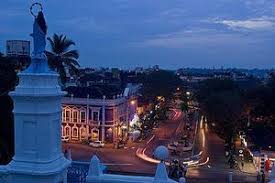
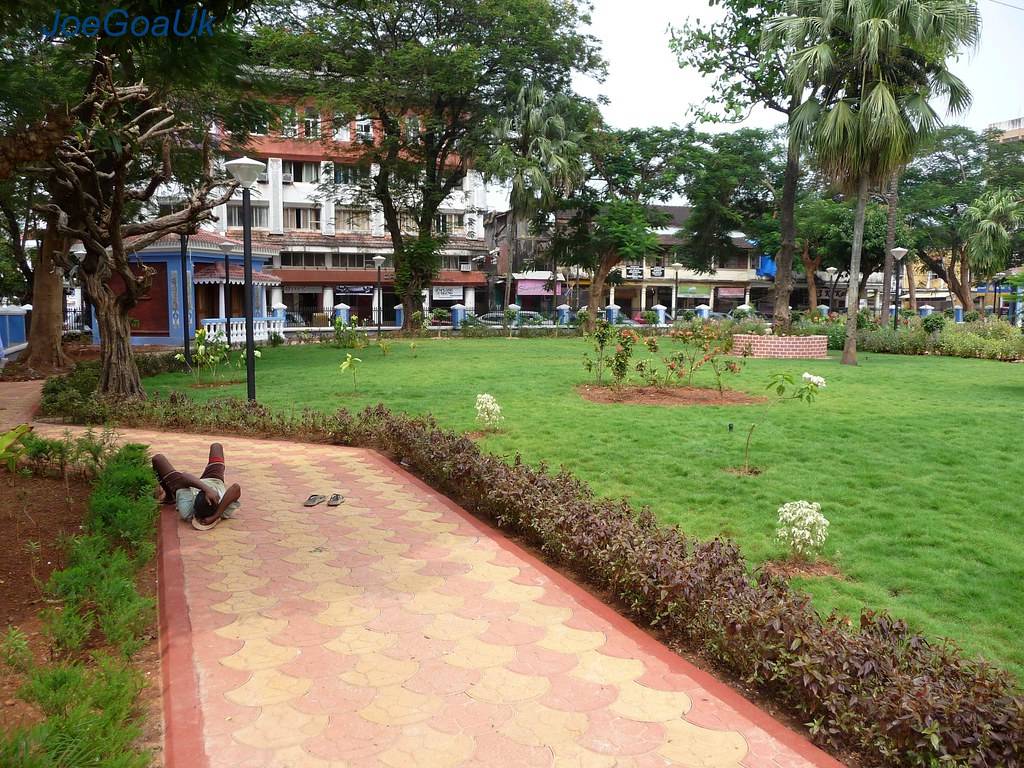
Not too long ago, Panjim’s long languishing Jardim Municipal was renewed and once more open to the public. For this action, we must give thanks to the Panjim Municipality and the other departments (and politicians) that engaged in the refurbishment. We have to be particularly thankful for this renewal because it was rumoured that a portion of the garden was to be converted into a multi-storey parking lot. One must give thanks for small mercies when they are afforded to us; and especially because the choice of renewal of the garden over the possibility of a multi-storied parking lot represents a commitment towards public spaces, rather than the trend towards the privatization of spaces that we are currently facing.

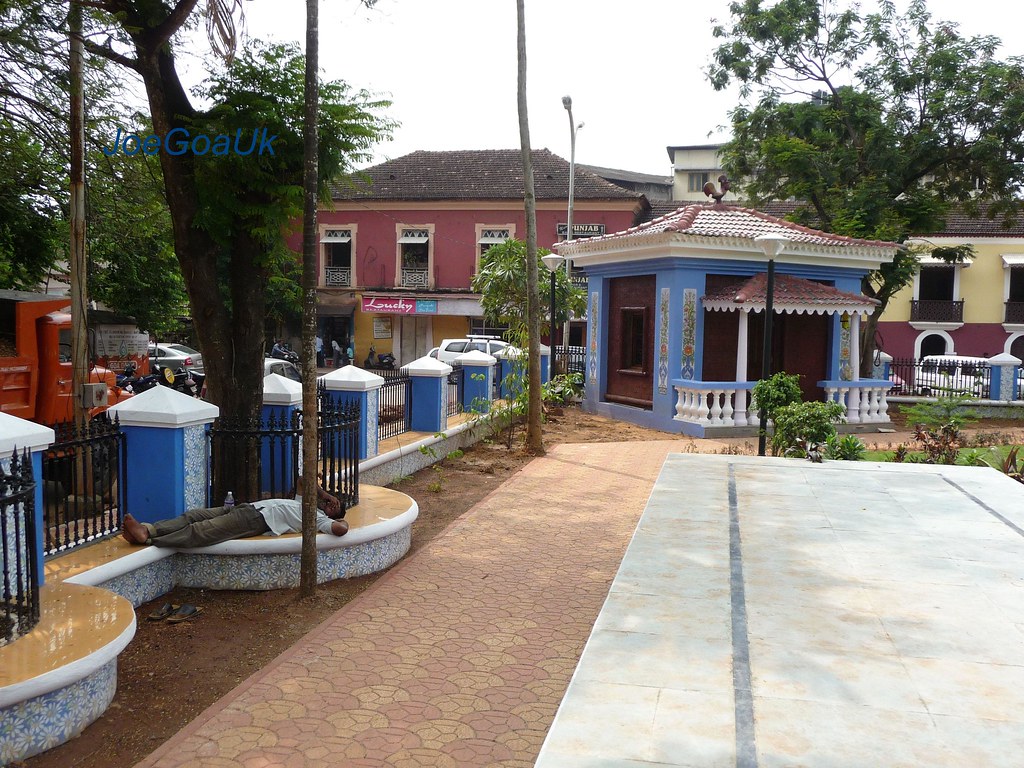
A day after the gala opening of the garden, a consistent visual archivist of Goa sprayed a couple of images of the garden in various Goa related cyber-groups on the internet. These images were not congratulatory images, but rather evidence for the complaint that he now mounted against the public uses of the garden. The images showed labourers sleeping on the newly planted lawns, and some men urinating in corners of the gardens. The images provoked the usual comments of rage, and chest-beating, both from Goans abroad and within Goa. It is to these comments that I would like to address this week’s column.

This column has often pointed out to the qalb or upheaval that Goan society is facing. ‘Save Goa’ is just one manifestation of a larger change. What is bothersome about this qalb is that it very often represents itself as progressive. It uses the language of decentralization, peoples’ democracy, need for public spaces even, to challenge the capitalist onslaught that Goa is facing. As valid as this battle and the arguments invoked may be (and they are!), very often these same valid critiques are employed by groups that are not particularly democratic themselves. While they embrace the ‘Save Goa’ slogan, what they seek to do is reaffirm the structural inequality in Goan society. I would argue that the complaints over the fact of labourers using the lawns of the Jardim Municipal for a siesta are in fact reflections of the social inequality that some of us would like to reinstate in Goa, under the guise of saving Goa. My interest does not lie in castigating these forces, but indicating why it is precisely in supporting the right of the migrant-labourer to sleep on the lawns, or indeed recognizing what makes us urinate on street corners, that we can lay the foundations for the Goa of our dreams.

The first argument I would like to make is that by sleeping on the lawn, the migrant-labourer is being the unwitting foot-soldier for the Goan dream. He is staking our continued claim to the public open spaces that were a feature of the fast-disappearing Goan landscape. The public open spaces are available not merely to be cordoned-off pretty images that our archivist is suggesting. They are present so that they can be used by the people. And this use is not limited merely to labourers lying on the lawns, they also include little Goan children playing on these very same lawns. As long as the lawns are not destroyed in this process, why should people be denied this small luxury? Indeed, these labourers lying on the lawns are also a reality-check, indicating that there are still people in our Republic, who do not have access to decent standards of labour.

The problem that little Goan children face with regard to playing spaces was brought home to me by Cecil Pinto my fellow columnist, who pointed out the manner in which the guards (acting on orders) invariably prevent his children from running across the lawns of public gardens. The logic that this Goan visual-archivist and the guard share in common is a privatizing logic. Pretty spaces to look at and not use result when we do not feel the need to use the public space anymore but merely whiz past from one private space to another in our little private vehicles. This is part of a larger enclosure movement that is on-going in Goa – think back to the manner in which the Government was contemplating the conversion of the old premises of the Escola Medica (GMC) into a mall. I repeat therefore, that what the labourer, in taking his afternoon siesta on the lawns, is doing is to be the foot-soldier in the larger battle that the Goan is fighting against the system. Indeed, it is not just in sleeping on the lawns that the labourer extends this solidarity to the Goan cause. A priest-friend once remarked to me, that when he takes his post-dinner constitutional around the city of Panjim, invariably what he finds is that it is ‘outsiders’ who use the public spaces as ‘we Goans once did’. Indeed, the liveliest public spaces in Panjim, and perhaps the safest, are where the migrant workers congregate to meet with each other, and unwind after their day’s work. ‘They use the space like Goans’, was my priest friend’s assertion. If they use the space as Goans, then it appears that we gain a couple of insights into this whole Goan identity question. First, that Goa is composed as much of its urban spaces, as it is by the open spaces of the villages. Secondly, it is in using these public spaces that we became properly Goan. That is to say, we were not born Goan, we were socialized into being Goan, by the use of the constitution of public space in Goa. Thus, anyone can become Goan with their adoption of certain mannerisms and a public manner. Indeed, contrary to the helpless hand-wringing of the Konkani ‘lovers’ in the State, Konkani is adopted by ‘outsiders’ at as fast a rate as it is being abandoned by ‘Goans’. The final insight that we gain from this priest’s insight, is that the Goan is increasingly abandoning the public space and retreating into the private. This is not a good sign at all given that democracy and indeed group identities are produced through our presence in public spaces.

Finally, what of those men urinating in the corners of our spanking new park? Clearly I will not suggest that public urination is a shot in our continuing effort to ‘Save Goa’. If so, then as was suggested so long ago, we could have pissed all our troubles away! However as with lying on the lawn, the public urination is indication of the absolute lack of decent and hygienic public facilities on offer more generally. In fact even such sanitary facilities when placed have more recently been effectively privatized by requiring payment to use the toilet.

In sum, we need to watch out for the manner in which our unequal Goan past may push us toward neo-liberal strategies to manage our cities. These strategies while looking good, would infact spell the doom that we are struggling so hard against. In the meanwhile, we need to put together a medal for the blissfully unaware labourer who spurred this entire discussion! Viva Goa!

(First published in the Gomantak Times 20 Oct 2010)

Saturday, October 16, 2010

A Letter to Amita: Unpacking Caste Politics

Dear Amita,

I want to begin this post by thanking you for your response to Dileep Padgaonkar’s review of Meera Kosambi’s book on her grandfather and Buddhist scholar Dharmanand Kosambi (Dharmanand Kosambi: the essential writings, edited by Meera Kosambi, Permanant Black) in The Times of India.

In your response you rightly point out that “To refer to the background of a brahmin landowner then as ‘humble’ is misleading and offensive.” No argument there. You raise points that are normally occluded in the debates and discussions within and about Goa. On the contrary, I would go further than you do when you say that “the condition of the non-brahmins was much worse, with many in grinding poverty, working on the land owned by the GSBs, unable to even think of basic education, their women and children sometimes bonded in the worst ways imaginable.” In fact, for most of the non-brahmin Hindu population of Goa, and especially in the Novas Conquistas, the GSB was the oppressor; not the Portuguese, and the GSB continues to be the oppressor. Let us also not forget that for the GSB the pre-Republic discrimination was not as severe as it was for other Hindu groups. There were sufficient number of GSBs within the system of the Estado da India to ensure that their interests were served, even while not being centre-stage. These inconvenient facts are unfortunately conveniently occluded in the anti-Portuguese hysteria that is generated by the ‘freedom-fighters’ whose lead figures are perhaps not surprisingly GSB! More recently, in other writings, I have suggested that perhaps the kind of stand-off that one saw in the Subodh Kerkar incident had as much to do with contra-GSB politics as with anti-non-Hindu politics.

Before I go on to my differences with you, and my suggestions of caution – that draw largely from Luis’ response to you - may I direct your attention ‘The Bomb,Biography and the Indian Middle Class’ published in the EPW issue dated June 10 2006, p. 2327. In this essay Sankaran Krishna points to the biography of the late Raja Ramanna. He points here to the curious fact, that like Dileep Padgaokar’s review, Ramanna’s review too begins with a reference to his Brahmin origins. Like you do, Krishna leads us from this reference to the Brahmin, to the manner in which this feature limits the extent of Indian modernity. Among other things, it is the basis on which the pride in one’s elevated caste background twines with the politics of ‘merit’ that we uphold to deny the reservation policy that Luis rightly supports, how it constructs the habitus of the Indian middle classes, its (our) response to the masses, and how it twines with Hindutva. The essay is a gem, and worth reading and I will hence cease to discuss that essay here. I will merely end by indicating that reference to the humility of the GSB caste is more than merely misleading and offensive. Padgaokar’s reference tells us also of how Padgaokar perceives himself, and the limits of his own modernity.

My differences with you commence from the position, where I argue that it is possible to conceive that the ‘humble GSB’ did in fact exist at the time in which Dharmanand was forced to manage the coconut plantations. Saying this does not, I believe, challenge your assertion of the preeminence of the Saraswat in Goa. This assertion only provides a critical nuance. What I am trying to gesture towards however is that we should not take the term GSB at face value but unpack it. The term GSB and the idea of a single GSB caste was in fact an invention of the early late 19th and early 20th century. This points was made in great detail by the historian Frank Conlon in an essay titled ‘Caste by Association: The Gauda Sarasvata Brahmana Unification Movement’ and published in 1974. That the discussion of this essay did not find its way into many of the discussions on Goan society and history, and contemporary Goan politics; I believe says much about the internal politics (and power structures) of Goa.

To return to Conlon’s essay however, he points out that the GSB community was forged in the early 1900’s primarily as a result of the efforts of non-elite migrants to Bombay city who members of around 11 historically related sub-castes. “The larger and more influential of these groups included Shenvi, Sāsastikar, Kudaldeskar, Bardeskar, Pednekar and Sarasvata (or Senvipaiki) jatis.” You will realize that his list, provides names for only 6 of these 11 sub-castes, and yet today most of us are unaware of the distinctions even among these 6 that until the early 1900’s were significant. These divisions were significant enough that non-elite members of the non-elite sub-castes had to attempt to create a single unified group that would allow them to gain from the combined strength of numbers, as well as the elite status of members of elite sub-castes.

These moves met with different responses. There were some, like the famed Shenoi Goembab who participated in this move by forging a ‘mother-tongue’ for this group outside of the language that the elite among them identified with. This caste-consolidation history of Konkani has today been occluded as Shenoi has been trapped in the Goan identity building movement (which is not unconnected with the machinations of some members of the GSB caste either). There were the Swamis (pontiffs) of some of the Maths, notably the Chitrapur Math and the Kashi Math who were not as keen to see these distinctions vanish. Indeed mention the commonality of Saraswats to a Chitrapur Brahmin even today, and you will see a smirk play on the their faces. Seeing themselves as Saraswats, rather than GSBs, they will tell you that the GSBs are known to be rather uncouth; villagers, shop-keepers and merchants. It was exactly this lower socio-economic standing among the non-elite sub-castes that the Gauda Sarasvata Brahmana Unification Movement sought to undo. This and get themselves recognized as Brahmins by other (notably Marathi-speaking) Brahmins.

I seek to raise this point, and stress this history for a number of reasons. First, we should not collapse the various sub-castes, the memory and identity of which may still linger, into the single rubric of Brahmin. The value of unpacking this term is similar to the value of the Dalit movement that resists their being packed into the box Hindu. Where strong ‘lower’-caste movements exist, for example Bihar, the specter of Hindutva has been diminished. I wonder whether the inclination of the GSB stalwarts in Goa who were formerly seen as secular, is not also the result of the recent years that has seen the effective consolidation of the GSB caste? Recognizing the non-elite status of some of these Brahmins would possibly also help generate insights into their other actions. Finally, unpacking ‘Brahmins’ would help deflect the kind of critique that the Luis who has responded to your post demonstrates.

As demonstrated by his response, the critique against casteism gets conflated into a critique against Brahmins. This then has less to do with a critique against casteism, and more to do with the continuing caste battle between the Brahmins and the Chardos. In fact, the conflation of monolithic Brahmins, or Chardos, aids precisely the attempts of elites in these groups to recruit foot-soldiers for the caste wars that benefit the elites. For make no mistake, the sub-castes that went on to compose the GSB, were and are very much present among the Goan Catholic as well. By this conflation, it is possible for Chardo (or any other dominant caste) sensibility to masquerade as ‘progressive’ while not questioning itself and its relationship to dominance and subjugation. Take for example the suggestion that not mentioning caste could possibly have to do with a higher level of maturity!

One could also take the other statement that Luis makes “It is difficult to otherwise imagine how else they’ll ever be able to rise from centuries of institutionalized injustice.” I do not have any problem with the ‘They vs. Us’ formulation implicit in this statement. After all I am sure that Luis comes from a dominant caste background and is acknowledging this. At the same time, there is nevertheless a certain teleology of progress embedded in the statement. It suggests that at the end of the day ‘they’ must rise to become like ‘us’. This is not a romanticisation of the miserable conditions of the oppressed. It is merely an attempt to contemplate a space for a Dalit response that is not dependent on dominant caste superciliousness. Off the cuff, the closest approximation I can think of is what I can think of comes from this little response to Gandhians from Dalit activists. Responding to being called Harijans, or Children of Goa, the Dalit activists retort, ‘if we are children of God, whose children are you!’

I will end on this note by simply summarizing, that as important as it is to point out that the GSB, no matter how ‘humble’ was also a landowner and oppressor; it is as important to unpack this term to display the variety of status groups that have been shoved into it. Simultaneously, we should beware of attempts to hijack this critique to aid the caste wars by other dominant castes against the clearly hegemonic Brahmin. Thus in saying so I return to your observation that “identifying caste is important in writings about India, for it can add crucial depth to our understanding of this caste-ridden society…”

Many thanks for your patience,

Jason

(First published on line at tambdimati: the goan review on 15 Oct 2010)

Wednesday, October 6, 2010

And the games people play...Reflections on the Commonwealth Games

A number of Indians, and unfortunately too small a number, were of the opinion that the only reason that the Commonwealth Games were being hosted by India, was to generate pride in the acquisition of a status symbol. This status symbol was to be the hosting of a ‘world class’ sporting event. It would demonstrate to the world that India was a super-power, an economic force that could be taken seriously. It could now hold a place among the leaders of the nations. While not grudging India this position, or its desire to be a leader among nations, a number of us felt that India had no business strutting around on the world stage in this manner when the country was beset by a variety of problems. These problems include a civil war that has been created by the Indian state not responding to the basic needs of its tribal and rural population. It includes the precarious economic conditions of peasants forced to commit suicide, children who are not given the chance of education but forced into labour. The problems are numerous, and the generation of pride was not going to help address any of these problems. On the contrary, the generation of pride would drop a veil over these problems and force us into a false sense of complacency.

It was for this reason that a couple of weeks ago, when the mess around the organization of the Commonwealth Games (CWG) first hit the international press stands, there were a number of us who were delighted. Our intense desire was to see the Games cancelled and the Indian government be shamed and taught a lesson. Our hope was that such a cancellation would shock the Indian socio-political system to sense, and force it to mend its ways. This shock we hoped would create the space for a developmental process that benefited all Indians, not just a small segment of elites, as is currently the case.

Recent events have intervened however to indicate just why the generation of this pride is such an issue for the Indian socio-political system. When the international media first focused on the CWG, by pointing out the filthy state of the Games Village, a number of us took this to be the gospel truth. Subsequently however, with other images becoming available we realized that this filth and incompleteness was only a part of a larger picture of competent attempts to meet ‘international standards’. Personally, it was when the Australian news crew tried to suggest that it had sneaked explosives into the Games village that a number of issues were made glaringly clear. It became clear that a good amount of international coverage on the incompetence of the Games authorities was not motivated by the same spirit in which some of us opposed the Games. This international coverage was motivated by an attempt to reinforce a global hierarchy, where white ‘developed’ nations are perfect, and can dictate to coloured ‘developing’ nations the norms for being civilized and developed. The focus on Indian poverty, the lack of a decent working environment for the labour involved, the child labour involved in producing the event; while in themselves valid, were merely ways in which India (and other countries like China, South Africa, and in future Brazil) could be ‘put in place’ within the global hierarchy.

It is partly for this reason, where countries of the South are constantly shamed, that pride and the acquisition of status symbols becomes an obsession. This desire to redress humiliation is understandable. What these countries (and India particularly) seem to fail to realize however is that by grasping for these status symbols they are setting themselves up for further humiliation. For those all giddy after the completion of the Opening Ceremony and the fact that the Games were not cancelled know this. This occurrence does not change the many valid critiques that were mounted against the Games by the international media. The validity of these critiques remain. The international media continues to mock India, even though the Indian population seems to have been induced to forget this fact in the euphoria subsequent to ‘successful completion’. It is because, despite the dishonesty of the motivations, the validity of the critique remains, that countries like India should realize that this mass spectacle route will never really give them the status they desire.

We should recognize that the Olympics and Commonwealth Games are parts of a larger model of development that were built on the colonial extraction of wealth, that continue today. There is no way the formerly colonized countries can ever manage to beat the inventors of the game, especially when the rules were and continue to be formulated by these former colonizers. The hope for these countries lies in changing the rules of the game. Indeed, the hope for these countries lies in formulating a new game, where the rules emphasize genuine equality. Part of the formula in rewriting the rules then, rests in rejecting the models of the existing game. Rejecting the wasteful expenditure of the Olympics and CWG is a critical part of the formula.

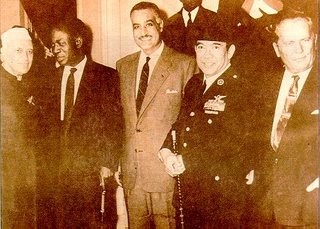
There was a time when, under what has come to be called Nehruvian socialism, there was a partial attempt to be different and reinvent the game. Though we did not succeed and eventually got sucked into this international game, the important fact is that we tried. The CWG attempt by India perhaps represents the final abandonment of this attempt to change the rules of the game. For this reason then, we should see the kind of derisive international media attention as our just and entirely expected rewards. We would be better served if we took note of the some of the valid critiques raised by both national and international media, and sought to work on setting the Indian house right, even as we set about to change the rules though which the international game of nations is played.


(First published in the Gomantak Times 6 October 2010)